
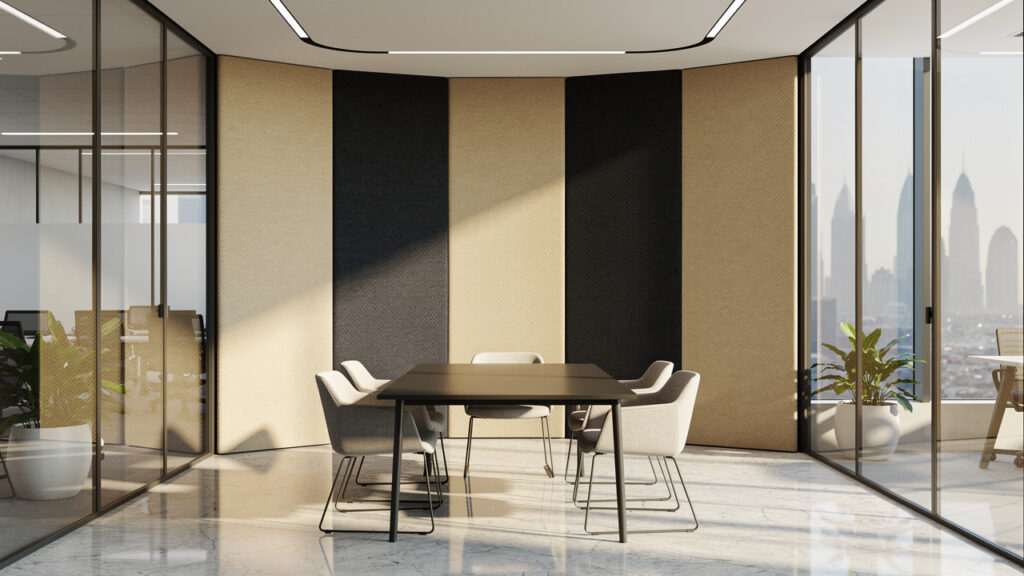
Saudi Arabia is building faster than ever under Vision 2030, yet many new spaces still suffer from harsh, echoey sound. Hard marble, glass, and concrete surfaces bounce every word around, which quickly turns offices, mosques, and hotels into tiring places to spend time. PET Acoustic Panels offer a simple way to bring noise under control while also supporting sustainability goals across the Kingdom.
PET Acoustic Panels are sound-absorbing boards made from recycled plastic bottles that calm noise by soaking up echo. They are safe to touch, low in emissions, and easy to install in busy buildings without disruption. In this guide you will see what PET panels are, why they suit Saudi projects, where they work best, and how DE Sound supports designers and contractors across the Gulf.
Keep reading to see how one material can improve comfort, meet green targets, and stay within tight project budgets across Saudi Arabia.
Key Takeaways
PET Acoustic Panels are rigid boards made from recycled PET fibers that absorb sound far better than many foam or fiberglass options. Their fibrous core traps sound energy instead of reflecting it, which quickly lowers echo and improves speech clarity in offices, schools, mosques, and homes.
Because PET Acoustic Panels contain around 60 to 100 percent recycled content, they support LEED and other green building schemes used on Vision 2030 projects. This recycled content helps project teams answer strict ESG reporting needs while still choosing a durable, attractive interior finish that designers appreciate.
Saudi buildings that gain most from PET Acoustic Panels include corporate offices, mosques, universities, hotels, mixed-use developments, and media studios. In each of these spaces the panels reduce reverberation time, protect privacy, and improve comfort for occupants, which supports performance, learning, and guest satisfaction.
DE Sound supplies PET Acoustic Panels across Saudi Arabia at factory-direct wholesale pricing with acoustic reports and fire certificates. The company backs every order with free technical advice, fast GCC delivery, and product options in many colors and shapes that suit high-end Saudi interiors.
What Are PET Acoustic Panels and How Do They Work?
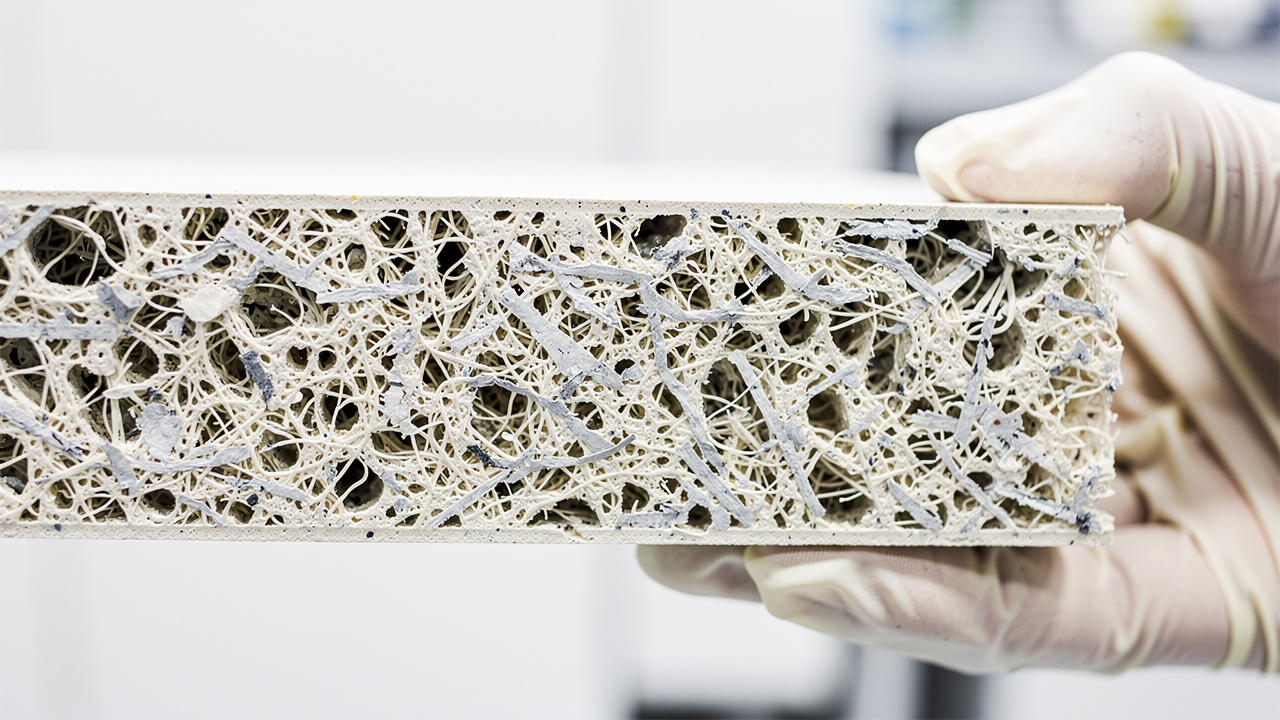
PET Acoustic Panels are rigid sound-absorbing boards made from Polyethylene Terephthalate (PET) fibers that turn noisy rooms into calmer spaces. These panels start life as post-consumer plastic bottles that would otherwise become waste.
Typical manufacturing steps include:
Bottles are cleaned and stripped of labels and caps.
The plastic is shredded into flakes and melted into fine fibers.
Those fibers are layered and heat-bonded into dense sheets without liquid glues.
Thermal bonding creates a stable, non-toxic sheet that is safe to handle. Installers can cut panels with common woodworking tools and fit them in occupied schools, hotels, or offices without irritating dust. According to the U.S. Green Building Council, using materials with recycled content supports LEED v4 Materials and Resources credits, which makes PET boards attractive for certified projects in Riyadh, Jeddah, and NEOM.
The acoustic performance of PET Acoustic Panels comes from their open fiber structure. When sound waves hit the panel, they pass into the tiny air pockets inside the material. Friction inside those fibers converts part of the sound energy into a trace amount of heat, which removes that energy from the room so it cannot bounce back as echo.
This behavior is measured with the Noise Reduction Coefficient (NRC), a value between 0 and 1 that describes average absorption. Quality PET Acoustic Panels typically achieve NRC values between 0.75 and 1.0 when tested to ASTM C423 standards, meaning they can absorb most incident sound energy (Acoustical Society of America). It is important to remember that these panels improve sound inside a room by reducing reverberation. They do not block sound transfer between rooms, so full sound isolation still needs separate mass layers and acoustic construction details.
Why PET Acoustic Panels Are Ideal for Saudi Arabia’s Building Sector
PET Acoustic Panels suit Saudi Arabia because they combine strong sound absorption, clear environmental benefits, and dependable performance in harsh climates. The Kingdom is pushing large-scale development under Vision 2030, and many of these projects must now meet strict environmental and comfort targets. A single material that supports both better acoustics and sustainability fits this new standard very well.
On the sustainability side, PET Acoustic Panels are made from recycled plastic that would otherwise enter landfills or the marine waste stream. Many products use 60 to 100 percent recycled content, which is documented in manufacturer data sheets for LEED submittals. According to the World Green Building Council, buildings generate around 39 percent of global energy-related carbon emissions, so choosing low-impact interior materials directly supports national net-zero goals.
Saudi Arabia is also seeing greater use of green frameworks that mirror systems such as LEED and the WELL Building Standard from the International WELL Building Institute. PET boards support these frameworks because they are low VOC, often meet GREENGUARD-style emission targets, and stay stable for many years, which lengthens the replacement cycle. Facility managers in ministries, universities, and large corporate campuses can improve indoor environmental quality while also meeting reporting requirements.
Climate conditions in the Gulf also favor PET Acoustic Panels. The material is moisture resistant and does not support mold or mildew, even with humidity swings between coastal cities and inland regions. Panels do not warp, sag, or crumble under normal temperature changes, which keeps ceilings and feature walls looking sharp in high-traffic lobbies and prayer halls.
Finally, the main Saudi building types align well with what PET Acoustic Panels do best. Corporate headquarters, government complexes, airports, mosques, hotels, and high-end apartments share a heavy use of stone, glass, and gypsum board. These hard surfaces create long reverberation times. Installing PET boards on key walls or as ceiling baffles softens those reflections, which makes speech clearer for worshippers, guests, students, and office workers across the Kingdom.
Top Applications of PET Acoustic Panels Across Saudi Commercial and Residential Projects
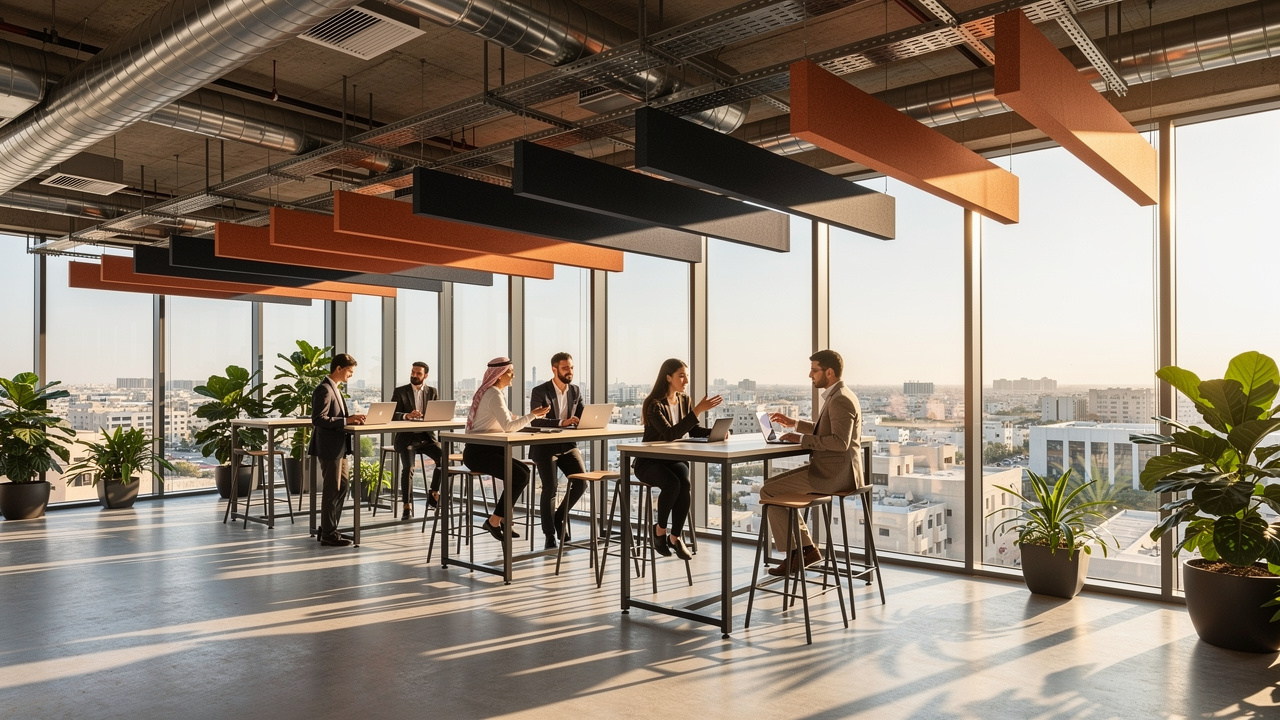
Top uses of PET Acoustic Panels across Saudi projects include workplaces, worship spaces, education, hospitality, studios, and residential developments. In each sector, the panels shorten reverberation time and reduce noise build-up so occupants can hear comfortably and concentrate. This is especially important in large open volumes and busy shared rooms that are common in Vision 2030 mega developments.
Better acoustics also support measurable performance outcomes. Research collected by the Center for the Built Environment shows that noise and lack of speech privacy are among the most frequent complaints in open-plan offices, a problem that studies evaluating EVALUATION OF THE ACOUSTIC properties of sound-absorbing panel prototypes confirm can be effectively addressed with fibrous absorption materials. By adding well-placed absorption, facility managers can address one of the main comfort issues without major structural changes.
Tip: A quick way to judge if a space needs acoustic treatment is to stand in the middle, clap once, and listen for how long the sound lingers. If you hear more than one or two clear reflections, PET Acoustic Panels will usually make a noticeable difference.
— DE Sound acoustic team
The table below summarizes where PET Acoustic Panels tend to deliver the best results in Saudi building projects:
| Sector | Typical Saudi Spaces | Main Benefits Of PET Acoustic Panels |
|---|---|---|
| Workplaces | Corporate offices, call centers, co-working floors | Lower overall noise, better speech privacy, more comfortable meetings |
| Worship | Mosques, prayer halls, community centers | Clearer sermon audio, reduced echo under domes, calmer atmosphere |
| Education | Classrooms, lecture halls, libraries | Improved speech intelligibility, less listening fatigue for students and teachers |
| Hospitality | Hotel lobbies, restaurants, ballrooms | Quieter receptions and dining areas, better guest experience during busy periods |
| Media & Creative | Recording studios, podcast rooms, edit suites | Controlled reflections for accurate monitoring and clean recordings |
| Residential | Villas, majlis rooms, home cinemas | Reduced echo in hard-finished rooms, more pleasant everyday conversations |
Where PET Panels Deliver the Biggest Impact
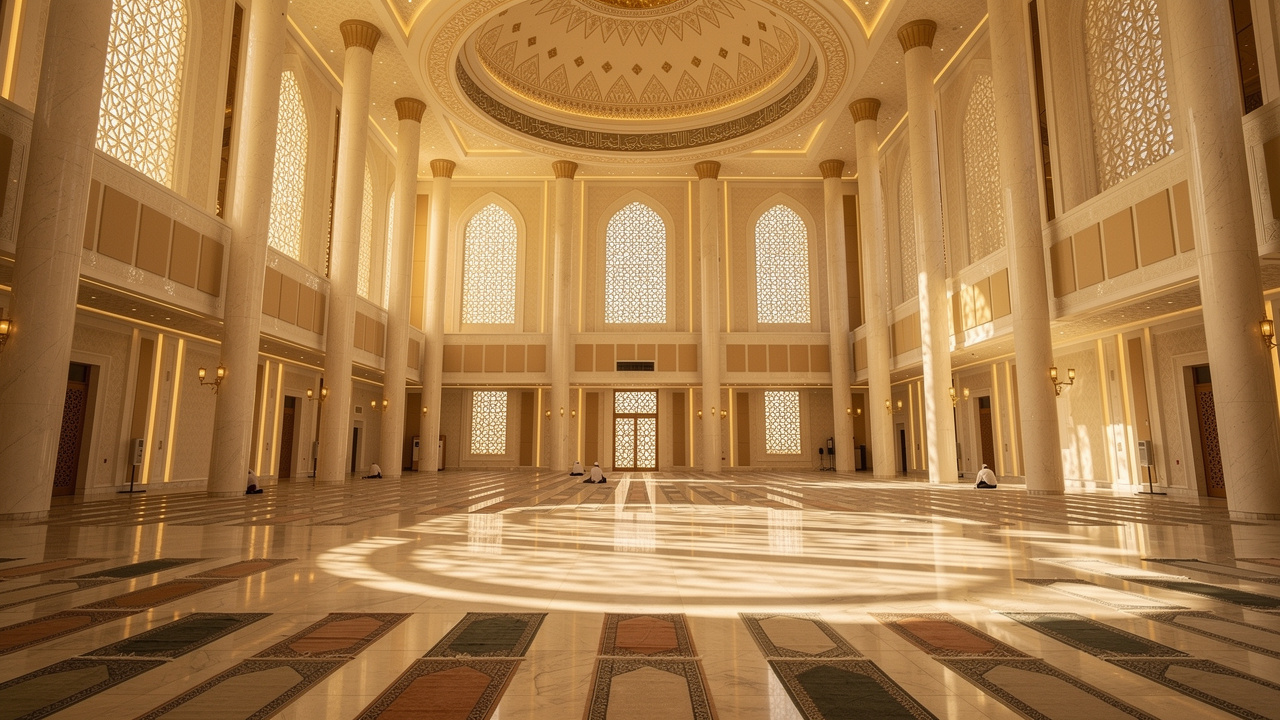
Where PET panels make the biggest difference in Saudi Arabia is in building types that mix hard finishes with constant speech or activity. These panels help designers solve echo problems while respecting local aesthetics and operational needs.
Corporate offices and open-plan workspaces in Riyadh, Jeddah, and Dammam often have glass partitions, exposed ceilings, and polished floors. In such spaces, PET Acoustic Panels installed as wall cladding, desk screens, or ceiling baffles lower the overall noise level and protect speech privacy between teams. By treating around 20 to 30 percent of the surface area with PET boards, project teams can make open offices far more comfortable.
Mosques across the Kingdom typically feature domes, marble, and large prayer halls that create strong echoes. When imams speak through the sound system, reflections from these surfaces can make words hard to follow. Thin PET Acoustic Panels, color-matched to existing finishes and placed on selected wall zones or balcony fronts, reduce that blur without distracting from sacred architecture. Clearer recitation helps worshippers stay focused, which supports the spiritual purpose of the space.
Educational institutions need good acoustics so students can hear teachers without strain, and research summarized by the Acoustical Society of America shows that children in poor classroom acoustics may miss up to 25 percent of spoken words. PET boards placed on back and side walls in classrooms bring reverberation times closer to the recommended 0.4 to 0.6 seconds range. Because the panels are impact resistant and low VOC, they suit corridors, lecture halls, and libraries used all day by young people.
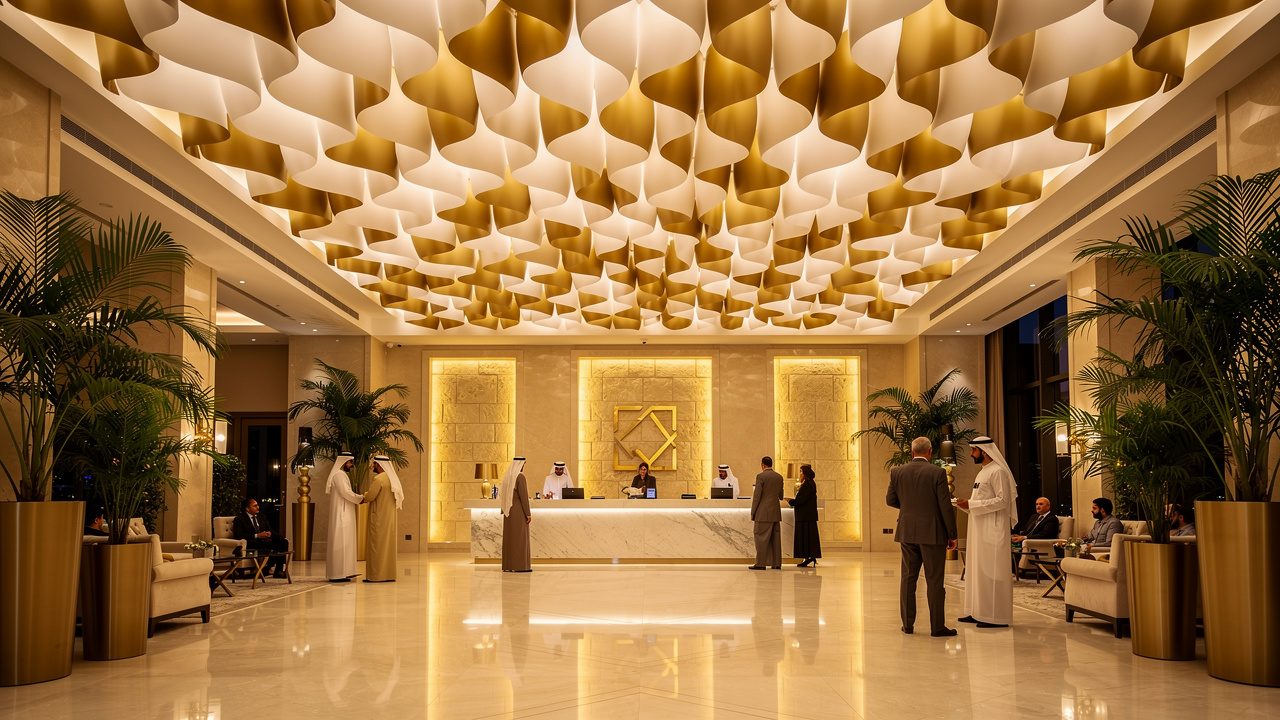
Hotels and hospitality venues in Makkah, Madinah, the Red Sea developments, and entertainment districts rely on peaceful lobbies, restaurants, and guest areas for positive reviews. Hard luxury finishes are visually impressive yet often very noisy during peak times. PET Acoustic Panels in custom colors, geometric ceiling clouds, or printed feature walls let interior designers control sound without losing the premium feel. For large Saudi hospitality chains, DE Sound can supply consistent panel lines across many properties so brand standards remain aligned.
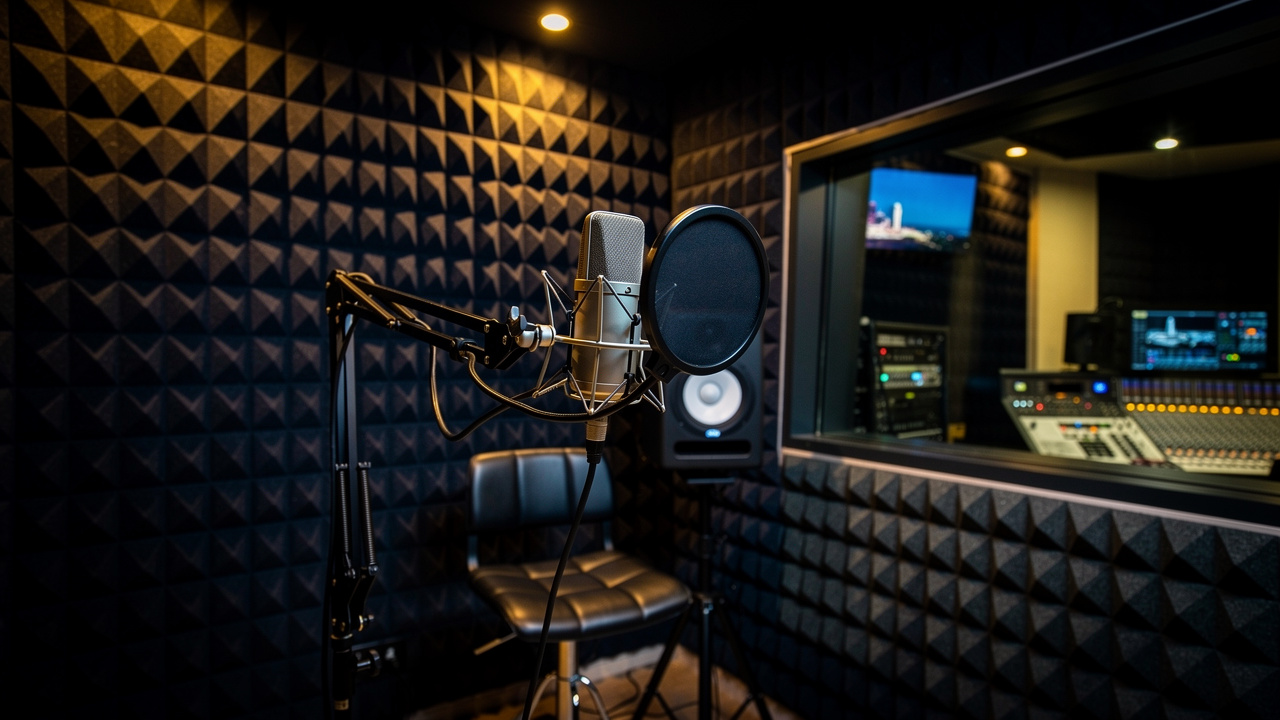
Recording studios and media facilities support Saudi Arabia’s fast-growing entertainment and content sectors. Control rooms, podcast suites, and small edit spaces need accurate, dry sound to produce broadcast-quality work. Thicker PET Acoustic Panels in the 15 to 25 millimeter range absorb both mid and some low frequencies when placed at first reflection points. Studio owners in cities such as Riyadh and Jeddah appreciate that DE Sound can combine PET panels with other acoustic products to fine-tune room response for music, voiceover, and video work.
Why Saudi Building Professionals Choose DE Sound for PET Acoustic Panels
Saudi building professionals choose DE Sound for PET Acoustic Panels because the company combines wholesale pricing, certified products, and Gulf-focused support. Instead of dealing with multiple overseas factories, project teams work with a single regional supplier that understands Saudi codes, climate, and construction practices. This saves time for interior designers, fit-out contractors, and procurement teams working under tight deadlines.
Factory-direct pricing is a major advantage on large Vision 2030 projects. DE Sound sources PET Acoustic Panels straight from manufacturing partners and passes that efficiency to clients, which helps keep per-square-meter rates competitive for towers, hotels, mosques, and residential compounds. For projects with thousands of square meters of treatment, even small unit cost differences add up to real budget relief.
Equally important is product documentation. DE Sound supplies PET Acoustic Panels that are tested for NRC, density, and fire performance to standards such as EN 13501 and BS 476. According to the World Green Building Council, upfront green features often add only a small percentage to project costs while delivering significant lifetime savings, and research on Life Cycle Carbon Emissions savings from recycled material substitutions in construction confirms that well-documented recycled materials support both budget and sustainability strategies. Having ready acoustic and fire reports also speeds civil defense submissions for Saudi consultants.
Service quality further sets DE Sound apart from generic distributors. The technical team helps clients choose panel thickness, layout, and fixing methods based on room use and budget. Logistics teams arrange fast delivery across the Gulf so materials reach sites on time, whether the project is a Riyadh corporate tower or a coastal resort.
Wholesale-friendly supply model gives contractors and facility managers confidence that material quantities for full campuses or hotel portfolios are available when needed. DE Sound can schedule phased deliveries, which supports construction sequencing and reduces storage pressure on crowded urban sites. Transparent, up-front pricing lets procurement teams compare options clearly and avoid surprise extras later.
Technical consultation from acoustic specialists helps avoid the common mistake of placing PET Acoustic Panels in visually pleasing yet acoustically weak locations. DE Sound advisers review drawings, suggest coverage percentages, and recommend mounting details that make real improvements to reverberation time. This guidance reduces rework on site and helps architects meet client performance expectations.
Gulf region experience means DE Sound understands how Saudi projects actually run, from coordination with HVAC and sprinkler layouts to working around Ramadan schedules. The team communicates easily with Arabic- and English-speaking stakeholders and is familiar with requirements from major developers such as NEOM and key government bodies. That local insight makes PET panel specification smoother for everyone involved.
“DE Sound’s team of acoustic specialists provides hands-on technical support from early specification through to site delivery, which helps Saudi building projects meet both acoustic performance targets and construction deadlines.”
— DE Sound project team
Wrapping Up
PET Acoustic Panels offer Saudi Arabia a practical way to improve indoor sound quality while meeting rising expectations for sustainable, comfortable buildings. Their recycled content, low emissions, and dependable acoustic performance make them well suited to Vision 2030 projects across offices, mosques, schools, hotels, and studios. By calming echo and noise, they support concentration, worship, learning, and guest comfort in every region of the Kingdom.
Choosing DE Sound as a supply partner adds further value for building professionals. Factory-direct pricing, certified acoustic data, and fast GCC logistics support both project budgets and timelines. Free technical advice helps design teams place panels where they provide the greatest benefit, not just where they look good.
For interior designers, fit-out contractors, facility managers, and procurement officers planning work in Saudi Arabia, PET Acoustic Panels from DE Sound bring performance, aesthetics, and sustainability together. Reach out to DE Sound for wholesale pricing, specification sheets, and a no-cost consultation on your next project.
Frequently Asked Questions
Question 1: Are PET Acoustic Panels Fire-Safe For Use in Saudi Commercial Buildings?
Quality PET Acoustic Panels are fire tested and usually achieve Class B or Class C ratings under EN 13501 and Class 1 under BS 476. These ratings suit most Saudi commercial interiors, including offices and hotels, when used as part of approved wall or ceiling systems. DE Sound supplies panels with full certificates for civil authority submissions.
Question 2: What Thickness Of PET Acoustic Panel Should I Specify for a Conference Room or Boardroom?
For typical conference rooms and boardrooms, 15 to 25 millimeter PET Acoustic Panels work best. The extra thickness improves absorption at lower speech frequencies, which helps participants hear clearly during long meetings. Many designers combine these panels with carpeting and soft furniture for balanced room acoustics.
Question 3: Can PET Acoustic Panels Contribute To LEED Certification on a Saudi Building Project?
Yes, PET Acoustic Panels often contain 60 to 100 percent recycled content that supports LEED v4 Materials and Resources credits. Their low VOC emissions can also help with Indoor Environmental Quality credits when documented correctly. DE Sound provides the recycled content and emissions data that LEED consultants need for Saudi projects.
Question 4: How Do PET Acoustic Panels Compare To Foam or Fiberglass Alternatives?
PET Acoustic Panels generally last longer and handle impacts better than standard acoustic foam products. They also avoid the itchy fibers and installation safety concerns associated with fiberglass boards. In many cases PET boards reach similar or higher NRC values, while offering better aesthetics and recyclability for modern Saudi interiors.
Question 5: Does DE Sound Offer Custom Colors and Shapes For High-End Interior Projects in Saudi Arabia?
Yes, DE Sound offers PET Acoustic Panels in a wide range of colors, textures, and CNC-cut shapes suited to luxury interiors. Designers can specify geometric patterns, feature walls, or ceiling clouds that align with brand palettes. This design freedom makes PET boards a strong fit for premium Saudi hospitality and corporate projects.