
Introduction
Noise between rooms, from corridors, and from busy streets is a growing headache on projects across Oman. As hospitality, corporate, and residential buildings rise in Muscat and other cities, expectations for quiet and privacy rise with them.
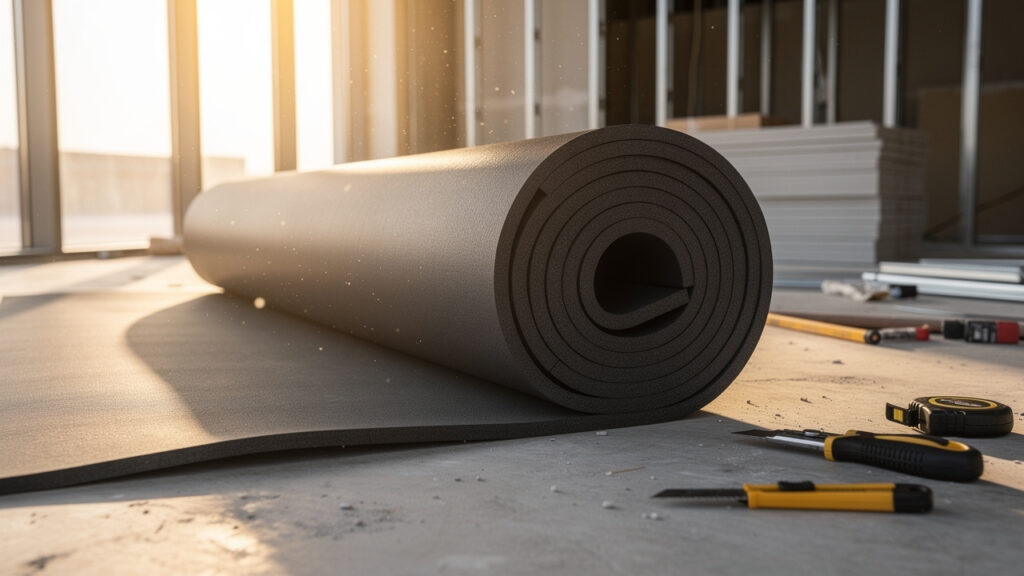
Mass Loaded Vinyl (MLV) gives designers and contractors a thin, heavy sound barrier that blocks noise without thick masonry. This dense vinyl sheet relies on high mass in a flexible form to stop sound passing through walls, floors, and ceilings. It works very differently from foam panels, which mainly calm echo inside a room, and it fits well into tight build-ups that are common in fit-out work.
This guide explains what Mass Loaded Vinyl is, where it fits best in Omani projects, which performance specs matter before you buy, and how DE Sound supports bulk supply across the Gulf. Keep reading if you want practical guidance you can apply on your next job, not just theory.
Key Takeaways
Key points from this guide help you judge when and how to use MLV on real projects in Oman. A quick scan here saves time later when you read in depth.
MLV is a thin, heavy sheet that blocks sound, not echo. Think of it as a flexible extra wall layer.
Top uses include hotels, offices, schools, homes, studios, and HVAC duct wraps. These match Oman’s growth sectors and give strong isolation without thick concrete.
Weight per square meter, thickness, fire rating, and temperature resistance matter most. Certified test data and real Sound Transmission Class (STC) ratings guide smart buying decisions.
DE Sound supplies tested MLV grades, bulk rolls, and practical technical help. Omani projects get factory-direct pricing and GCC-wide delivery support.
What Is Mass Loaded Vinyl And How Does It Work?
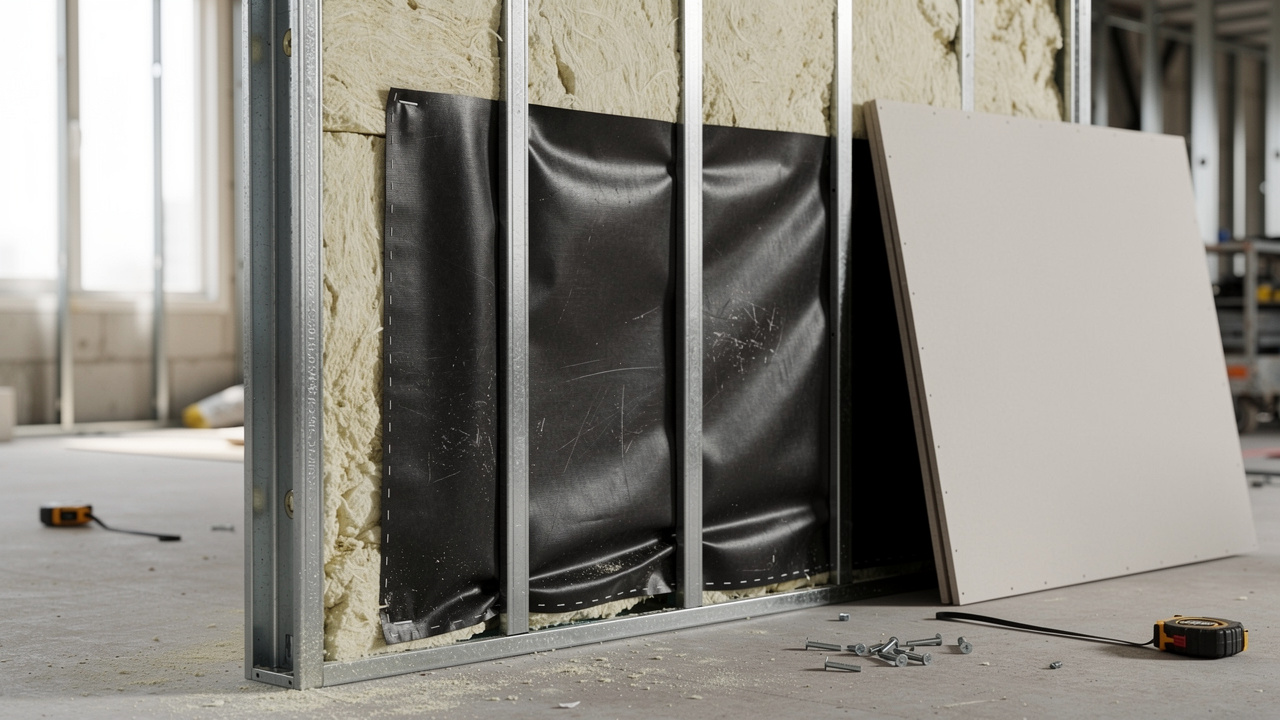
Mass Loaded Vinyl is a dense, limp acoustic barrier sheet that blocks sound by adding heavy mass to building elements. It gives walls, floors, and ceilings extra weight without taking much space, which makes it ideal when partition thickness is limited. For architects and contractors, it acts as a flexible extra skin that reduces airborne noise traveling between rooms.
MLV is made from a vinyl base loaded with heavy mineral fillers such as barium sulfate or calcium silicate. These fillers push the weight up to around 4.8 kilograms per square meter for the common 1 pound per square foot grade. The sheet still bends easily, so installers can wrap it around corners, ducts, and irregular details that rigid boards cannot cover.
Unlike fiberglass or acoustic foam, which mainly calm reflections inside a room, Mass Loaded Vinyl behaves as a sound blocker. It resists movement when sound waves hit it, so far less energy passes through to the other side. In many Omani projects, teams combine MLV with mineral wool inside the cavity, so the wall both blocks transfer and controls echo.
The physics behind this comes from the mass law of acoustics, which says heavier barriers lose more energy when sound hits them. Research summarized by the National Research Council Canada shows that doubling the mass of a wall can improve airborne sound insulation by about 6 decibels. This is why adding a thin but heavy MLV sheet to a light stud wall can make such a big difference.
According to test data shared by manufacturers such as Acoustiblok, a single 1 pound per square foot MLV sheet on its own often reaches an STC rating in the mid twenties. When sandwiched between two layers of gypsum board, the same sheet can help a partition reach composite ratings above STC 50, which suits many hotel and apartment walls. Because the material is limp instead of rigid, it avoids sharp resonance peaks and performs well across a wide range of frequencies, including tricky low bass from subwoofers or mechanical rooms.
“Good sound isolation usually comes from simple physics, extra mass and airtight construction, not from fancy tricks.”
— DE Sound Technical Team, Acoustic Specialists at DE Sound
For Oman, where many fit-outs must respect tight wall build-ups, MLV offers a practical way to reach acoustic targets without changing structure or losing much floor area.
Where Is MLV Used? Top Applications For Projects In Oman

Mass Loaded Vinyl is used wherever project teams in Oman need strong sound isolation in a thin build-up. It shows up inside walls, under floors, above ceilings, and wrapped around noisy services in hotels, offices, schools, and homes. Because it is flexible, the same roll can serve both flat partitions and curved ducts.
In hospitality projects in Muscat, Salalah, and Duqm, MLV is often placed in guestroom party walls and behind headboards so neighbors do not hear each other, a practice aligned with research on acoustic insulation in plasterboard systems with mineral wool that confirms performance gains in layered assemblies. It also lines service risers and pipe chases to keep water and drainage noise out of premium rooms. International hotel brands work hard to protect guest ratings, and noise control is a major part of guest comfort.
Corporate offices and boardrooms in towers across the UAE and Oman also benefit from Mass Loaded Vinyl. Adding a layer inside partitions around meeting rooms keeps private conversations from leaking into open-plan zones. Used under raised access floors, MLV reduces both airborne sound and the thud of footfall from above, which matters in multi-tenant commercial buildings.
Schools and training centers need clear speech to support learning. The World Health Organization recommends background noise in classrooms stay below about 35 decibels for good speech understanding. By using MLV in partitions between classrooms, music rooms, and corridors, designers working for the Ministry of Education in Oman can keep lessons quiet even in busy blocks.
“Excessive noise seriously harms human health and interferes with people’s daily activities.”
— World Health Organization
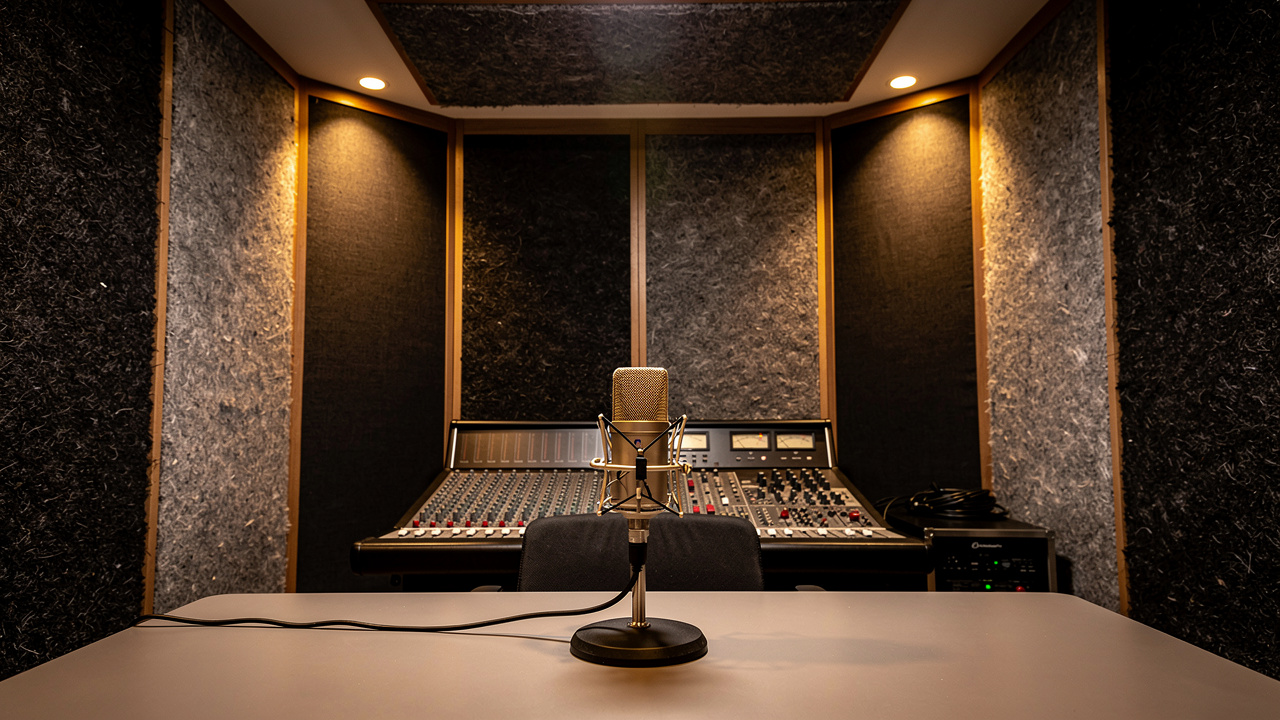
Studio owners, podcasters, and content creators in Muscat and Sohar rely on MLV as a base layer of wall and ceiling assemblies. It helps keep traffic noise, neighbor activity, and even air conditioners out of recordings. Combined with resilient channels and mineral wool, it forms the shell of many room-in-room studio designs across the Gulf.
Mechanical plant rooms, chiller yards, and long HVAC duct runs are another high-impact application. Wrapping ducts and pipes in MLV reduces breakout noise so fans, pumps, and compressors are far less audible in hotel rooms, offices, and apartments served by the same systems. In Oman’s hot climate, where air conditioning runs nearly all year, this type of duct treatment can remove a constant source of complaints.
Finally, residential towers and villas use MLV inside shared walls and floors to calm noise between family members and between neighbors. A thin MLV layer under floating screeds or under laminate floors, supplied through partners like DE Sound, controls both airborne sounds and footsteps without raising floor levels too much.
MLV Performance Specs And Material Variants What To Evaluate Before You Buy
Choosing the right Mass Loaded Vinyl for an Omani project means checking weight, thickness, temperature rating, fire certificates, and lab test data. These numbers show how well the product will block sound, survive local climate, and pass approvals. Skipping this step can lead to underperforming walls that still let noise through.
The most visible spec is weight per square foot or per square meter. Standard 1 pound per square foot MLV weighs around 4.8 kilograms per square meter and suits most offices, hotels, and homes. Heavier 2 pound per square foot material, roughly 9.8 kilograms per square meter, fits recording studios, cinemas, and mechanical rooms where strong low frequency control is needed. Many lab reports show that moving from 1 pound to 2 pound grades can add roughly 4 to 6 STC points to the same wall build-up.
Thickness is linked to weight. Typical 1 pound MLV is about 3.2 millimeters thick, while 2 pound grades sit near 6.4 millimeters. Both easily fit behind gypsum board without affecting architectural lines. For Oman’s heat, temperature rating is just as important. Quality MLV from manufacturers such as Kinetics Noise Control is designed to stay stable up to around 65 degrees Celsius, which covers hot plant rooms and sun-exposed ducts.
Fire performance matters for Civil Defense approvals in Muscat, Sohar, and other Omani cities. Specifiers should look for MLV tested to ASTM E84 Class A or similar standards accepted by local authorities and by the International Code Council. Products used in exit corridors, shafts, and ceilings should come with clear fire and smoke spread data on a manufacturer data sheet.
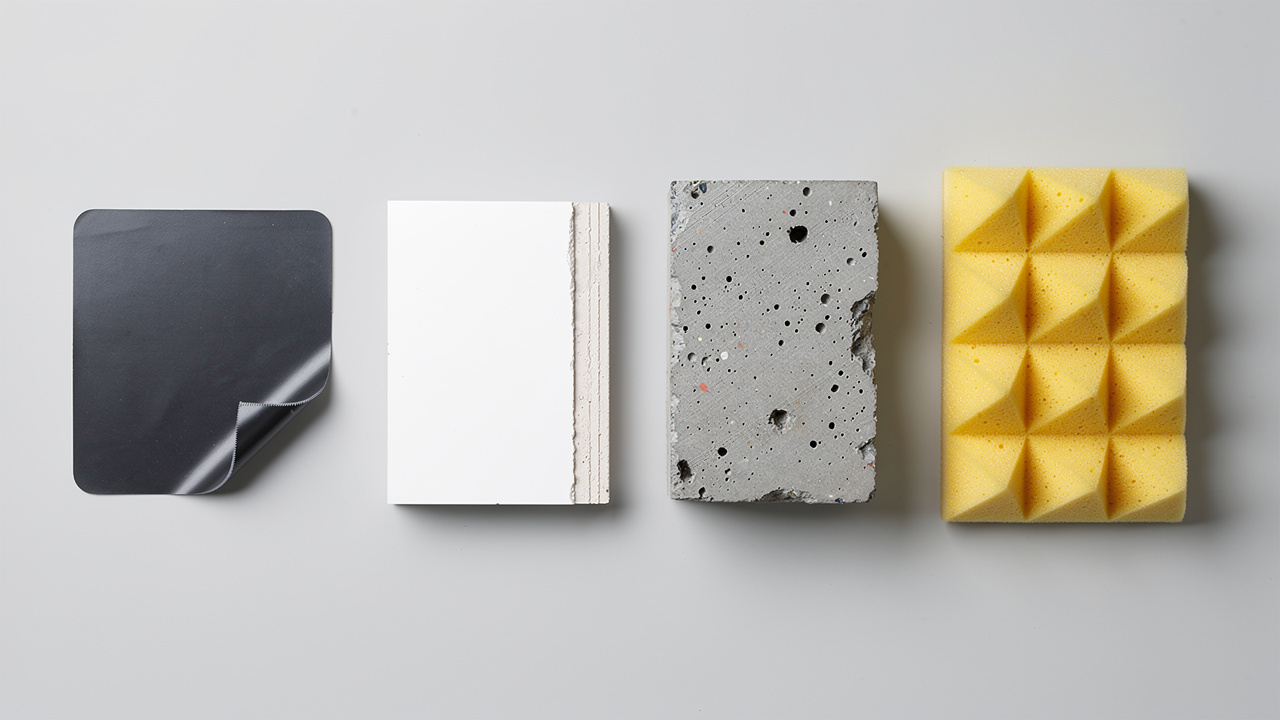
Here is a simple comparison that project teams often review before selecting an acoustic barrier:
| Material | Main Effect | Standalone STC | Typical Thickness | Flexibility | Relative Cost |
|---|---|---|---|---|---|
| MLV 1 lb per square foot | Mass barrier | Mid 20s | 3.2 mm | High | Medium |
| Acoustic drywall panel | Mass plus damping | High 20s to low 30s | 12 to 15 mm | Low | Medium high |
| 150 mm concrete block wall | Mass barrier | Around 45 to 50 | 150 mm | None | Medium |
| Acoustic foam panel | Absorption only | Not rated | 25 to 100 mm | Medium | Low |
For hotel party walls and between-unit partitions, many building codes modeled on guidance from the International Code Council target STC 50 or higher. That level usually requires MLV to work together with cavity insulation, double layers of board, and careful detailing. Before ordering, procurement teams in Oman should always request independent lab reports under ASTM E90 or ISO 140, not just marketing brochures, to confirm that the exact product grade meets project targets.
How DE Sound Supplies MLV For Projects Across Oman

DE Sound supplies Mass Loaded Vinyl to projects across Oman as a wholesale acoustic partner focused on real project needs. The company combines factory-direct pricing, certified materials, and regional logistics so designers, contractors, and facility managers can get the right MLV grade on site when they need it.
Because DE Sound sources directly from approved manufacturers, Omani clients avoid unnecessary markups from multi-layer distribution chains. That matters, since building cost studies from firms such as Deloitte show materials can represent about half of total construction spending on many projects. By buying MLV and other acoustic materials in bulk, hotel developers in Muscat, fit-out contractors in Sohar, and school projects in Nizwa can protect both performance and budgets.
DE Sound also treats MLV as one part of a complete acoustic package. Alongside Mass Loaded Vinyl, the team supplies absorptive panels, acoustic ceilings, barriers, and underlay products suited to GCC construction. That means an office tower in Muscat can source duct wraps, wall barriers, and decorative acoustic panels through a single purchase order instead of juggling multiple vendors.
Key ways DE Sound supports Oman-based teams include:
Practical acoustic guidance for real drawings. The technical team helps pick suitable MLV weight, roll width, and layout for each wall, floor, or duct. Designers can share plans or reflected ceiling layouts and receive clear build-up suggestions that match local construction styles. This saves time during value engineering and reduces guesswork on site.
Regional stock and fast delivery. With inventory positioned for GCC projects, DE Sound can dispatch full pallets or mixed loads of MLV and other acoustic items to Oman with short lead times. This helps contractors keep to tight fit-out schedules without last minute product swaps that risk lower performance.
Clear documentation and support for approvals. Data sheets, independent acoustic test reports, and fire certificates come as part of every MLV package. This gives consultants and authorities the information they expect during design reviews, tender stages, and Civil Defense submissions, which keeps approval steps smoother for project managers.
“Most soundproofing problems we see are not about the material choice, they come from weak details at joints and penetrations.”
— DE Sound Technical Team, Acoustic Specialists at DE Sound
When needed, DE Sound also speaks directly with local consultants or site teams in Oman to explain correct fixing, overlaps, and sealing methods. That way the installed Mass Loaded Vinyl performs close to its lab rating, not just on paper.
The Bottom Line
For projects in Oman, Mass Loaded Vinyl offers a thin, flexible way to add serious mass to walls, floors, ceilings, and ducts. It helps hotels, offices, schools, studios, and homes reach acoustic targets without thick concrete or major structural changes.
Real results depend on two things: choosing the right MLV weight and grade, and installing it as a continuous, sealed barrier inside a properly designed system. DE Sound supports both sides by supplying certified MLV in bulk and backing it with clear, friendly technical advice across the GCC. For your next Omani project, a short discussion with DE Sound can turn noise complaints into quiet, comfortable rooms.
Frequently Asked Questions
Mass Loaded Vinyl often raises similar questions from designers, contractors, and facility teams in Oman. These short answers give fast guidance you can apply straight away on projects.
Question: What is the difference between 1 lb and 2 lb Mass Loaded Vinyl?
The 1 pound per square foot grade suits most hotel, office, and residential walls where noise is moderate. The heavier 2 pound grade fits studios, cinemas, plant rooms, and other loud spaces. It adds extra low frequency control and can improve wall STC by around 4 to 6 points in many assemblies.
Question: Can MLV be used on HVAC ducts in hot climates like Oman?
Yes, MLV works well on ducts in hot climates when the product is temperature rated for those conditions. For Oman, look for material tested for continuous use up to about 65 degrees Celsius. Always match the rating with expected duct surface temperatures before final specification.
Question: Does MLV work on its own, or does it need other materials?
MLV on its own gives a standalone STC in the mid twenties, which already blocks a fair amount of airborne sound. For hotel, school, or studio performance, it usually works with other parts: double gypsum layers, damping compounds, resilient channels, and mineral wool in the cavity. Together, these systems can reach composite STC ratings from the low fifties to mid sixties.
Question: How do I verify that MLV supplied in Oman meets performance standards?
Ask suppliers for third party acoustic test reports that reference ASTM E90 or ISO 140, and check that data matches the exact product grade. Also request ASTM E84 Class A, or similar fire test reports, plus temperature ratings. Be careful with vendors who only provide generic marketing sheets without clear lab references.
Question: Where can I buy Mass Loaded Vinyl in bulk for a project in Oman?
DE Sound supplies Mass Loaded Vinyl in bulk to contractors, designers, facility managers, and studio builders across Oman and the wider GCC. The company offers factory-direct pricing, certified MLV grades, fast regional delivery, and free technical consultation. Contact DE Sound to discuss quantities, grades, and build-ups for your next project.