
Introduction
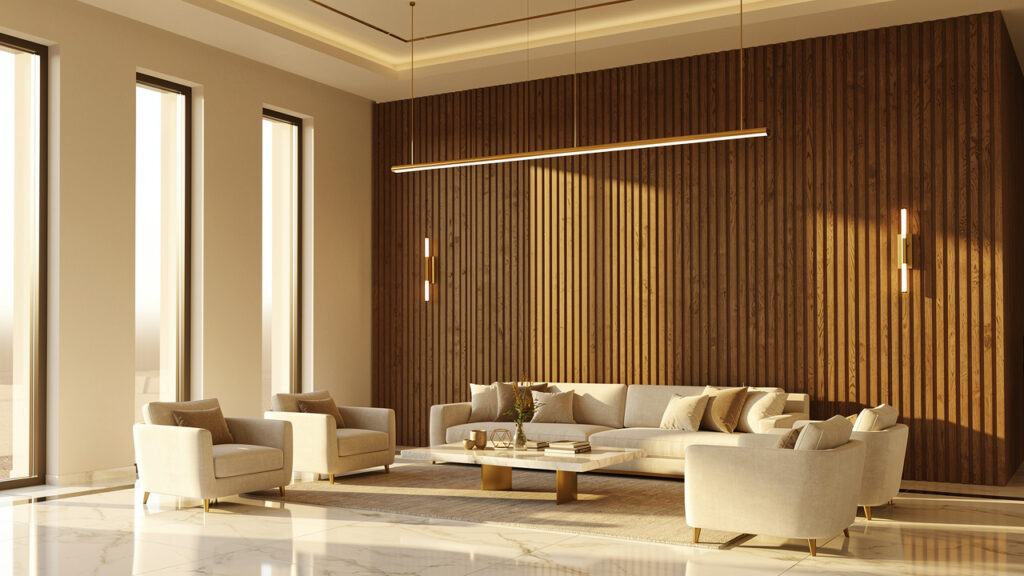
Luxury spaces in Kuwait often look calm but sound harsh. Acoustic Wooden Panels for Luxury Kuwait Interiors solve this by calming echo while keeping a rich wood finish.
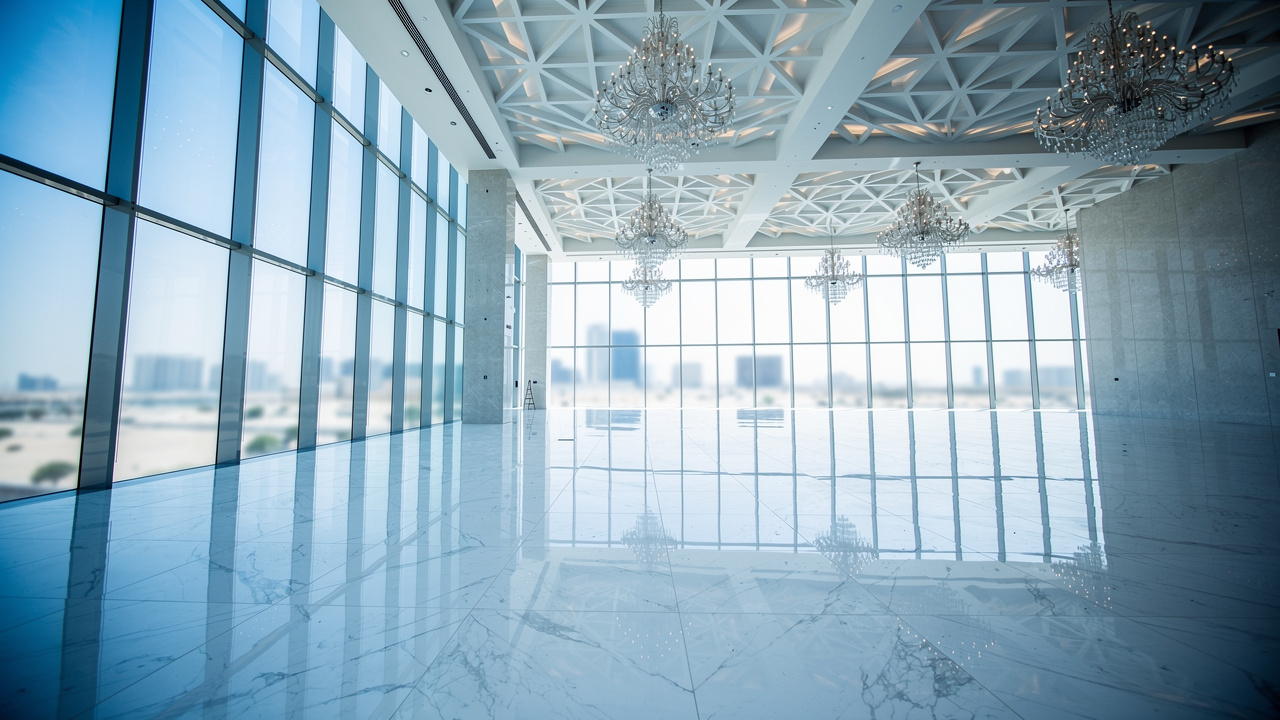
Hard marble, glass partitions, and double‑height ceilings bounce sound around rooms in Kuwait City villas, hotels, and offices. Conversations blur, music feels tiring, and clients notice the difference very quickly.
Acoustic wooden panels turn walls and ceilings into sound‑smart surfaces that still look high end. This guide explains what these panels are, how they work, which types suit different Kuwait projects, and why DE Sound is a smart wholesale partner for designers and contractors.
Keep reading to see how better acoustics can lift the whole experience of a luxury interior in Kuwait.
Key Takeaways
Key points from this guide help designers, contractors, and facility managers decide whether acoustic wood panels fit their next Kuwait project. The bullets below give a fast summary before the detailed sections.
Acoustic wooden panels add visual warmth and cut echo and background noise, so luxury rooms feel calm instead of loud.
Kuwait luxury interiors use many hard surfaces. Wood panels soften these effects and handle the reverberation that marble, glass, and stone create.
Panel types vary by look and performance. Options suit hotels, villas, studios, and offices, and finishes can match almost any high‑end scheme.
DE Sound supplies panels at factory‑direct rates, with free technical advice and fast GCC delivery, helping projects stay on budget and on time.
Good acoustic specifications need real test data. Designers should check NRC values and Gulf‑climate suitability. DE Sound provides third‑party reports and guidance.
What Are Acoustic Wooden Panels and Why Do Kuwait’s Luxury Interiors Need Them?
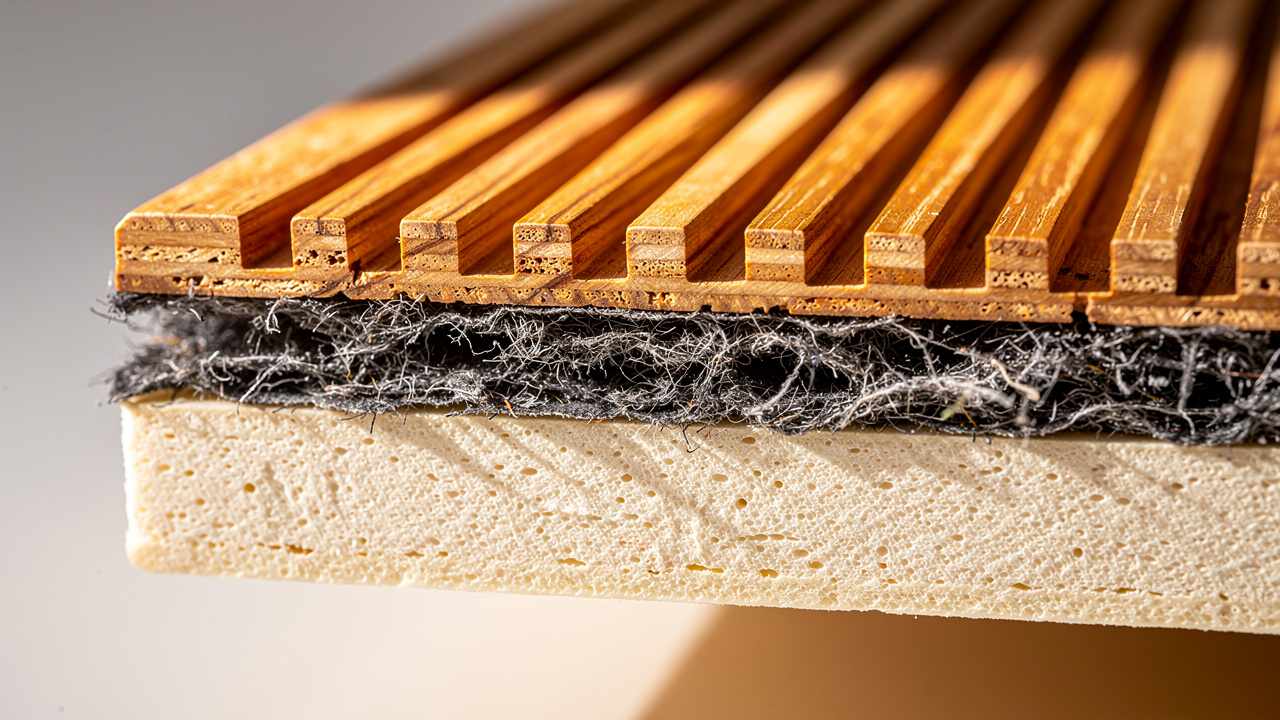
Acoustic wooden panels are decorative wood claddings that also manage sound, so they suit luxury Kuwait interiors that need both beauty and comfort. Each panel combines a wood face with a sound‑absorbing or sound‑scattering core, which makes it different from a simple MDF or solid timber wall.
Standard decorative cladding reflects nearly all sound that hits it. Acoustic wooden panels add slots, perforations, or slats with an acoustic backing, so part of the sound is absorbed instead of bouncing back. The visible face stays warm and elegant, which keeps architects and clients happy on high‑budget projects in areas like Salmiya and Kuwait City.
Kuwait has very specific acoustic challenges:
Large marble floors, glass balustrades, and gypsum ceilings in villas and towers all reflect sound.
Open‑plan majlis rooms and double‑height hotel lobbies can reach uncomfortable reverberation levels.
Long corridors in premium offices make footsteps, phone calls, and trolley noise carry far down the hallway.
Research from the World Health Organization links long‑term exposure to noise above 55 decibels with higher stress and sleep problems, so this is more than a small annoyance.
People can close their eyes, but they can never close their ears.
Luxury clients in Kuwait now expect quiet, private, and clear interiors as part of the overall experience. They invest in brands like Bang & Olufsen, premium joinery, and custom lighting, and they notice when a space sounds “hard.” Acoustic Wooden Panels for Luxury Kuwait Interiors let designers correct the sound without giving up on natural materials, rich veneers, or clean modern lines. DE Sound focuses on these needs at the wholesale level, so both fit‑out teams and owners gain better results from the same wall area.
How Acoustic Wooden Panels Work With Absorption, Diffusion, and Sound Control
Acoustic wooden panels control sound inside a room through three main actions, which work together to improve comfort in Kuwait’s luxury spaces: absorption, diffusion, and sound blocking. Understanding them helps designers pick the right panel for each room.
Absorption happens when sound energy moves through perforations or gaps in the wood face into a soft backing, often mineral wool or acoustic polyester. Inside that layer, sound energy turns into a tiny amount of heat, so less sound reflects back into the room. Many premium panels supplied by DE Sound reach Noise Reduction Coefficient (NRC) values between 0.65 and 0.95, meaning they absorb 65 to 95 percent of sound in key speech ranges, consistent with Updated Acoustic Normative Data gathered across multiple acoustic environments.
Diffusion is useful when a room should stay lively but controlled, such as a hotel lobby or music room. Panels with ribs, 3D blocks, or variable depths scatter sound in different directions instead of reflecting it in one sharp line. That reduces flutter echo and “slap back” without making the space feel too dead. Recording studios and podcast rooms across the Gulf region often mix slatted absorbers with diffusers to hit this balance, an approach supported by research showing that Modulation statistics allow robust prediction of speech recognition accuracy across varied acoustic backgrounds.
Sound blocking, often called isolation, relates more to how panels are mounted than to the wood face. When panels sit on decoupled frameworks with air gaps or dense layers behind them, they reduce noise transfer between rooms. For ballrooms stacked over meeting rooms, or apartments above retail, this helps protect privacy. Key metrics like NRC, Sound Absorption Average (SAA), Sound Transmission Class (STC), and target reverberation time (RT60) are defined in standards such as ISO 354 and ASTM C423, and a summary of Table 1 Summary characteristics of speech acoustics confirms these measurements as primary benchmarks for evaluating acoustic panel performance. DE Sound panels come with third‑party test reports, which Kuwait consultants and authorities often request for commercial approvals.
To sum up:
Absorption reduces reflected sound and echo.
Diffusion breaks up sharp reflections so sound feels more natural.
Blocking limits sound transfer between rooms when panels are mounted on the right sub‑structure.
Tip from the DE Sound technical team: Always check acoustic test reports for the full panel build‑up, including backing material and air gap, so on‑site results match the lab performance you specify.
Types of Acoustic Wooden Panels for Luxury Kuwait Projects
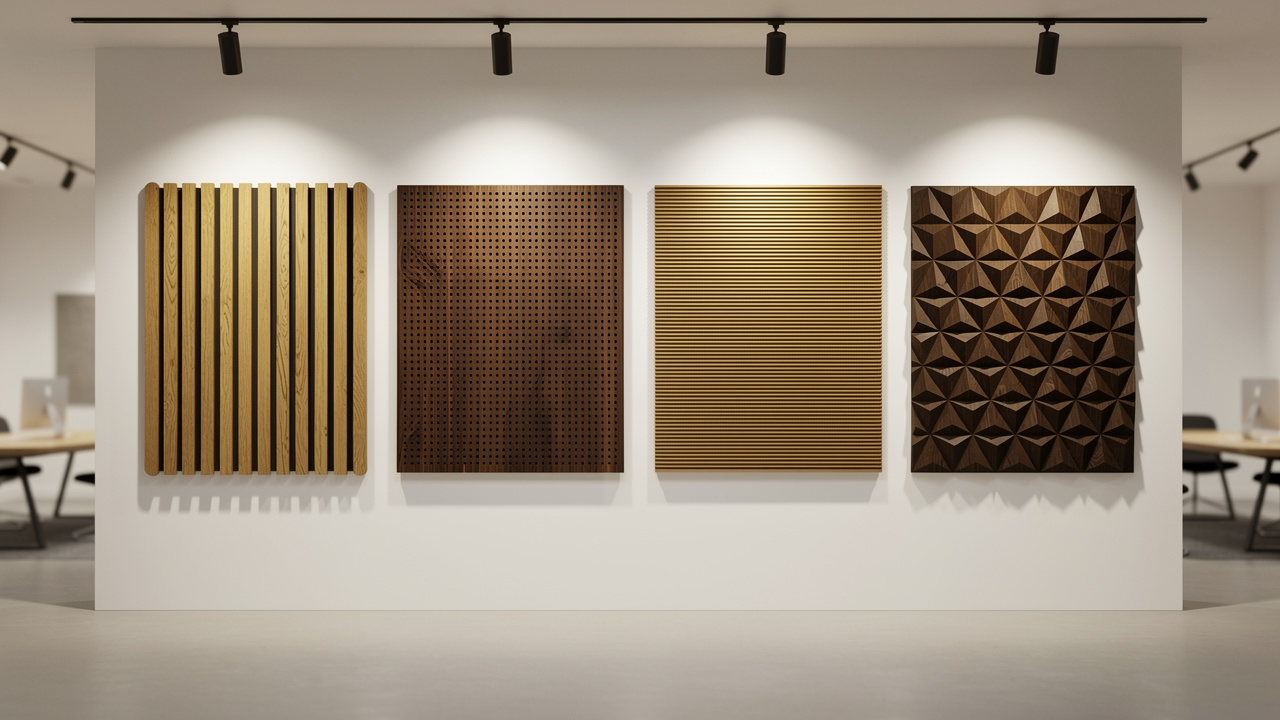
Types of acoustic wooden panels for Kuwait projects range from simple slats to complex 3D forms, so nearly any luxury interior style finds a match. The main families differ in how they look and how strongly they absorb or scatter sound.
Slat or linear wood panels use repeated battens fixed over an acoustic felt or fabric backing. Gaps between slats let sound reach the absorber while the linear pattern suits modern villas, majlis rooms, and hotel lobbies. Perforated panels use visible holes across a veneer or laminate face, backed with mineral wool, to reach high NRC ratings with a clean flat surface.
Grooved and micro‑perforated panels use fine slots or tiny holes that are almost invisible once installed. These work well for home cinemas, boardrooms, and VIP lounges where clients want high performance without seeing a dotted pattern. Three‑dimensional relief and diffuser panels use blocks, pyramids, or stepped profiles to scatter sound and give a sculptural effect, often used behind reception desks or in music rooms, a design approach explored in depth in studies on the Application of Hybrid Absorptive–Diffusive panels with variable acoustic characteristics.
Here is a quick comparison designers in Kuwait can use for early concept work.
| Panel Type | Visual Style | Typical NRC Range | Common Kuwait Uses |
|---|---|---|---|
| Slat or linear panels | Warm, modern, rhythmic lines | 0.65 to 0.85 | Villas, majlis spaces, hotel lobbies, offices |
| Perforated veneer panels | Clean, near‑flat wood surfaces | 0.70 to 0.90 | Ballrooms, meeting rooms, corridors |
| Grooved or micro panels | Almost continuous wood appearance | 0.70 to 0.95 | Home cinemas, boardrooms, private suites |
| 3D relief or diffuser panels | Sculptural, statement feature walls | Mainly diffusion | Studios, feature walls, high‑end residences |
Material and finish options matter as much as panel type. European oak remains a favorite in Kuwait for its soft grain and light tone, while American walnut, teak, and wenge give deeper colors for more formal spaces. For very large areas, engineered veneer over MDF or HDF helps keep color consistent from sheet to sheet, which hotel brands and corporate clients appreciate. Designers aiming for LEED points under the US Green Building Council often look at bamboo or recycled‑content composites, both of which DE Sound can supply with matching acoustic performance, as research on Improving Building Acoustics with natural fiber composites demonstrates their viability for sustainable luxury construction.
Where Acoustic Wooden Panels Work Best in Kuwait
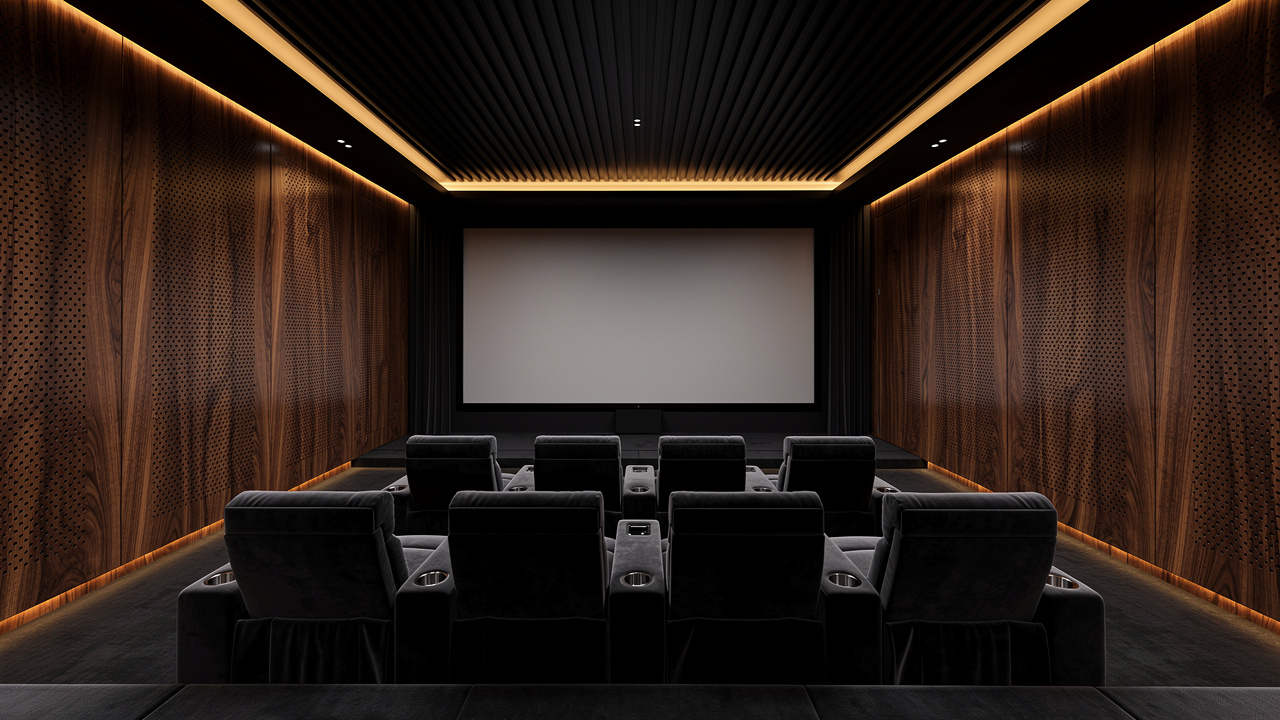
Acoustic wooden panels fit many Kuwait sectors when projects aim for both comfort and prestige. Private villas in Mishref, Bayan, and Rumaithiya use them in home cinemas, large majlis halls, and master suites to keep conversations clear and bedrooms quiet.
Some of the most common applications include:
Private villas: Home cinemas, big majlis spaces, stair halls, and master suites, where owners want clear speech and quiet sleeping areas.
Five‑star hotels: Ballrooms, restaurants, lift lobbies, and guest corridors gain calmer atmospheres when ceilings and feature walls use slatted or perforated panels.
Corporate offices and boardrooms: Towers near the Avenues and Sharq use acoustic wood to improve speech privacy, reduce staff fatigue, and support video‑conferencing quality.
Education and media: Educational buildings and broadcast studios across Kuwait use acoustic wood for better learning spaces and cleaner audio for recording and live streaming.
Why DE Sound Is Kuwait’s Trusted Wholesale Partner for Acoustic Wooden Panels
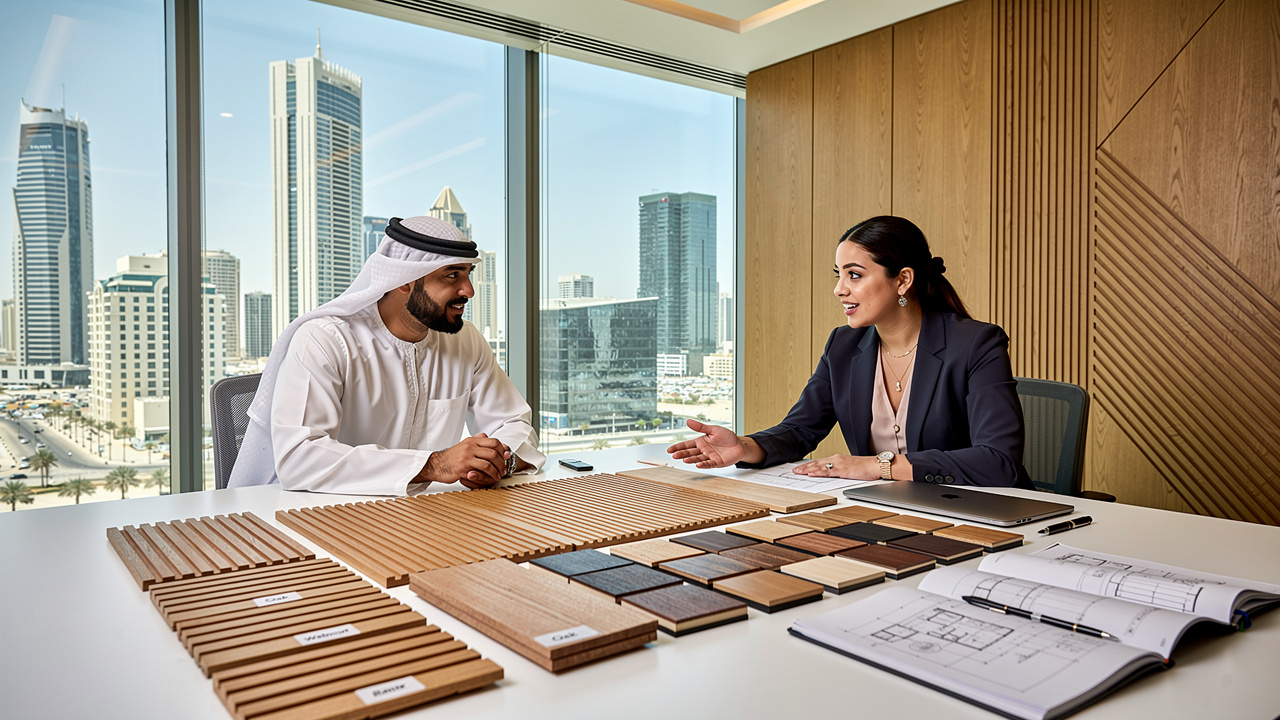
DE Sound is a wholesale acoustic specialist that focuses on the needs of Gulf projects, so Kuwait designers and contractors get products that match both climate and client expectations. The company supplies a wide range of Acoustic Wooden Panels for Luxury Kuwait Interiors at factory‑direct pricing, which helps luxury fit‑outs stay on budget without dropping material quality.
For procurement teams, clear information matters as much as the panel itself. DE Sound provides third‑party acoustic reports, fire test certificates to EN 13501‑1 for Class B or Class A options, and detailed installation notes, with panel systems informed by the latest research such as Multifunctional performance assessment of waste-based wall panels for combined acoustic, thermal, and structural efficiency. That documentation supports approvals with Kuwaiti authorities and international consultants working from Dubai, London, or Riyadh. The International WELL Building Institute counts acoustics as one of ten core aspects of healthy buildings, and DE Sound helps project teams align with those goals through better material choices.
Here is how DE Sound supports Kuwait luxury projects in practice:
Transparent pricing: Factory‑direct supply cuts out multiple middle layers. That means hotel groups, developers, and ministries can specify high‑performing acoustic wood systems without constant value engineering, even when ordering hundreds of square meters.
Gulf‑region expertise: The team works daily with projects in the UAE, Kuwait, Saudi Arabia, and other GCC states, so they understand high ceilings, stone floors, and strong air‑conditioning cycles. They recommend moisture‑resistant cores, correct panel thickness, and suitable fixing systems for these conditions.
End‑to‑end technical support: DE Sound advisers help with panel layout, joint details, and coordination with lighting and HVAC. They also share tips so contractors keep the designed air gap and backing depth, which protects the NRC values promised in lab reports. Fast delivery from regional stock points reduces site delays, an advantage for tight hotel and office handover dates.
By combining certified acoustic performance, climate‑suitable construction, and responsive support, DE Sound has become a trusted source for acoustic wooden panels on many Gulf luxury projects, from boutique hotels to government offices.
The Bottom Line
The main point is simple. Acoustic Wooden Panels for Luxury Kuwait Interiors turn beautiful but noisy rooms into spaces that look refined and sound comfortable. In a market where clients expect quiet sleep, clear meetings, and relaxed social areas, ignoring acoustics now feels like an obvious gap.
Conclusion
Wood acoustic panels give Kuwait villas, hotels, offices, and schools a practical way to control echo without losing the appeal of real wood finishes, and a A Short Review of recent innovations in acoustic materials confirms that wood composites continue to lead in both performance and sustainability benchmarks. The right mix of panel type, finish, and installation detail delivers measurable NRC performance along with the warm look designers want. DE Sound supports that process with factory‑direct pricing, certified products, and free consultation matched to Gulf building styles.
Interior designers, contractors, and facility managers who want luxury spaces that both look and sound premium can reach out to DE Sound for project‑specific guidance or bulk quotations for upcoming Kuwait work.
Frequently Asked Questions
Question: What NRC rating should I specify for acoustic wooden panels in a luxury Kuwait hotel ballroom?
For large hotel ballrooms in Kuwait, an NRC of 0.80 or higher is usually recommended. High coverage on ceilings and upper walls helps reach target reverberation times, often around one and a half to two seconds for multi‑use halls. Always request ISO 354 laboratory reports from suppliers like DE Sound.
Question: Are acoustic wooden panels suitable for Kuwait’s climate?
Yes, acoustic wooden panels with engineered MDF or HDF cores and proper sealers work well in Kuwait’s hot, dry, and air‑conditioned environments. Panels should include moisture‑resistant treatments and stable backing materials. DE Sound specifies products tested for Gulf humidity swings and temperature cycles.
Question: Can acoustic wooden panels be customized with Arabic or geometric motifs?
Yes, CNC routing technology allows acoustic wood panels to include Arabic calligraphy, mashrabiya‑style patterns, or brand‑driven geometric designs. Perforation sizes and spacing are adjusted so the panel still performs acoustically. DE Sound frequently supplies custom patterns for royal residences, signature restaurants, and flagship offices.
Question: How do I compare acoustic wooden panel suppliers in Kuwait?
Compare suppliers by verified NRC, SAA, and STC test certificates, fire rating class, and proven bulk supply for large GCC projects. Also check climate suitability, installation support, and pricing clarity. DE Sound provides full test documentation, Gulf‑ready constructions, and transparent factory‑direct quotations for Kuwait projects.
Question: Do acoustic wooden panels require special fire ratings for commercial projects in Kuwait?
Yes, commercial, hospitality, and educational projects in Kuwait usually require fire‑rated acoustic wooden panels. Many consultants call for Class B or Class A performance under EN 13501‑1. DE Sound offers acoustic wood systems in these fire‑rated versions, each backed by valid third‑party test certificates.