
Introduction
Noise leaking through doors in Gulf Cooperation Council (GCC) offices, hotels, and studios ruins privacy, focus, and guest comfort.
Rapid high-rise growth, busy highways, and mixed-use towers amplify every sound that slips between rooms.
Acoustic doors for GCC projects use heavy cores and tight seals to block sound far better than standard doors.
They turn a weak doorway into a serious sound barrier for boardrooms, guest rooms, and recording spaces.
This guide explains what acoustic doors are, how STC numbers work, the performance different sectors need, the components that matter most, and how DE Sound supports bulk projects across the region.
Keep reading to match the right door to your project and avoid expensive noise complaints later.
Key Takeaways

Key points from this guide help designers, contractors, and facility teams move faster on real projects.
They show how acoustic doors protect privacy in GCC hotels, offices, and studios without guesswork.
Use them as a quick reference when you review drawings, specs, or supplier quotes.
Acoustic doors use dense cores and high performance seals so they block speech and traffic noise instead of letting it pass between rooms. They replace weak hollow-core doors that undo careful wall and ceiling treatment in GCC buildings. Correctly chosen doors keep acoustic goals realistic and measurable.
STC and Rw ratings give a simple number for how much sound a complete door assembly stops. Knowing which ranges match hotels, offices, and studios prevents under-specifying doors that later cause guest complaints or failed client handovers.
Door cores, perimeter seals, frames, and hardware all control real performance in Dubai, Abu Dhabi, Riyadh, Doha, and beyond. Working with DE Sound helps project teams pick tested systems, handle GCC climate demands, and secure bulk pricing with fast delivery across six Gulf countries.
What Are Acoustic Doors and Why Does the GCC Need Them Now?
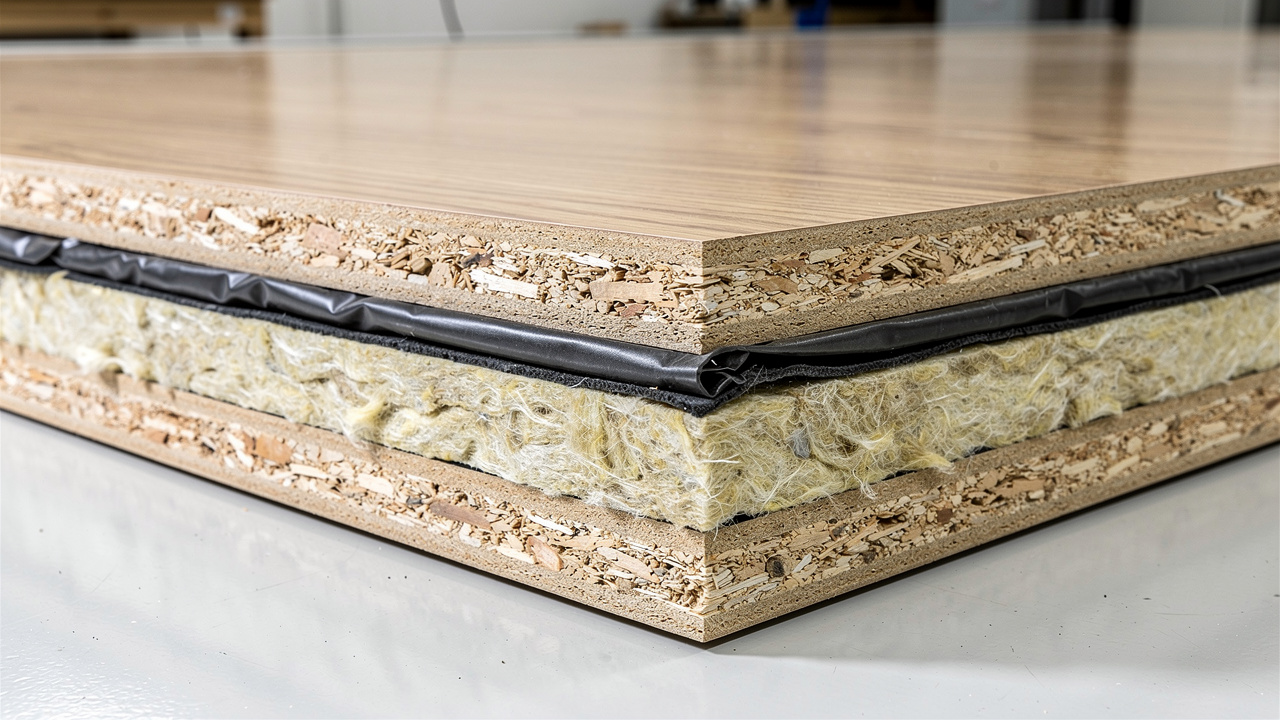
Acoustic doors are door systems built from the start to block sound, not just close an opening.
They use heavy, multi-layer cores, compression seals around the frame, and automatic drop seals at the floor to cut sound passing through.
Unlike common hollow-core or basic solid timber doors, acoustic doors for GCC projects combine mass and airtight detailing.
Cores often include:
dense MDF
particleboard
mineral wool
mass loaded vinyl
These layers have different stiffness, so the build-up stops the door leaf from vibrating like a drum when exposed to traffic, voices, or music on one side.
Around the edges, proper acoustic doors rely on tested seal systems instead of loose rubber strips.
Compression gaskets in the frame grip the leaf when it closes, while an automatic bottom seal drops to meet marble, tile, or concrete floors.
Even gaps of a few millimeters around a door can cut real performance far below the lab rating, a finding reinforced by studies on environmentally friendly sound insulation materials used in modern door structures.
Across the UAE, Saudi Arabia, Qatar, Kuwait, Bahrain, and Oman, noise control now sits high on client checklists.
Dubai and Abu Dhabi add luxury hotels and serviced apartments each year, while Riyadh’s Vision 2030 drives new entertainment venues and studios.
According to the World Health Organization, unwanted noise links directly to sleep disturbance and stress, which hospitality and residential brands work hard to avoid.
At the same time, media clusters such as Dubai Media City and twofour54 Abu Dhabi host podcast rooms and video studios in mixed-use towers.
Here, a standard door can let corridor chatter or HVAC hum spoil a recording session.
DE Sound sees many projects where walls, ceilings, and floors receive acoustic attention, only for a low grade door to become the weakest point.
Understanding STC and Rw Ratings The Numbers That Define Acoustic Performance
STC and Rw ratings describe in a single number how well a door blocks airborne sound.
Higher values mean better isolation, so less conversation or traffic noise passes to the other side.
STC (Sound Transmission Class) is used mainly in the United States and widely in GCC project specs.
Rw (Weighted Sound Reduction Index) follows European and ISO methods common in many government and hospitality projects from Doha to Muscat.
For a given door, STC and Rw values usually sit within one to three points of each other, so they are easy to compare.
Here is a practical reference table designers and contractors can keep in mind:
| STC Rating | Real-World Performance | Recommended Application |
|---|---|---|
| STC 25–30 | Normal speech clearly heard through the door | Only basic internal doors, no privacy |
| STC 35–40 | Loud speech still heard but softer | Small offices, simple classroom partitions |
| STC 45–50 | Loud speech not understandable | Hotel guestrooms, clinics, boardrooms |
| STC 50–55+ | Very strong isolation | Studios, broadcast suites, cinemas |
For context, a typical hollow-core door in a residential tower in Sharjah might sit around STC 20–25.
That allows every word of corridor conversation to pass through, even if the wall around it is much better.
Research from Nielsen Norman Group shows that unwanted speech is one of the most distracting noises in open and semi-open offices.
In GCC commercial projects, STC 45 is a sensible starting point for real privacy.
Five star hotels in Dubai Marina, Abu Dhabi’s Corniche, or Doha’s West Bay often push guestroom doors toward STC 48–50.
Studios, podcast rooms, and broadcast spaces in Riyadh or Manama usually need STC 50 or higher so microphones do not pick up hallway sounds.
“For most GCC office floors, aiming for STC 45 on key meeting rooms is a safe rule of thumb that avoids many noise complaints later on.” — DE Sound acoustics specialist
For any claimed number, third party lab reports from ISO 10140 or ASTM E90 facilities matter far more than catalog text.
Specs for towers in DIFC or King Abdullah Financial District often demand that entire assemblies, including leaf, frame, seals, and hardware, appear in those reports.
DE Sound supplies acoustic doors with verified test data so design teams can attach proof to submittals and avoid disputes during commissioning.
Acoustic Doors Across GCC Sectors What Hotels, Offices, and Studios Actually Need
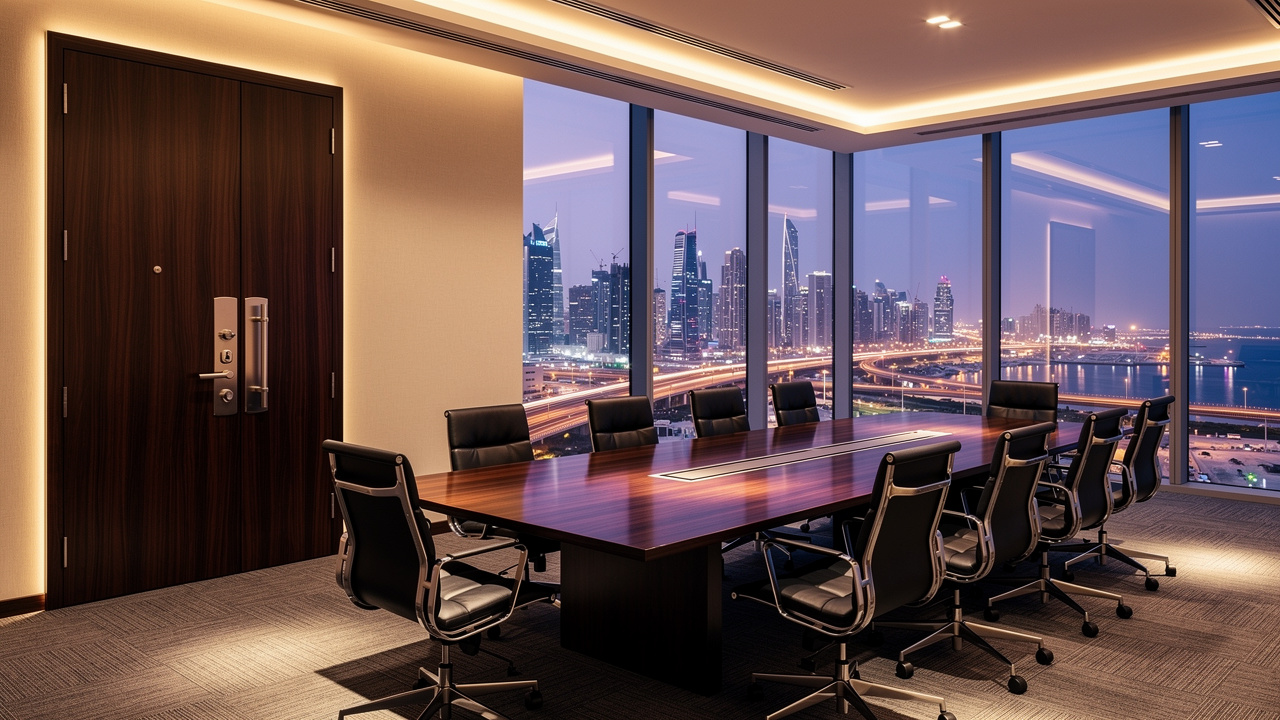
Different GCC sectors need different acoustic door performance, even though they all share the same regional pressures.
Knowing these ranges makes it easier to decide where budget should go and where a mid range option works.
Hospitality: Guest comfort is everything.
Studies from J.D. Power show that noise complaints consistently sit among the top guest issues in hotel surveys.
Global brands such as Marriott, Hilton, and IHG usually expect guestroom entry and interconnecting doors in Dubai or Doha to reach at least STC 42, and often closer to STC 50 in premium towers.
Corridor, ballroom, and meeting room doors in resorts on Palm Jumeirah or the Corniche often need both fire and acoustic performance.
Civil Defense authorities in the UAE and other Gulf states commonly ask for FD30 or FD60 fire ratings together with STC 40 or higher.
That mix narrows the product field, so early coordination with a specialist supplier like DE Sound helps prevent late redesigns.
Corporate Offices: Across DIFC, ADGM, and Riyadh’s King Abdullah Financial District, offices mix open plan space with glass fronted meeting rooms and quiet pods.
Phone booths and small meeting rooms usually work well around STC 38–42, which softens speech but keeps costs reasonable over many doors.
Boardrooms, legal offices, and investment suites often rise to STC 45–50 so confidential discussions in Kuwait City or Manama stay private.
Studios And Media Spaces: These projects push performance higher again.
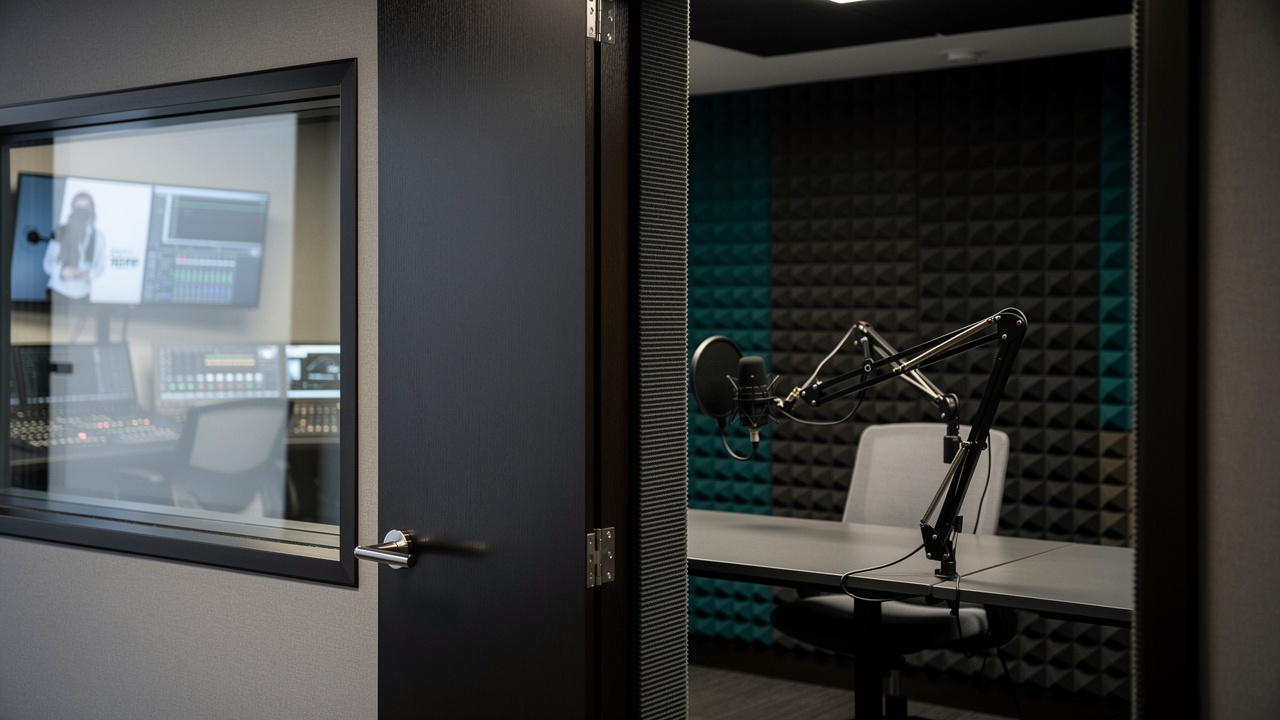
Podcast rooms in Dubai Media City or production suites in twofour54 Abu Dhabi may share floors with offices, cafes, or server rooms.
To avoid re-takes, acoustic doors here should target STC 50–58 with very tight seals and good control of low frequencies from subwoofers or drums.
These spaces often sit under strong HVAC systems feeding several rooms at once.
If a door and frame do not close airtight, pressure differences can lift seals slightly and cut isolation.
DE Sound works with studio builders to choose doors, closers, and hardware that stay tight while remaining practical for everyday use.
The Four Components That Make or Break Acoustic Door Performance

The performance of acoustic doors for GCC projects depends on more than a heavy leaf.
Four elements together decide whether the installed door matches its lab rating.
Door Leaf Mass And Core Build
High performance leaves in towers from Dubai to Jeddah can weigh from 60 to 150 kilograms.
They use multiple layers of MDF, particleboard, mineral wool, or mass loaded vinyl so sound energy loses strength as it passes through each layer, a principle explored in depth in research on improving door system sound transmission loss.Perimeter Compression Seals
Soft neoprene, EPDM, or silicone gaskets sit in the frame on the head and jambs and squeeze slightly when the door closes.
If these seals are missing, too short, or badly aligned, even a premium leaf will act like a normal interior door.Automatic Drop Seal At The Bottom
This small device lowers a seal strip against the floor as the handle side of the door closes.
In GCC projects that often use marble, porcelain, or polished concrete, that strip must tolerate hard surfaces while keeping full contact along the width.Frame, Hinges, And Latching Hardware
Frames need to be fixed rigidly to block paths around the door, with acoustic sealant between frame and wall, not just foam or standard silicone.
Multi point locks spread pressure across the leaf so seals compress evenly from top to bottom.
Here is the key point: even a tiny 1 millimeter gap around the edge can reduce performance by more than 10 decibels, as confirmed by numerical investigation of the trade-off between sound insulation and air ventilation in partially open door assemblies.
That shift takes an STC 50 door for a studio in Muscat down to the feeling of a simple office door.
“Even the most acoustically treated room is only as effective as its weakest link, and in many GCC fit-outs, that weakest link is the door.” — DE Sound project consultant
DE Sound supplies complete door packages, including seals and tested hardware, so contractors are not left mixing parts from several brands.
Clear site guides help installers in Dubai, Sharjah, or Riyadh hang doors square, adjust closers, and set drop seals correctly.
This practical support keeps the final result close to the numbers in the laboratory report.
Tip: Ask your installer to perform a simple flashlight test around each closed door. If light escapes at the edges, sound will too. — DE Sound technical team
Why DE Sound Is the GCC’s Trusted Wholesale Acoustic Door Partner
Choosing the right acoustic doors for GCC projects becomes much easier with a supplier focused on this niche.
DE Sound acts as a wholesale partner, not just a catalog, for interior designers, contractors, and facility teams across six Gulf countries.
Wholesale Pricing And Availability
By sourcing factory direct, DE Sound offers acoustic doors and related materials at wholesale rates for towers, hotels, and campuses from Dubai to Doha.
That helps fit-out contractors meet acoustic specs without pushing budgets beyond what clients in Abu Dhabi or Riyadh accept.Verified Acoustic Data
Every product in the acoustic door range carries third party test data.
Design teams can see actual STC or Rw reports for full assemblies, including frame and seals, before locking in a spec.
This level of transparency supports submissions for hotels, schools, hospitals, and offices that follow international standards from London or Frankfurt.Designed For Gulf Climate Conditions
DE Sound understands the Gulf climate and its effect on seals and hardware.
EPDM and silicone options cope better with heat and humidity in coastal areas such as Dubai Marina or Doha West Bay than basic neoprene.
Corrosion resistant hinges and thresholds keep doors closing properly even with salty air and frequent cleaning.Free Technical Guidance
The company supports projects with free technical consultations.
Teams can share drawings from Sharjah, Kuwait City, or Manama and receive clear guidance on STC targets, door positions, and hardware choices.
According to Oxford Economics, noise reduction improves productivity and lowers distraction in workplaces, which makes these early design choices financially sensible too.Regional Logistics And Complementary Products
DE Sound coordinates fast delivery across UAE, Saudi Arabia, Qatar, Kuwait, Bahrain, and Oman.
Bulk orders for hotel corridors, office floors, or training centers arrive in line with the fit-out schedule instead of holding up handover.
Because DE Sound also supplies acoustic panels, underlays, and seal kits, procurement teams can simplify orders through a single regional partner.
Wrapping Up
Acoustic doors for GCC projects are no longer a nice extra; they sit at the heart of privacy and comfort.
Hotels, offices, and studios in Dubai, Abu Dhabi, Riyadh, Doha, and beyond all depend on the right STC level and proper installation.
Matching door ratings to each application, and insisting on tested assemblies, prevents noise complaints and costly rework.
DE Sound helps design and construction teams choose suitable systems, manage lead times, and keep performance reliable in harsh Gulf conditions.
For upcoming fit-outs or refurbishments, project teams can reach out to DE Sound for clear advice, product specifications, and bulk pricing that match real GCC needs.
Frequently Asked Questions
Question 1: What STC rating do I need for a hotel guestroom door in the UAE?
The typical target for UAE hotel guestroom doors sits between STC 42 and STC 50. This range keeps corridor chatter and lift noise out of rooms in busy towers. Civil Defense codes often also require FD30 or FD60 fire ratings. DE Sound supplies certified fire rated acoustic doors that meet both safety and acoustic needs in one package.
Question 2: Are acoustic doors available with fire ratings in the GCC?
Yes, acoustic doors with FD30 and FD60 fire ratings are widely available across GCC markets. These doors combine tested fire resistance with STC values around 40 or higher. They are common in hotel corridors, stair cores, and public areas in Dubai, Doha, and Riyadh. Sourcing combined acoustic fire doors from DE Sound simplifies both specification and site coordination.
Question 3: How do GCC climate conditions affect acoustic door seal selection?
High summer temperatures and strong sun can harden standard neoprene seals in Gulf projects. EPDM and silicone seals maintain flexibility far better in Dubai, Abu Dhabi, or Bahrain. Coastal areas such as Palm Jumeirah and Doha West Bay also need stainless or coated hardware to resist corrosion and keep seals compressed correctly over time.
Question 4: What is the difference between STC and Rw ratings?
STC and Rw both describe how much airborne sound a door, wall, or window blocks. STC is common in American standards, while Rw follows European and ISO methods often used in government and hospitality work. Values usually differ by only one to three points. In GCC projects, either works as long as independent lab reports support the claimed rating.
Question 5: How long does it take to source acoustic doors for a GCC project?
Lead times for certified acoustic doors from European factories usually run from eight to sixteen weeks. That depends on finish choices, fire ratings, and hardware packages. DE Sound shortens this process with regional stock, planned shipments, and clear delivery schedules across the UAE and wider GCC. Early engagement during design helps avoid delays during fit-out.