
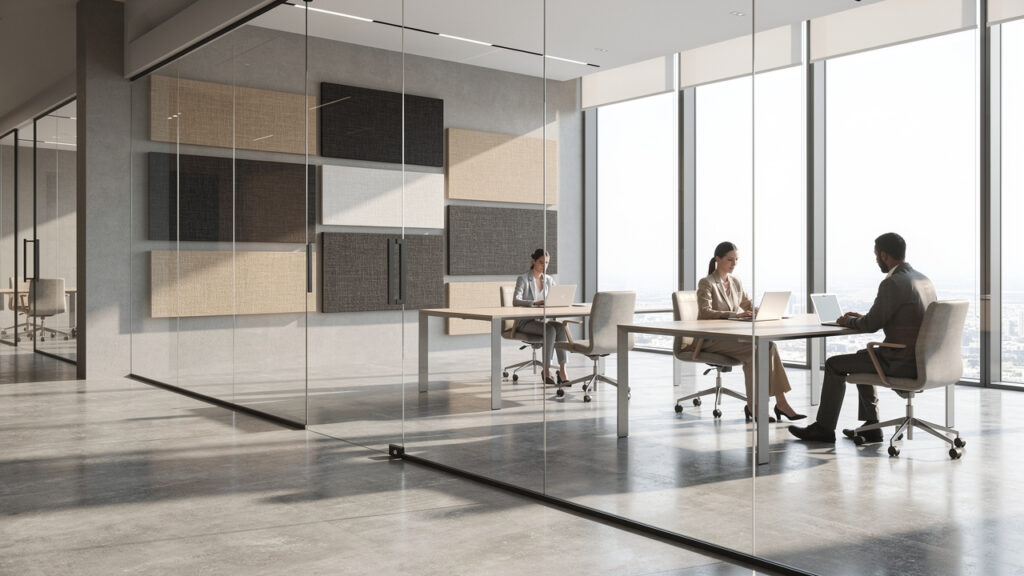
Introduction
Open offices across Dubai, Abu Dhabi, and Riyadh often feel loud, echoey, and distracting. Hard floors, glass partitions, and busy teams turn GCC workspaces into sound chambers that wear people out. Meetings spill into open areas, phone calls overlap, and focus time becomes rare.
Acoustic fabric panels for GCC workspaces are wall or ceiling panels that absorb sound while matching modern Gulf interiors. This guide on Acoustic Fabric Panels GCC Workspaces explains how these panels reduce reverberation, meet fire and sustainability standards, and fit into everything from offices to studios. You also see where they work best in real projects and how DE Sound supports designers and contractors with bulk, certified acoustic materials.
You do not need to be an acoustics engineer to deal with this. If noise control now sits on your project checklist, the next sections give you clear, practical steps to plan, specify, and source acoustic fabric panels across the GCC. Think of this as a short field guide for real Gulf projects across the UAE, Saudi Arabia, Qatar, and beyond.
Key Takeaways
Short on time? Scan these points, then read deeper later.
GCC open offices echo fast. Hard surfaces spread every voice, and acoustic panels bring reverberation under control.
Fabric panels double as design elements. They look like normal wall features, so designers still keep brand colors and clean, professional interiors.
Panels suit many sectors. You see them in offices, hotels, schools, and studios, lining walls and ceilings, with desk screens adding extra nearby control.
Specs drive safe design. NRC and fire class sit first in the brief, and DE Sound aligns these for bulk GCC orders.
Why Noise Control Is Now a Core GCC Workspace Requirement
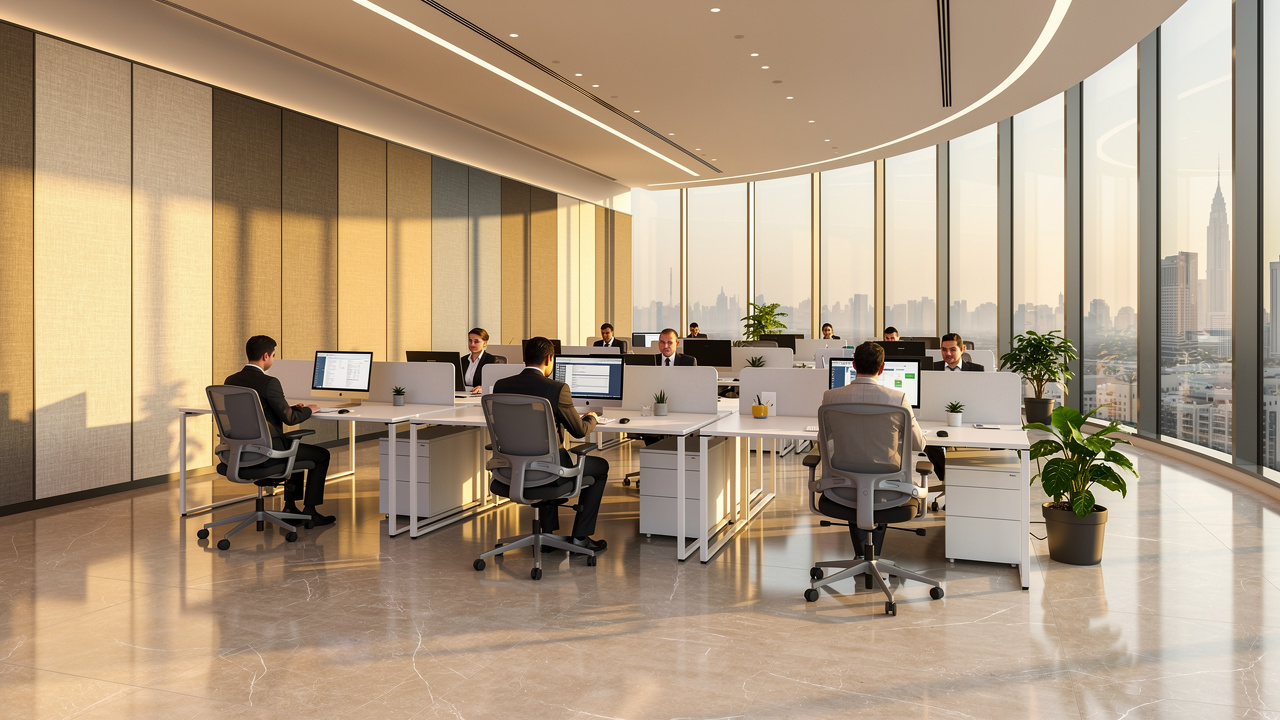
Noise control has become a core GCC workspace requirement because open offices amplify sound and drain concentration across large floors. Glass partitions, stone tiles, and exposed ceilings create long reverberation times, so every phone call carries much further than planned. Research from Nielsen Norman Group shows that noise and lack of privacy sit at the top of employee complaints in open offices worldwide. That finding matches what many design teams now see in Dubai, Abu Dhabi, Riyadh, and Doha fit-outs.
Noise also hits measurable performance. A study cited by Oxford Economics found that more than half of office workers say loud colleagues reduce their productivity. When you layer that on top of rising real estate costs in places like DIFC or West Bay, every lost focused hour feels expensive. Tenants and operators now treat acoustic comfort as a base expectation, not a luxury finish.
For many design teams, acoustic fabric panels for GCC workspaces now sit beside lighting and HVAC in the early design stage. GCC commercial development keeps expanding, so the acoustic question appears on almost every project brief. Large office campuses, coworking hubs, and mixed-use towers across the UAE and Saudi Arabia seek design schemes that blend openness with controlled sound. Two big shifts push acoustic fabric panels to the front of that discussion:
Regional green building programs such as LEED, BREEAM, and Estidama include acoustic comfort in their scoring. Meeting these credits often needs a minimum NRC level across key rooms. That steers projects away from bare concrete and toward tested acoustic materials. Panels that already carry documented test reports make approval smoother for consultants and authorities.
Hybrid work changes how often people visit the office. When staff commute to central hubs, they expect quiet places for focus, calls, and workshops. Surveys highlighted by Gensler show that employees rate good acoustics as a major part of an effective workplace. Owners who ignore that reality risk short leases and negative tenant feedback.
“Noise is not just an annoyance; it is a productivity issue and a health issue.”
— Julian Treasure, Sound Consultant
How Acoustic Fabric Panels Work – And Why They Suit GCC Interiors
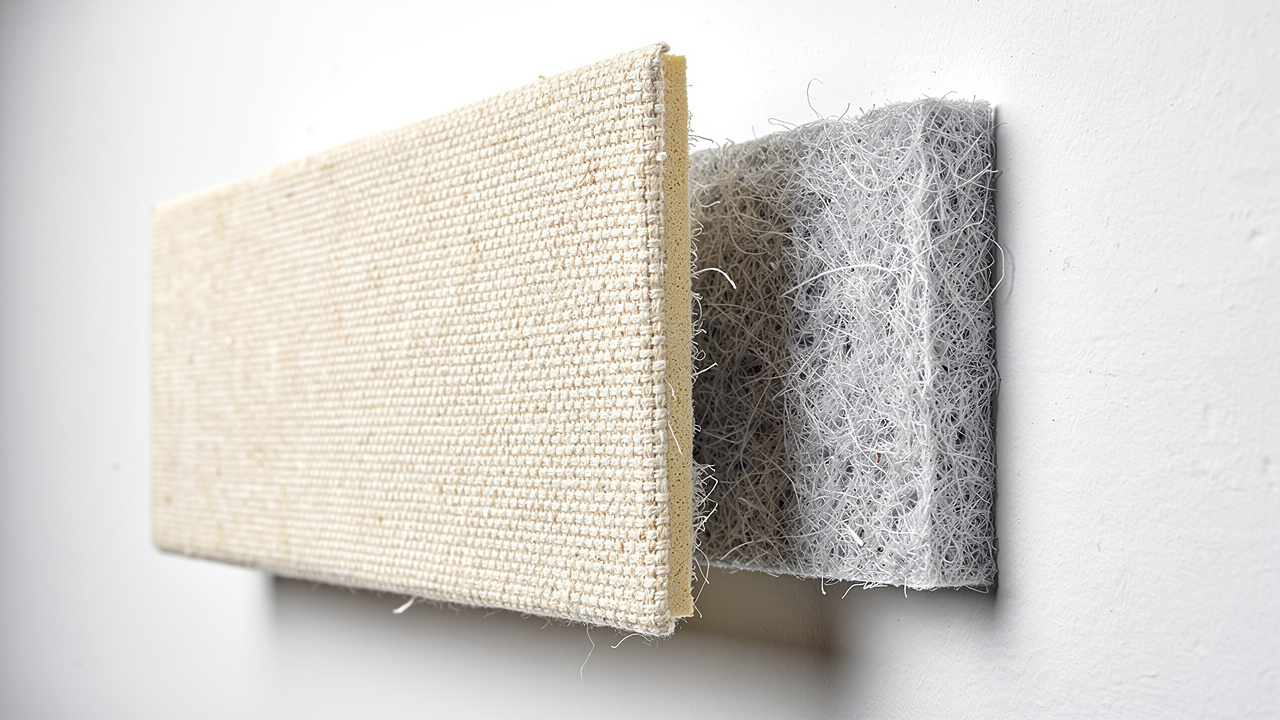
Acoustic fabric panels control sound in GCC interiors by absorbing energy instead of letting it bounce between hard surfaces. Each panel usually combines a dense acoustic core with a breathable fabric face, so noise passes through the cloth and gets trapped inside the fibers. According to the Acoustical Society of America, porous absorbers like these work best when sound can enter freely and lose energy as heat. The key performance number for this process is the Noise Reduction Coefficient (NRC), which runs from 0 to 1.
High-grade panels for professional projects often reach NRC values between 0.75 and 1.0 in lab tests. That means they absorb most of the sound that hits them across speech frequencies. Core materials vary, but recycled PET fiber, mineral wool, and high-density polyester are common across UAE projects. Panel thickness and any air gap behind the panel improve performance at lower frequencies, which matters for larger meeting spaces and studios.
From both a design and compliance angle, these products suit GCC interiors very well:
Design flexibility: Fabric faces come in hundreds of colors and textures, so panels read as part of the wall finish instead of obvious acoustic gear. Designers can match corporate palettes, timber tones, or neutral schemes.
Sustainability: PET cores often contain high recycled content, which supports material credits under frameworks such as LEED and Estidama, as noted by the US Green Building Council in its materials guidance.
Fire safety: Commercial ranges supplied by DE Sound carry fire certificates aligned with BS EN 13501-1 and UAE Civil Defense approvals, so your design stays within local safety rules.
Maintenance also stays straightforward. Most fabric finishes can be vacuumed or lightly brushed to remove dust, and many PET products allow spot cleaning with mild detergents, so panels keep their appearance over long leasing periods.
For fit-out contractors and studio owners, that mix of tested data, safety, and finish options removes many project headaches. DE Sound keeps a wide catalog of PET, wood-backed, and stretch fabric systems, so you can match performance, budget, and appearance in a single coordinated order.
“When panels tick the boxes for acoustics, fire, and design, project approvals move faster and snag lists shrink.”
— DE Sound Technical Team
Where Acoustic Fabric Panels Are Specified Across the GCC
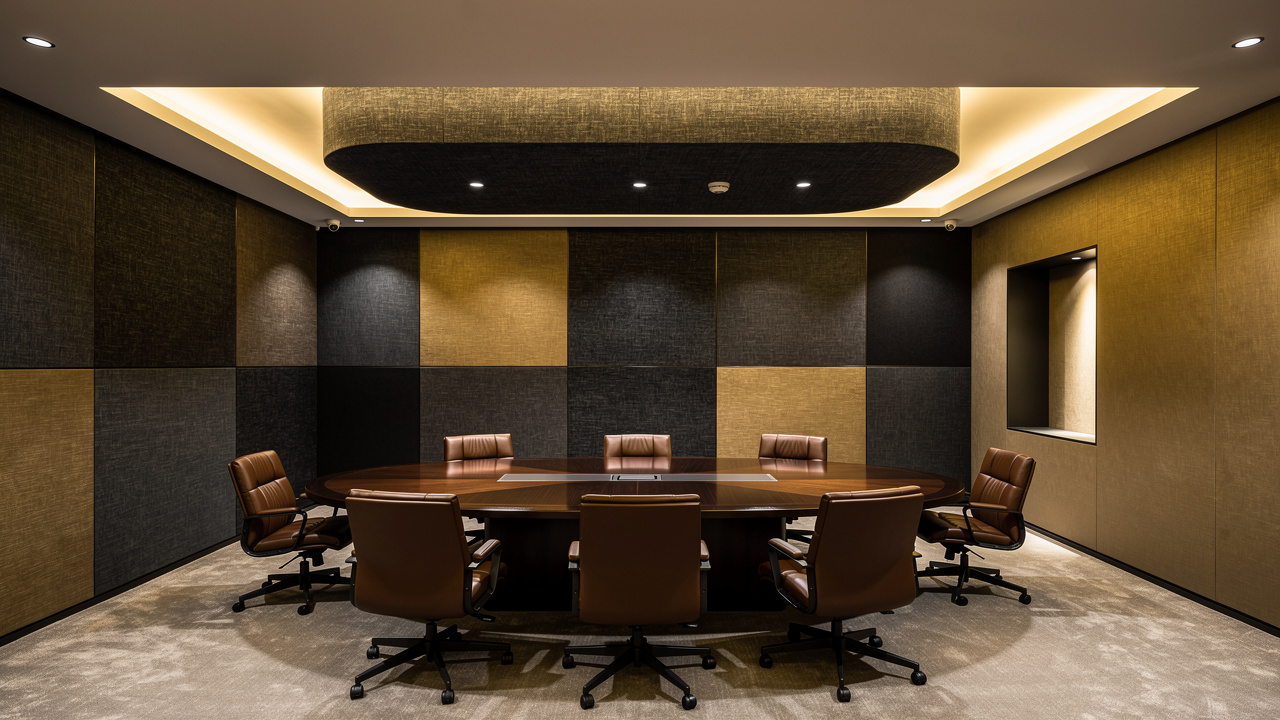
Acoustic fabric panels in GCC workspaces appear across many project types, from corporate towers to home studios. The same basic panel concept adapts through different thicknesses, mounting methods, and fabrics to suit each environment. Designers and facility managers across the UAE, Saudi Arabia, Qatar, and Oman now treat these panels as standard items in their project menus. Three categories show up again and again.
Corporate offices and coworking spaces in districts such as DIFC, Business Bay, and King Abdullah Financial District rely heavily on acoustic fabric panels. Wall panels absorb early reflections from open desk areas and glass meeting rooms, which shortens reverberation time and lifts speech clarity. Ceiling rafts or baffles help where wall space is limited, especially in retrofit projects. Fabric-wrapped desk screens then add privacy and block direct sound between adjacent teams, especially in hot-desking or benching layouts.
Hospitality and education projects form the next major group. Hotel ballrooms, boardrooms, and restaurants across Dubai Marina and Doha West Bay need quiet conversation even when occupancy is high, and An in-depth study on acoustic design principles confirms that well-specified absorption directly improves speech intelligibility in densely occupied hospitality environments. Custom-colored fabrics let designers match brand palettes, so guests notice only a refined interior, not the acoustic treatment doing the work. In schools and universities, PET panels add bright color while cutting echo in classrooms and lecture halls, and research summarised by the World Health Organization links better acoustic conditions with improved learning and reduced stress.
Studios and content creation rooms across the Gulf now depend on higher performance fabric panels. Podcast booths in Dubai Media City, broadcast suites in Riyadh, and small home studios in Sharjah often target NRC values above 0.90 so recordings stay clean. Panels mounted on timber battens to create an air gap handle mid and low frequencies more effectively, especially when combined with corner bass traps, a principle reinforced by research into the Development of Sustainable Sound absorbing panel constructions using natural fiber cores. Many creators also add ceiling clouds above the microphone position to dry up early reflections and keep vocals clear.
The table below gives quick starting targets by workspace type.
| Workspace Type | Recommended NRC Target | Preferred Panel Type |
|---|---|---|
| Open Plan Office | 0.70–0.85 | PET felt or fabric-wrapped wall and ceiling panels |
| Conference Room | 0.80–0.95 | Fabric-wrapped framed panels with air gap |
| Recording Studio | 0.90–1.0 | High-density PET or fabric-wrapped broadband panels |
| Educational Classroom | 0.75–0.90 | PET felt wall panels in bright colors |
| Hotel or Restaurant | 0.70–0.85 | Custom fabric-wrapped wall panels and ceiling clouds |
How to Source and Specify Acoustic Fabric Panels in the GCC

Specifying acoustic fabric panels for GCC workspaces works best when you pin a few technical numbers in your brief. Those numbers keep design intent, consultant approval, and procurement aligned from concept through handover. Without them, panels may look right on drawings but fall short on site. Four checks cover most commercial and studio projects:
Set An NRC Target By Room Type
Target NRC based on room function instead of picking a random value. Open office floors usually sit well between 0.70 and 0.85, while studios and high-privacy rooms benefit from 0.90 or higher. Published data from ASTM International standard tests gives you comparable NRC figures across brands. Always ask suppliers for complete test reports, not only marketing summaries.Confirm Fire Performance For Local Codes
Fire performance is non-negotiable in UAE commercial buildings. Look for panels tested to BS EN 13501-1 or similar standards and carrying at least Class B, with Class A used in more sensitive areas. UAE Civil Defense approvals rely on these certificates, so keeping them in your submittal package avoids project delays. DE Sound provides copies of current fire test reports with its panel ranges.Choose The Right Core Material
Choose core materials that match both performance and climate needs. Recycled PET handles Gulf humidity well, stays dimensionally stable, and supports sustainability goals under programs like LEED and Estidama. Mineral wool or dense polyester cores give strong broadband absorption in studios and high-end boardrooms. Asking about density and thickness up front helps you compare options fairly and avoid under-specifying key rooms.Match Thickness And Mounting To Acoustic Goals
Panel thickness and mounting method shape how the room finally sounds. Thin tiles near 12 millimeters work for decorative wall coverage and basic echo control, while 25 to 50 millimeter panels with an air gap reach deeper frequencies. Framed fabric panels suit premium boardrooms, whereas simple PET tiles suit schools and breakout areas. Matching a small set of standard sizes across the project also simplifies installation, cutting, and future replacement.
Bulk sourcing then turns those specs into real stock on site. Large projects across Dubai, Abu Dhabi, Jeddah, and Doha often run thousands of square meters of panels, so price stability and reliable lead times matter as much as product choice. DE Sound operates as a wholesale, factory-linked supplier, which gives interior designers and contractors transparent pricing and rapid delivery across six GCC countries. The team also offers free layout advice, so panel quantities and placement match your acoustic targets without unnecessary overspend.
“On complex Gulf projects, a single acoustic supplier who understands local codes saves weeks of coordination.”
— DE Sound Project Support
Frequently Asked Questions
These common questions about acoustic fabric panels in GCC workspaces give quick guidance for early planning. Each answer stands alone, so you can share them with clients and project teams.
Question: What NRC rating should I specify for an open-plan office in the UAE?
For most open-plan UAE offices, aim for NRC between 0.70 and 0.85. Glass-heavy, hard-surfaced floors often benefit from the higher end of that band. Thicker panels or panels mounted with an air gap also help control lower frequencies from HVAC systems and nearby traffic.
Question: Are acoustic fabric panels fire-rated for UAE commercial buildings?
Yes, acoustic fabric panels for GCC workspaces must be fire rated for UAE commercial projects. Look for products tested under BS EN 13501-1 or similar standards and carrying Class A or Class B ratings. Always request up-to-date test certificates from your supplier before material approval or site delivery.
Question: What is the difference between PET felt panels and fabric-wrapped framed panels?
PET felt panels use recycled plastic fiber, are lightweight, and suit feature walls, ceilings, and education projects. Fabric-wrapped framed panels use a rigid frame with a thicker core, so they feel more premium and suit boardrooms, hotels, and studios. DE Sound supplies both types with documented acoustic and fire performance, so specifiers can mix them across one project where needed.
Question: Can acoustic fabric panels contribute to LEED or Estidama certification?
Yes, many PET acoustic panels support LEED and Estidama credits through recycled content and low-emitting materials. Specifiers should request Environmental Product Declarations and recycled content statements from suppliers to support submissions. DE Sound keeps documentation ready for its eco-focused acoustic ranges to simplify these processes.
Question: How does DE Sound support bulk orders for large GCC projects?
DE Sound supports bulk GCC orders with wholesale, factory-linked pricing and clear quotations. Stock and production planning cover multi-phase projects so specifications stay consistent. Fast delivery across six Gulf countries and free technical consultation on panel choice, layout, and fixing methods help projects stay on time and on budget.
Wrapping Up

Acoustic fabric panels now sit alongside lighting and furniture as core elements of contemporary GCC workspaces. They turn loud, reflective rooms into calmer, more productive environments while keeping the visual language of premium Gulf interiors intact. With clear performance targets and the right supplier, they shift from nice extra to standard line item on every fit-out.
DE Sound combines tested acoustic materials, factory-direct pricing, and hands-on technical help for projects across the UAE and wider GCC. Whether you are planning an office refresh, a new hotel wing, or a content studio, the team can review drawings, suggest panel layouts, and quote bulk packages. Reach out to DE Sound for a free consultation and bring noise control into your next specification with confidence.
Conclusion
Acoustic fabric panels for GCC workspaces give you a practical, design-friendly way to deal with noise before it becomes a complaint list. When you line up NRC, fire rating, and material choice, panels simply slot into your standard finishes schedule. Partnering with a regional specialist like DE Sound keeps that process clear from concept to handover.