
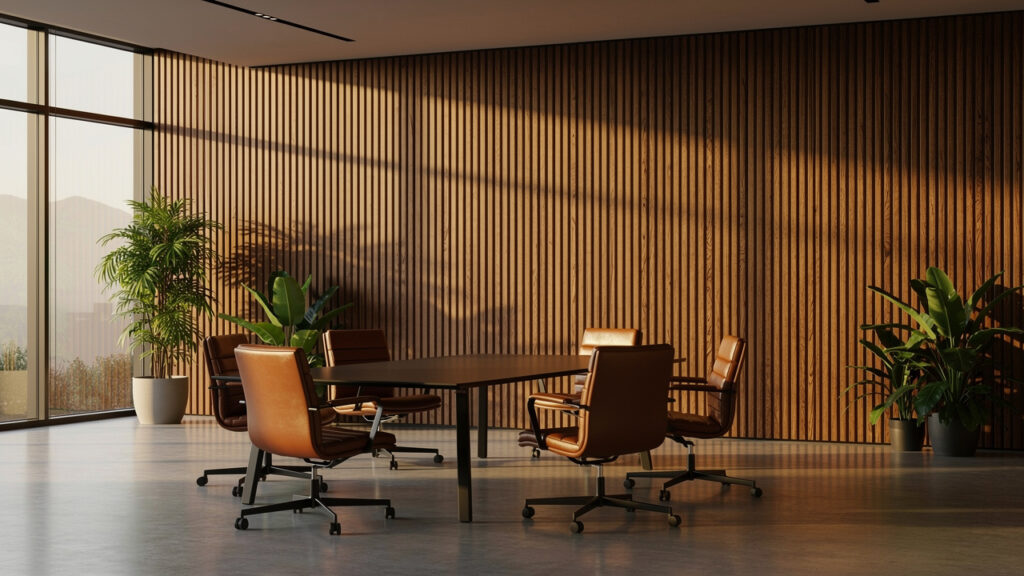
Modern offices, restaurants, and homes across African cities often sound harsh, with echo building up on glass, tile, and concrete surfaces. Acoustic wood panels offer a clear way to soften that noise while keeping interiors warm and contemporary.
When sound lingers, meetings feel tiring, guests complain, and recordings lose clarity. Hard finishes that look premium in Lagos, Nairobi, Accra, Johannesburg, and Cairo can quickly turn into an acoustic headache as people raise their voices just to be heard.
Acoustic wood panels are engineered wall and ceiling elements that combine a wood finish with a hidden acoustic core to absorb and scatter sound. This guide explains what they are, how they work, where they fit best in African interiors, and how to select and source the right panels, using DE Sound’s Gulf-region experience as a practical reference.
Now, let us walk through the key ideas before you plan your next fit-out.
Key Takeaways
Acoustic wood panels use a layered build with a decorative wood face, structural core, and acoustic backing to manage echo and noise. They look like high-end cladding yet provide measured sound absorption, so designers get warmth, texture, and comfort in the same product.
Demand is rising in African interiors as cities develop more offices, hotels, schools, and studios. The same treatments proven in Dubai and Abu Dhabi now fit naturally in Nairobi boardrooms and Lagos restaurants. Panels are moving from hidden add-ons to visible feature elements.
Successful projects start with verified acoustic data, the right panel type for each room, and a reliable wholesale supply partner. Brands such as DE Sound show how factory-direct pricing, certified test reports, and clear consultation help design teams specify with confidence.
What Are Acoustic Wood Panels and Why Are They Gaining Momentum in African Interiors?
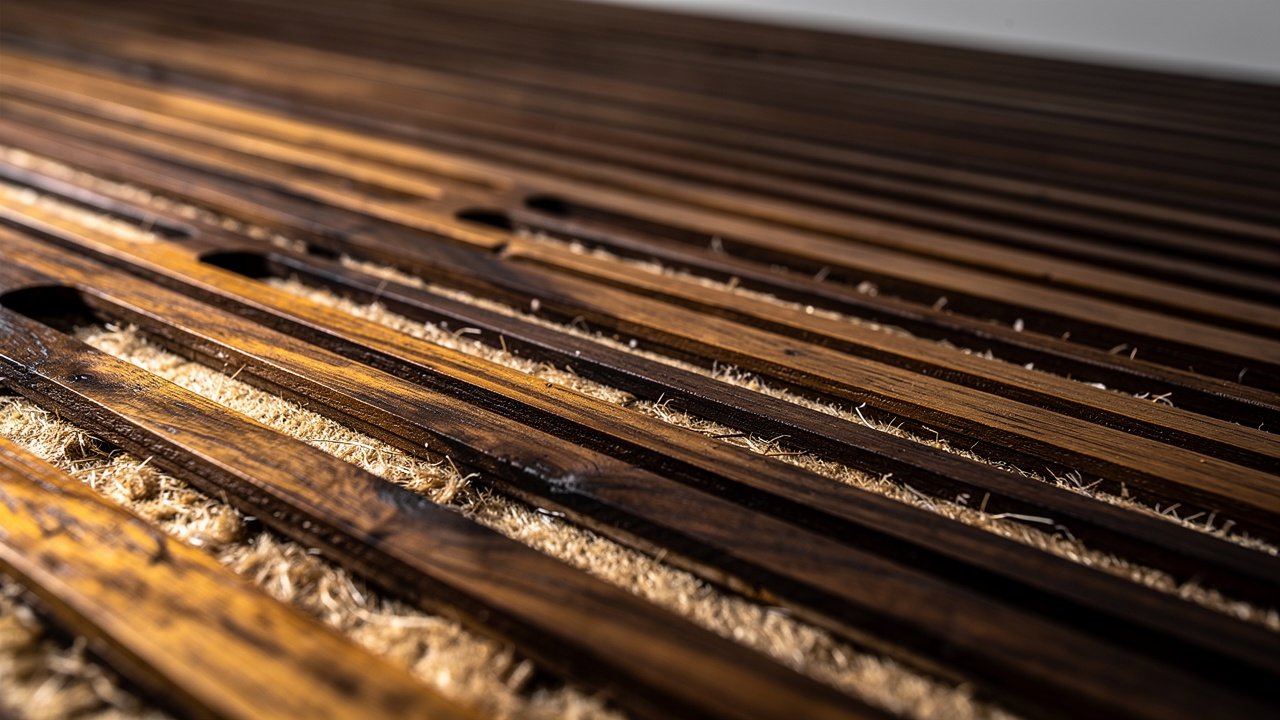
For modern African interiors, acoustic wood panels are engineered wood-based surfaces that control sound while delivering a refined visual finish. These panels differ from simple timber cladding because they combine aesthetics with tested acoustic performance. Designers across Africa now treat them as both a sound-control tool and a strong visual feature.
Each panel usually has three parts:
The visible face in wood veneer, laminate, MDF, or solid timber with small perforations or grooves.
A stable core behind the face to give structure.
An acoustic layer at the back, such as mineral wool, glass wool, or dense felt.
Sound enters through the slots or holes, passes into the backing, and loses energy inside the fibers instead of bouncing back into the room.
That layered build is what separates an acoustic panel from a plain wall finish. A standard timber wall simply reflects sound, which increases reverberation and muddiness. Acoustic wood panels are tested for performance, often with Noise Reduction Coefficient (NRC) values between 0.70 and 0.95, meaning they absorb 70–95 percent of incident sound at selected frequencies. Product data from suppliers and manufacturers such as DE Sound and Saint-Gobain Ecophon shows how this range is realistic for modern systems.
The need is not just technical. Rapid urban growth in Nigeria, Kenya, Ghana, South Africa, and Egypt brings more office towers, co-working hubs, hotels, and mixed-use apartments. These projects often mirror Gulf-region interiors, with large glass areas and polished floors. According to the World Health Organization, environmental noise already ranks among the main environmental health risks in developed regions, which highlights how sound comfort matters as cities grow. Suppliers such as DE Sound in the GCC show that once clients experience quieter spaces, they start asking for acoustic wood panels as standard, not luxury extras.
How Acoustic Wood Panels Work: Performance Principles Every Designer Should Know

In acoustic design, acoustic wood panels work by absorbing, scattering, and slowing down sound energy inside a room. The wood face breaks up sound waves, the perforations or slots let part of that energy move into the backing, and the soft core converts vibration into a tiny amount of heat. The result is a shorter reverberation time and clearer speech without a dead, lifeless room.
Three main mechanisms are at play:
Sound absorption happens when waves pass through the openings and into porous material such as mineral wool.
Diffusion happens on the shaped or slatted surface as reflections spread in many directions instead of bouncing straight back.
Dampening of vibration appears when the panel system is decoupled from the main wall, so less energy passes into neighboring spaces.
To specify panels with confidence, designers lean on a few standard metrics:
NRC (Noise Reduction Coefficient) is a single number from 0 to 1 that averages how much energy a surface absorbs in key mid frequencies. Quality acoustic wood panels often sit in the 0.65–0.95 band.
The European αw rating (ISO 11654) groups panels into Classes A to E, with Class A meaning very high absorption.
STC (Sound Transmission Class) measures how much sound passes through a wall, which reminds teams that acoustic wood panels mainly treat echo inside a room rather than sound isolation between rooms.
Guides from the U.S. General Services Administration suggest office reverberation times around 0.5 seconds for comfortable speech, which is easier to reach when wall or ceiling areas use tested acoustic panels. The table below gives a quick comparison by panel type.
| Panel Type | Typical NRC Range | Main Acoustic Role | Common Interior Use |
|---|---|---|---|
| Perforated wood | 0.70–0.90 | Strong mid–high absorption | Offices, boardrooms, hotel lobbies |
| Slatted or grooved | 0.65–0.85 | Balanced absorption and look | Open offices, homes, restaurants |
| Wood wool | 0.75–0.95 | Broad absorption, tough | Schools, sports halls, creative studios |
| Diffuser panels | Low absorption | Scatter sound for clarity | Recording studios, control rooms, theaters |
When you combine these types thoughtfully, you shape both the sound and the feel of a space. DE Sound often uses such mixes in Gulf projects, pairing slatted panels for visual rhythm with diffusers behind the listener in studios for a more natural sound field.
“Sound affects us physiologically, psychologically, cognitively, and behaviorally.”
— Julian Treasure, sound expert and author of Sound Business
Top Applications of Acoustic Wood Panels in Modern African Commercial and Residential Spaces
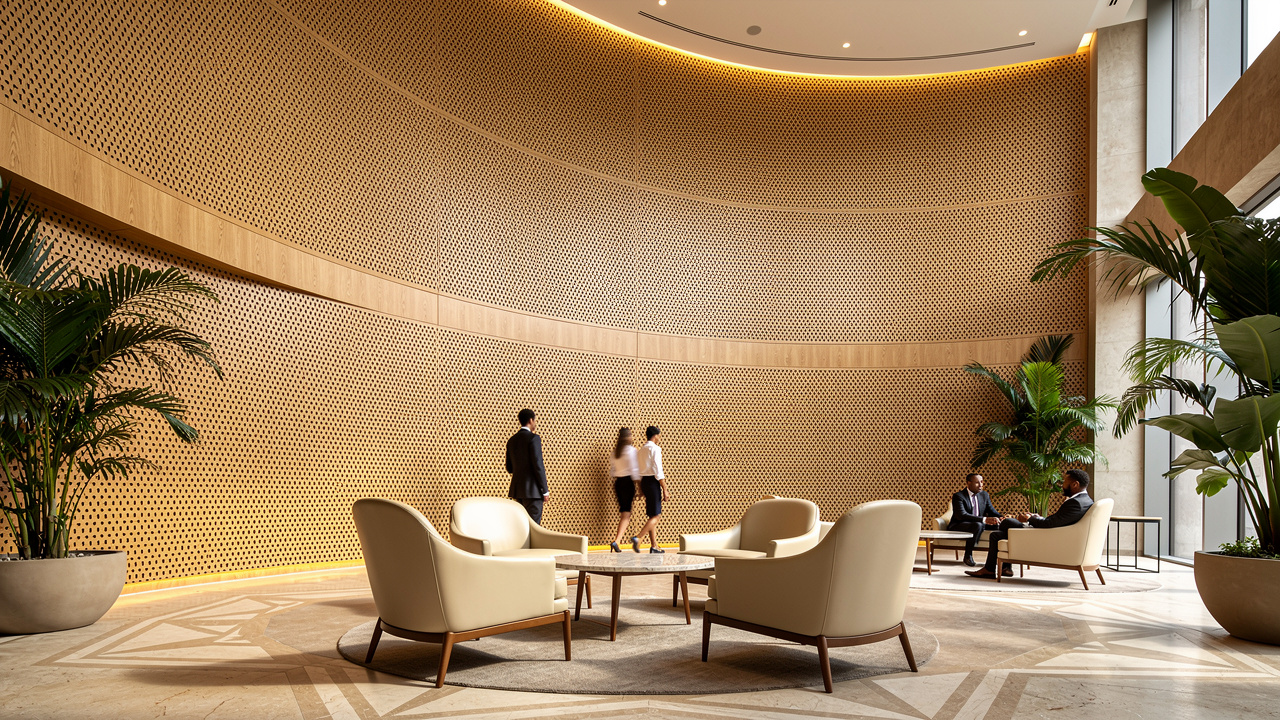
Across African cities, acoustic wood panels already support offices, hotels, schools, studios, and homes that need calm yet characterful interiors. Each sector faces a slightly different acoustic problem, so panel choice and placement change with the brief. The good news is that decades of experience in Dubai, Abu Dhabi, and Doha give a tested playbook that transfers well to Nairobi, Johannesburg, and Accra.
Key applications include:
Corporate Offices And Boardrooms
Open-plan layouts with glass partitions and hard flooring often suffer from long reverberation times. In these rooms, slatted or perforated acoustic wood panels on feature walls or ceiling rafts help cut reverberation into the 0.4–0.6 second range favored for clear speech. Research from Oxford Economics found that more than half of surveyed office workers say noise reduces their productivity, which makes acoustic design a business issue as well as a comfort topic. DE Sound’s work in Dubai financial districts shows that once a few floors use panels successfully, other tenants quickly follow.Hotels, Restaurants, And Lounge Spaces
Hotels, restaurants, and lounges across Lagos, Cape Town, and Kigali need to manage buzz without losing atmosphere. Wood veneer acoustic panels in walnut, oak, or teak fit naturally into luxury palettes, matching joinery and furniture while quietly reducing background clatter. Guests experience calmer lobbies, clearer conversations, and fewer noise complaints at reception. Experience from Gulf hospitality projects shows that simple moves like lining the back wall of a restaurant with perforated wood can change the entire mood of the space.Schools, Universities, And Training Centers
Classrooms and lecture halls often have bare plaster walls and tiled floors that blur speech for students at the back. Durable wood wool panels or perforated boards handle knocks, provide high absorption across a wide frequency range, and keep maintenance simple. Guidance linked to the WELL Building Standard and ASHRAE, summarized by the Harvard T.H. Chan School of Public Health, notes that better acoustic comfort supports learning and focus, which matches feedback from many African educators.Studios, Content Rooms, And Homes
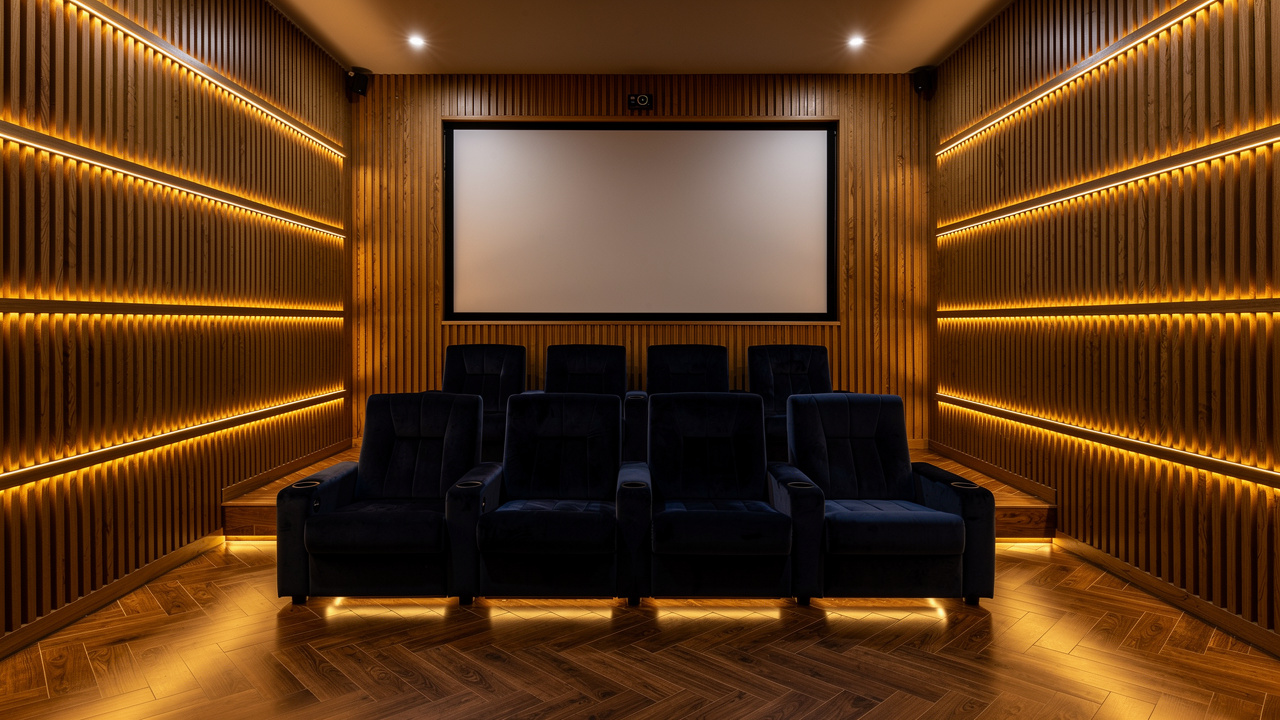
Studios, podcast booths, and content rooms in cities such as Lagos and Nairobi need more precise control. Here, designers mix perforated absorbers near early reflection points with timber diffusers on rear walls to keep energy in the room while avoiding slap echo. Residential clients building home theaters or music rooms enjoy slatted panels that double as decorative feature walls, often combined with concealed LED lighting for a cinematic feel. DE Sound’s studio projects in Abu Dhabi show that such hybrid rooms work well for both spoken word and music, a requirement many African creators share.
How to Choose and Source the Right Acoustic Wood Panels for Your Project

Choosing acoustic wood panels for an African project starts with clear acoustic goals, reliable data, and practical sourcing. Designers, fit-out contractors, and facility managers all need panels that look right, perform as promised, and arrive on time at scale. A simple, structured checklist keeps that process on track.
Start With Acoustic Performance Data
Use third-party laboratory tests instead of marketing phrases. Look for NRC or αw values printed on official reports, and compare them across vendors for the same installation build-up. If a panel has no test report, treat it as decorative rather than acoustic. This habit protects both your design intent and your client.Match Panel Type To The Main Problem
Align the panel style with the room’s main sound issue and visual direction. Perforated boards suit boardrooms that need strong speech clarity, while slatted systems can soften open-plan offices without feeling like a studio. Wood wool works well where balls, bags, or chairs may hit the wall. Diffusers are best when you want clarity without heavy damping, such as in control rooms or high-end listening spaces.Check Durability, Cleaning, And Maintenance
Review surface durability, cleaning method, and future maintenance needs before sign-off. Veneer or HPL-faced panels clean easily and handle high traffic in corridors and receptions. Fabric-based systems may stain faster, so they suit controlled environments. Avoid painting over perforations on site, because thick paint can block openings and lower the real NRC performance.Review Sustainability And Certifications
Look at sustainability credentials, especially in large commercial and hospitality projects. Many clients now ask for low-VOC finishes, recycled content, or products that support green building certifications. The World Green Building Council notes that buildings account for about 39 percent of global energy-related carbon emissions, so material choices matter. Panels made with certified timber or PET content help design teams hit environmental targets.Plan Wholesale Supply, Logistics, And Support
Consider wholesale access, logistics, and technical support from the start. Large rollouts in office towers or hotel chains need stable pricing, consistent batches, and clear guidance for installers. This is where reference suppliers such as DE Sound stand out. The company operates from the UAE and wider Gulf region, offers factory-direct pricing, and holds a broad range of tested acoustic wood and PET panels. African design teams can study DE Sound’s specification habits, certifications, and detailing as a quality benchmark, even when sourcing locally.
“Acoustic treatment is still an emerging discipline in many African design markets. Brands that provide clear guidance and hands-on consultation are better placed to lead, especially where buyers are still learning what acoustic treatments can offer.”
— DE Sound Industry Insight
DE Sound also provides free consultation to architects, interior designers, and contractors, helping them select panel types, coverage ratios, and fixing systems that match both design intent and measured performance. That mix of technical support and transparent pricing aligns well with what growing African markets need as acoustic comfort becomes a standard expectation.
Wrapping Up
Acoustic wood panels sit at a rare sweet spot where design impact and performance meet. One product line can add texture, rhythm, and warmth to a wall while cutting reverberation, sharpening speech, and calming busy rooms in African cities.
As office towers, hotels, schools, and homes rise across Lagos, Nairobi, Accra, Johannesburg, and Cairo, acoustic comfort is shifting from nice-to-have to basic quality. Clients who visit quieter, better-tuned spaces quickly feel the difference and start asking their design teams for similar results.
The path forward is clear. Work with verified acoustic data, pick panel types that suit each space, and draw on experienced suppliers such as DE Sound for guidance and reference standards. That approach leads to African interiors that sound as good as they look, ready for the next wave of growth.
Frequently Asked Questions
Question: What is the difference between acoustic wood panels and regular decorative wood wall cladding?
Answer: Acoustic wood panels include a perforated or grooved face plus an acoustic backing, so they absorb and scatter sound. Regular decorative cladding is just a hard surface that reflects sound. The layered build of acoustic panels, tested with NRC or αw ratings, creates measurable noise reduction that plain timber cannot deliver.
Question: What NRC rating should I look for when specifying acoustic wood panels for a commercial office?
Answer: For most open-plan offices, target panels with NRC between 0.70 and 0.90. Higher values, such as 0.85 and above, suit meeting rooms and boardrooms where speech clarity matters. Aim for overall reverberation around 0.4–0.6 seconds and always request independent laboratory test reports before approving any product.
Question: Are acoustic wood panels suitable for humid or coastal climates, such as those found in parts of Africa?
Answer: Yes, if you pick the right core and finish. Moisture-resistant MDF or similar cores with sealed veneer or laminate faces hold up much better than solid timber in humid or coastal conditions. This approach mirrors what works in Gulf cities such as Dubai and Abu Dhabi with comparable climate challenges.
Question: Can acoustic wood panels be used on ceilings as well as walls?
Answer: They work very well on ceilings. Panels overhead intercept the main sound path between floor and ceiling, which often delivers more benefit per square meter than wall treatment alone. Designers can use direct-fix hangers or suspended grids, keeping access routes for services where needed.
Question: How much wall coverage is typically needed to achieve effective acoustic treatment?
Answer: For standard offices, a starting point is 15–25 percent of the total surface area across walls and ceilings. Music rooms, podcast studios, or performance spaces may need 35–50 percent coverage, combined with careful placement. Under-treating a room is common, so linking coverage to acoustic calculations or specialist advice is always wise.