
Introduction
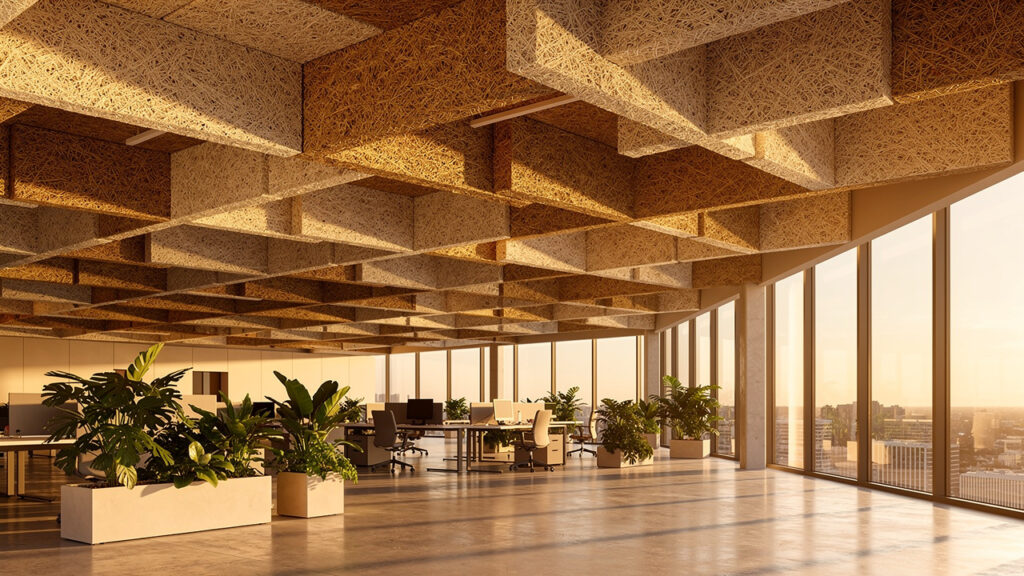
Africa’s new commercial buildings often chase green targets yet still struggle with hard, echoing interiors. Noise undercuts comfort and productivity. Wood wool acoustic panels give project teams one material that softens sound and supports lower-impact construction. These rigid boards use wood fibers bound with cement or magnesite and a porous surface that absorbs noise rather than bouncing it back. This guide explains how they fit African sustainable projects, how they perform, and how to specify them at scale, with DE Sound as a reference supplier.
Key Takeaways
Wood wool acoustic panels are rigid mineral-bound boards that absorb sound and act as a finished surface. They cut reverberation in concrete-heavy African projects and add the visual warmth clients expect.
Their sustainable profile comes from renewable timber, lower embodied carbon than foam, and VOC-free binders. Panels can be recycled or downcycled, helping teams pursue LEED, EDGE, and Green Star Africa credits.
Acoustic performance covers the speech range that matters in schools, hotels, and offices. When mounted over an air gap or mineral wool, they also improve low frequency control, so designers can keep ceilings exposed and still meet acoustic targets.
Factory-direct sourcing keeps costs predictable on large projects and clear technical data simplifies tender comparisons.
DE Sound combines wholesale pricing with tested materials and free consultation for architects and contractors. Experience from hospitality, education, and corporate projects across the Gulf region translates well to African projects and certification frameworks.
What Are Wood Wool Acoustic Panels and Why Does Africa’s Construction Sector Need Them?

Wood wool acoustic panels are rigid sound-absorbing boards made from long strands of softwood bound with cement or magnesite. The open, fibrous surface lets sound enter the panel and converts part of that energy into heat through friction, which reduces echo and lowers overall noise in a room.
Laboratory data from DE Sound’s partner factories and from brands such as Heradesign and Rockfon show Noise Reduction Coefficient (NRC) values between about 0.55 and 0.95, depending on thickness and mounting. That range covers what most classrooms, offices, and hotel spaces need, and because the material also looks finished, designers do not need a separate decorative layer on top.
The core of each panel uses fast-growing timber locked in place by a mineral binder. The result behaves like a light concrete board with better acoustic and thermal behavior. The cement matrix provides fire resistance and moisture stability, while the wood fibers keep weight lower than many solid alternatives. Panels can be cut, painted with breathable coatings, and installed as ceilings, wall linings, or suspended baffles.
Africa’s commercial building stock still leans heavily on concrete, tile, and glass. Those surfaces keep initial costs down but create long reverberation times that hurt speech clarity. Research shows that Carbon emission peaks in countries worldwide are closely tied to the built environment, which pushes regulators and investors toward greener specifications. Wood wool acoustic panels address both issues in one step by moderating noise while supporting lower-impact material choices, giving developers better user comfort and a smoother path to green financing.
DE Sound already supports similar specifications in Gulf-region hotels, schools, and offices. That experience gives African project teams access to proven acoustic build-ups, real NRC data, and practical installation details instead of trial-and-error on site.
How Do Wood Wool Panels Support Sustainable and Green Building Standards?
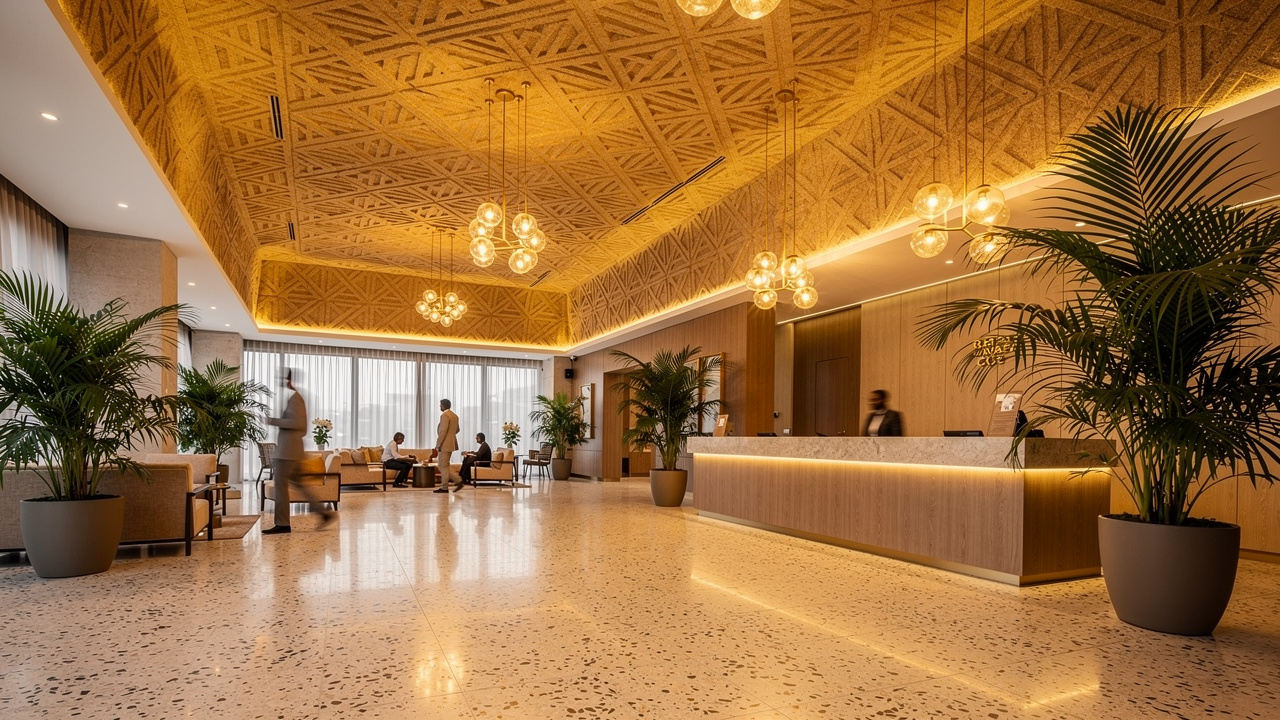
Wood wool panels support sustainable and green building standards by combining renewable raw materials with low emissions and clear documentation. Their core uses timber from responsibly managed forests, and the mineral binder contains no added formaldehyde or plastic foam. Production relies on simple mechanical shaving and relatively low-temperature curing compared with petrochemical acoustic products, a distinction supported by Global daily CO2 emissions data showing the outsized impact of energy-intensive manufacturing processes. The World Green Building Council notes that green buildings can cut operational energy use by up to 50 percent versus conventional buildings; materials that improve thermal and acoustic comfort help projects reach that kind of performance without heavy, high‑carbon finishes.
Indoor air quality is a priority for hospitals, offices, and schools in cities like Nairobi, Kigali, and Johannesburg. Tests show wood wool panels as low VOC and free from harmful emissions. The US Environmental Protection Agency reports that people spend about 90 percent of their time indoors, so every fit‑out material affects long‑term health. With wood wool, designers get acoustic control without plasticizers or solvent‑based coatings.
Fire and moisture performance also matter for green ratings and local codes, and Energy–Environmental Evaluation of Alternative concrete composites paired with bio-based insulations confirms that mineral-bound materials offer favorable safety profiles in real building conditions. The cementitious matrix around the fibers helps panels reach Class A2 or Class B reaction‑to‑fire ratings under EN 13501‑1, which aligns with many African regulations influenced by European standards. The same matrix resists humidity swings in coastal cities like Mombasa and Dakar as well as drier inland climates, so panels keep their shape and the acoustic values from laboratory tests remain reliable over time.
For certifications such as LEED, BREEAM, EDGE from the International Finance Corporation, and Green Star Africa from the Green Building Council South Africa, wood wool panels can contribute to credits under categories such as Materials and Indoor Environmental Quality, and sometimes Innovation. When a supplier such as DE Sound provides full fire, acoustic, VOC, and chain‑of‑custody reports, project teams can link those documents directly to specific credit requirements in their submissions.
Where Are Wood Wool Acoustic Panels Used Across African Commercial Projects?
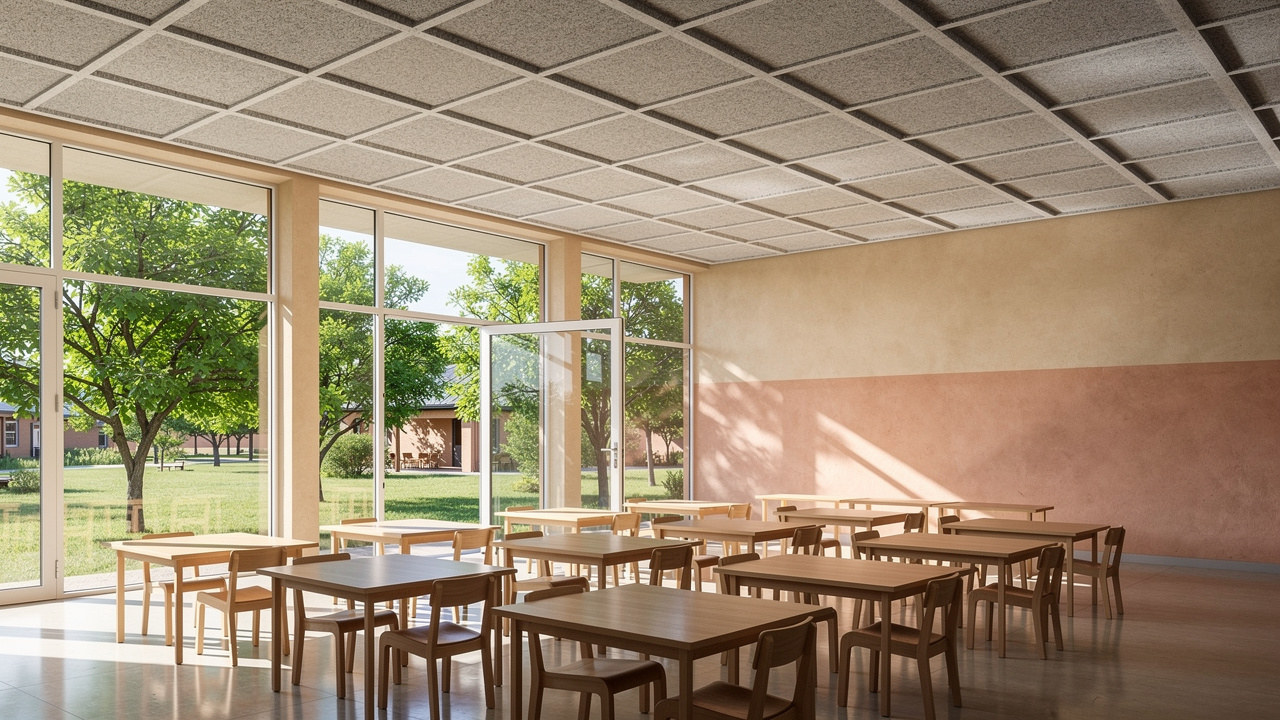
Wood wool acoustic panels fit many of the building types that dominate Africa’s construction pipeline. They help schools, hotels, and offices meet acoustic targets. Because the material doubles as a visible finish, it suits projects where budgets or ceiling heights limit extra layers.
Classrooms, lecture halls, and libraries are a leading use case. They need low reverberation so students can hear clearly. The World Health Organization notes that excessive classroom noise harms learning, and bare concrete rooms rarely meet its guidelines. Adding wood wool ceilings and key wall areas shortens RT60 and improves speech intelligibility.
In hotels and hospitality, lobbies, restaurants, and ballrooms often combine hard floors with glass facades and high ceilings. Wood wool acoustic panels in warm colors or custom RAL tones calm these spaces while matching brand palettes.
Modern offices and co‑working hubs face similar noise challenges. Open plans, exposed ceilings, and hard finishes let conversations spill across teams. Ceiling rafts, floating baffles, and feature walls in wood wool give facility managers a practical way to bring reverberation down for more focused work and clearer meetings, and the impact resistance suits corridors and breakout areas.
To help specifiers compare options, the table below sets wood wool panels against other common acoustic materials.
| Material | NRC Range | Fire Rating | Sustainability | Best Application |
|---|---|---|---|---|
| Wood Wool Panels | 0.55–0.95 | Class A2/B | High | Commercial, hospitality, education |
| Acoustic Foam | 0.50–0.85 | Class C/D | Low | Budget or home studio |
| Fabric-Wrapped Panels | 0.70–0.95 | Class B/C | Medium | Offices, auditoriums |
| Timber Slat Panels | 0.50–0.80 | Class C | Medium | Residential, restaurants |
The comparison shows how wood wool balances acoustic performance, fire safety, and sustainability across several project types. Foam can absorb sound but often has weaker fire ratings and limited environmental benefits, while fabric‑wrapped boards add layers and may age faster in heavy‑use spaces. For many African green building projects, wood wool acoustic panels provide the most rounded result. DE Sound’s reference projects in Gulf‑region hospitality, education, and office fit‑outs give African teams useful templates for similar design briefs.
How to Source and Specify Wood Wool Acoustic Panels for Large-Scale African Projects
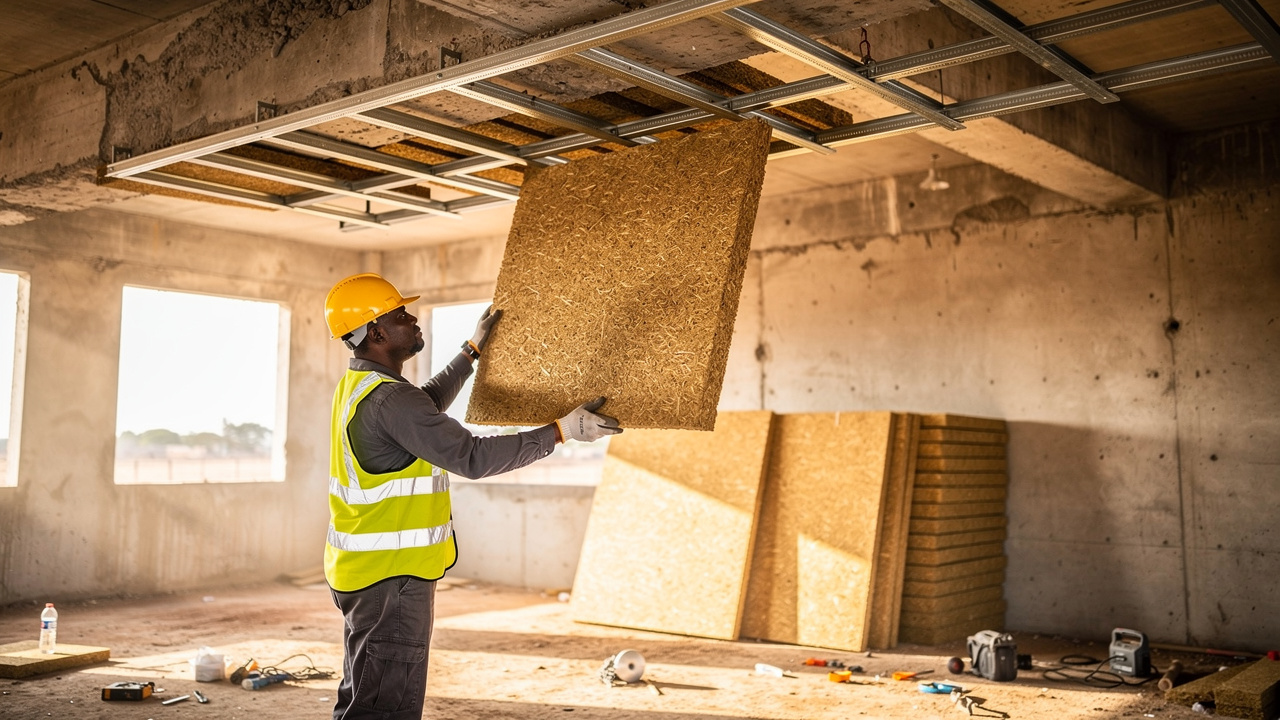
Sourcing and specifying wood wool acoustic panels starts with matching panel performance to room function, then checking fire and sustainability documentation. Once those points line up, procurement teams can compare price, lead time, and installation method with confidence.
Panel thickness and mounting sit at the heart of acoustic performance, as demonstrated in A Comparative Analysis of energy performance studies showing how building envelope material choices directly shape both thermal and acoustic outcomes.
15 mm panels: best for decorative wall areas and small rooms with modest noise levels.
25–35 mm panels: a common choice for classrooms, offices, and hospitality spaces aiming for NRC values of 0.70–0.85.
50 mm panels over an air gap: suited to auditoriums, cinemas, and conference halls where stronger mid and low frequency absorption is needed.
Mounting details matter as much as thickness—a principle confirmed by Determination of the sound insulation performance research on wood-based panels, which shows that installation geometry significantly affects acoustic outcomes across the frequency spectrum. A battened or suspended framework with a 50–150 mm cavity, often filled with mineral wool, improves low frequency behavior and lifts the overall NRC. Designers should base calculations on the exact installation build‑up used in the laboratory report, not just the bare panel.
Fire rating and documentation come next. Codes that follow EN 13501‑1 typically accept Class A2‑s1,d0 or Class B‑s1,d0 for interior public spaces. Procurement teams should request current fire reports, acoustic test summaries, VOC declarations, and any FSC or PEFC certificates for the timber. These documents support green building submissions under LEED, BREEAM, EDGE, and Green Star Africa and also speed up local authority approvals.
For multi‑building developments, wholesale supply and technical backup matter as much as the product itself. DE Sound operates on a factory‑direct model, giving project owners transparent bulk pricing on wood wool acoustic panels. The company’s acoustic specialists help architects, contractors, and facility managers choose panel thicknesses, layouts, and mounting systems based on experience in Gulf‑region schools, hotels, and offices—a pattern that fits African conditions where tight timelines and certification targets leave little room for guesswork.
“You can’t manage what you don’t measure.” — Peter Drucker
For acoustic design, that means pairing supplier advice with basic calculations or simulations early in the project, instead of reacting to complaints after handover.
Wrapping Up

Wood wool acoustic panels combine acoustic comfort, design flexibility, and sustainability in a way that fits Africa’s growing green building movement. They quiet concrete‑heavy interiors, support energy‑efficient operation, and align with certifications like EDGE and Green Star Africa. At the same time, they provide a warm, finished surface that suits hotels, schools, and modern offices.
For architects, interior designers, and procurement teams, this single material can simplify specifications across project portfolios. When sourced through a wholesale partner such as DE Sound, panels arrive with the technical reports, fire classifications, and sustainability credentials needed for serious commercial work. If your next African project needs better sound control and credible environmental performance, wood wool acoustic panels deserve a place high on the specification list.
Frequently Asked Questions
Frequently asked questions about wood wool acoustic panels for African projects focus on climate suitability, green ratings, and supply models.
Question: Are wood wool acoustic panels suitable for humid climates found in coastal African cities?
Answer: Yes. The cementitious binder resists moisture and keeps the board stable. In cities like Lagos, Mombasa, and Accra, panels maintain performance when kept away from direct water contact and fixed with corrosion‑resistant hardware.
Question: What green building certifications can wood wool acoustic panels contribute to in Africa?
Answer: They can support LEED, BREEAM, EDGE, and Green Star Africa submissions. FSC or PEFC timber, low‑VOC performance, and recyclability help with Materials and Indoor Environmental Quality credits when suppliers provide full test and sourcing documentation.
Question: What NRC rating should I specify for a classroom or lecture hall in a sustainable school project?
Answer: Aim for an NRC between 0.70 and 0.85. Many designers start with 35 mm wood wool panels and adjust coverage and mounting with an acoustic consultant to hit RT60 values around 0.4–0.8 seconds for clear speech.
Question: Can DE Sound supply wood wool acoustic panels for bulk commercial projects?
Answer: Yes. DE Sound supports bulk commercial work with factory‑direct supply of wood wool acoustic panels, wholesale pricing, tested and certified products, and free technical consultation—an approach that suits large hospitality, education, and office programs across multiple buildings.