

Urban buildings in Dubai and Abu Dhabi sit inside constant traffic and construction noise. Standard glazing often lets that sound leak straight into hotel rooms, offices, and homes. Acoustic Laminated Glass adds a sound‑damping interlayer inside the window so city noise drops before it reaches occupants.
Noise complaints affect guest reviews, reduce focus in open offices, and disturb sleep in high-rise apartments beside major roads. Over time, that constant noise also wears down health and productivity.
This article explains why Acoustic Laminated Glass is now standard good practice for urban buildings in the Gulf. You will see how it works, what Rw ratings to target, and where DE Sound fits into the picture.
Keep reading to plan facade and interior acoustic choices together from the earliest design stage.
Key Takeaways
Key points for quick reference.
Acoustic laminated glass adds special interlayers that absorb sound, while standard glass leaks noise.
Urban projects usually need higher Rw values. Many facades target 42–47 dB, a range that suits busy sites.
Laminated glass mainly handles exterior noise. Sound still sneaks through joints and hard rooms keep echoing inside.
DE Sound supplies acoustic panels and related materials at factory-direct pricing, with free advice on every project.
Estidama, LEED, and WELL reward quieter rooms. Acoustic glass supports those credits, and interior treatments push performance further.
What Is Acoustic Laminated Glass and How Does It Work?

Acoustic Laminated Glass is a type of glazing that uses a special interlayer to cut noise passing through the pane. Instead of a single sheet of glass, it joins two or more sheets with a soft plastic layer in between. That layer changes how the glass vibrates, so less sound reaches the other side.
Most acoustic interlayers use PVB or EVA. These plastics behave in a viscoelastic way, which means they move slightly when sound hits them and turn part of that energy into tiny amounts of heat. The outer glass still vibrates, but the interlayer slows that motion so it loses strength before it reaches the inner pane. The result is a clear drop in traffic, voice, and machinery noise.
Conventional double glazing works in a different way. It uses an air or gas cavity between two panes to interrupt the sound path. That helps, but both panes often share the same thickness, so they vibrate together at some frequencies and let more sound through. This issue, called coincidence, is very noticeable in the speech range.
In acoustic units, glass makers often choose different thicknesses for each pane, a strategy validated by studies on Airborne sound insulation performance of lightweight double-leaf wall assemblies with varied configurations. That simple step shifts the coincidence peaks so they no longer line up. Combined with the damping interlayer, it gives a smoother sound reduction curve across low, mid, and high frequencies.
To compare products, designers in the Gulf mostly look at Rw ratings, which summarize how much airborne sound a panel blocks, as explored in research on Optimizing Sound Insulation Performance of glazing assemblies with varying thickness combinations. According to performance data from Saint-Gobain, typical single 6 mm glass often sits around Rw 30 dB, while acoustic laminated units and acoustic IGUs can reach Rw 40 dB and above, with Accurate and efficient prediction methods now available to model sound insulation across multilayer glazing structures. That extra 10 dB matters, because psychoacoustic research reported by the Acoustical Society of America shows a 10 dB drop can make noise sound roughly half as loud.
A helpful way to think about it is:
Standard 6 mm single glass: around Rw 30 dB
Basic double glazing: around Rw 32–35 dB
Acoustic laminate or acoustic IGU: Rw 40+ dB
Even a small change on paper can feel dramatic to people inside the room.
Why Urban Buildings in the UAE Demand Acoustic Laminated Glass

Urban buildings in the UAE require Acoustic Laminated Glass because city noise loads are simply too high for standard glazing. Hotels on Sheikh Zayed Road, offices along major corridors, and towers under flight paths all face heavy traffic, aircraft, and construction sound day and night. Without high-performance glass, interior comfort targets are very hard to reach.
Key noise sources cluster tightly in Gulf cities, for example:
busy highways with dense traffic and many heavy vehicles
metro lines and airport approach paths
nightlife districts, outdoor venues, and constant building work
Facades closest to these sources often see external levels above 70 dB during peak periods.
Health bodies treat that seriously. The World Health Organization recommends night-time bedroom levels below 30 dB and notes that long-term exposure above 55 dB outdoors links to higher risks of heart disease.
“An Lnight,outside of 40 dB should be considered as the target of night noise guidelines.”
— World Health Organization, Night Noise Guidelines for Europe
To bridge the gap between a noisy street and a calm interior, facades generally need sound reductions in the 40 dB range.
For that reason, many hotel, residential, and office projects in the UAE now target facade Rw values of at least 42 dB, with 45 dB or higher near highways or airport corridors. Acoustic Laminated Glass inside insulated glazing units helps reach those numbers within reasonable frame depths. Design guides from groups such as ASHRAE and CIBSE support similar performance goals for urban sites.
Acoustic performance also links closely to green building programs used in the region. Abu Dhabi’s Estidama Pearl Rating, LEED from the US Green Building Council, and the WELL Building Standard from the International WELL Building Institute all award credits for good indoor acoustic conditions. Acoustic Laminated Glass helps project teams control facade noise so indoor levels meet those criteria without over-sizing mechanical systems.
For procurement officers and facility managers, that means Acoustic Laminated Glass is not just a comfort choice. It directly supports brand standards, staff well-being, guest satisfaction scores, and environmental certifications that matter to investors and operators across the GCC.
Key Applications: Where Acoustic Laminated Glass Makes the Biggest Impact

Acoustic Laminated Glass delivers the most value in building types where noise control and visual openness both matter. In the UAE, that often means hotels, offices, schools, studios, and high-rise homes facing busy streets. In each case, the glass must hit a realistic Rw target that matches the noise outside and the function inside.
Luxury hotels and serviced apartments need quiet rooms even beside expressways or airports, and the Specification for Laminated Architectural flat glass outlines the quality requirements that certified acoustic laminated products must meet. Many international brands now expect facade assemblies around guest rooms to reach Rw 42–47 dB, especially in downtown Dubai and Abu Dhabi. Acoustic Laminated Glass in an insulated unit helps keep guests asleep while still giving floor-to-ceiling views.
Corporate offices and meeting suites also depend on good acoustic separation. Glass partitions let light travel through the floor plate, yet standard single glass often leaves conversations easy to hear next door. Acoustic partitions that use Acoustic Laminated Glass can raise Rw into the high 30s or low 40s, improving speech privacy for boardrooms, legal teams, and HR spaces.
Schools and universities face another type of risk. Research summarized by the World Health Organization shows that classroom background noise above 35 dB harms speech understanding and learning outcomes. In UAE campuses near main roads or playgrounds, acoustic windows and internal glazed walls help teachers keep a calm sound level without blocking daylight that supports student focus.
Recording studios, podcast rooms, and content-creation suites have extremely demanding needs. Control-room and live-room windows must allow clear sightlines yet keep drums, vocals, and playback audio from leaking between spaces. Studio builds in Dubai often target Rw 45 dB or higher for glazed openings, using double Acoustic Laminated Glass with large air gaps to control a wide frequency range.
High-rise residential towers benefit as well. A well-chosen Acoustic Laminated Glass facade can cut traffic noise enough that everyday living sound becomes the loudest source in the room. That upgrade increases comfort and helps premium buildings stand out in crowded districts.
To help compare options at a glance, the table below outlines typical targets and glass setups often used in Gulf-region projects.
| Application Type | Recommended Minimum Rw | Typical Glass Configuration | Example Use Case |
|---|---|---|---|
| Luxury hotel facade | 42–47 dB | Acoustic laminated outer pane in IGU with 14–20 mm cavity and tempered inner pane | Guest rooms near highways or metro |
| Corporate meeting room | 38–42 dB | Single 10.8 mm acoustic laminate in framed partition | Boardrooms and executive offices |
| Classrooms and training rooms | 35–40 dB | 6.8 or 8.8 mm acoustic laminate in windows or internal screens | Schools beside busy internal roads |
| Recording or podcast studio window | 45–50 dB | Two acoustic laminates with 150–250 mm air gap | Observation window between control room and live room |
| High-rise residential facade | 38–45 dB | 44.2 acoustic laminate IGU with low-e coating | Apartments on major city routes |
For all these project types, DE Sound supports design teams by pairing the correct glass strategy with interior acoustic products that keep the whole system balanced.
Acoustic Laminated Glass Is Only Half the Solution — Here’s What Completes It
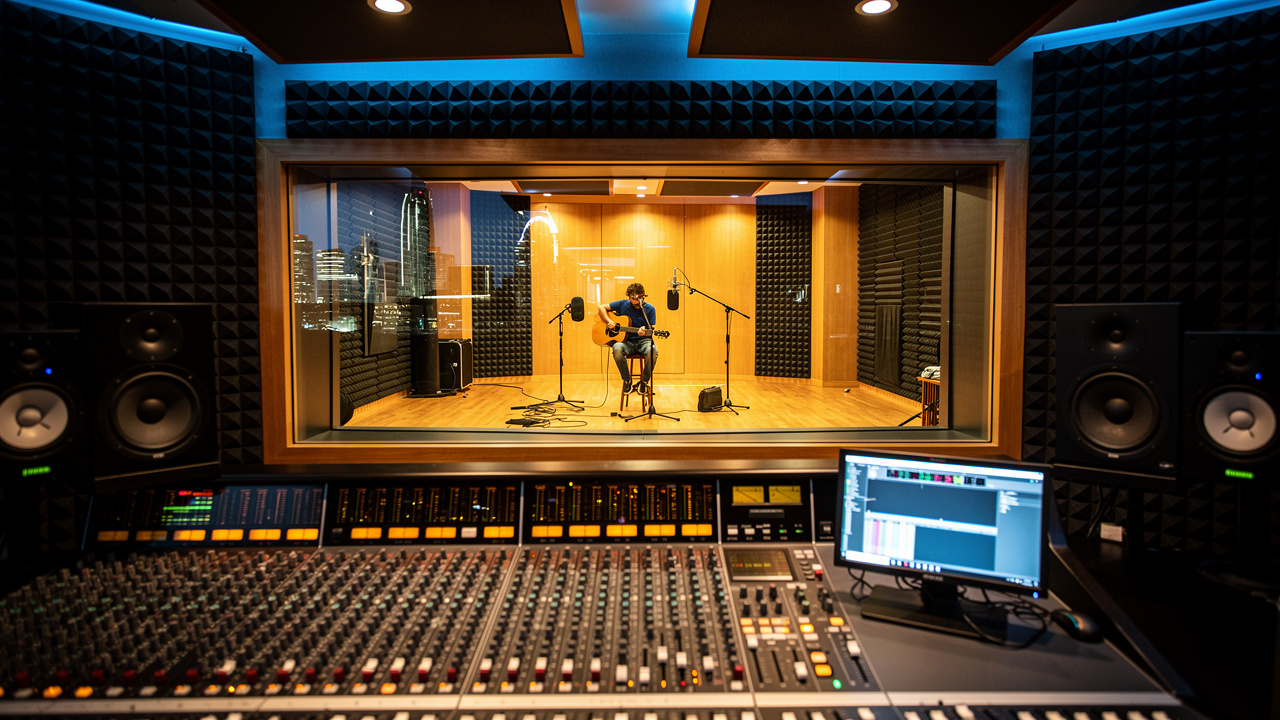
Acoustic Laminated Glass handles noise at the building envelope, yet it cannot fix every sound problem alone. Once noise levels drop at the facade, reflections, flanking paths, and mechanical noise inside the building still shape what people actually hear. Interior acoustic design completes the picture.
Flanking paths are a frequent weak spot. Sound can bypass glass through concrete slabs, side walls, ceilings, service shafts, and poorly sealed doors. If those parts do not match the facade performance, speech, traffic, or music can still travel between rooms or from outside. Research from Leesman shows that noise and lack of privacy remain among the top complaints in open-plan offices worldwide, even when buildings use good facades.
DE Sound focuses exactly on this interior layer for projects across the UAE and the wider GCC. The company supplies tested acoustic panels, bass traps, ceiling systems, and other sound-control materials at factory-direct prices, making it easier to keep both facade glass and internal treatments within budget. Project teams in Dubai, Abu Dhabi, Riyadh, and Doha also benefit from fast regional delivery and practical design support.
“Effective noise control in urban buildings is never a single-product solution.”
— DE Sound Technical Team
When Acoustic Laminated Glass is part of the facade, DE Sound helps match it with interior products so the final in-room sound level actually meets the design brief.
A simple project checklist often includes these steps:
Treat key reflection points inside rooms. Wall panels near talkers, ceiling islands over meeting tables, and absorptive finishes at the back of rooms all shorten reverberation and improve clarity. In studio builds, thicker broadband panels help keep low frequencies under control.
Block obvious flanking paths. Well-sealed acoustic doors, treated bulkheads, lined service risers, and isolation strips under partitions reduce sound that sneaks around the glass. This matters a lot in hotels where corridor and room walls intersect the facade.
Coordinate glass and interior specs early. When Acoustic Laminated Glass performance is known, DE Sound can suggest complementary wall and ceiling products so the whole assembly meets Rw and reverberation targets without surprises late in construction.
By treating glass specification and interior acoustics as one combined task, Gulf-region project teams deliver quiet, comfortable spaces that perform far better than those relying on facades alone.
The Bottom Line

Acoustic Laminated Glass is now a front-line requirement for serious urban buildings in the UAE, not a luxury add-on. City noise levels, guest expectations, and workplace comfort standards all push facades toward Rw values in the low and mid 40s, especially near highways, metro lines, and airports.
Real acoustic comfort, though, depends on what happens inside the walls as much as at the glass. That is where DE Sound helps designers, contractors, and facility managers link high-performance glazing with certified interior acoustic products across the Gulf.
For project teams planning hotels, offices, schools, studios, or residential towers, the next step is simple: contact DE Sound for a free acoustic review or wholesale product inquiry and line up facade and interior treatments from day one.
Frequently Asked Questions
Q1: What Is The Difference Between Acoustic Laminated Glass And Standard Double Glazing?
Acoustic laminated glass uses a soft interlayer that damps vibration, while standard double glazing relies only on the air gap between panes. Double glazing often has a coincidence dip where performance drops, but the interlayer in acoustic units keeps sound reduction more even across key frequencies.
Q2: What Rw Rating Should I Specify For A Hotel Facade In Dubai?
Most urban hotel facades in Dubai aim for Rw 42–47 dB for guest room windows. Sites beside highways, metro lines, or airport corridors often push closer to the top of that range and may use advanced acoustic IGUs or triple-glazed setups to hit the target.
Q3: Does Acoustic Laminated Glass Also Provide UV And Thermal Protection?
Yes, laminated glass with PVB interlayers blocks up to around 99 percent of UV radiation, which is significant given research on the Global burden of cutaneous melanoma attributable to ultraviolet radiation, underlining why UV-blocking glazing matters in sun-intense climates like the UAE. Thermal performance improves when Acoustic Laminated Glass forms part of an insulated glazing unit with a low-e coating and a properly sized air or gas cavity, and the relationship between UV exposure and occupant health is further examined in the Global assessment of surface ultraviolet radiation and skin melanoma incidence from 1990 to 2021.
Q4: Can Acoustic Laminated Glass Help Achieve Estidama Or LEED Certification In The UAE?
Yes, Estidama, LEED, and WELL all include indoor environmental quality credits linked to background noise and sound insulation. Acoustic Laminated Glass supports those goals by cutting facade noise so internal levels meet the acoustic criteria that these rating systems describe for bedrooms, offices, and learning spaces.
Q5: Where Can I Source Certified Acoustic Laminated Glass And Complementary Soundproofing Materials For A Gulf Region Project?
You can work with DE Sound as a wholesale acoustic partner across all six GCC countries. DE Sound supplies certified acoustic panels and related materials, offers factory-direct pricing, and provides free technical guidance so glass specifications and interior treatments form one coherent, high-performing acoustic design.