
Introduction
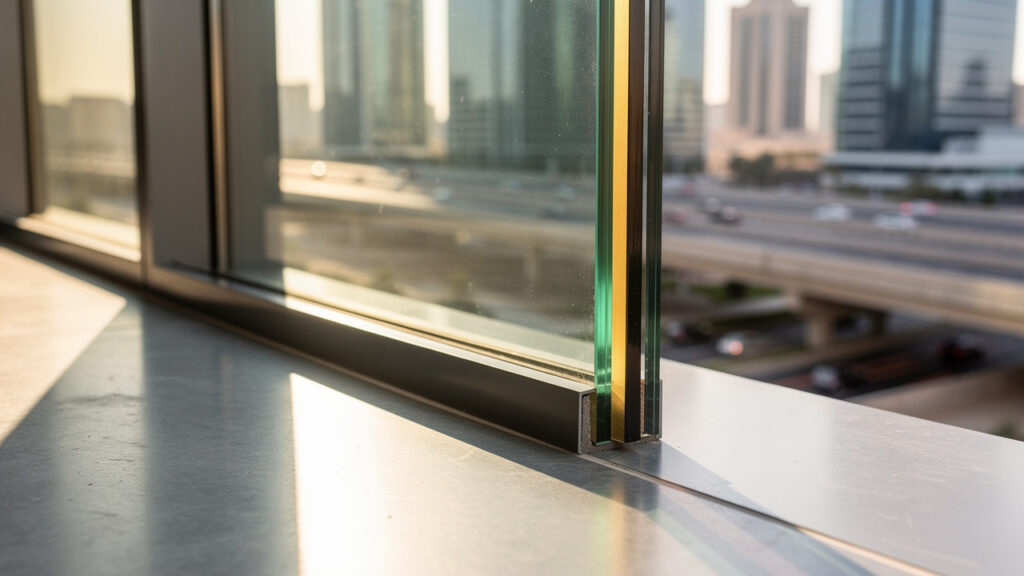
Traffic near Sheikh Zayed Road or Al Khail Road can turn a hotel room, classroom, or home into a noisy space. Standard windows and doors rarely give enough relief from that constant background roar.
A strong answer is acoustic laminated glass, which uses a special sound-damping layer between glass panes to cut traffic noise. This glass slows vibration from passing cars, trucks, and metro lines while still letting in daylight and keeping views open.
In this guide, you will see:
what acoustic laminated glass is
how it reduces traffic noise
how to read ratings like STC, Rw, and OITC
where it makes the biggest impact in UAE projects
what extra benefits it brings
how DE Sound supports bulk procurement across the Gulf
The next sections give you clear, practical points you can apply directly on your next project.
Key Takeaways
Acoustic laminated glass uses a soft acoustic interlayer between glass panes. It absorbs vibration from traffic noise. Standard single or double glazing lets much more sound pass through.
STC, Rw, and OITC are the main ratings for glass sound performance. Higher numbers mean better noise control. OITC is most useful for road and rail noise.
Hotels, offices, schools, studios, and high-rise homes in UAE cities gain the most from acoustic glazing. Correct glass choice can turn noisy locations into calm interiors.
Glass alone is not enough for best results. Frames, seals, walls, and doors must also block sound so the system works as one.
DE Sound supports UAE and GCC projects with certified acoustic materials, clear advice on performance data, and wholesale pricing that fits large builds.
What Is Acoustic Laminated Glass and How Does It Reduce Traffic Noise?
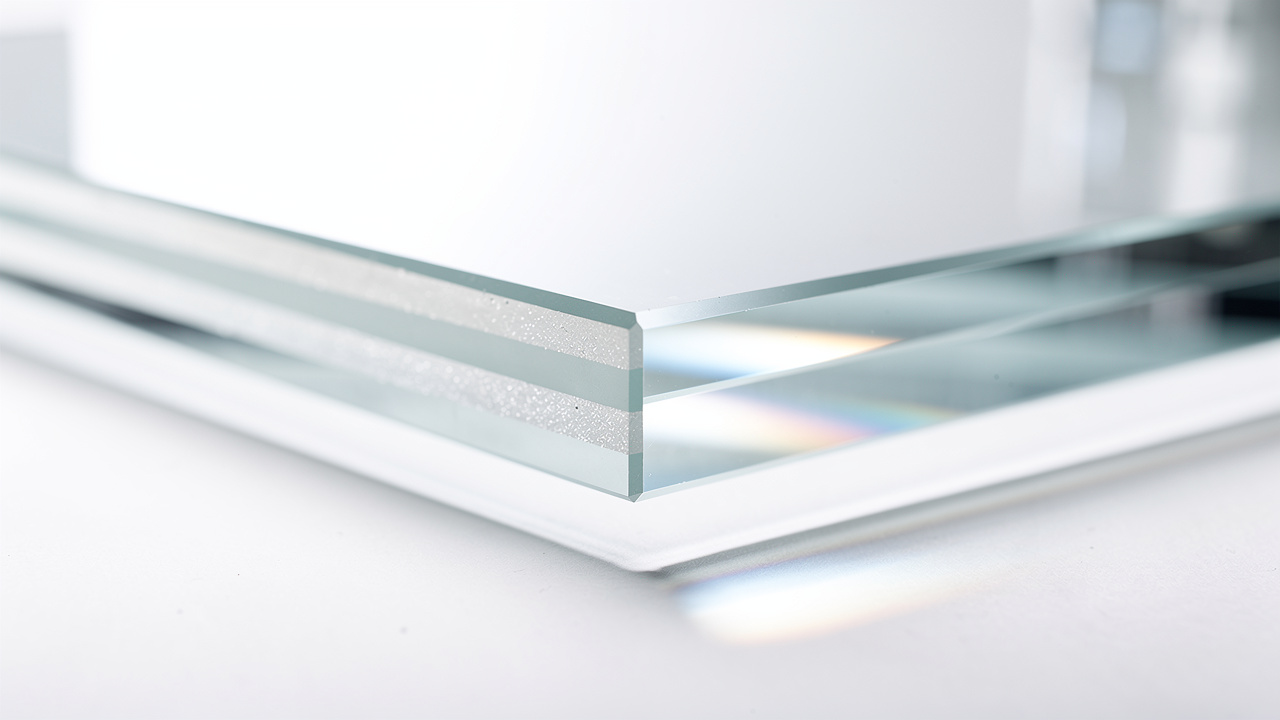
Acoustic laminated glass is a type of safety glass that adds a special sound-damping layer between two or more panes. This interlayer, often an acoustic-grade PVB film, absorbs vibration that carries traffic noise through normal glass. The result is lower interior sound levels without losing light, views, or design options.
When cars or trucks pass a building in Dubai, Abu Dhabi, or Sharjah, pressure waves hit the glass and make it vibrate. Standard float glass vibrates freely, so the sound energy passes almost straight into the room. In acoustic laminated glass, the softer interlayer flexes and turns much of that energy into a tiny amount of heat, which the ear does not hear.
In simple terms, acoustic laminated glass works through:
Extra mass – two or more panes give more resistance to sound waves.
Damping interlayer – the acoustic PVB layer reduces resonance.
Frequency tuning – glass thickness and interlayer type are chosen to target traffic noise bands.
The effect is strongest in the low to mid frequencies linked with engine rumble, tire noise, and metro movement. These tones travel far and pass through concrete, brick, and ordinary windows quite easily. By pairing the extra mass of two panes with this damping core, acoustic laminated glass systems give a clear step down in traffic noise, even on busy corridors.
According to the World Health Organization, long-term exposure to road traffic noise above 53 dB Lden increases risks of heart disease and annoyance.
The World Health Organization notes that keeping traffic noise below specific dB levels is important for long‑term health and comfort.
Acoustic laminated glass helps bring indoor noise closer to comfort levels, which matters for guest sleep in hotels, focus in classrooms, and privacy in clinics near major roads.
Compared with basic double glazing that simply uses an air gap, acoustic laminated units:
handle a wider range of frequencies
improve weak spots where normal glass lets sound pass more easily
perform better against real-world road and rail noise
This makes them a smarter choice for dense UAE sites where road and rail noise are constant.
How to Read Acoustic Performance Ratings: STC, Rw, and OITC Explained
Acoustic performance ratings give a simple way to compare how glass systems block sound. STC, Rw, and OITC all describe noise reduction, but each uses slightly different test methods and focus. Knowing these numbers helps you choose the right acoustic laminated glass system and check supplier claims.
A common saying among acoustic consultants is that “you can’t improve what you don’t measure.” These ratings are how you measure.
STC – Sound Transmission Class
STC (Sound Transmission Class) is common in American standards. It uses a lab test where sound hits one side of a glass sample and a microphone measures how much reaches the other side.
A 6 mm single pane may reach only about STC 27–29.
A good acoustic laminated IGU can reach STC values in the high 30s or low 40s.
According to the US Environmental Protection Agency, a change of 10 dB is heard as roughly half or double the loudness. Moving from STC 30 to STC 40 can feel like a major drop in noise for building users.
Rw – Weighted Sound Reduction Index
Rw (weighted sound reduction index) follows ISO rules and appears often in UAE and European-based specifications. The idea is similar to STC, and Rw numbers are close in size.
Many consultants in Dubai list façade glass targets such as Rw 40 for hotel rooms or premium apartments near highways. Rw is especially common in:
European supplier documentation
LEED and BREEAM related acoustics reports
UAE design briefs prepared by international consultants
OITC – Outdoor Indoor Transmission Class
OITC (Outdoor Indoor Transmission Class) focuses more on lower frequencies that match real traffic and aircraft noise. That makes OITC especially useful for sites along Sheikh Zayed Road, near the Dubai Metro, or close to airport flight paths.
In simple terms:
| Rating | Best Use Case | Typical Focus |
|---|---|---|
| STC | Interior walls, partitions, general glazing | Mid‑frequency sounds |
| Rw | Façade glass in ISO / European specifications | Similar to STC, ISO based |
| OITC | Traffic, rail, aircraft, façade performance | Lower, real‑world spectra |
For any large project, ask suppliers for full lab reports that show STC, Rw, and OITC for the exact glass build you plan to use, and reference studies like Accurate and efficient prediction of sound insulation in multilayer structures to understand how these ratings are validated. Look for tests under standards such as ASTM E413, ISO 717‑1, or BS EN based methods so you can compare options fairly, and consult the Guide for Acousto-Ultrasonic Assessment of composites and laminated structures to understand how bonded assemblies like acoustic glass are evaluated.
Tip: Always request full third‑party test reports, not just marketing brochures or “typical” values.
Where Acoustic Laminated Glass Makes the Biggest Impact in UAE Projects
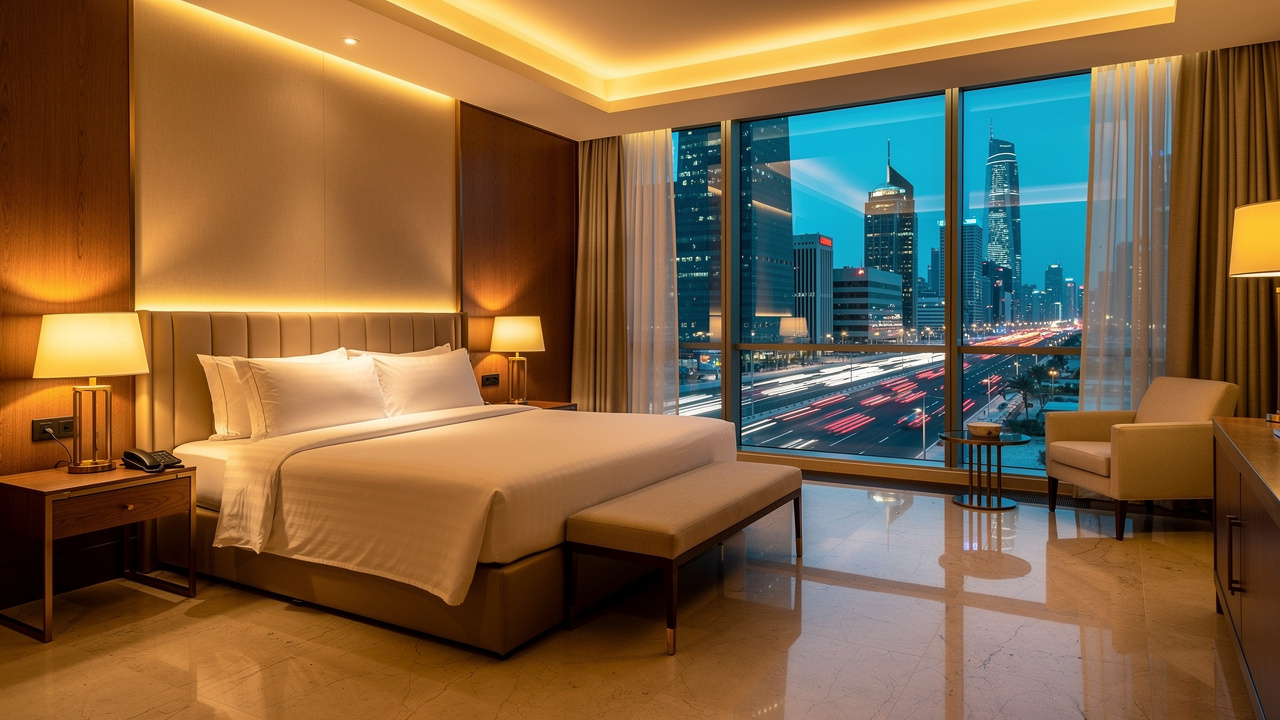
Acoustic laminated glass gives the best return where outside noise is high and indoor comfort is a priority. In UAE cities, that usually means:
hotels
offices
schools and universities
studios and media facilities
high-rise homes close to roads or metro lines
The right specification can turn a noisy address into a quiet, premium space.
Hotels along Dubai Marina, Jumeirah Beach Road, or Abu Dhabi Corniche rely on calm guest rooms even with traffic and nightlife outside. Acoustic laminated IGUs for room windows, lobby fronts, and spa zones help protect guest sleep and brand reputation. Many operators treat acoustic glazing as a base requirement, not a luxury add-on.
Open offices in Business Bay or Abu Dhabi Global Market often use glass to keep daylight and views. Acoustic laminated partitions for meeting rooms and focus pods keep speech private while keeping the space bright. Research from the US Green Building Council connects better acoustic control with higher occupant comfort and productivity in LEED certified buildings, which is relevant for many corporate projects in the Gulf.
Schools and universities near busy routes gain a lot when classroom and library glass cuts noise from playgrounds and traffic. Recording studios, podcast rooms, and streaming spaces in media hubs around Dubai Media City use thick acoustic laminates in control room windows to keep recordings clean. High-rise towers beside Al Khail Road or the Dubai Metro upgrade façades and balcony doors to acoustic glass to raise sale and rent values.
A quick reference table for common UAE applications appears below.
| Application Type | Recommended Glass Configuration | Typical STC / Rw Target |
|---|---|---|
| Hotel guest room near highway | Acoustic laminated IGU with asymmetric panes and 12–16 mm air gap | STC 38–45 / Rw 40–45 |
| Corporate meeting room | Single acoustic laminate in partition system | STC 35–40 |
| Classroom or library | Acoustic laminated IGU in thermally broken frame | STC 35–40 / Rw 37–42 |
| Studio control window | Thick multi‑ply acoustic laminate with large air gap to second pane | STC 45+ |
| High‑rise apartment façade | Acoustic laminated IGU with low‑E coating near traffic corridors | STC 38–43 / Rw 40–45 |
Tip: For façades near major roads, aim for the higher end of the STC / Rw ranges shown above, especially for hotel and residential projects.
Beyond Noise: Additional Benefits of Acoustic Laminated Glass for Gulf-Region Buildings

Acoustic laminated glass brings more than traffic noise control for Gulf projects. It also improves safety, blocks most UV radiation, supports energy savings, and keeps design choices wide open. For interior designers and facility managers, this means one product can meet several project needs at once.
Key extra benefits include:
Improved safety and security
From a safety point of view, laminated glass holds together when broken. The interlayer grips glass fragments so they cling to the film instead of falling. This behavior helps meet safety glazing rules for doors, low‑level glass, and balustrades in UAE hotels, malls, and schools.UV protection for interiors
Acoustic interlayers also block nearly all ultraviolet light, consistent with findings from A comprehensive review of ultraviolet radiation and functionally modified textile and glazing materials used in building applications. Tests on laminated glass show that standard PVB blocks about 99% of UV energy that causes fading of fabrics and finishes, supported by research on the UV irradiation effect on wet-finished fabrics and UV-blocking materials. In a Dubai hotel room or retail front, this protection helps carpets, artworks, and display items keep their color longer, as demonstrated by studies on Ultraviolet-Protective Textiles: Exploring the potential of UV-blocking materials for preserving interior finishes.Energy performance in hot climates
Acoustic laminated glass pairs well with low‑E coatings and tinted substrates, and research on Fiber Fabric-Reinforced Laminated Veneer materials for green buildings highlights how layered laminate systems contribute to thermal and acoustic insulation in sustainable construction. The glass can cut noise, reduce solar heat gain, and improve winter insulation in one build. In hot Gulf climates, cooling can account for more than half of building electricity use according to the International Energy Agency.The International Energy Agency notes that space cooling can use more than half of a building’s electricity in hot regions, so reducing heat gain through glass delivers direct cost benefits.
Design flexibility
Design wise, acoustic laminates are available in clear, tinted, reflective, patterned, and even printed forms. That means architects do not need to trade aesthetics for performance when they choose high‑grade acoustic glazing for towers, villas, or hospitality spaces.
How DE Sound Helps UAE and GCC Projects Source Acoustic Laminated Glass Systems

Sourcing the right acoustic laminated glass system for a UAE or GCC project can feel complex, especially when noise targets, budgets, and timelines all matter. DE Sound steps in as a regional wholesale acoustic partner that makes these choices simpler and more reliable.
DE Sound focuses on supplying certified acoustic materials at factory‑direct prices across the Gulf region. For projects that rely on acoustic glazing, their team helps clients:
interpret STC, Rw, and OITC data
compare different glass makeups
avoid under‑specified glass that fails to meet real site noise conditions
This guidance supports architects, interior designers, and contractors who may not work with acoustic ratings every day.
Project teams also face tight delivery schedules. With established Gulf logistics, DE Sound can coordinate acoustic materials so they arrive in line with façade, fit‑out, or studio build phases. This reduces the risk of last‑minute substitutions that weaken acoustic performance.
Another key benefit is free expert consultation. DE Sound advisers look at the full noise control plan, not only the glass. They suggest how:
acoustic laminated glass
door seals
wall panels
ceiling treatments
underlay products
can work together as one system. That approach is especially useful for hotels near busy roads, schools near highways, or studios in mixed‑use towers.
For detailed glass makeups and availability, DE Sound encourages project teams to contact their technical group. They can confirm certified configurations that match your acoustic targets and align with Gulf building code requirements.
Wrapping Up
Acoustic laminated glass systems offer one of the most effective ways to cut traffic noise while keeping the clear, modern look that UAE projects expect. By adding a sound‑damping interlayer between glass panes, these systems soften low‑frequency road rumble and raise comfort in rooms close to busy streets or rail lines.
Real performance depends on correct ratings, tested configurations, and how the glass works with frames, seals, and other acoustic materials. DE Sound supports this process with certified products, regional delivery, and clear advice that matches glass choices to project goals.
Interior designers, contractors, facility managers, and procurement teams across the Gulf can reach out to DE Sound for free technical consultation and wholesale pricing on acoustic materials for their next project.
Frequently Asked Questions
Question: What is the difference between acoustic laminated glass and standard laminated glass?
Acoustic laminated glass uses a special acoustic‑grade interlayer that absorbs vibration more effectively than standard PVB. This layer targets a wider range of sound frequencies, especially low traffic noise. The result is higher STC and Rw ratings, while standard laminated glass focuses mainly on safety and UV control.
Question: What STC rating do I need for a hotel room window near a busy road in Dubai?
A hotel room near a major Dubai road usually needs a window system around STC 38–45 to feel calm. The exact target depends on outside noise levels and brand standards. An acoustic consultant can refine the goal, but always ask for certified lab data for the specific glass build.
Question: Can acoustic laminated glass be combined with solar control coatings in the UAE climate?
Yes, acoustic laminated glass works very well with low‑E coatings and tinted glass. In an insulated unit, this mix cuts noise, limits UV exposure, and lowers solar heat gain at the same time. That combination helps reduce air‑conditioning loads in hot Gulf climates.
Question: Does DE Sound supply acoustic laminated glass across all GCC countries?
DE Sound supplies certified acoustic materials across the GCC through its regional network. For current stock, lead times, and acoustic glass options on a specific project, it is best to contact DE Sound’s technical team so they can review drawings and schedules.
Question: Is acoustic laminated glass suitable for recording studios and podcast spaces in the UAE?
Yes, acoustic laminated glass is widely used in control room and vocal booth windows for professional studios. Thick acoustic laminates with well‑designed frames provide strong isolation while keeping visual contact between rooms. Many UAE podcast and content spaces rely on this approach to keep recordings clean and clear.