
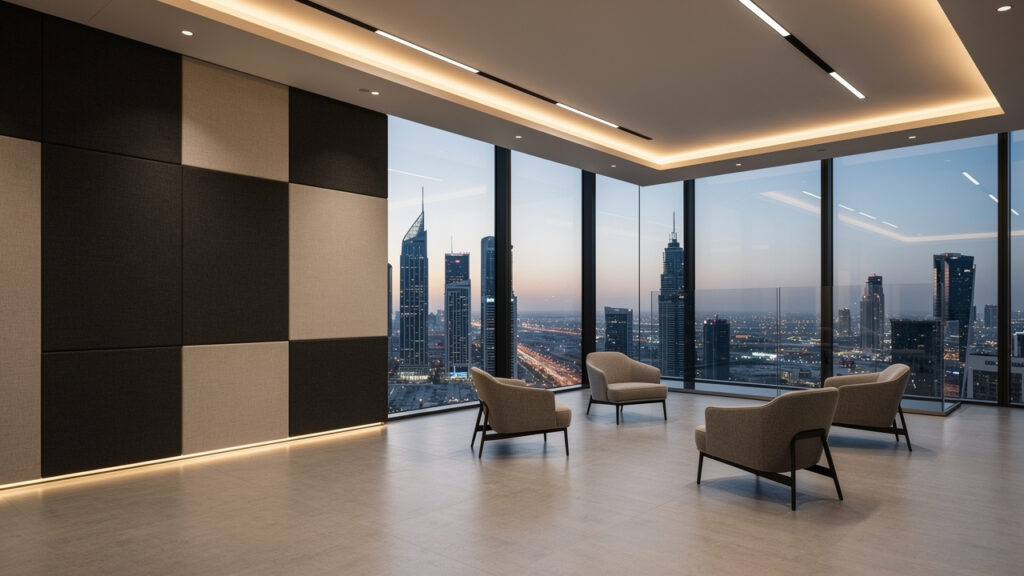
Business in Dubai runs on energy, but that energy gets loud fast. Professional soundproofing turns that noise into a controlled part of the space instead of a daily problem. In simple terms, professional soundproofing uses tested materials and building methods to block, absorb, and control sound so it does not hurt work, sleep, or guest comfort.
Noise in Dubai does not come from one place. Traffic, construction, busy lobbies, and open offices all stack together and create stress that never quite goes away. For hotels, schools, studios, and corporate towers, that constant noise slowly hurts ratings, learning, and productivity.
Professional soundproofing gives designers and facility managers a clear path forward. This article explains Dubai’s special noise pressures, the four core principles of sound control, which sectors feel the pain most, how DE Sound supports projects across the GCC, and what it really costs to ignore acoustics. The goal is simple: help every project team specify the right materials the first time.
Ready to see how that plays out across real Dubai buildings and fit outs?
Key Takeaways
Dubai’s building style and density create acoustic problems that feel very different from quieter cities. Tall glass towers, marble lobbies, and constant construction mean noise comes from above, below, and outside at the same time. Without a clear acoustic plan, every new project risks repeating the same mistakes.
Several sectors in the UAE carry the biggest burden from bad acoustics. Hotels, corporate offices, schools, and media studios all depend on clear speech and privacy. When sound control is weak, these businesses feel it in reviews, retention, and daily stress.
Professional soundproofing rests on four linked principles that work together. Blocking uses dense materials to stop sound travel, while absorption calms echo inside rooms. Vibration isolation stops impact noise through structure, and diffusion spreads sound more evenly for natural listening.
When acoustics support the task, people perform better with less effort. Research from the World Health Organization links long term noise to health stress, while office studies from Nielsen Norman Group show noise and lack of privacy are top workplace complaints. Better sound leads to better focus, calmer guests, and clearer teaching.
DE Sound acts as a regional acoustic partner rather than a single product shop. With PET panels, wood acoustic panels, and stretch systems held in GCC stock, the company helps Dubai projects match tested materials to real performance needs. Free technical guidance keeps bulk orders aligned with codes and budgets.
Why Dubai’s Commercial Environment Creates Distinct Acoustic Challenges

Dubai’s commercial environment creates acoustic challenges because dense towers, hard finishes, and constant activity push background noise far above what many offices and hotels were designed to handle. Professional soundproofing in this city must fight both outside noise and harsh internal echo at the same time. That mix makes basic fixes or light products fall short.
Three main noise sources tend to overlap:
Street And Traffic Noise
Major routes like Sheikh Zayed Road and Al Khail Road send steady traffic noise into glass curtain walls all day and late into the night. High-rise clusters such as Business Bay and Jumeirah Lakes Towers concentrate that noise between close buildings. According to the World Health Organization, long exposure above 55 decibels links to higher health risk, and many outdoor spots near highways sit above that mark during busy hours.Reflective Interior Surfaces
Inside, design trends add a second problem. Marble floors, exposed concrete, and full-height glass partitions reflect sound instead of calming it. That is why a single loud phone call on an open plan floor in DIFC seems to spread across dozens of workstations. Studies from Nielsen Norman Group show noise and lack of privacy rank among the main complaints in open offices.Ongoing Construction And Fit Outs
Construction adds a third layer. New towers, metro extensions by the Roads and Transport Authority, and constant fit outs in popular malls mean drilling, hammering, and impact tools are always nearby — and a review of modelling and prediction methods for flanking transmissions shows how impact energy from construction activity travels through connected building structures far beyond the source point. For hotels on Dubai Marina or near City Walk, this can affect both daytime meetings and night rest.
The result is clear: without proper acoustic design, even premium interiors feel busy, tiring, and less private than guests or staff expect.
What Professional Soundproofing Actually Involves And The Four Core Principles
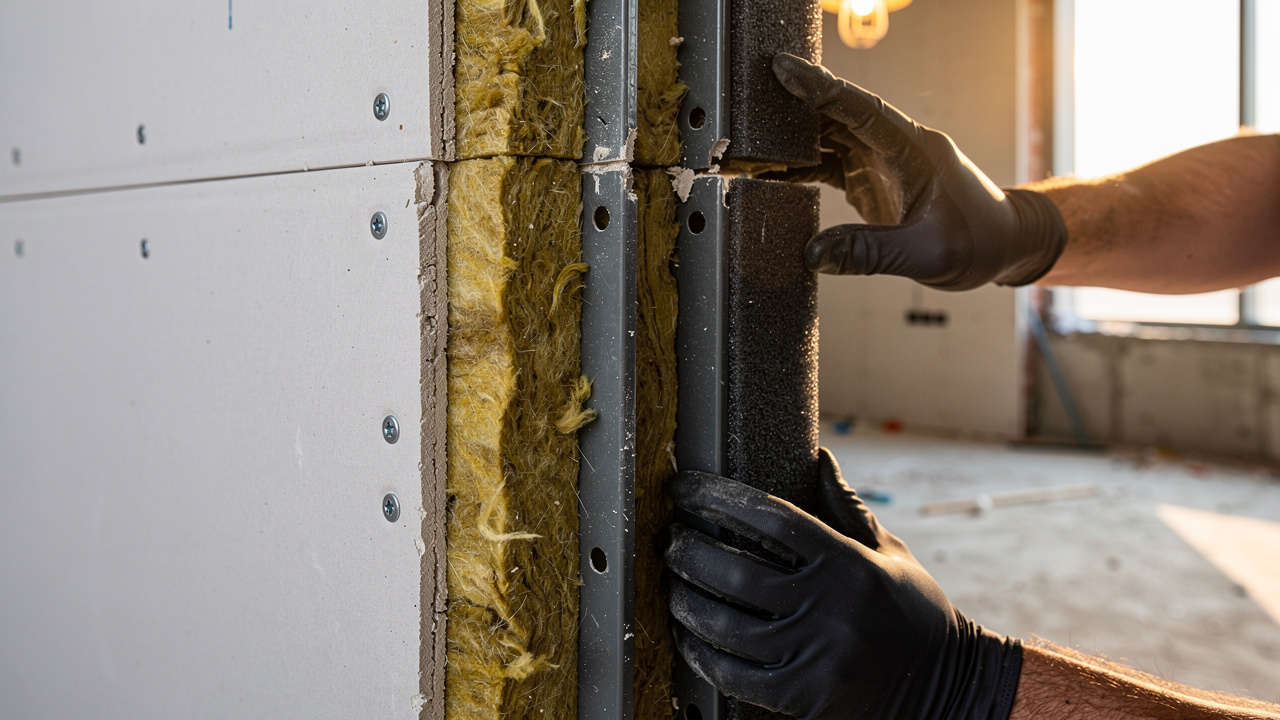
Professional soundproofing for Dubai projects combines building science, tested materials, and careful detailing to control how sound moves and behaves. It goes far beyond foam tiles or “acoustic” paint. When the four core principles work together, businesses get quieter rooms plus clear, natural sound where people work, meet, or relax.
The four principles look like this:
Blocking (Sound Insulation)
Blocking uses heavy, dense materials to stop sound from passing between spaces. Double layers of 5/8 inch Type X drywall, mass loaded vinyl, and solid-core doors with proper seals are common tools. Industry guides from the US General Services Administration show that higher Sound Transmission Class (STC) ratings on these assemblies directly improve speech privacy between rooms.Absorption (Controlling Echo)
Absorption deals with echo and long reverberation inside a room. Porous materials, such as PET acoustic panels, mineral wool, or fabric-wrapped boards, soak up sound that would otherwise bounce between concrete slabs and glass. DE Sound supplies PET and stretch panel systems that balance absorption with visual design, which matters in corporate offices and hotel lobbies.Vibration Isolation (Impact Noise Control)
Vibration isolation addresses impact sources, like footsteps in a corridor above or subwoofers in a lounge, that shake the structure itself. Resilient channels, isolation clips, and acoustic floor underlays reduce that transfer by breaking direct contact between surfaces and framing. This is key for gyms over offices or rooftop venues above guestrooms.Diffusion (Even Sound Distribution)
Diffusers use shaped surfaces to scatter sound instead of letting it pile up in one area. Recording rooms in Dubai Media City and home theaters in Dubai Hills often mix diffusers with absorbers to keep spaces lively but controlled. As acoustic engineer Trevor Cox notes:“Good design rarely means a dead room; it means sound that behaves in a controlled and even way.” — Trevor Cox, Professor of Acoustic Engineering at the University of Salford
When these four ideas guide product choice and layout, professional soundproofing delivers repeatable, testable results rather than guesswork.
Which Dubai Business Sectors Need Professional Soundproofing Most?
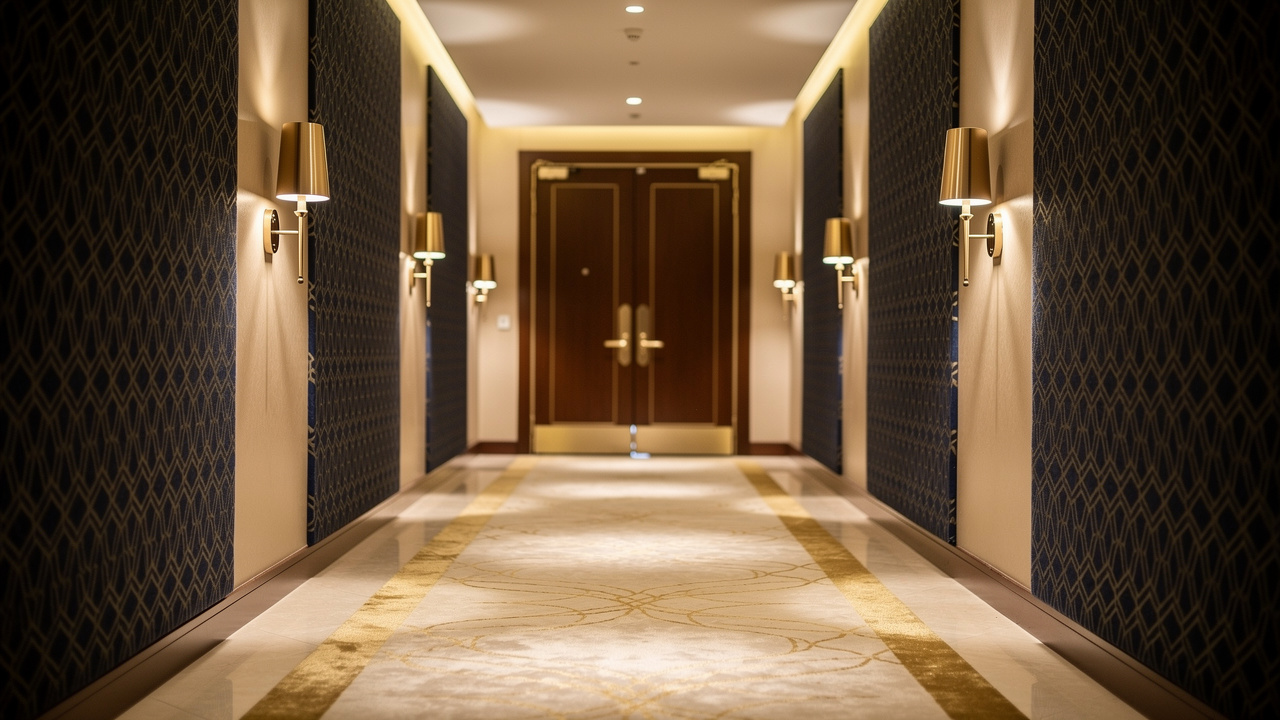
Certain Dubai sectors feel the impact of poor acoustics much more than others, which makes professional soundproofing a direct business concern. Hotels, offices, schools, and media spaces all link sound quality to guest ratings, contracts, and program outcomes. Each type of space faces different noise paths and comfort goals.
Hotels And Hospitality
Hotels and hospitality venues across areas like Palm Jumeirah, Downtown Dubai, and Dubai Marina depend on quiet rooms to protect five-star reputations. Guests judge privacy by how much hallway noise, lift sounds, or club music reaches the bed. J.D. Power hotel studies show noise ranks among top guest complaints worldwide, and the same holds for regional brands watched by Dubai Tourism. Meeting rooms and ballrooms also need good speech clarity for corporate events.Corporate Offices And Coworking Spaces
Corporate offices and coworking hubs in districts such as DIFC and Dubai Internet City run on calls, video meetings, and confidential talks. Open plan layouts with exposed ceilings make sound bounce across long distances. Research from Leesman highlights noise and lack of privacy as constant pain points in modern offices. Professional soundproofing and acoustic treatment allow phone rooms, boardrooms, and open desks to share space without constant disruption.Schools, Universities, And Training Centers
Schools and universities in areas like Academic City, Al Barsha, and Sharjah’s education zones see direct learning gains from better acoustics. The American Speech-Language-Hearing Association (ASHA) reports that poor classroom acoustics can cut how much speech students understand. When classrooms, libraries, and multipurpose halls use ceiling tiles, wall panels, and sealed doors, teachers do not need to raise their voices and students follow more easily.Studios And Content Creation Spaces
Studios, podcast suites, and content creator rooms are growing fast around Dubai Media City, Production City, and Al Quoz. These spaces need isolation from outside traffic, nearby warehouses, and even their own control rooms. Streaming on platforms like YouTube and Spotify rewards clear audio, so echo, street noise, or HVAC rumble all hurt the final product. Professional soundproofing, including room-within-room builds, decoupled ceilings, and tuned absorption, turns these spaces into reliable production tools rather than trial-and-error setups.
Across all these sectors, Dubai’s push toward smart city goals and quality tourism means that acoustic comfort is now part of brand value, not a hidden extra.
How DE Sound Helps Dubai Businesses Solve Their Acoustic Challenges

DE Sound supports Dubai businesses by pairing wholesale acoustic materials with hands-on technical guidance. Instead of juggling many small suppliers, project teams work with one regional partner that understands GCC codes, Dubai Municipality practice, and real project pressures. For interior designers and fit out contractors, that means fewer surprises and more predictable acoustic results.
On the product side, DE Sound focuses on tested and certified materials that suit modern Gulf interiors, including:
PET acoustic panels for open offices in Business Bay that need both absorption and sustainability points under LEED or Estidama.
Wood acoustic panels for luxury hotel lobbies along Sheikh Zayed Road where designers from firms like Gensler and Perkins+Will want warmth without harsh echo.
Stretch fabric systems to cover large walls or ceilings in conference rooms and schools while hiding services behind a clean finish.
Free expert consultation sits at the center of the service. DE Sound’s technical team reviews drawings, listens to noise complaints, and then suggests assemblies instead of random products. That might mean matching PET ceiling panels with heavier wall builds that include mass loaded vinyl and mineral wool, or recommending simple retrofits like door seals for cost-conscious tenants. This guidance helps avoid buying the wrong material for the noise type.
For projects that run across the GCC, such as hotel chains or education groups, DE Sound also solves the logistics side. Fast delivery into UAE, Saudi Arabia, Qatar, Oman, Bahrain, and Kuwait keeps schedules on track even when main contractors push for early handover. As acoustic consultant Oliver Reeth from Arup often reminds clients:
“Acoustics works best when it is treated as a system from structure to finishes, not as a final minute patch.” — Oliver Reeth, Senior Acoustic Consultant at Arup
DE Sound’s catalog and support model are built around that systems view.
| DE Sound Advantage | Business Benefit |
|---|---|
| Factory direct wholesale pricing | Makes professional acoustic materials viable for large and small projects |
| Tested and certified products | Aligns with Dubai building and fire safety requirements |
| Free expert consultation | Reduces trial and error and protects project budgets |
| Fast delivery across six GCC countries | Helps main contractors and fit out teams keep milestones |
| Eco friendly acoustic materials | Supports LEED, Estidama, and UAE net zero commitments |
The Business Cost Of Ignoring Professional Soundproofing In Dubai

Skipping professional soundproofing in Dubai carries both visible and hidden costs. Lost focus, poor guest sleep, and weak learning outcomes all turn into lower revenue or higher churn over time. For regulated sectors, weak sound control can even collide with code and privacy rules.
The risks show up differently by sector:
Offices And Workplaces
In offices, constant chatter and call noise lower concentration during deep work. Studies gathered by the World Green Building Council report that acoustic comfort is one of the main indoor factors linked to productivity. When staff in Dubai Internet City or TECOM spend more time masking sound with headphones, they often complete fewer high-focus tasks in a day and feel more tired.Hotels, Apartments, And Short-Stay Rentals
In hotels and furnished apartments, negative reviews on platforms like Booking.com and Google Maps quickly reflect noise problems. A recurring comment about nightclub bass, hallway noise, or slamming doors can push search ranking down for popular areas such as JBR or City Walk. Once the issue appears in several languages, brand teams spend far more on marketing to correct the public view than the original acoustic work would have cost.Schools, Clinics, And Confidential Spaces
Schools and training centers also carry risk. If a multipurpose hall or classroom in Academic City fails to meet local acoustic guidance, speech clarity drops, especially for younger students or learners of a second language — a concern reinforced by the repeatability of SOPRANOISE quick measurement methods for assessing sound insulation of barriers, which underscores how reliably quantifying acoustic performance is essential to verifying that spaces actually meet the standards they are designed for. That harms outcomes and parent satisfaction at the same time. Clinics and corporate suites that handle confidential talks must reach certain speech privacy levels to meet best practice from groups like ASHA and international healthcare bodies.
In short, poor acoustics keep costing money, time, and goodwill every day they remain unfixed.
The Final Word On Professional Soundproofing For Dubai Businesses
Dubai’s mix of dense towers, reflective interiors, and ambitious service goals makes professional soundproofing a basic design task, not a luxury upgrade. When blocking, absorption, isolation, and diffusion work together, offices feel calmer, hotels sound private, and classrooms support clearer teaching.
DE Sound gives Dubai project teams a practical way to reach that level. With PET panels, wood systems, and stretch panels held at wholesale pricing, plus certified data and free consultation, the company links real-world noise problems to proven assemblies. For contractors, architects, and facility managers across the GCC, that means fewer surprises and better long-term performance.
To move from noise complaints to controlled sound, project teams can contact DE Sound for a no-cost review of plans or browse the current catalog to match materials to goals.
Frequently Asked Questions
What Is The Difference Between Soundproofing And Acoustic Treatment?
Soundproofing focuses on blocking sound between spaces by using dense barriers and sealed details. Acoustic treatment focuses on reducing echo and improving clarity inside a room with absorptive panels and ceiling systems. Most commercial projects in Dubai need both for privacy and comfort.
How Much Does Professional Soundproofing Cost For A Commercial Space In Dubai?
Professional soundproofing cost in Dubai ranges from simple retrofits to full wall rebuilds. Industry guides describe entries such as mid-range upgrades with added drywall and mass loaded vinyl, and full assemblies with mineral wool and isolation clips. Wholesale sourcing from DE Sound helps large projects keep material spend under control.
Which Acoustic Panels Are Best For Open Plan Offices In Dubai?
PET panels, fabric-wrapped panels, and stretch systems all work well for open plan offices. PET options suit teams chasing both absorption and sustainability credits, while stretch walls give more visual freedom. DE Sound supplies all three panel types with factory-level pricing for GCC projects.
Does Professional Soundproofing Help With UAE Green Building Compliance?
Yes, acoustic design can support UAE green building targets when it uses low-emission and recycled materials. Recycled PET acoustic panels and carefully designed wall assemblies help with LEED and Estidama points. DE Sound offers several eco-focused product lines that align with Dubai sustainability rules.
Can DE Sound Supply Acoustic Materials For Large Hotel Or School Fit Outs Across The GCC?
Yes, DE Sound ships bulk acoustic materials to all six GCC countries. Hotels, schools, and corporate campuses can use one supplier for PET panels, wood acoustic panels, and stretch systems. This single relationship simplifies procurement and keeps finishes consistent from Dubai to Riyadh and Doha.