

Noise in Dubai’s commercial buildings quickly turns premium offices and hotels into crowded, stressful places.
Phone calls, lobby music, trolley wheels, and traffic echo across hard surfaces. Open-plan floors that look clean and modern can sound harsh and tiring if sound is left unmanaged.
Acoustic treatment uses specialized materials and smart layouts to control how sound behaves inside commercial buildings. In Dubai, these methods help open-plan offices, hotels, malls, and mixed-use towers reduce echo, improve privacy, and keep noise from traveling between floors. This guide explains the main acoustic strategies for commercial projects, the product types for each space, key performance ratings, and how to pick the right supplier.
You will learn:
which areas trigger the most noise complaints in commercial buildings
what wall, ceiling, and floor products work best in each type of space
how to read key acoustic ratings such as NRC, STC, and IIC
where a wholesale partner like DE Sound fits into your project team
Read on to see how better acoustics turn busy Dubai buildings into calm, productive spaces.
Key Takeaways
Before choosing materials or suppliers, it helps to see the big picture. These takeaways highlight decisions that interior designers, contractors, and facility managers handle every week across Dubai. Keeping them in mind makes it easier to match acoustic targets with real budgets and timelines.
Well-planned acoustic treatment now acts as basic infrastructure in Dubai offices, hotels, and mixed-use towers. It protects focus, privacy, and guest comfort, which supports productivity and stronger online reviews. According to the World Health Organization, long-term exposure to environmental noise above 55 decibels raises stress and heart disease risk.
Dubai open-plan offices and glass-walled high-rises amplify sound from calls, coffee points, and corridors. Unmanaged noise means more distractions, more mistakes, and lower tenant satisfaction. Research from the University of Sydney shows that lack of sound privacy is the top complaint in open-plan workplaces, ahead of lighting and temperature.
Choosing the right acoustic partner is as important as picking the materials themselves. Contractors and designers need certified products, clear documentation, and quick logistics across Dubai, Abu Dhabi, and the wider GCC. DE Sound combines factory-direct pricing, free expert consultation, and fast delivery to match the tight schedules common on Dubai fit-out projects.
Acoustic metrics such as NRC (absorption), STC (sound blocking), and IIC (impact noise) give project teams a shared language. Using these numbers in briefs and specifications keeps expectations realistic and helps avoid disputes once tenants move in.
Why Commercial Buildings in Dubai Need Acoustic Treatment
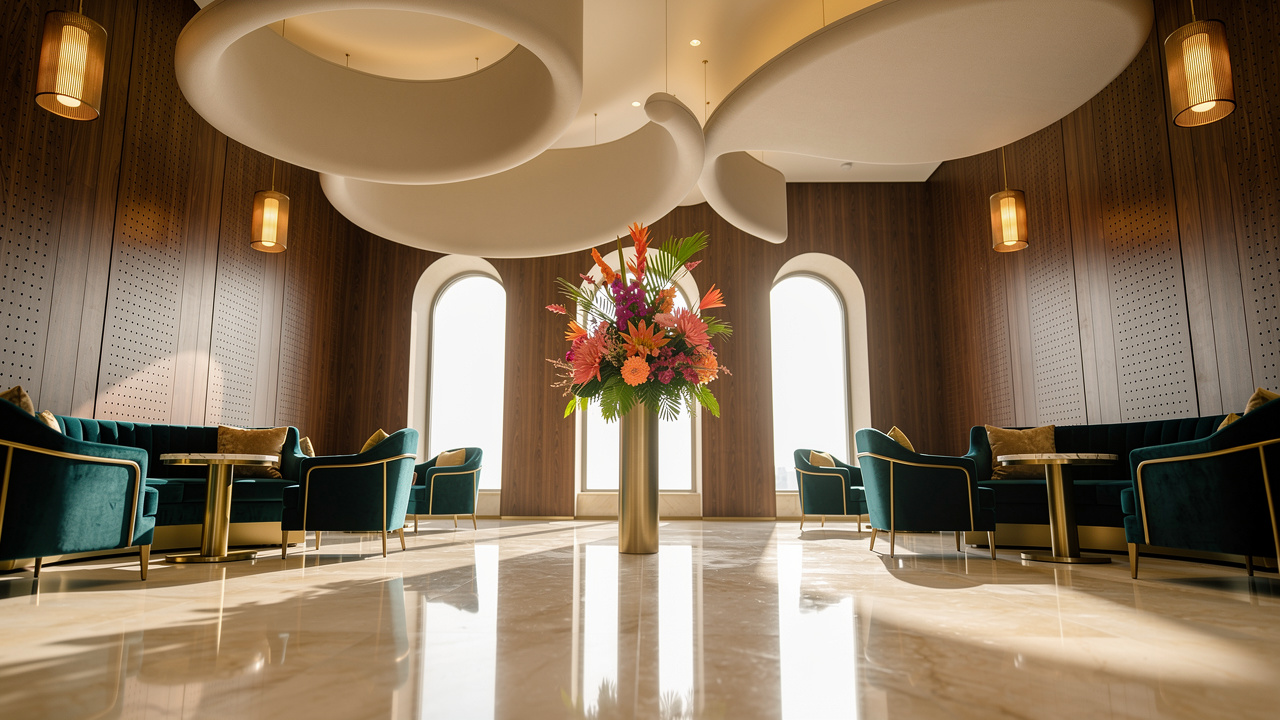
Commercial buildings in Dubai need acoustic treatment because dense high-rise districts create constant overlapping noise. Well-considered sound control protects the value of offices, hotels, and malls by reducing distractions, complaints, and early tenant turnover.
In areas like DIFC, Business Bay, and Dubai Media City, open-plan offices fill entire floors with hard glass and concrete finishes. Phone calls, video meetings, and printer noise bounce across large rooms, so staff struggle to concentrate. That constant background noise reduces focus time for knowledge workers and increases the risk of mistakes in finance, legal, and media firms.
Hotels in Downtown Dubai and Palm Jumeirah rely on quiet guest rooms and calm lobbies to protect their brand image. Noise from corridors, elevators, or nearby venues often shows up in online reviews, pulling ratings down even when design and service are strong. Research from the Cornell University School of Hotel Administration shows that noise complaints are a major negative theme in guest feedback, so acoustic comfort links directly to revenue.
A common saying among hotel operators is that guests rarely notice good acoustics, but they always notice bad acoustics. That line sums up how important quiet rooms and lobbies have become for repeat business.
To summarise why sound control matters so much in Dubai commercial property:
Productivity: Quieter offices support longer focus periods, clearer calls, and fewer errors.
Guest Experience: Hotels, clinics, and spas rely on calm environments to justify premium room and service rates.
Compliance: Developers and facility managers must align with building codes, fire approvals, and rating systems.
Regulation and certification add more pressure to get sound control right. The WELL Building Standard and LEED both include acoustic comfort criteria for offices and mixed-use buildings. Locally, UAE Civil Defence fire approvals and Dubai Municipality guidelines require tested, documented materials, so acoustic treatment has become a standard item in serious commercial specifications.
What Types of Acoustic Treatment Work Best for Commercial Spaces?
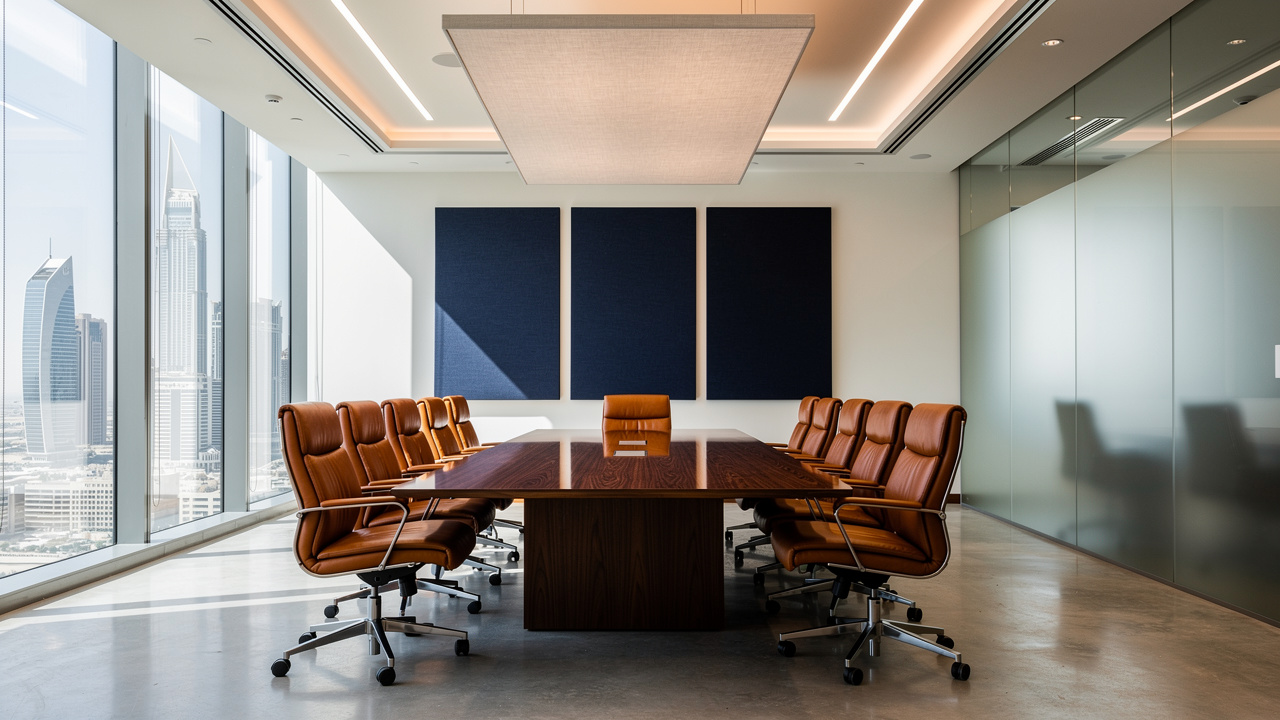
The most effective acoustic setup for commercial spaces combines absorption, isolation, and diffusion across walls, ceilings, and floors. The ideal mix depends on whether the project is an open-plan office, focused meeting space, hotel lobby, classroom, or retail floor.
Core acoustic elements include:
Wall-Mounted Acoustic Panels
Wall-mounted acoustic panels control echo and improve speech clarity inside rooms. PET panels, fabric-wrapped boards, stretch systems, and perforated wood finishes turn reflective concrete or gypsum into sound-absorbing surfaces. In Dubai boardrooms, co-working spaces, and classrooms, panels at ear height along side walls usually cut reverberation and make speech easier to follow.Ceiling Baffles And Clouds
Ceiling baffles and clouds treat the largest uninterrupted surface in most commercial interiors. Suspended elements with a high Noise Reduction Coefficient (NRC) absorb sound that would otherwise bounce between the floor and slab, especially in open offices and call centers. They can integrate with lighting and air diffusers, so designers still have freedom to create feature ceilings without sacrificing acoustic performance.Sound-Isolating Partitions And Membranes
Sound-isolating membranes and acoustic partitions focus on blocking transmission between spaces rather than changing sound inside a room. Products like mass loaded vinyl, acoustic plasterboard, and properly detailed double-stud walls raise the Sound Transmission Class (STC) of partitions between offices, hotel rooms, or cinema halls. When a tenant adds a studio or podcast room in a tower, dedicated acoustic doors and seals stop noise from leaking into corridors or neighboring suites.Floor Acoustic Underlayments
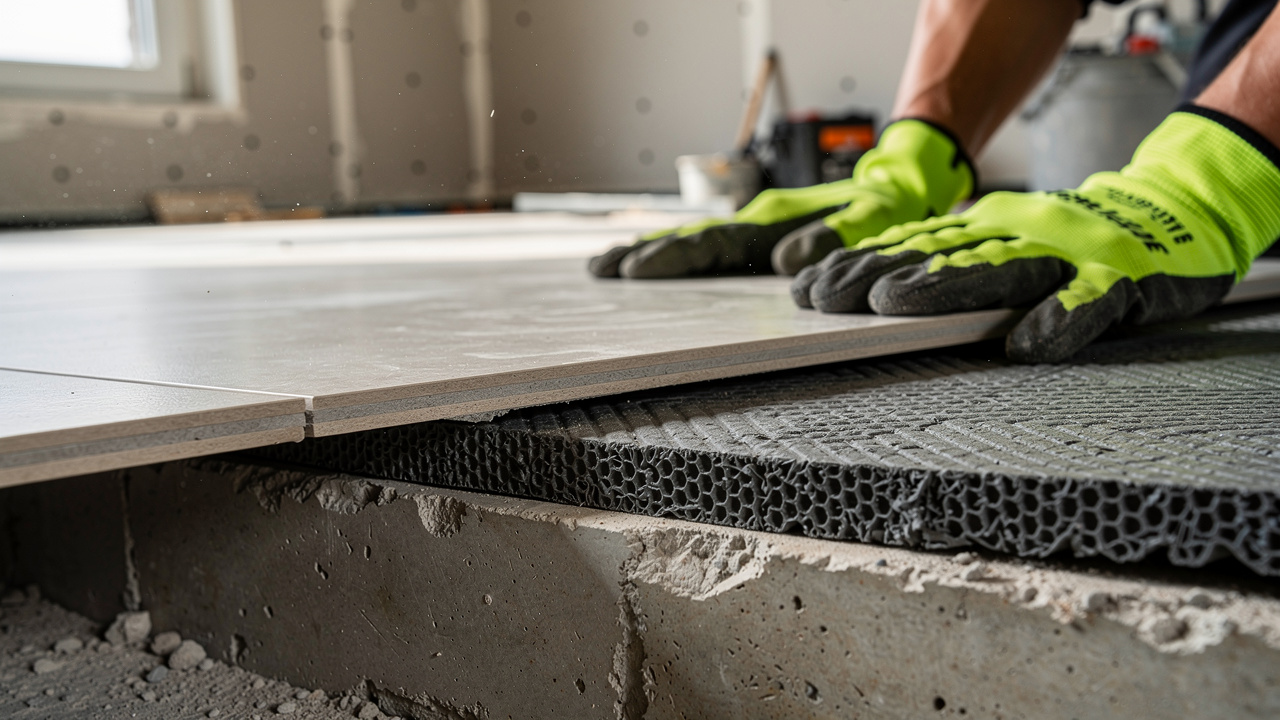
Floor acoustic underlayments reduce impact noise from footsteps, chairs, and trolleys in multi-storey commercial towers along Sheikh Zayed Road and beyond. Rubber or composite mats beneath tile, vinyl, or carpet improve Impact Insulation Class (IIC) values, which means fewer complaints from tenants on levels below. For gyms, serviced offices, and hospitality projects, combining underlayments with area rugs and soft seating gives a balanced result.
For many Dubai projects, a simple rule is to start by treating the ceiling, then add wall panels and floor underlayments where complaints persist. A specialist such as DE Sound can help translate broad comfort targets into a practical set of products and quantities.
Key Acoustic Performance Metrics to Know

Acoustic performance metrics keep product selection grounded in measurable results instead of guesswork. Three values appear on most data sheets for ceilings, wall panels, and partitions in UAE projects. Knowing the basics of NRC, STC, and IIC helps match products to the right noise problem.
For quick reference, project teams often look for the ranges below:
| Metric | What It Measures | Typical Design Goal For Offices/Classrooms In Dubai |
|---|---|---|
| NRC (Noise Reduction Coefficient) | How much sound a surface absorbs (0 = reflects everything, 1 = absorbs everything) | NRC 0.60–0.90 on main ceiling or wall treatment in open-plan areas |
| STC (Sound Transmission Class) | How well a full wall, floor, or ceiling blocks airborne sound | STC 45–55 between offices; 50+ for hotel and clinic partitions |
| IIC (Impact Insulation Class) | How well a floor build-up reduces impact noise such as footsteps | IIC 50+ in multi-storey offices, hotels, and apartments |
Noise Reduction Coefficient (NRC) shows how much sound a material absorbs on a scale from 0 to 1. A ceiling tile with NRC 0.80 absorbs about 80 percent of the sound that reaches it and reflects the rest. According to manufacturer data from Armstrong Ceiling, tiles with NRC 0.60 or higher are classed as high absorption for open offices and classrooms.
Sound Transmission Class (STC) rates how well a full wall, floor, or ceiling construction blocks airborne noise. Standard gypsum partitions often sit between STC 35 and 45, while high-performing walls for hotels or studios may target 55 or higher, according to the US General Services Administration. Higher numbers mean better privacy between offices, guest rooms, and apartments.
Impact Insulation Class (IIC) measures resistance to impact sounds such as footsteps, dropped items, or rolling carts. Bare slabs without acoustic underlay often show low IIC numbers, which leads to frequent complaints in stacked office and residential towers. Adding rubber, cork, or composite underlays lifts IIC ratings and helps landlords keep upper floor noise from disturbing occupants below.
When comparing data sheets, always check whether numbers refer to a single material or to a full wall, floor, or ceiling build-up. That difference has a major impact on real-world performance.
How to Choose the Right Acoustic Approach for Your Commercial Project in Dubai
Choosing the right acoustic setup for a commercial project in Dubai starts with a clear picture of the noise problem. Echo in a meeting room, poor privacy between offices, and footfall noise from an upper floor all need different approaches.
Once the issue is clear, a simple checklist makes design decisions faster and keeps budgets under control. The steps below work for new towers, shell-and-core fit-outs, and retrofits in live buildings.
Identify The Main Noise Issue
Pin down the core complaint before looking at product catalogues. Is the problem echo inside a space, voices leaking through walls, or impact noise from above? A short walk-through during working hours – even using a basic smartphone sound-level app – gives a much better sense of what staff and guests hear every day.Set Clear Acoustic Performance Targets
Use standards and project requirements to define measurable goals. The ANSI S12.60 classroom guideline suggests reverberation times around 0.4 to 0.6 seconds, while many hotels aim for partitions above STC 50 for bedrooms, according to ANSI and the US General Services Administration. Writing these numbers into the brief guides both design and procurement and avoids vague debates later.Review Construction Limits And Site Constraints
Look at the existing structure and services. New builds in Dubai Hills or Dubai Creek Harbour can often accept thicker walls or raised floors, while retrofits in older towers along Sheikh Zayed Road may need lighter, surface-mounted acoustic treatments. Ceiling height, slab load, existing MEP routes, and access to risers all affect what can be installed without rework.Check Fire Ratings, Sustainability Data, And Local Approvals
For every product type, confirm compliance with UAE Civil Defence, Dubai Municipality, and Abu Dhabi’s Estidama program. Fire classification, smoke development, VOC emissions, and recycled content often appear in the same technical file. Using tested, clearly labelled acoustic panels, ceilings, and membranes supports green building goals and protects the project team during approvals.Balance Aesthetics, Integration, And Supplier Reliability
Fabric-wrapped panels, printed acoustic art, perforated wood, and coloured PET boards let designers keep a strong visual concept while meeting technical targets. Large commercial projects in areas like Jumeirah Lake Towers or Dubai Silicon Oasis often run more smoothly with a single acoustic partner such as DE Sound, which supplies consistent batches, handles logistics, and provides GCC-wide delivery. Mock-ups or small pilot areas help confirm both the look and the sound before full rollout.
Tip: Many Dubai fit-out project managers say that acoustics should be planned at the same time as HVAC, lighting, and fire protection, not after ceilings are closed. Early coordination avoids costly changes later.
Why DE Sound Is Dubai’s Trusted Wholesale Acoustic Materials Partner
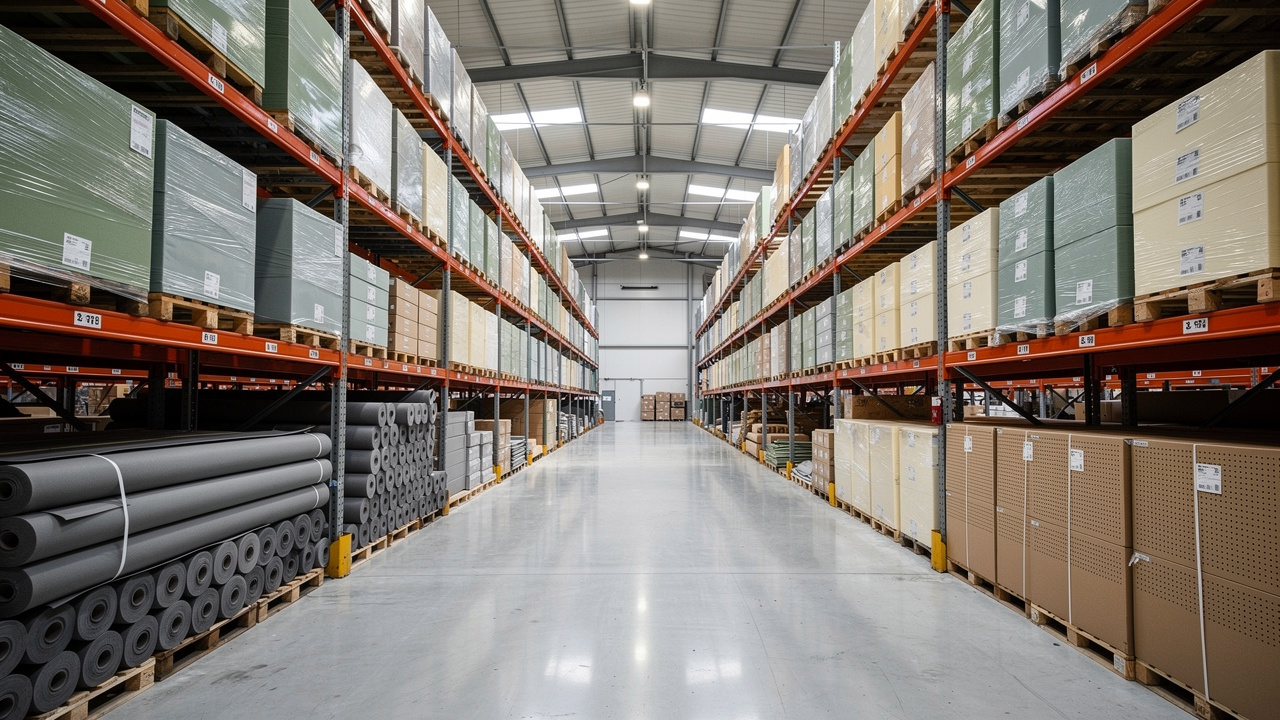
DE Sound is a trusted wholesale acoustic materials partner in Dubai because it offers factory-direct pricing with strong technical support. The company supplies a wide catalogue of certified panels, ceilings, membranes, and accessories across the UAE and all six GCC countries, which helps large projects stay aligned on quality and schedule. Centralised warehousing also simplifies deliveries to multiple sites or phases.
Interior designers and fit-out contractors can source PET wall panels, stretch fabric systems, perforated wood, ceiling baffles, acoustic underlays, and soundproofing barriers from one warehouse network. This reduces the risk of mismatched finishes or mixed performance levels when different floors or zones are ordered at different times. Studio owners and content creators in Dubai Media City can also order bass traps and broadband absorbers from the same brand.
Beyond supply, DE Sound provides free design input on panel placement, coverage percentages, and target NRC or STC values. Samples and data sheets support specification stages with architects, acoustic consultants, and client representatives. Because shipments move regularly between Dubai, Riyadh, Doha, Muscat, Manama, and Kuwait City, project teams benefit from predictable lead times rather than unpredictable import delays.
Several distributors, including Acoustica Middle East, SoundAway UAE, and Ecotone Systems UAE, also serve the region, yet DE Sound focuses on a wholesale-first model with clear pricing. Procurement teams can compare options quickly, knowing that bulk rates reflect factory channels rather than layered markups. That mix of pricing clarity, certified performance, and regional logistics makes DE Sound a dependable long-term partner for commercial acoustic work.
Concluding Thoughts on Getting Commercial Acoustics Right in Dubai
Good acoustics in Dubai commercial buildings are now a basic requirement rather than a luxury. Well-planned acoustic treatment lifts comfort, supports productivity, and protects long-term asset value. For project teams that need wholesale supply plus practical guidance, DE Sound offers a straightforward route from concept to delivered materials so offices, hotels, and malls sound as good as they look.
Frequently Asked Questions
What Is the Best Acoustic Material for an Open-Plan Office in Dubai?
The best starting point is high-NRC ceiling baffles combined with wall-mounted PET or fabric panels. This mix reduces reverberation and improves speech clarity at desks without changing every surface. As a simple guide, many open-plan offices work well when roughly 30–50 percent of the ceiling area is covered with good absorbers. DE Sound can suggest coverage and panel types once it reviews simple floor plans.
How Much Does Acoustic Treatment Cost for a Commercial Fit-Out in Dubai?
Costs depend on material type, coverage area, ceiling height, and project size. Basic wall and ceiling treatments can stay affordable per square metre and are often comparable to other mid-range interior finishes. More decorative options such as perforated timber or printed fabric systems cost more but can replace other feature finishes, keeping the overall budget balanced. DE Sound provides wholesale quotes so teams can match options to budgets at an early stage.
Do Acoustic Panels Also Act as Soundproofing?
Most acoustic panels do not soundproof rooms; they mainly absorb reflections and tame echo inside the space. To block noise between rooms you need added mass and decoupled constructions such as double-stud walls, acoustic membranes, and high-performance doors. DE Sound also supplies heavy membranes and other isolation materials when full privacy is required, for example between hotel rooms, meeting suites, or recording spaces.
Are DE Sound’s Acoustic Products Compliant with UAE Building Regulations?
Yes. DE Sound acoustic products are tested for UAE projects, and fire reports plus certificates support submissions to UAE Civil Defence and other authorities. This documentation helps consultants and contractors during approvals and gives facility managers confidence when they audit installed materials in the future.
How Quickly Can Acoustic Materials Be Delivered to a Dubai Project Site?
Lead times depend on whether items are stock or made to order. Many standard panels and PET boards ship quickly from local warehouses, which suits fast-track office and retail fit-outs. Custom colours, sizes, or perforation patterns follow agreed timelines, often linked to factory production slots and shipping schedules. Project teams should confirm delivery windows early so acoustic materials arrive on site in line with the ceiling and partition program.