
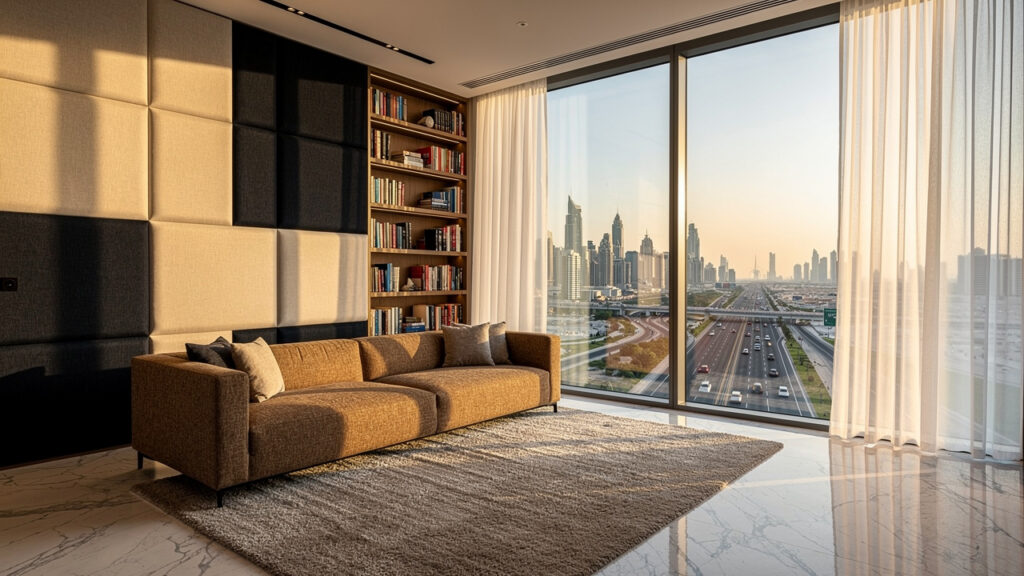
Traffic on Sheikh Zayed Road, loud neighbors, and tower construction can turn a Dubai apartment into a noisy box, and research on noise causes cardiovascular disease confirms why reducing it matters beyond comfort.
That constant noise hurts sleep, cuts focus for remote work, and ruins content recording or online calls — a concern echoed by the Frontiers | global burden of occupational noise-induced hearing loss, which is projected to worsen through 2040.
To soundproof your apartment in Dubai without major renovations, you adjust how sound enters, leaves, and reflects in each room.
The focus stays on surface-level products such as acoustic panels, window inserts, and door seals that install with light fixing.
This article explains noise types, priority surfaces, renter-friendly steps, and how DE Sound supports you.
Read on to match your noise problems with simple, lease-safe upgrades that fit Dubai apartments.
Key Takeaways
These key points give a fast guide before you order any acoustic material.
Spot airborne noise or impact noise first. This choice guides materials; a wrong match wastes money.
Treat walls, windows, and doors before anything else. These carry most noise. Floors matter in towers with hard finishes.
Use lease-safe products. Surface panels and inserts work well, and Dubai tenants can usually keep deposits.
Start with expert help. DE Sound offers free advice, and factory pricing keeps acoustic panels realistic for most budgets.
What Types Of Noise Are Actually Affecting Your Dubai Apartment?

The main noise types that affect a Dubai apartment are airborne noise and impact noise.
Understanding both helps you choose products that actually quieten rooms instead of giving only cosmetic change.
Airborne noise includes neighbor voices, TV sound through shared drywall, and traffic from Sheikh Zayed Road or Al Khail Road.
These sounds slip through gaps around doors and windows or through lightweight partitions that lack real mass.
Dense, sealed layers such as glazed inserts, barrier panels, and acoustic doors help slow this noise down.
Impact noise comes from footsteps, dropped items, dropped items, or chairs that scrape on tile in the unit above.
The vibration moves through slabs, beams, and walls, so it often feels like it arrives from every side at once.
To cut this, you need resilient layers under flooring or decoupled ceilings that break the vibration path.
Dubai towers often mix large glass surfaces, hard marble floors, and open-plan living, which means both airborne and impact noise bounce freely.
That layout explains why a simple rug or curtain rarely gives enough relief.
“There is overwhelming evidence that exposure to environmental noise has adverse effects on the health of the population.”
— World Health Organization, Burden of Disease from Environmental Noise
According to the World Health Organization, environmental noise costs people in Western Europe over one million healthy life years every year, so correct diagnosis is more than a comfort issue.
Which Surfaces Should You Treat First To Soundproof Your Apartment?
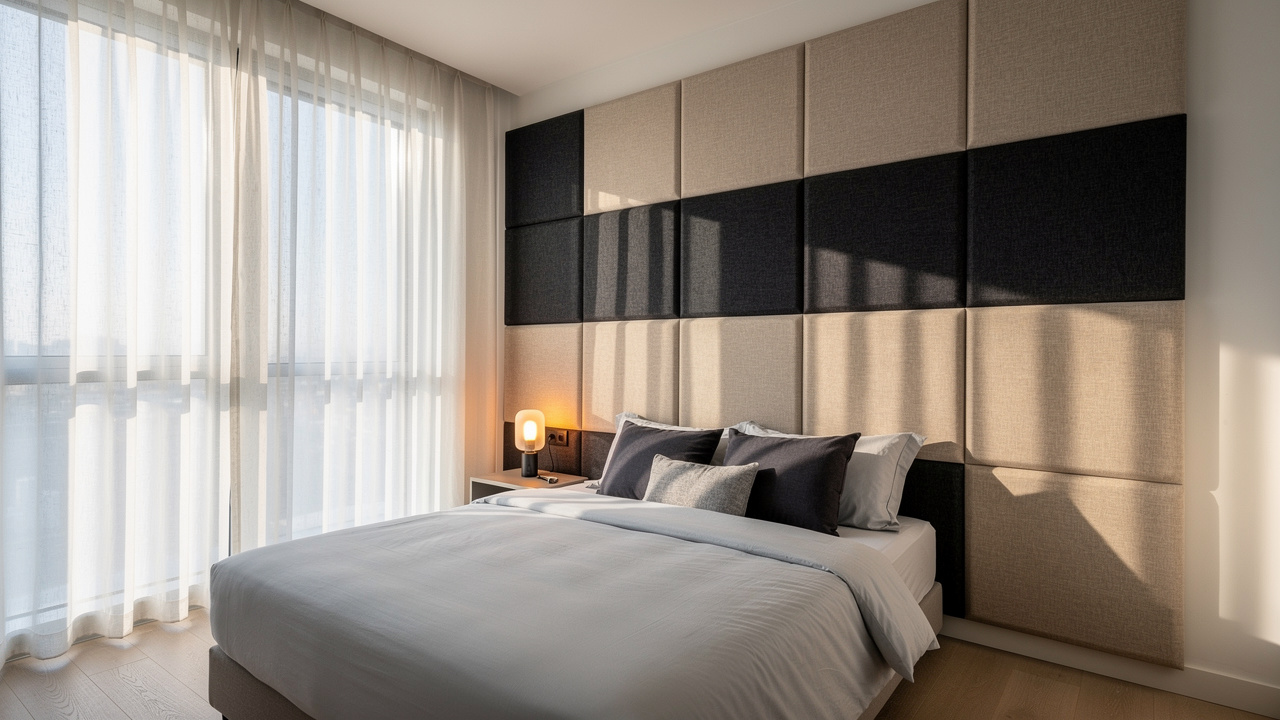
To soundproof your apartment without major work, focus first on the surfaces that leak the most noise: walls, windows, doors, then floors and ceilings.
Treating those in a smart order often gives more relief than covering every inch with foam.
The summary below links each surface to a lease-friendly option.
| Surface | Main Noise Issue | Non Invasive Option | Effort Level | Relative Cost |
|---|---|---|---|---|
| Shared walls and ceilings | Neighbor voices and TV through partitions | PET, wood, or stretch acoustic panels from DE Sound | Medium | Medium |
| Windows facing streets | Traffic and construction from outside | Acoustic window inserts, seals, and heavy curtains | Medium | Medium to high |
| Entry and corridor doors | Hallway voices and lift noise | Door seal kits, automatic bottoms, solid sweeps | Low | Low |
| Hard tile or marble floors | Footsteps within your unit | Thick rugs with acoustic underlay | Low | Low to medium |
Shared walls and ceilings often cause the clearest neighbor noise in Dubai apartments, especially in towers around Dubai Marina or Business Bay, and studies on measurement and prediction of airborne sound insulation in partition walls confirm how much performance varies by construction type.
Surface-mounted PET, wood, or stretch panels from DE Sound add absorption and some extra mass without opening walls or touching structure.
Panels sit on brackets or light framing, so renters and owners both gain a quieter living room or bedroom.
Windows are usually the weakest point against street noise.
According to the U.S. Environmental Protection Agency, normal indoor conversation sits near 60 decibels, while a quiet bedroom target stays around 35 decibels at night.
Acoustic inserts, better seals, and layered blackout curtains over glass that faces Sheikh Zayed Road, Dubai Creek, or a busy school yard help pull levels closer to that range.
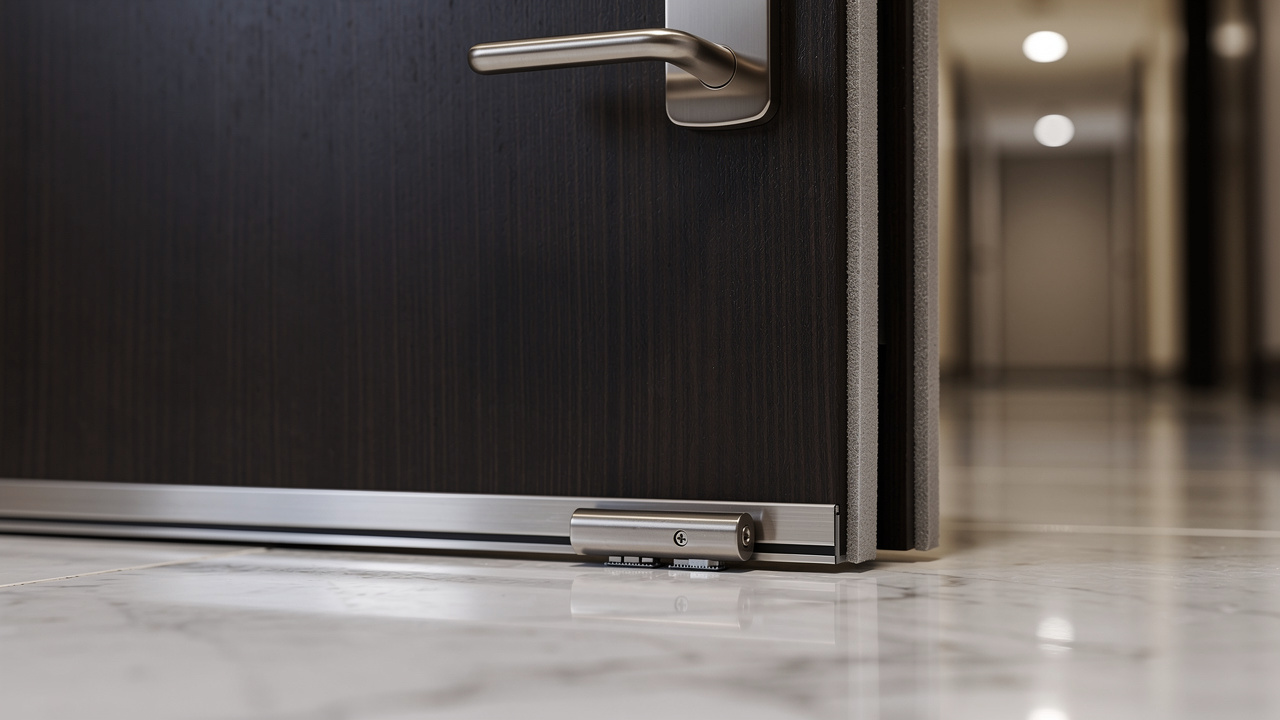
Apartment entrances and corridor doors often have big gaps at the sides and under the leaf, which act like open vents.
Simple upgrades such as adhesive seals, drop-down automatic bottoms, or dense door sweeps close these paths with very little mess.
Many Dubai residents report that once the door seals improve, voices and trolley noise from the corridor fall sharply.
Hard tile or marble floors in new towers reflect sound and pass impact noise straight into the slab, a challenge addressed by research on improving building floor acoustics with innovative inorganic sound insulation coatings.
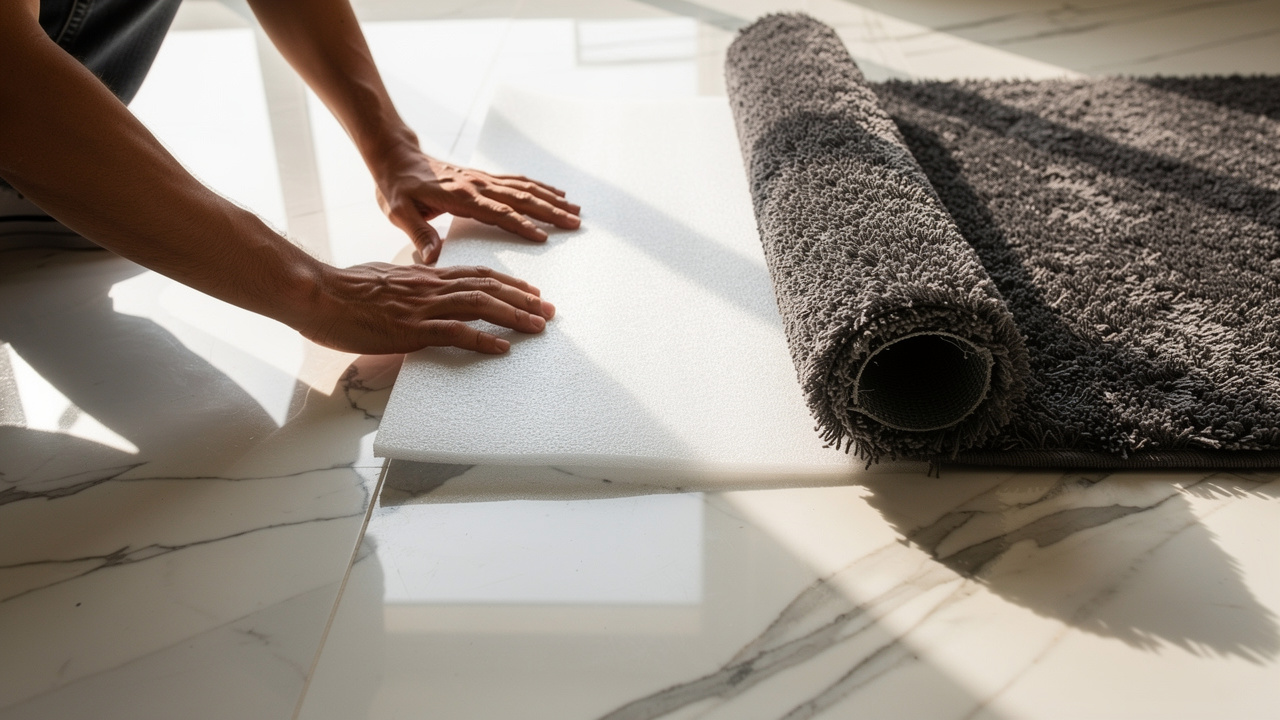
A heavy rug with a dense underlay softens your footsteps so neighbors below hear less, and your own space feels calmer.
For impact from above, a decoupled ceiling with acoustic hangers works best, and DE Sound can advise designers on surface systems that respect building rules.
Budget-Friendly Options For Renters In Dubai
Many Dubai tenants feel stuck because leases limit drilling and heavy works.
You can still soundproof your apartment step by step with small, reversible moves.
These ideas suit short-term stays near Downtown Dubai, Dubai Marina, or any other busy community.
Lay a thick rug and add a dense pad. This soft layer trims footstep noise and makes rooms feel less harsh.
Push full bookshelves to shared walls. Packed pages add weight and scatter sound that would otherwise pass straight through.
Use a white noise machine or app. Gentle sound masks sudden spikes from traffic or neighbors. Sleep usually feels deeper.
Seal cracks around frames and pipes with acoustic sealant. Tiny gaps leak loud noise; one tube often treats a whole studio.
Hang heavy blackout curtains over glass. Extra fabric slows street noise and blocks glare, and it works well beside any future window insert.
See these moves as helpers, not full fixes. Proper panels and barrier layers still matter; DE Sound can link them into a clear, room-by-room plan.
What Are The Most Common Soundproofing Mistakes Dubai Residents Make?
The most common soundproofing mistakes in Dubai apartments come from product confusion and from missed gaps.
Many residents buy foam panels or thin curtains and expect silence, then feel disappointed when neighbor noise hardly changes.
A short check of how sound enters your space prevents this frustration.
One big myth says that any acoustic panel blocks outside sound.
In reality, fabric or PET panels mainly absorb echo inside the room.
They help speech clarity for Zoom calls or TikTok videos, yet they do not stop TV sound that travels from your neighbor through the wall.
The next mistake is to ignore small openings around frames, sockets, and service risers.
Even a five-millimeter gap around a window frame can act like a mini loudspeaker.
The European Environment Agency notes that more than 20 percent of people in Europe live with traffic noise above health limits, so every leak you close has real value.
You also see the same three patterns across Dubai towers and villas:
Treating airborne issues with impact fixes. Floor underlay will not stop a loud TV. You first match the method to the noise type.
Covering one surface only. A treated wall does little if the main leak is the window. Map every surface that carries sound into the room.
Skipping any basic assessment. People rush to buy products on sale. A ten-minute phone call with DE Sound can replace months of trial and error.
How DE Sound Helps You Soundproof Your Apartment The Right Way

DE Sound helps you soundproof your apartment in Dubai with products that fit Gulf buildings and everyday budgets.
The company supplies tested acoustic materials, then backs them with clear, human advice rather than complex jargon.
That mix suits both a single noisy bedroom and a full tower fit-out.
On the product side, DE Sound offers PET, wood, and stretch acoustic panels that mount directly on walls or ceilings.
Surface-applied barrier layers and other sound control sheets give extra mass without deep drilling into concrete.
Because DE Sound works on a factory direct model, residents and contractors receive wholesale-level pricing even for small orders.
Key ways DE Sound supports Dubai apartments and studios include the points below.
Certified acoustic performance across panels and layers. Test reports fit UAE expectations, which keeps consultants and landlords comfortable. You get products that match the numbers on the sheet.
Fast delivery across the UAE and the wider GCC. Projects in Dubai, Abu Dhabi, Riyadh, or Doha receive material on tight schedules. That speed matters when tenants wait for quieter rooms.
Free expert consultation for residents and professionals. A short call or site visit turns vague noise complaints into a clear, step-by-step plan. This guidance reduces over-ordering and missed items.
For facility managers and content creators, that guidance lines up with global health advice on noise, including research on the impacts of workplace noise exposure and the mitigation strategies that consistently reduce harm.
The National Institute for Occupational Safety and Health estimates that about 22 million workers face harmful noise each year, so acoustic comfort links directly to performance.
By leaning on DE Sound, you reduce guesswork and move faster to a calm, believable result.
The Bottom Line: Start With The Right Products And The Right Advice
Quiet in a Dubai apartment starts with two clear steps:
Decide whether airborne or impact noise hurts you more, then note which surfaces carry that sound.
Match each surface with a lease-friendly upgrade rather than a random bundle of online gadgets.
Because Dubai homes rely on hard finishes and tight building rules, product choice matters even more than in older cities.
DE Sound brings certified panels, factory direct pricing, and fast GCC delivery together with simple, honest advice.
Reach out for a free consultation or browse their acoustic range, and turn your next fit-out into a calmer place to live and work.
Frequently Asked Questions
Question: Can I soundproof my Dubai apartment without breaking my lease?
Yes, you can use surface products to soundproof your Dubai apartment and still respect your lease.
Panels, window inserts, and door seal kits often fix with removable hardware.
DE Sound can suggest options that come down clean when you move.
Question: Do acoustic panels actually block noise from neighbors?
No, acoustic panels alone do not block your neighbors.
Panels absorb echo and improve how your room sounds.
To reduce TV or music through walls, you add mass layers, seals, or better glazing.
Question: What is the most effective non-invasive method for wall noise in an apartment?
For wall noise, an effective surface approach is a dense barrier panel system plus sealing of gaps.
Surface-mounted PET or wood panels from DE Sound go on the loudest wall sections.
Acoustic sealant then closes leaks.
Question: How much does it cost to soundproof an apartment in Dubai?
Costs vary, since a small studio with light traffic needs fewer materials than a large flat beside Sheikh Zayed Road.
DE Sound keeps budgets steady through factory direct pricing.
A quick quote based on drawings gives realistic numbers.
Question: Does DE Sound deliver acoustic materials across the UAE?
Yes, DE Sound delivers acoustic materials across the UAE and the wider GCC.
Residents and fit-out contractors receive the same organized logistics.
That reach makes it easy to repeat a working package across several properties.