
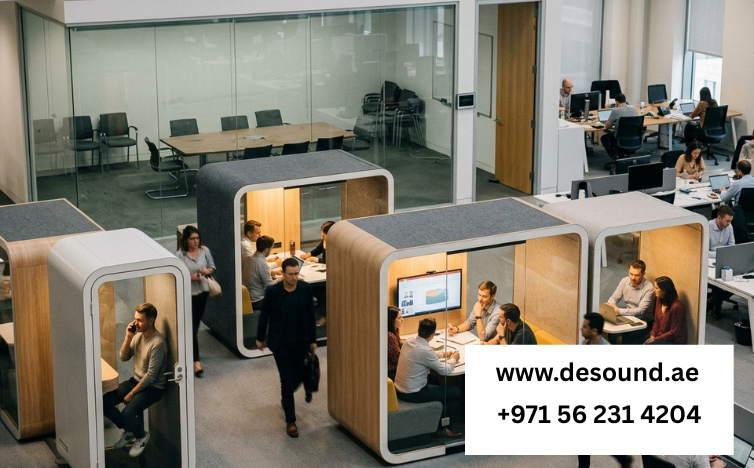
Walk into any modern office today and you’ll notice something changing. Large meeting rooms still exist—but they’re no longer the center of daily work. Instead, smaller, smarter, and more flexible solutions like acoustic pods are taking over. This shift isn’t random. It’s driven by how people actually work now.
Most office interactions today are no longer long boardroom meetings. They’re quick calls, short discussions, or focused solo work. In fact, studies show that up to 73% of meetings involve just 2–4 people, yet offices are still filled with oversized meeting rooms designed for large groups.
That mismatch is exactly why acoustic pods are becoming the smarter choice.
Modern Work Needs Smaller, Faster Spaces
The way teams operate has changed. Work is faster, more flexible, and often digital. Employees need spaces for:
- Quick video calls
- Short one-on-one discussions
- Focused work sessions
Traditional meeting rooms are too large, often booked, and not designed for these quick interactions. Acoustic pods solve this by providing instant access to private space without scheduling delays.
Instead of walking across the office searching for an empty room, employees can step into a nearby pod and continue working without interruption.
Flexibility Is the Biggest Game-Changer
One of the main reasons acoustic pods are replacing meeting rooms is flexibility. Traditional meeting rooms are fixed. Once built, they cannot be moved or resized without renovation.
Acoustic pods are completely different. They are modular, movable, and scalable. Businesses can add more pods as teams grow or rearrange them as office layouts change.
This flexibility is especially important for:
- Growing companies
- Coworking spaces
- Hybrid work environments
In these setups, adaptability matters more than permanence.
Faster Installation, Lower Cost
Building a meeting room is not just expensive—it’s disruptive. It involves construction, downtime, and long planning cycles.
Acoustic pods remove that problem completely. They can be installed in days, sometimes even hours, without structural changes.
From a business perspective, this means:
- No construction delays
- Lower upfront investment
- Immediate usability
For companies trying to scale quickly, this is a major advantage.
Better Noise Control in Open Offices
Open-plan offices look modern, but they come with one major issue: noise. Conversations, calls, and background chatter spread easily, making it hard to focus.
Acoustic pods are specifically designed to solve this. They use layered materials and sealed structures to create isolated environments that reduce both internal and external noise.
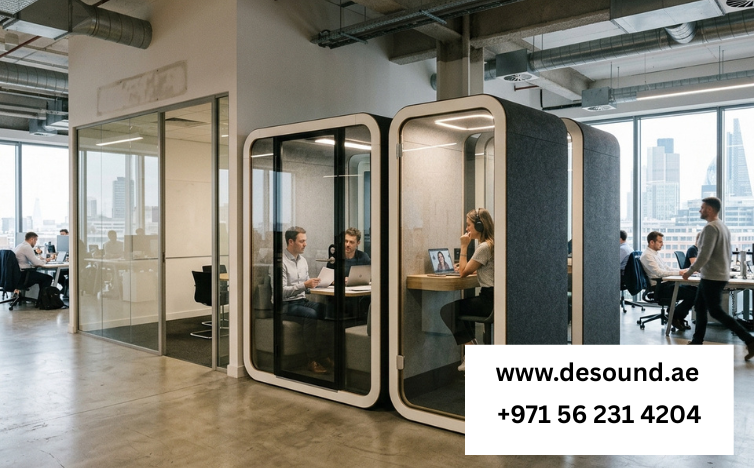
Some high-quality pods can reduce noise by 30–35 dB, creating a quiet zone even in busy offices.
This makes them ideal for:
- Private calls
- Video meetings
- Deep focus work
Better Use of Office Space
Traditional meeting rooms take up a significant amount of space—and often go underutilized. Research has shown that large meeting rooms are frequently used at only a fraction of their capacity.
Acoustic pods solve this inefficiency by:
- Occupying less space
- Serving multiple purposes
- Supporting short, frequent use
Instead of one large room sitting empty, multiple pods can serve more people throughout the day.
Designed for How Offices Actually Work Today
Modern offices are no longer static. Teams are hybrid, meetings are digital, and work patterns change daily.
Acoustic pods align perfectly with this reality. They provide:
- On-demand privacy
- Compact meeting spaces
- Flexible layouts
Meanwhile, traditional meeting rooms still serve a purpose—but mostly for large group discussions, presentations, or client meetings.
This is why many companies are not fully replacing meeting rooms—but reducing them and replacing the rest with pods.
The Real Shift: From Permanent to Adaptive Workspaces
The rise of acoustic pods is part of a bigger trend in office design. Businesses are moving away from rigid layouts toward adaptable environments that can evolve over time.
Acoustic pods represent this shift perfectly. They allow offices to:
- Scale without reconstruction
- Adapt to changing team sizes
- Improve productivity without redesigning the entire space
This is why they are no longer just an alternative—they are becoming a standard feature in modern workplaces.
Call us: Contact DeSound Soundproofing Expert in Dubai For Soundproofing: +971 56 231 4204
Conclusion
Acoustic pods are replacing traditional meeting rooms because they match how people work today. They offer flexibility, faster setup, better noise control, and more efficient use of space.
Meeting rooms are not disappearing—but their role is changing. Instead of being the default solution, they are now part of a larger system where acoustic pods handle everyday tasks.
If your office struggles with noise, lack of privacy, or inefficient space usage, shifting toward acoustic pods is no longer just an upgrade—it’s a smarter way to work.