
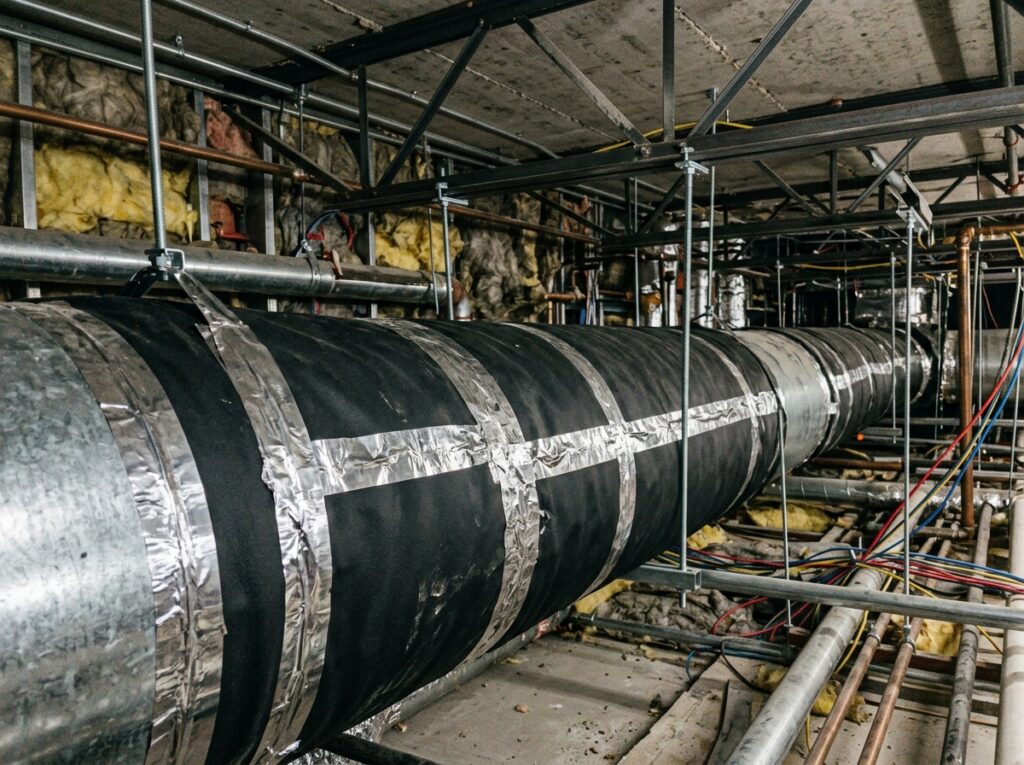
Controlling unwanted noise is becoming increasingly important across Johannesburg as residential developments, commercial buildings, entertainment venues, offices, and industrial facilities continue to grow. Noise from neighbouring rooms, traffic, machinery, music, and building services can affect privacy and comfort when walls and floors do not provide sufficient sound isolation.
Mass Loaded Vinyl (MLV) is a dense, flexible soundproofing membrane designed to help reduce airborne sound transmission. Its high mass combined with relatively low thickness makes it useful when additional sound-blocking performance is needed without creating an excessively bulky construction.
From apartment buildings and offices to recording studios and industrial areas, MLV can be incorporated into different building assemblies to strengthen their soundproofing performance.
What Is Mass Loaded Vinyl?
Mass Loaded Vinyl is a flexible, high-density membrane specifically developed to act as a sound barrier.
Its main purpose is to add mass to a wall, floor, ceiling, partition, or enclosure. The additional mass makes it more difficult for airborne sound energy to pass through the construction.
Unlike decorative acoustic panels, which are primarily used to absorb sound reflections inside a room, MLV is designed to help block sound transmission between spaces.
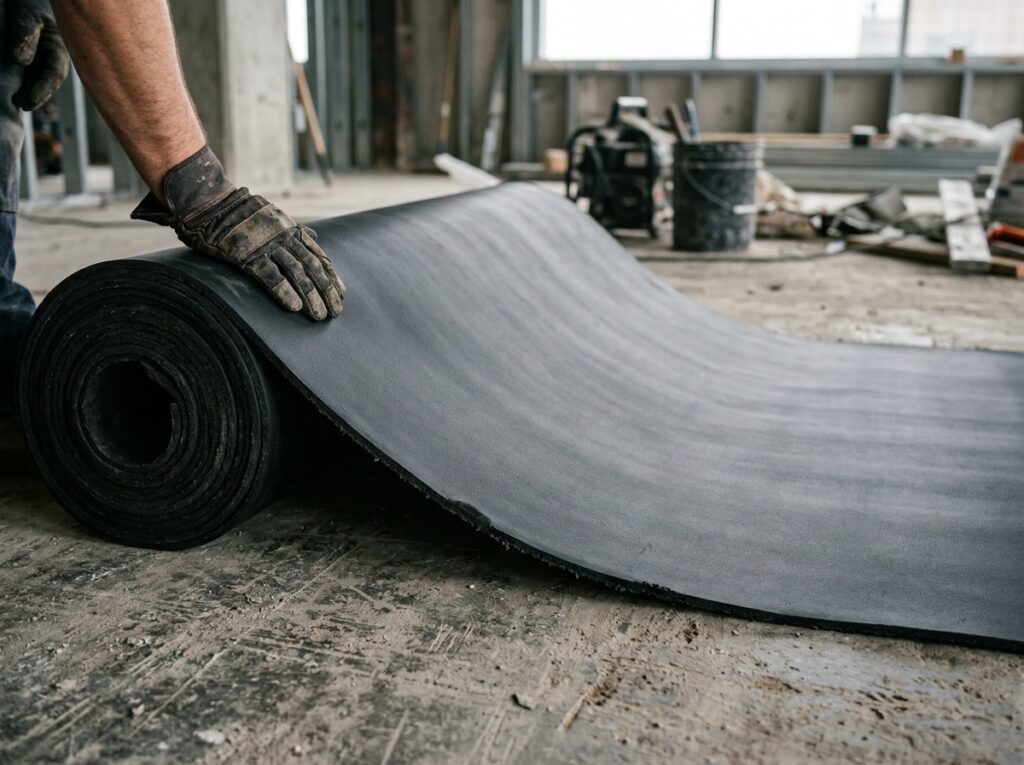
It is commonly supplied in rolls, allowing the material to be measured, cut, and incorporated into different construction systems.
Why Use MLV for Soundproofing?
One of the challenges of conventional soundproofing is achieving greater mass without dramatically increasing the thickness of a wall or ceiling.
MLV addresses this problem by providing substantial density in a relatively thin and flexible format.
This makes it particularly useful for:
- Renovation projects
- Apartment partitions
- Office walls
- Home cinemas
- Recording studios
- Hotel rooms
- Mechanical enclosures
- Industrial spaces
Its flexibility also allows it to be fitted around areas where rigid sound barriers may be difficult to use.
How MLV Helps Reduce Noise
Soundproofing performance depends on the complete construction assembly, but MLV can contribute by increasing the mass of the barrier.
When incorporated correctly, it can help reduce the transmission of airborne sounds such as:
- Human speech
- Television
- Music
- Traffic
- Machinery
- HVAC equipment
- Commercial activity
- Neighbouring room noise
For noise problems involving structural vibration or impact noise, additional isolation measures may be required alongside MLV.
Key Advantages of Mass Loaded Vinyl
High Density Without Excessive Thickness
MLV provides significant additional mass while occupying comparatively little space. This can be especially useful where wall or ceiling depth is restricted.
Flexible Material
Unlike rigid boards, MLV can be rolled and shaped around different surfaces and construction details.
Versatile Application
The membrane can be incorporated into walls, floors, ceilings, partitions, doors, and enclosures depending on the requirements of the project.
Compatible With Other Materials
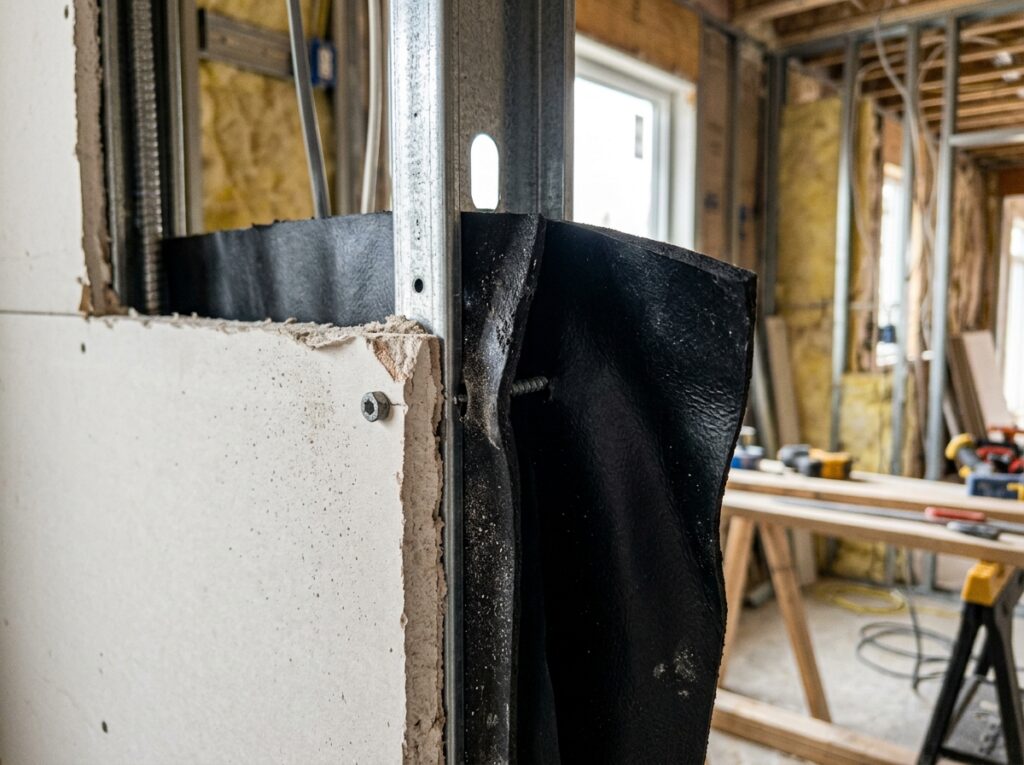
MLV can work alongside acoustic insulation, gypsum board, resilient channels, flooring systems, and other soundproofing components.
Minimal Maintenance
Once installed correctly within a protected construction assembly, MLV generally requires little ongoing maintenance.
Applications for Residential Properties
Apartments and houses can be affected by sound travelling between rooms or neighbouring properties.
MLV can form part of soundproofing assemblies designed for:
Bedroom Walls
Additional sound-blocking mass can help reduce airborne noise travelling between bedrooms and adjacent spaces.
Apartment Partitions
MLV can be incorporated into separating walls to improve acoustic privacy between neighbouring units.
Home Cinemas
Entertainment rooms can produce high sound levels. Incorporating MLV into surrounding walls and ceilings can help limit sound escaping into other parts of the property.
Home Offices
For people working from home, better sound isolation can help create a more private and controlled workspace.
Commercial Applications
Commercial buildings often contain areas with different acoustic requirements.
MLV can be incorporated into:
- Office partitions
- Meeting rooms
- Hotel walls
- Conference facilities
- Restaurants
- Entertainment venues
- Healthcare buildings
- Retail spaces
- Studio environments
In an office, for example, MLV can form part of a partition assembly designed to reduce sound travelling between meeting rooms and private offices.
MLV for Recording and Media Rooms
Recording studios, podcast rooms, broadcast facilities, and home cinemas require careful attention to sound isolation.
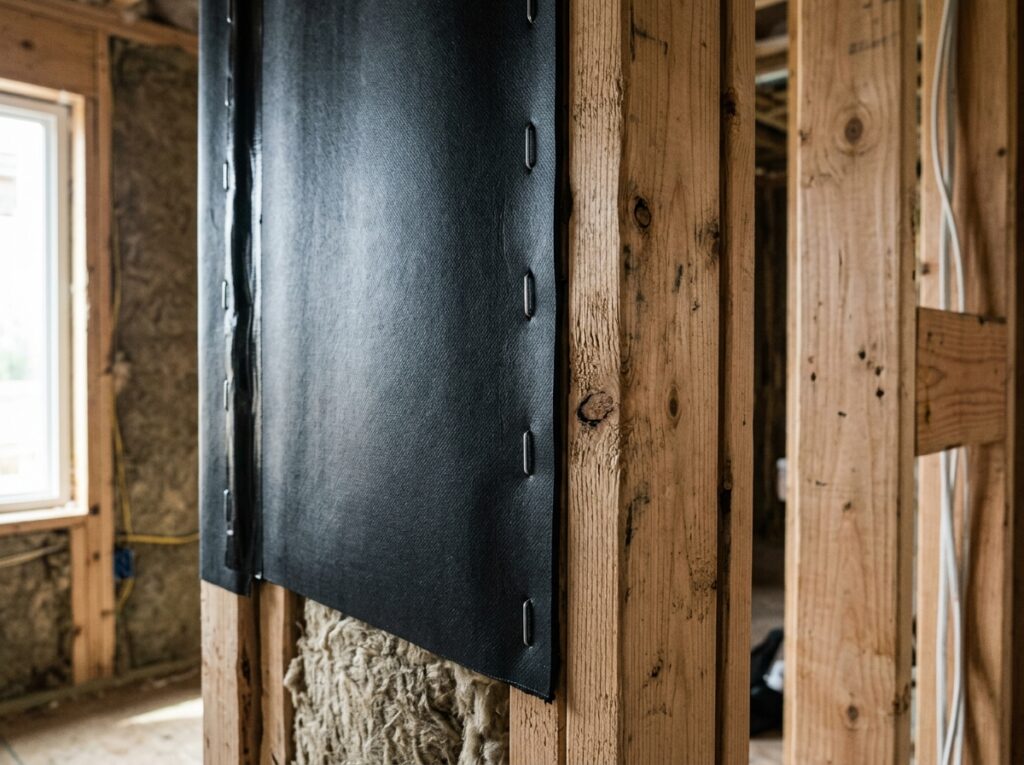
MLV can be incorporated into walls and ceilings as one layer of a multi-material soundproofing assembly.
A complete system may combine:
MLV + acoustic insulation + resilient separation + gypsum board + acoustic sealant
Each component contributes differently to the overall performance.
The MLV adds mass, insulation helps control sound within the cavity, resilient components reduce mechanical vibration transfer, and sealants help close small openings.
Industrial Soundproofing Applications
Industrial environments can contain some of the most challenging noise sources. Generators, compressors, pumps, machinery, and mechanical equipment can produce substantial airborne noise.
MLV can be incorporated into suitable:
- Equipment enclosures
- Mechanical rooms
- Partitions
- Acoustic barriers
- Wall systems
- Ceiling assemblies
For industrial applications, the complete noise-control strategy should also consider vibration and structure-borne sound.
MLV in Johannesburg’s Growing Construction Market
Johannesburg combines residential communities, corporate districts, hospitality developments, entertainment spaces, and industrial areas within a rapidly evolving urban environment.
Areas such as Sandton, Rosebank, Midrand, and surrounding commercial districts contain a wide variety of modern buildings where acoustic privacy and noise control can be important considerations.
MLV provides a practical option for construction systems where additional sound-blocking mass is required without relying solely on thick and heavy building materials.
Choosing the Appropriate MLV
The correct MLV specification depends on the application and the construction system in which it will be installed.
Before purchasing the material, consider:
Density
Higher-density membranes can provide greater mass for sound isolation applications.
Thickness
The thickness should correspond to the requirements of the construction assembly and available installation space.
Coverage Area
Calculate the wall, floor, ceiling, or enclosure area carefully to determine the required quantity.
Installation Method
MLV must be integrated correctly with surrounding materials to prevent gaps and weak points.
Type of Noise
Determine whether the primary problem is airborne sound, impact noise, or structural vibration. Different problems may require different acoustic treatments.
Installation Considerations
Good installation is essential for obtaining the intended performance from an MLV system.
Important considerations include:
- Covering the required surface continuously.
- Overlapping or joining sections correctly.
- Sealing penetrations and joints.
- Minimizing unnecessary gaps.
- Paying attention to electrical and mechanical openings.
- Ensuring the membrane works correctly with the surrounding construction layers.
A high-quality sound barrier can lose considerable effectiveness if sound is able to bypass it through untreated openings or weak points.
Frequently Asked Questions
Does MLV absorb sound?
MLV is primarily a sound-blocking material, rather than a conventional sound-absorbing panel. Its high mass helps reduce airborne sound transmission through building assemblies.
Can MLV be used inside drywall walls?
Yes. It can be incorporated between layers of drywall or other suitable wall construction systems.
Can MLV help with traffic noise?
It can contribute to reducing airborne traffic noise when correctly incorporated into walls, windows, ceilings, or other suitable building assemblies. The overall construction performance is also important.
Is MLV suitable for apartments?
Yes. MLV can be incorporated into walls, floors, and ceilings where improved acoustic separation between rooms or neighbouring units is required.
Can MLV be combined with acoustic insulation?
Yes. Combining MLV with acoustic insulation and other appropriate construction materials can create a more comprehensive soundproofing assembly.
Conclusion
Mass Loaded Vinyl offers a flexible and space-efficient method of adding sound-blocking mass to modern construction systems. Its dense composition and adaptable format make it suitable for residential, commercial, hospitality, studio, and industrial applications.
For buildings across Johannesburg and South Africa, MLV can form an important component of soundproofing systems designed to reduce airborne noise transmission. When combined with appropriate insulation, resilient construction, effective sealing, and other acoustic materials, it can help create quieter rooms, improved privacy, and more comfortable indoor environments.