
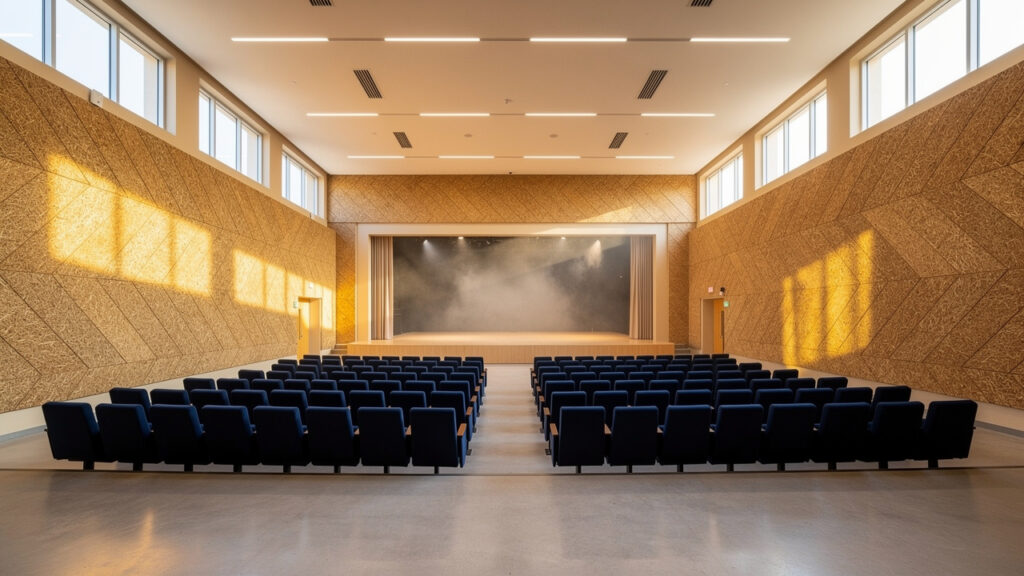
Introduction
Many Gulf-region schools and auditoriums struggle with harsh echo, loud chatter, and muffled speech during lessons and events. Teachers repeat themselves, students miss key ideas, and performances lose impact.
That is where acoustic wood wool panels change the picture. These mineral-bonded wood fiber panels absorb and scatter sound so voices stay clear and rooms feel calmer, with the performance characteristics of such mineral binders thoroughly examined in the Development of a Mineral binder study for wood wool acoustic panels published in Materials. In this article you will see how acoustic wood wool panels improve speech intelligibility, protect learning outcomes, support auditorium sound, and meet fire, humidity, and sustainability targets across the UAE and wider GCC.
One material can tidy up both noise and compliance headaches on your next project.
Key Takeaways
Good classroom and auditorium sound directly affects learning, audience comfort, and teacher well-being. The points below highlight why many Gulf projects now choose wood wool.
Acoustic wood wool panels reduce echo and reverberation. They help teachers sound clear without shouting so students hear more and stay focused.
Panels suit multi-use auditoriums. Speech, music, and film playback all benefit, while designers keep freedom for color, texture, and lighting schemes.
Wood wool supports green school targets. Panels use natural fibers and low-emission binders, and DE Sound makes bulk sourcing simple with clear pricing and technical guidance.
Why Poor Acoustics in Schools and Auditoriums Are a Bigger Problem Than You Think

Poor acoustics in schools and auditoriums erode learning and audience experience long before test scores or feedback show it. Hard surfaces such as concrete, ceramic tile, glass, and metal bounce sound around the room, creating a long reverberation time that blurs consonants and soft syllables.
According to the American Speech-Language-Hearing Association, children in noisy classrooms can miss up to one third of the words a teacher says. Research summarized by the Acoustical Society of America links better classroom acoustics with test score gains of around 15–20 percent, a finding reinforced by a A Comprehensive Comparison of insulation and acoustic materials across timber building systems. For younger pupils, students learning in a second language, and learners with mild hearing loss, that difference can decide whether content sticks or not.
Teachers feel the impact too, raising their voices to cut through the noise and often finishing the day with vocal strain. When rooms do not support clear speech, they compensate with extra repetition and slower pacing, leaving less time for questions and group work.
School auditoriums in the UAE and GCC add another layer of challenge. One hall hosts assemblies, drama, choir, visiting speakers, and parent events. If reverberation is too long, announcements boom near the stage yet sound muddy at the back row. Facility teams then spend extra budget on microphones and loudspeakers instead of treating the room’s untreated surfaces.
How Do Acoustic Wood Wool Panels Improve Sound in Educational Spaces?

Acoustic wood wool panels improve educational spaces by absorbing and diffusing sound so classrooms, halls, and auditoriums stay clear and comfortable. Each board combines long wood fibers with a mineral binder — a composition explored in depth in research on the Development of a Mineral binder for wood wool acoustic panels — creating a rigid, porous surface that works well for both speech and music.
When sound reaches the fibrous surface, air moves through tiny gaps between strands. Friction inside that maze converts part of the sound energy into a small amount of heat, so less energy reflects back into the room. Independent lab tests following ASTM International methods commonly show Noise Reduction Coefficient (NRC) values between 0.65 and 0.95 for these panels, meaning strong sound absorption in the mid-range frequencies that carry speech.
The rough, irregular surface also breaks up strong reflections. Instead of a sharp echo from a painted concrete wall, the reflection arrives softer and more spread out over time. That mix of absorption and gentle scattering helps an auditorium keep some “life” for music while still keeping speech intelligible during assemblies or lectures.
In practical terms, many manufacturers report reverberation time reductions of 40–70 percent when wood wool panels cover the main wall and ceiling areas of a room, a performance range consistent with the Determination of the sound insulation performance studies conducted on wood-based panels in interior applications. Studies referenced by the World Health Organization show that shorter reverberation supports better concentration and lower stress, especially for children, and in a treated classroom every seat in a school hall receives a more even sound field and students hear the ends of words more clearly.
What Panel Thickness Works Best for Classrooms vs. Auditoriums?
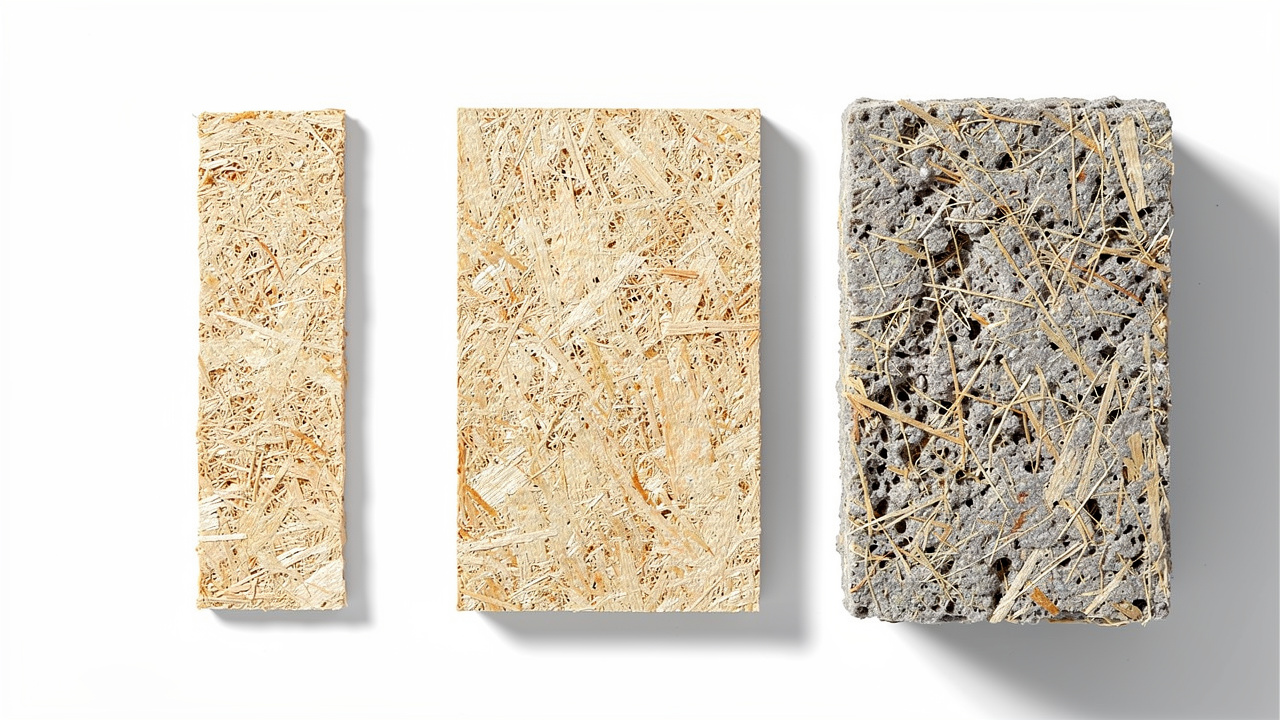
Choosing the right thickness for acoustic wood wool panels helps match performance with budget. Classrooms usually need strong control of mid to high frequencies, while auditoriums also need help in the low to mid range. Thickness and mounting method work together to cover both needs.
| Panel Thickness | Best Use In Schools And Halls | Helpful Notes |
|---|---|---|
| 25 mm | Standard classrooms, libraries, staff rooms | Focus on speech clarity and moderate noise levels. |
| 50 mm | School auditoriums, lecture theaters, music rooms | Better low frequency control and smoother sound for music. |
| 75 mm plus air gap | Large auditoriums, band rooms, recording suites | High performance for bass build up and long reverberation. |
Mounting panels on battens or a metal frame with an air gap often gives similar low frequency benefits to a thicker board. DE Sound’s team can review room sizes and intended use, then suggest a thickness and gap that keep both performance and cost on track.
5 Key Advantages of Acoustic Wood Wool Panels for Schools and Auditoriums
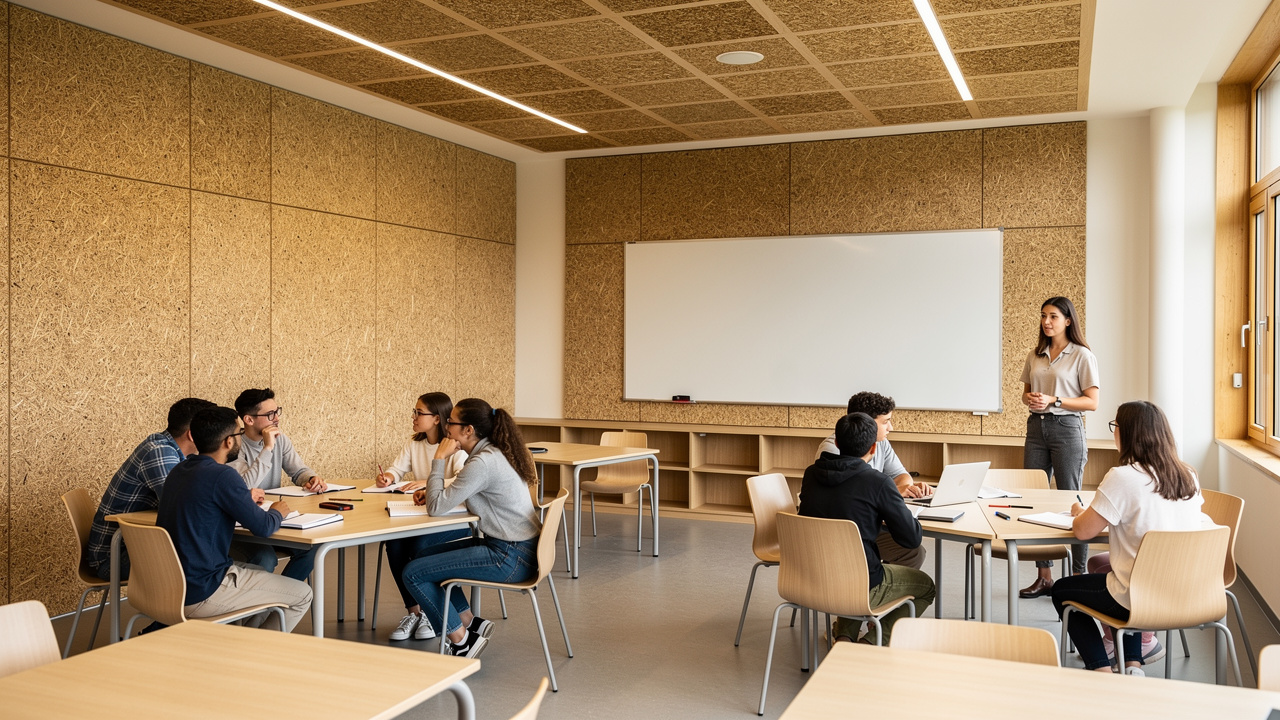
The main advantages of acoustic wood wool panels for schools and auditoriums combine performance, safety, durability, and design. One material can address the typical complaints facility managers hear from teachers, students, and parents without clashing with the architect’s concept, which is why more UAE and GCC projects now specify wood wool at design stage.
Superior Speech Intelligibility
Acoustic wood wool panels cut reverberation so each word arrives with more clarity, helping the teacher’s voice stand out and keeping auditorium announcements clear at comfortable microphone levels.Durability And Impact Resistance
The mineral-bonded structure resists bumps from school bags, chairs, and sports equipment much better than foam or thin fabric panels, protecting the original investment in busy circulation areas.Fire Performance That Supports Approvals
Quality acoustic wood wool panels reach Class A1 or A2 under EN 13501-1, classes that align with UAE Civil Defence expectations and indicate non-combustible or very limited combustibility.Moisture And Humidity Resistance
Cement-bonded wood wool panels stay dimensionally stable, resist mold growth, and keep their acoustic performance in Gulf-region humidity and coastal air, even in heavily air-conditioned auditoriums.Aesthetic Versatility For Modern Learning Spaces
The natural texture of wood wool pairs with warm timber or clean, modern color schemes, and manufacturers such as DE Sound’s partners offer factory-applied RAL colors for easy branding.
Are Acoustic Wood Wool Panels a Sustainable and Compliant Choice for Gulf Region Schools?
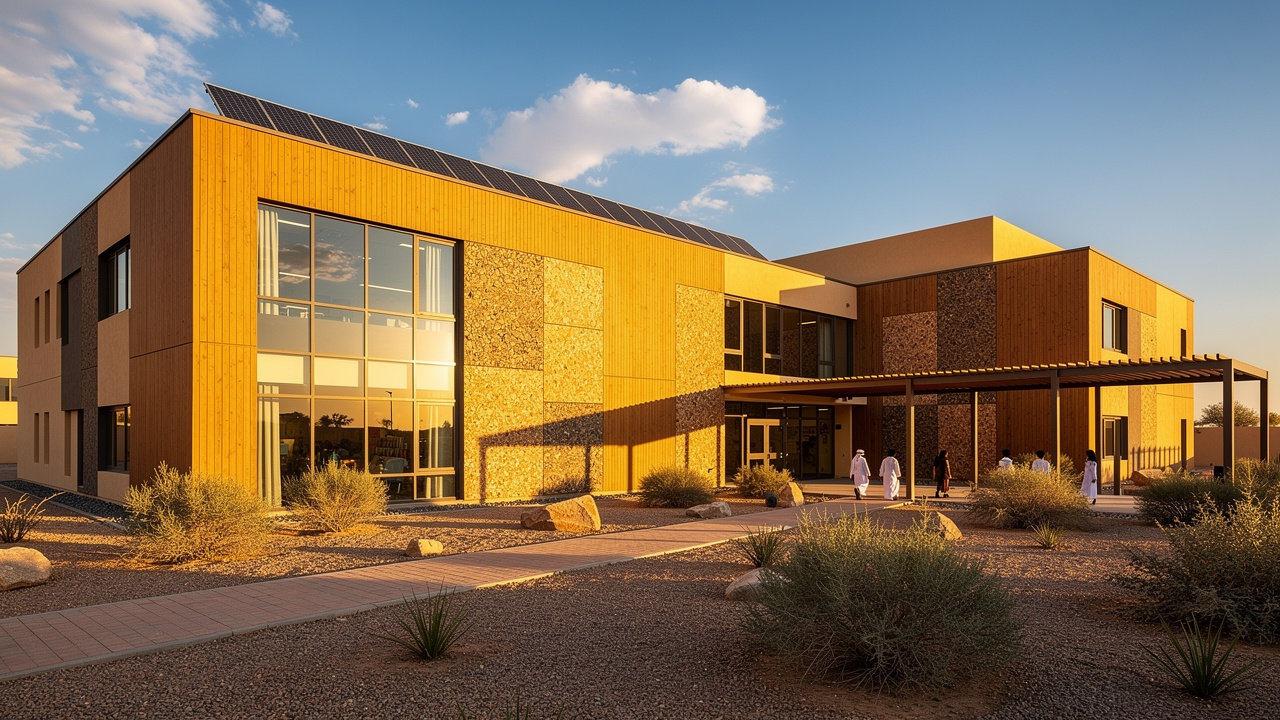
Acoustic wood wool panels give Gulf-region schools and universities a way to improve sound while also supporting sustainability and health targets. The material relies on renewable wood fibers and mineral binders rather than petrochemical foam, helping to cut reliance on fossil-based inputs.
The United Nations Environment Programme reports that buildings and construction account for almost 37 percent of energy-related carbon dioxide emissions, a figure consistent with Global Carbon Budget 2024 data tracking sectoral contributions to worldwide CO2 output. Choosing long lasting, low emission materials can lower that footprint, as demonstrated by Climate, cost, and technical comparisons of natural fiber insulation materials against conventional petrochemical alternatives for exterior wall applications. Many wood wool products use FSC-certified timber and last for decades, cutting replacement waste — a sustainability advantage highlighted across Regional Energy Transition: Decoupling research linking durable low-carbon materials to long-term emissions reduction strategies.
Indoor air quality matters as much as carbon. The U.S. Green Building Council highlights low emitting materials in LEED, and wood wool acoustic panels are typically low VOC and inert once installed, supporting LEED, BREEAM, and Estidama Pearl goals. Resistance to mold and biological growth also helps protect children with asthma or allergies, and research on Global daily CO2 emissions trends underscores why selecting low-embodied-carbon, durable materials matters for school projects seeking to reduce their long-term environmental impact.
Compliance is another key concern for facility managers. Fire classifications such as A1 or A2 in EN 13501-1, supported by proper test reports, match the kind of documentation UAE Civil Defence, Dubai Municipality, and Abu Dhabi Civil Defense (ADCD) expect. DE Sound supplies acoustic wood wool panels with full data sheets and certificates, which helps consultants and contractors prepare approval packages without last minute surprises.
How DE Sound Makes Acoustic Wood Wool Panel Procurement Easy for Schools and Auditoriums
DE Sound makes acoustic wood wool panel procurement easier for schools and auditoriums across the GCC by combining factory-direct pricing with practical support. As a regional acoustic materials specialist, the company keeps advice focused on acoustic outcomes and helps procurement teams treat large wall and ceiling areas without breaking tight education budgets.
Factory-direct pricing means large wall and ceiling areas can be treated without breaking tight education budgets, and procurement teams receive clear unit rates upfront for accurate bills of quantities and faster tender comparisons.
Beyond pricing, DE Sound offers free technical consultation for architects, interior designers, and contractors. The team can review drawings, advise on panel thickness and layout, and suggest mounting methods that suit the existing structure. For public projects, DE Sound provides NRC data, EN 13501-1 fire reports, and other certificates often requested by UAE Civil Defence or local authorities.
Factory-Direct Supply For Large Programs
DE Sound sources acoustic wood wool panels directly from manufacturers, holds local stock, and offers structured discounts for bulk school and auditorium work, keeping lead times and costs under control.Fast Logistics Across Six GCC Countries
Regional warehousing and logistics partners keep deliveries aligned with tight fit-out schedules, helping main contractors avoid delays and last minute substitutions.Hands-On Technical And Documentation Support
The DE Sound team assists with shop drawings, fixing details, and on-site advice when installers first work with wood wool. Standard test reports and safety documentation come as part of the package, reducing design risk for consultants and giving clients more confidence in the finished result.
“DE Sound’s wholesale model and free consultation are structured to support the scale and complexity of institutional projects, from a single classroom upgrade through to a full auditorium acoustic fit-out.”
Wrapping Up
Acoustic wood wool panels give schools and auditoriums in the Gulf a practical way to manage echo, protect speech clarity, and support better performances. At the same time, the panels bring durability, fire performance, humidity resistance, and sustainability benefits that traditional soft finishes struggle to match.
For project teams in the UAE and GCC, DE Sound adds another layer of value through factory-direct pricing, fast delivery, and accessible technical support. If a school, university, or cultural venue is planning a new build or refurbishment, it makes sense to speak with DE Sound about acoustic wood wool panels early in design. A conversation can reveal how much clearer the next term could sound.
Frequently Asked Questions
Schools and auditorium managers often ask similar questions before they commit to acoustic wood wool panels. The answers below cover the most common points and give a starting reference, but each project still deserves its own review, so DE Sound’s team remains available for detailed advice.
What Is the Best Way to Install Acoustic Wood Wool Panels in a School Classroom?
The best way to install acoustic wood wool panels in a school classroom is usually mechanical fixing on timber or metal battens, creating an air gap for better low frequency control. Direct adhesive fixing works well on walls where mid to high frequency control is the main need, while suspended grid ceilings suit larger rooms and still allow access to services.
How Long Do Acoustic Wood Wool Panels Last in High-Traffic School Environments?
Acoustic wood wool panels normally last many years in high-traffic school environments. The mineral-bonded structure resists impact, does not sag over time, and with basic cleaning panels usually outlast several cycles of paint and furniture.
Can Acoustic Wood Wool Panels Be Painted to Match a School’s Interior Design?
Yes, acoustic wood wool panels can be painted to match a school’s interior design. Factory-applied acoustic coatings in RAL colors give the most consistent finish and protect performance. When painting on site, use breathable, water-based, microporous paint; thick, film-forming, or oil-based paints block pores in the panel surface and reduce sound absorption.
Do Acoustic Wood Wool Panels Meet UAE Fire Safety Requirements for Schools?
Acoustic wood wool panels that hold Class A1 or A2 ratings under EN 13501-1 meet the fire performance levels typically expected in UAE schools and public buildings. Many authorities, including UAE Civil Defence, accept these classifications when backed by proper test reports, and DE Sound supplies panels with the necessary documentation so consultants can submit complete approval packages.