
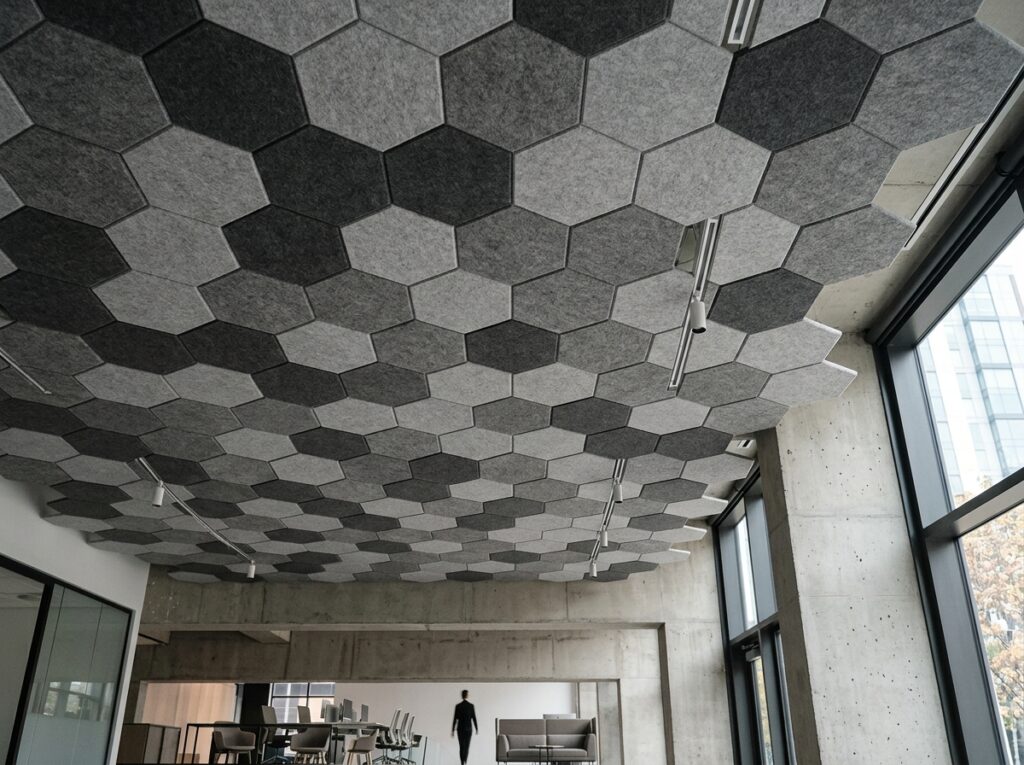
Modern interiors in Nairobi, Kenya increasingly combine open layouts, glass partitions, concrete surfaces, tiled floors, exposed ceilings, and minimalist furniture. While these elements create clean and contemporary spaces, they can also produce an unwanted acoustic effect.
Sound reflects easily from hard surfaces. Conversations overlap, background noise travels across open areas, and rooms can develop excessive reverberation.
For offices, hospitality venues, educational facilities, healthcare environments, and other busy interiors, acoustic PET panels can be incorporated into the design to help absorb reflected sound and create a more controlled acoustic environment. PET panels are commonly used as wall treatments, ceiling elements, screens, and decorative acoustic features.
Understanding the Acoustic Challenge
A room can be visually impressive and still sound uncomfortable.
Consider a modern office with glass meeting rooms, polished flooring, large windows, and relatively few soft furnishings. When someone speaks, part of their voice travels directly toward the listener, while other sound energy reflects from surrounding surfaces.
With multiple people talking simultaneously, these reflections accumulate.
The result can be:
- Increased reverberation
- Reduced speech clarity
- Distracting background noise
- Conversations travelling farther
- Reduced acoustic comfort
- A generally louder-feeling environment
Acoustic treatment addresses this by introducing surfaces capable of absorbing some of the sound energy that would otherwise continue reflecting around the room.
What Are Acoustic PET Panels?
Acoustic PET panels are sound-absorbing panels manufactured from polyester fibre, commonly formed into lightweight boards or felt-like acoustic elements.
Their porous fibre structure allows sound energy to enter the material rather than simply reflecting from a hard surface. This makes PET panels particularly useful for controlling reverberation and improving speech conditions inside occupied spaces.
They can be incorporated into a project as:
- Wall panels
- Ceiling panels
- Suspended baffles
- Acoustic clouds
- Decorative screens
- Room dividers
- CNC-cut feature panels
- Workstation screens
This flexibility allows acoustic treatment to become part of the interior concept rather than looking like an afterthought.
Why PET Acoustic Treatment Works Well in Modern Nairobi Interiors
Contemporary commercial architecture often prioritizes openness.
Large windows, exposed materials, open ceilings, and flexible furniture arrangements can make spaces feel spacious and attractive.
However, these same characteristics may increase sound reflections.
PET acoustic systems provide a way to introduce absorption without dramatically changing the overall architectural character.
The panels can be used selectively rather than covering every available surface.
For example, treatment can be concentrated around:
Meeting areas
Reception spaces
Open workstations
Large feature walls
Collaboration zones
Ceiling areas
This allows acoustic treatment to be coordinated with the actual use of the room.
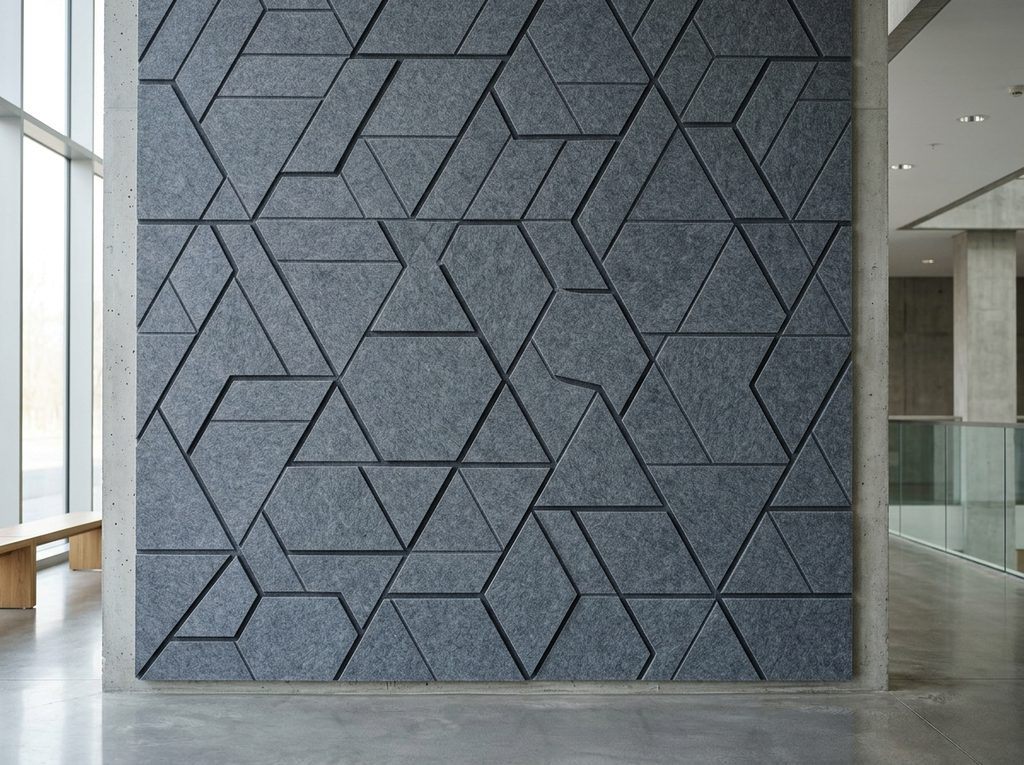
PET Panels for Open-Plan Offices
Open-plan offices are among the environments where acoustic problems can become particularly noticeable.
Employees may simultaneously be:
- Speaking with colleagues
- Attending online meetings
- Making phone calls
- Working at computers
- Collaborating in groups
- Moving between work areas
Without sufficient sound absorption, these activities can create a continuous background of reflected noise.
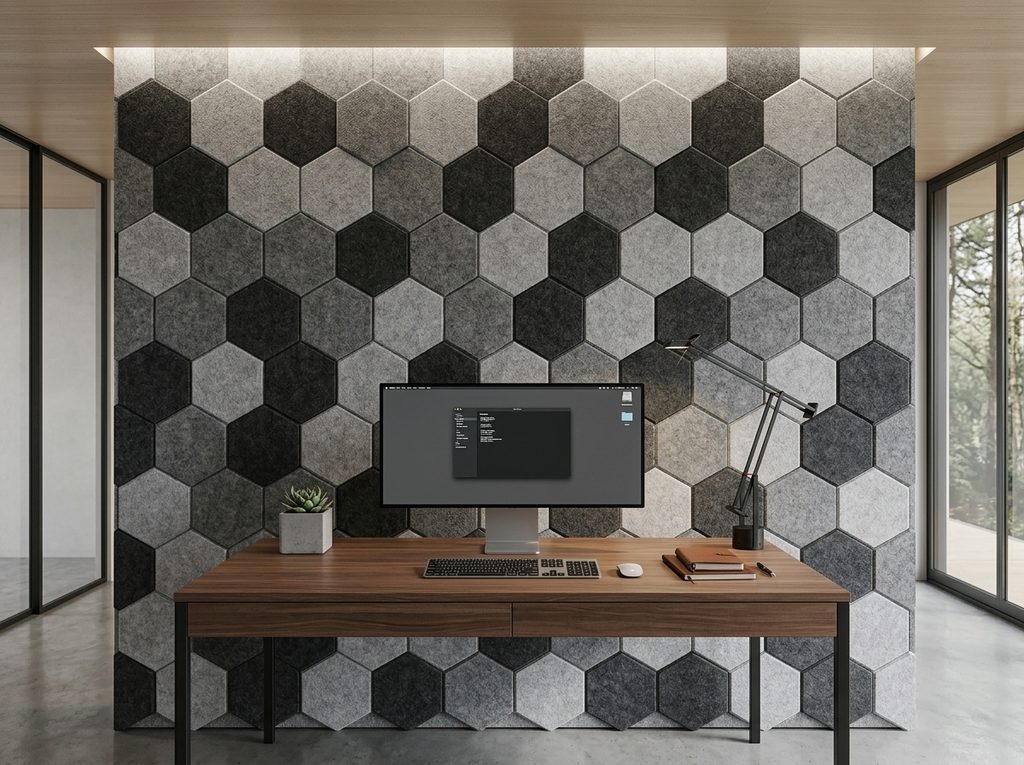
PET panels can be positioned on walls, ceilings, or around workstations to help control the acoustic environment.
Suspended PET elements can also be useful where the ceiling remains open and the designer does not want to close the entire ceiling plane.
Creating Better Meeting Rooms
Meeting rooms require particular attention to speech.
If a room contains extensive glazing and hard surfaces, sound can reflect repeatedly between walls and the ceiling.
This can make conversations feel less natural and can be particularly noticeable during video conferences.
PET acoustic treatment can be introduced through:
Feature Walls
A decorative PET installation can create an acoustic backdrop behind a conference table.
Side Walls
Additional absorption can help control reflections reaching participants.
Ceiling Elements
Suspended acoustic clouds or baffles can introduce absorption overhead.
Decorative Patterns
CNC-cut PET panels can create geometric or branded designs while providing acoustic treatment.
The amount and location of treatment should be determined according to the room’s dimensions and acoustic requirements.
Acoustic Treatment for Restaurants and Cafés
Restaurants can become significantly louder as occupancy increases.
Customers are talking, staff are moving between tables, kitchen activity is taking place, and background music may be playing simultaneously.
If the room contains mostly hard finishes, these sounds can reflect throughout the dining area.
PET acoustic panels can be integrated into the restaurant design through:
- Decorative wall installations
- Ceiling features
- Booth-back panels
- Suspended elements
- Custom geometric designs
Rather than making the restaurant look like a treated acoustic room, the panels can be designed as part of the visual identity.
Hospitality Applications
Hotels and hospitality venues need to balance appearance with guest comfort.
Large reception areas, lounges, restaurants, conference rooms, and event spaces can all experience different acoustic challenges.
PET treatment can be adapted to these environments.
Hotel Lobbies
Large open lobbies can use wall or suspended acoustic elements to introduce additional absorption.
Restaurants
Decorative PET features can help control reflected conversations.
Lounges
Soft-looking acoustic surfaces can complement furniture and interior finishes.
Conference Areas
Targeted treatment can improve the acoustic environment for meetings and presentations.
Educational Environments
Schools, universities, training centres, and lecture facilities depend heavily on clear communication.
A teacher or presenter needs to be heard without excessive reverberation from walls and ceilings.
PET panels can be incorporated into:
- Classrooms
- Training rooms
- Lecture spaces
- Libraries
- Student common areas
- Seminar rooms
- Multipurpose halls
Wall and ceiling treatment can be distributed according to the room’s geometry and intended use.
The objective is not simply to make the room quieter, but to create an environment where speech is easier to understand.
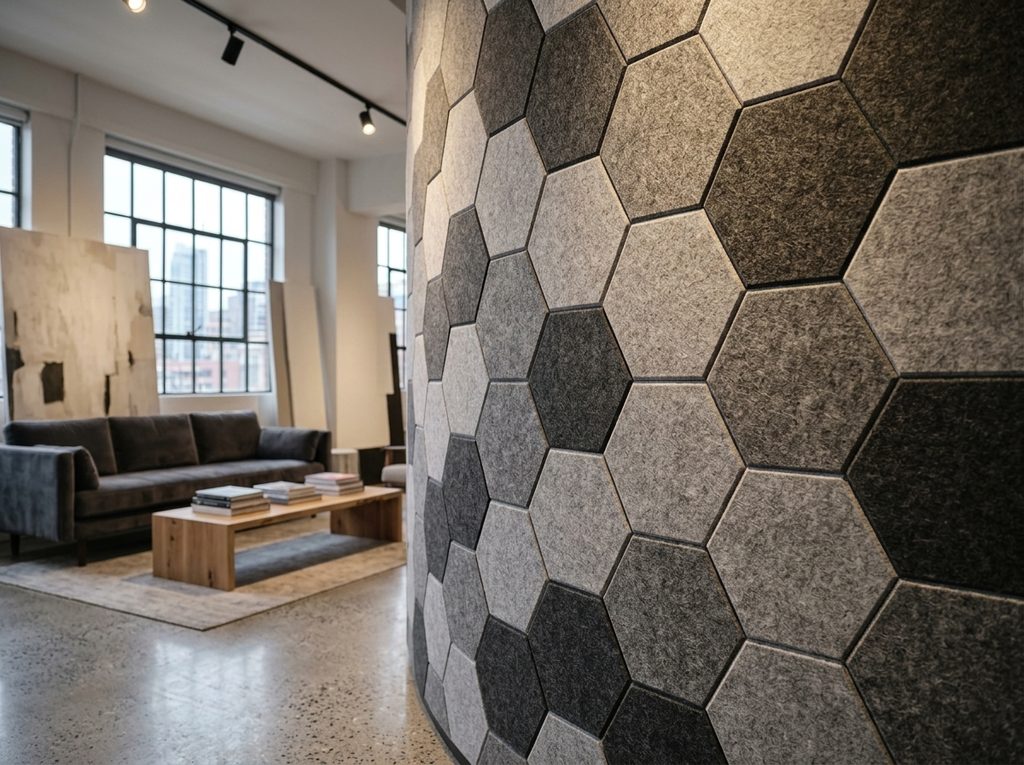
Healthcare and Professional Environments
Acoustic comfort can also be important in healthcare and professional settings.
Reception areas, consultation rooms, waiting areas, and administrative spaces may contain conversations that should remain reasonably contained within the immediate environment.
PET panels can contribute to controlling reverberation within these spaces.
However, acoustic absorption should not be confused with complete sound privacy. If confidential conversations must be prevented from travelling between rooms, additional sound isolation measures may be required.
PET Panels as Decorative Architecture
One of the advantages of PET acoustic systems is their design flexibility.
Panels can be manufactured or cut into different:
- Shapes
- Patterns
- Geometric arrangements
- Linear designs
- Layered forms
- Branded graphics
Some systems can also be CNC-cut to create customized visual patterns.
This gives architects and interior designers an opportunity to make acoustic treatment part of the overall design language.
For example, a company could incorporate its brand geometry into a feature wall rather than installing conventional rectangular acoustic panels.
Ceiling Treatment Without Closing the Ceiling
Many modern commercial buildings use exposed ceilings to maintain an industrial or spacious aesthetic.
Closing the entire ceiling with conventional panels may not be desirable.
Suspended PET baffles and acoustic clouds offer another approach.
Because the elements can hang below the existing ceiling, they introduce additional absorbing surfaces while allowing:
- Lighting systems
- HVAC services
- Sprinklers
- Electrical services
- Structural elements
to remain visible and accessible.
Suspended PET baffles can expose both sides of the material to the room, increasing the available absorbing surface.
Acoustic PET Screens for Flexible Workspaces
Not every acoustic treatment needs to be permanently attached to a wall.
PET screens can be used to create acoustic and visual separation between workstations.
This can be particularly useful in offices where layouts change regularly.
Freestanding or desk-mounted screens can help define:
Individual work areas
Focus zones
Collaboration spaces
Meeting areas
Temporary divisions
This approach provides acoustic treatment while maintaining flexibility within the workplace.
PET Acoustic Panels vs. Soundproofing
It is important to understand what PET panels are designed to do.
PET panels are primarily sound absorption products.
Their main purpose is to help control sound within the room by reducing reflections and reverberation.
They are not a substitute for a complete soundproofing wall.
If the problem is noise coming through a neighbouring wall, additional sound isolation measures may be necessary.
A soundproofing system could involve:
- Mass Loaded Vinyl
- Acoustic insulation
- Multiple board layers
- Decoupled construction
- Acoustic doors
- Sealing systems
- Acoustic glazing
In some projects, PET panels and soundproofing systems can be used together because they address different acoustic problems.
Choosing the Right PET Treatment
There is no single panel configuration that works equally well in every room.
Several factors should be considered.
Room Dimensions
A large open space will have different requirements from a small meeting room.
Ceiling Height
Higher ceilings can contribute to increased reverberation.
Existing Surfaces
Glass, concrete, marble, tile, and plasterboard can all influence the acoustic behaviour of the space.
Occupancy
A busy restaurant requires a different treatment strategy from a quiet private office.
Room Function
A classroom prioritizes speech clarity, while a recording space may require a more specialized acoustic design.
Interior Design
Colours, shapes, panel orientation, and placement should complement the architectural concept.
A More Strategic Approach to Acoustic Treatment
Installing acoustic panels randomly across a room is rarely the most effective approach.
A professional acoustic assessment can identify:
- Where sound is being generated
- Which surfaces are creating strong reflections
- How much absorption is already present
- Where additional treatment would be most useful
- Whether wall, ceiling, or freestanding treatment is appropriate
This allows the treatment to be distributed according to the room’s acoustic requirements rather than simply covering the largest available surface.
Professional Acoustic PET Panel Services in Nairobi
A complete acoustic project can include much more than material supply.
Professional services may include:
- Acoustic consultation
- Site assessment
- Room acoustic evaluation
- Reverberation analysis
- Acoustic treatment planning
- Wall treatment design
- Ceiling treatment design
- Custom PET panel layouts
- CNC-cut acoustic designs
- Acoustic screens
- Installation services
The objective is to create a treatment strategy that works with the building’s architecture and intended use.
Maintenance and Care
PET acoustic panels are generally straightforward to maintain.
Routine care may include:
- Removing dust regularly
- Gentle vacuuming
- Cleaning marks using appropriate methods
- Avoiding excessive moisture
- Avoiding harsh chemicals
- Inspecting panels for physical damage
The specific cleaning procedure should follow the recommendations provided for the selected PET acoustic system.
Frequently Asked Questions
Do PET panels reduce echo?
Yes. PET acoustic panels are designed to absorb reflected sound and can help reduce reverberation when appropriately specified and positioned.
Are PET panels suitable for offices?
Yes. They can be used on walls, ceilings, workstations, and as acoustic screens in open-plan and collaborative offices.
Can PET panels be used on ceilings?
Yes. PET systems are available as ceiling panels, clouds, and suspended baffles.
Do PET panels soundproof a room?
No. They primarily provide sound absorption inside the room. Sound isolation requires a different construction strategy.
Can PET panels be customized?
Many PET acoustic systems support custom shapes, CNC-cut patterns, colours, and layouts.
Are PET panels suitable for restaurants?
Yes. They can be incorporated into dining areas and hospitality interiors to help manage reverberation and background noise.
Acoustic PET Solutions for Nairobi Projects
Every building has its own acoustic requirements.
An open-plan office may need treatment distributed throughout the workspace, while a restaurant may benefit from ceiling absorption and decorative wall features. A classroom may require focused treatment around the teaching area, while a reception space may need a combination of architectural and acoustic elements.
For projects in Nairobi, the most effective approach is to assess the room first and then develop an acoustic treatment strategy around its purpose, dimensions, finishes, occupancy, and design.
PET panels can then become part of that strategy rather than being added simply as a decorative material.
Conclusion
Acoustic PET panels provide a practical combination of sound absorption, design flexibility, and lightweight interior treatment.
They can be incorporated into offices, restaurants, hotels, educational facilities, healthcare spaces, meeting rooms, residential interiors, and other environments where excessive reflections and reverberation affect acoustic comfort.
Their value goes beyond simply placing panels on a wall. Through carefully planned wall installations, ceiling systems, suspended baffles, screens, and custom designs, PET acoustic treatment can become an integrated part of the architecture.
For Nairobi projects, a professionally planned acoustic solution can help transform reflective interiors into spaces that are more comfortable, clearer for communication, and better suited to the way people actually use them.