
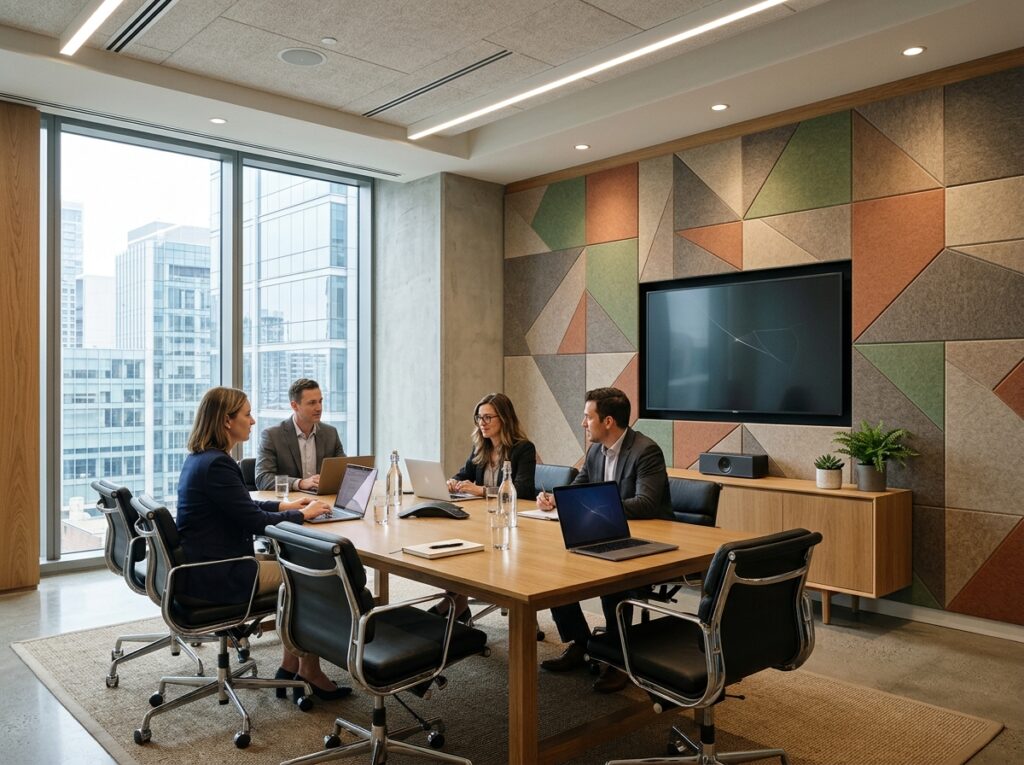
As Nairobi continues to grow as a centre for business, hospitality, education, technology, and residential development, modern buildings are increasingly incorporating open layouts, glass partitions, tiled floors, and contemporary architectural finishes.
Although these materials can create attractive and spacious interiors, they can also produce excessive sound reflections. Conversations may overlap, background noise can build up, and large rooms can develop noticeable reverberation.
Acoustic PET panels offer a flexible way to address these challenges. Their sound-absorbing construction can help control reflected sound while their modern appearance allows them to integrate naturally into contemporary interior designs.
For projects in Nairobi, Kenya, acoustic PET panel solutions can be planned around the specific requirements of offices, hotels, restaurants, educational facilities, conference rooms, and residential spaces.
What Are Acoustic PET Panels?
Acoustic PET panels are sound-absorbing panels manufactured from polyester fibres. Many acoustic systems use recycled PET content, making them an option for projects where recycled materials are preferred.
Unlike dense soundproofing barriers, PET panels are designed primarily to manage sound within the room.
Their fibrous structure allows sound waves to penetrate the surface, where part of the acoustic energy is absorbed instead of being reflected back into the surrounding space.
This can help address:
- Excessive echo
- Reverberation
- Reflected speech
- Sound buildup
- Poor speech intelligibility
Why Room Acoustics Matter
A room can be visually impressive and still have poor acoustic performance.
Consider a conference room with glass walls, a hard floor, a solid ceiling, and minimal furniture. Sound generated by a conversation can reflect repeatedly between these surfaces.
The result may be:
More reflections → Longer reverberation → Less clear speech
Acoustic PET panels introduce additional absorption into the environment.
When strategically positioned, they can help reduce unwanted reflections and create a more balanced acoustic atmosphere.
Key Advantages of PET Acoustic Treatment
Lightweight Construction
PET panels are relatively lightweight, which makes them suitable for a variety of wall and ceiling applications.
Sound Absorption
Their fibrous structure is designed to absorb reflected sound and help control reverberation.
Design Flexibility
PET material can be manufactured into different shapes, sizes, colours, and patterns.
Modern Appearance
The clean appearance of PET panels works well with contemporary commercial and residential interiors.
Wall and Ceiling Applications
Depending on the selected system, panels can be mounted on walls or used as suspended acoustic elements.
Decorative Potential
Rather than hiding acoustic treatment, designers can use PET panels to create visual features within the room.
Acoustic PET Panels for Nairobi Offices
Nairobi’s business environment includes corporate offices, technology companies, financial institutions, co-working spaces, and professional service firms.
Many workplaces use open-plan layouts to encourage collaboration.
However, multiple conversations, telephone calls, online meetings, and general movement can create considerable background sound.
PET acoustic treatment can be incorporated into:
- Open-plan workspaces
- Meeting rooms
- Boardrooms
- Reception areas
- Collaboration zones
- Breakout areas
- Private offices
The objective is to control reflected sound without making the workspace feel visually enclosed.
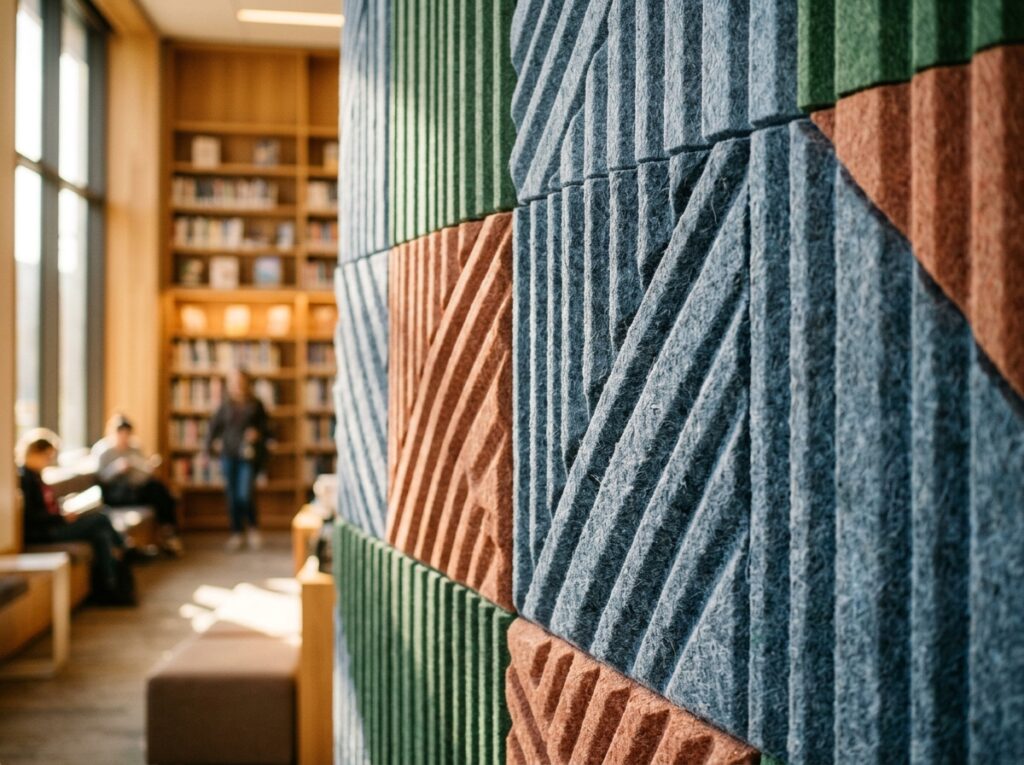
Improving Meeting Room Acoustics
Meeting rooms require clear communication.
Glass partitions and large tables can create strong reflection paths, particularly when there are few absorbent surfaces.
PET panels can be positioned on selected walls or ceilings to help control these reflections.
A well-planned treatment strategy can contribute to:
- Clearer conversations
- Better speech intelligibility
- Reduced reverberation
- More comfortable meetings
- Improved acoustic privacy within the room
The appropriate amount of treatment depends on the room’s dimensions and existing materials.
PET Acoustic Treatment for Restaurants
Restaurants can become increasingly loud as occupancy rises.
Conversations, music, kitchen activity, dishes, furniture movement, and hard architectural finishes all contribute to the acoustic environment.
PET panels can provide sound absorption without requiring a restaurant to sacrifice its visual identity.
Possible applications include:
Feature Walls
A decorative PET installation can provide both acoustic treatment and a strong visual element.
Ceiling Elements
Suspended acoustic panels can provide absorption from above while leaving walls available for artwork or other design features.
Dining Zones
Treatment can be strategically positioned around seating areas to help manage reflected sound.
Hotels and Hospitality Spaces
Hotels require a balance between aesthetics and comfort.
Large reception areas, lounges, restaurants, conference facilities, and business centres can all experience excessive reverberation.
PET acoustic panels can be incorporated into hospitality interiors through custom layouts and carefully selected colours.
For example, a hotel conference room may use PET panels behind presentation areas or across selected ceiling sections to help control speech reflections.
A lobby may use decorative suspended elements that contribute to both the visual character and acoustic environment.
Educational Applications
Classrooms, lecture rooms, training facilities, and libraries depend on effective communication.
When sound continues reflecting around a classroom, spoken instructions can become harder to understand.
Acoustic PET panels can help absorb some of these reflections and create a more controlled listening environment.
Potential applications include:
- Classrooms
- Lecture halls
- Libraries
- Training rooms
- Seminar rooms
- Study areas
The treatment should be designed according to the room’s size, occupancy, surfaces, and intended use.
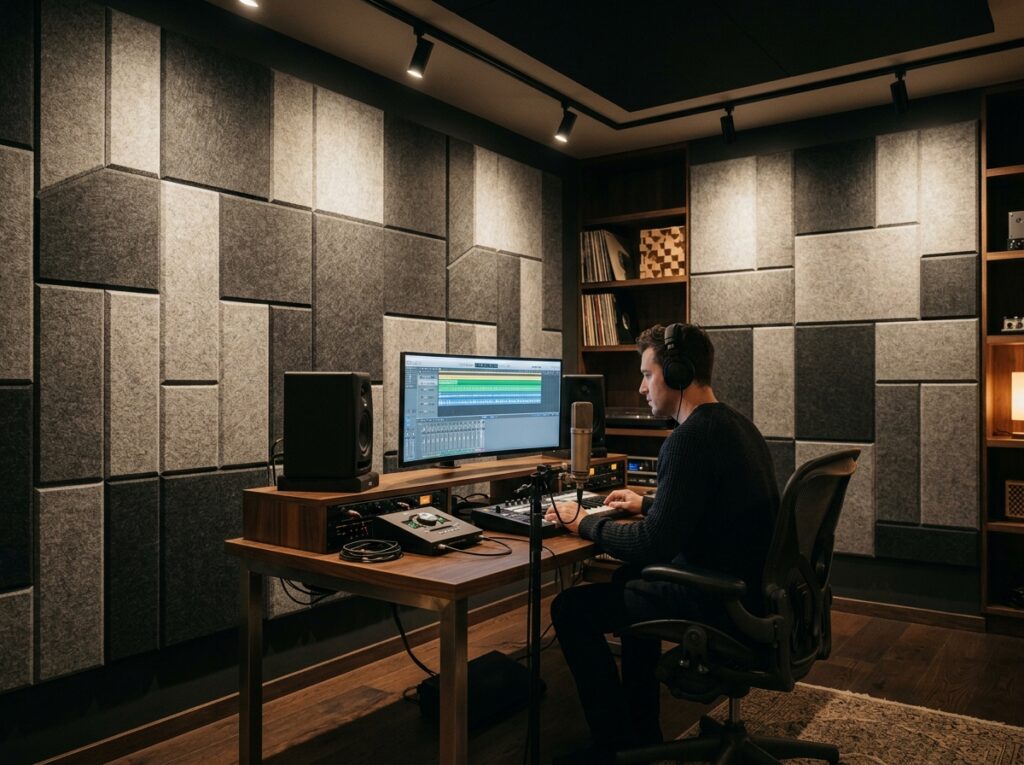
Decorative PET Panel Designs
Acoustic treatment does not have to look repetitive or industrial.
PET panels can be incorporated into creative interior concepts.
Geometric Arrangements
Different shapes can be combined to form geometric patterns across walls.
Layered Designs
Panels can be positioned at different depths to create visual dimension.
Colour Combinations
Multiple colours can be combined to complement furniture, flooring, lighting, or corporate branding.
Custom Feature Walls
A full wall can be transformed into an acoustic architectural feature rather than simply being covered with standard panels.
Suspended PET Acoustic Systems
Large open rooms often have significant ceiling areas that contribute to sound reflection.
Suspended PET elements can introduce additional sound absorption without requiring every wall to be treated.
They can be particularly suitable for:
- Open offices
- Restaurants
- Reception areas
- Conference halls
- Educational facilities
- Large commercial spaces
Suspended elements can also be arranged in rows, patterns, or creative configurations to become part of the interior architecture.
Choosing the Right PET Acoustic System
Several factors should be considered when planning acoustic treatment.
Room Size
Larger spaces may require greater acoustic coverage.
Ceiling Height
High ceilings can increase reverberation and may influence the placement of acoustic elements.
Existing Surfaces
Glass, concrete, tile, and other reflective materials should be considered during acoustic planning.
Occupancy
A busy restaurant and a lightly occupied meeting room have different acoustic requirements.
Panel Thickness
Different panel constructions can offer different acoustic characteristics.
Installation Location
Wall-mounted and suspended systems may be appropriate for different environments.
PET Panels vs. Soundproofing Materials
PET panels should not be confused with sound isolation materials.
They primarily absorb sound inside a room.
They do not, by themselves, prevent significant amounts of noise from passing through a wall or ceiling.
For projects where the main problem is sound travelling between rooms, a different approach may be required.
A complete soundproofing system may incorporate:
- Mass Loaded Vinyl
- Acoustic insulation
- Multiple board layers
- Resilient channels
- Acoustic sealants
- Soundproof doors
- Acoustic glazing
The appropriate solution depends on the source of the noise and the route through which it travels.
Professional Acoustic Planning
Effective acoustic treatment requires more than choosing an attractive panel.
The location and amount of acoustic absorption should be considered in relation to the room.
A professional assessment can examine:
Room dimensions + Surface finishes + Occupancy + Noise sources + Existing acoustic treatment
This information can then be used to develop an appropriate acoustic treatment strategy.
The result is a system designed around the actual environment rather than a generic installation.
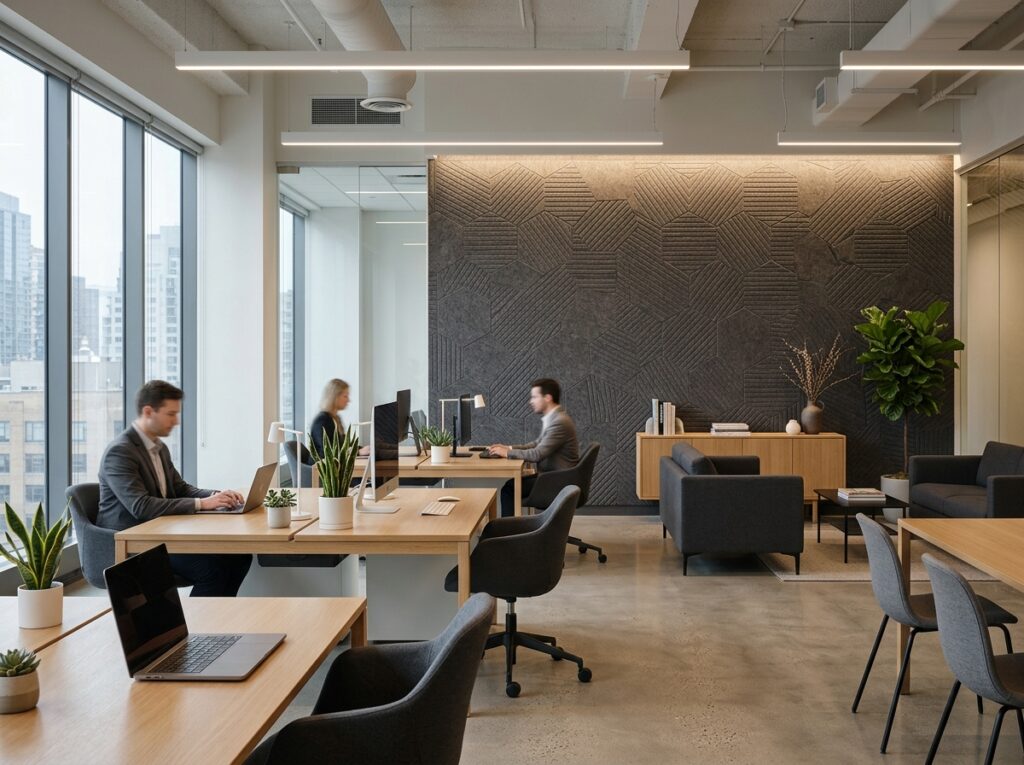
PET Panel Maintenance
Acoustic PET panels are generally straightforward to maintain.
Routine care can include:
- Dusting with a soft brush.
- Using a suitable vacuum attachment.
- Carefully cleaning minor marks.
- Avoiding excessive moisture.
- Avoiding abrasive cleaning chemicals.
- Inspecting exposed edges and mounting points.
Maintenance procedures should always follow the recommendations provided for the specific PET panel system.
Frequently Asked Questions
Do PET panels completely soundproof a room?
No. They are primarily sound-absorbing products designed to reduce reflections, echo, and reverberation within a room.
Can PET panels improve speech clarity?
Yes. Reducing excessive reflected sound can help make speech easier to understand.
Are PET panels suitable for open-plan offices?
Yes. They can be used strategically in open workspaces to help manage reflected sound.
Can PET panels be installed on ceilings?
Yes. Depending on the system, they can be mounted directly or suspended from suitable ceiling structures.
Are PET panels suitable for restaurants?
Yes. They can help control reverberation while also serving as decorative interior elements.
Conclusion
Acoustic PET panels provide a flexible combination of sound absorption and contemporary interior design. Their lightweight construction, range of design options, and ability to be installed on walls or ceilings make them suitable for many modern environments.
For offices, hotels, restaurants, schools, conference rooms, and residential interiors in Nairobi, professionally planned PET acoustic treatment can help reduce unwanted reflections and create more comfortable spaces for communication and everyday activities.
Whether incorporated as a geometric feature wall, a colourful decorative installation, or a suspended ceiling system, PET panels can make acoustic treatment an integrated part of the interior rather than something added only after acoustic problems appear.