
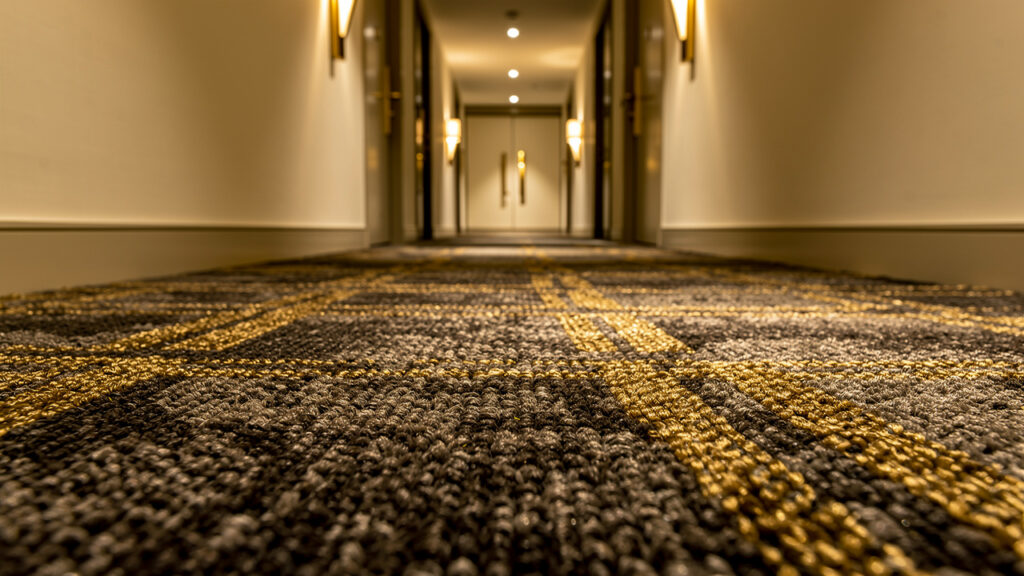
Introduction
Noise spilling between rooms and floors often ruins office focus and hotel comfort across the UAE. Hard tiles and concrete reflect every footstep, suitcase wheel and late‑night phone call. Without acoustic carpets, these surfaces act like loudspeakers inside busy buildings.
Acoustic carpets are floor coverings designed to absorb airborne sound and soften impact noise at the same time. Their dense pile and heavy backing work together with an acoustic underlay so the floor starts to act like a quiet filter between spaces.
This article explains what acoustic carpets are, how they cut noise in hotels and offices, how to choose them, and how DE Sound supports projects across the Gulf.
Key Takeaways
Here are the main points office and hotel teams can keep in mind while reading.
Acoustic carpets control both airborne noise and impact noise. Soft pile absorbs voices, keyboard sound and ringing phones. Dense backing and underlay cushion footsteps, carts and chair movement so less vibration reaches the rooms below.
Hotels rely on acoustic carpets to calm corridors, rooms and lobbies. Offices use them in open work areas, meeting rooms and reception zones. Each area needs the right mix of pile type, backing and underlay to meet its acoustic targets.
Performance ratings help compare products for the same project. NRC shows how much airborne sound the carpet absorbs. IIC shows how well the floor build up blocks impact noise between levels.
When teams specify acoustic carpets early they avoid expensive retrofit work later. Design teams can integrate carpet, underlay and slab details in one coordinated package. That approach also makes approval with local authorities smoother.
DE Sound supplies acoustic carpets and matching underlays across the UAE and wider GCC. The team provides advice on performance data, fire ratings and layout details. This support helps designers and contractors meet acoustic goals without guesswork.
What Are Acoustic Carpets And How Do They Work?
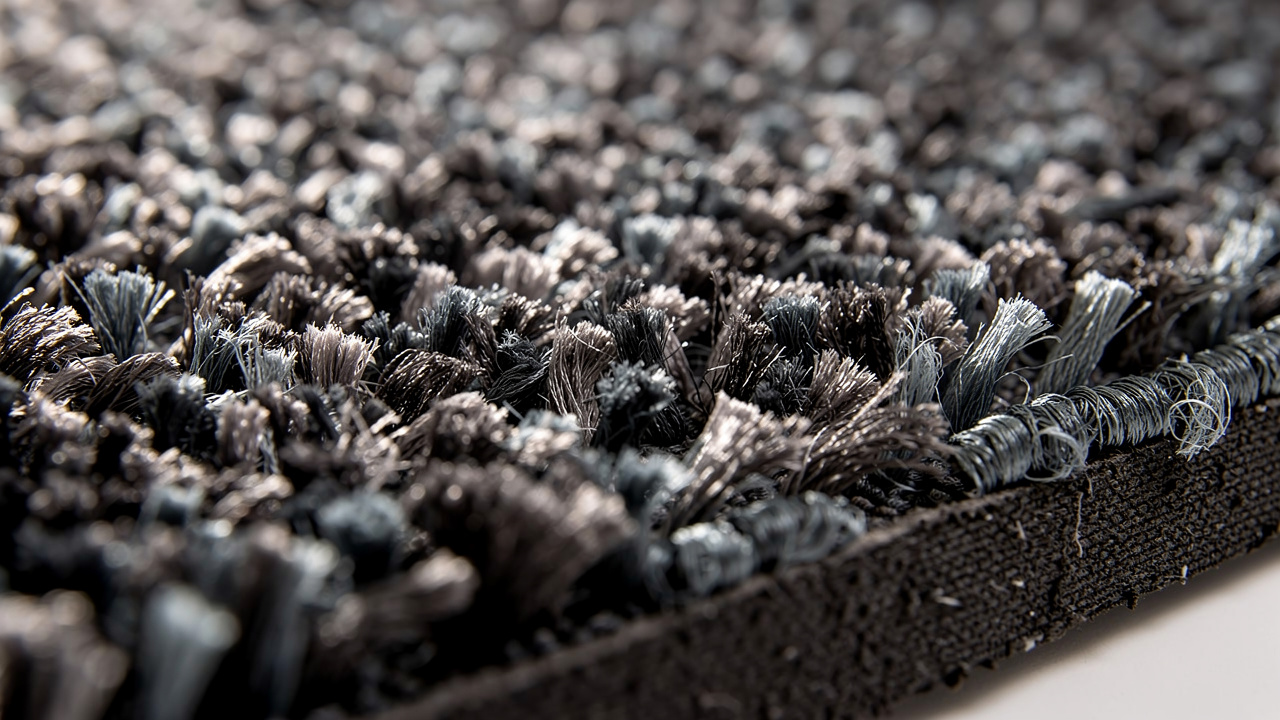
Acoustic carpets are specialized floor coverings that control noise by absorbing sound and softening impact in offices, hotels and other busy buildings. They differ from decorative carpets because they use dense pile, heavy backing and often a dedicated underlay to interrupt sound before it travels. When voices and equipment noise hit the carpet, the fibers rub together and convert part of that sound energy into tiny amounts of heat.
This effect is measured by the Noise Reduction Coefficient (NRC), which runs from 0 for full reflection to 1 for full absorption. High performance acoustic carpets typically reach NRC values between 0.30 and 0.65, according to test data shared by DE Sound and commercial manufacturers such as Shaw Contract. That level of absorption already brings a clear drop in echo inside meeting rooms, guest suites and studios.
Impact noise works differently, because footsteps and moving furniture send vibrations through the slab into rooms below, as explored in research on the Acoustic Performance of Tufted carpets paired with underlayment systems. Acoustic carpets address this through their mass and cushioning, which raise the Impact Insulation Class (IIC) of the floor build up. Many carpet and underlay systems help projects reach IIC ratings above 50, a target often used in multi family and hotel standards, according to guidance from the Carpet and Rug Institute.
How Do Acoustic Carpets Reduce Noise In Hotels?
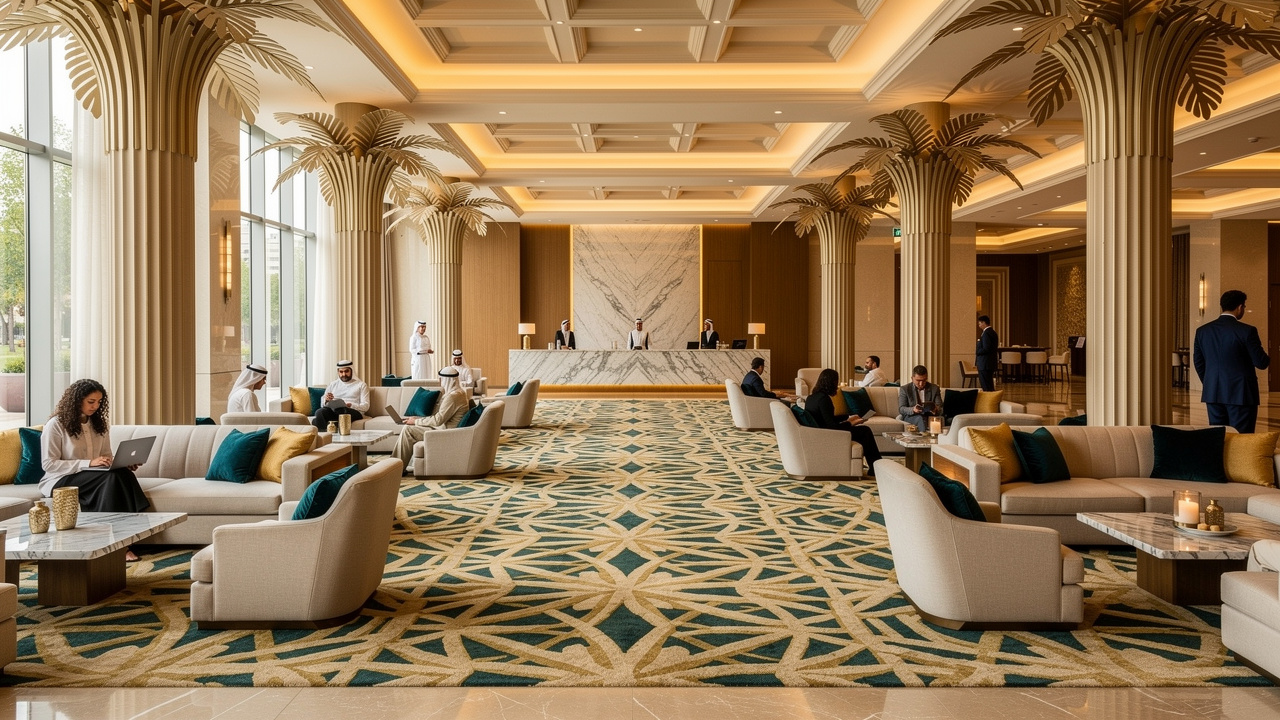
In hotels, acoustic carpets mainly protect guests from corridor footsteps, room to room noise and harsh lobby echo. By calming both impact and airborne sound, they support the quiet feeling that brands in Dubai and Abu Dhabi rely on.
Noise ranks among the most common guest complaints in global hotel surveys, according to research from J.D. Power.
Corridors sit directly above other rooms, so every heel strike and suitcase wheel can travel through the slab into sleeping areas. Thick cut pile acoustic carpets combined with high density rubber underlay add mass and cushioning that raise the IIC rating and calm those impacts. Housekeeping trolleys and service carts sound softer, yet the floor still feels firm underfoot for staff safety.
In lobbies and lounges, patterned loop pile carpets hold up under suitcase traffic while reducing reverberation that would otherwise bounce off glass and stone. Better control of reverberation improves speech clarity for reception staff and concierge teams, which supports guest comfort and upselling work. Inside guest rooms and suites, soft cut pile acoustic carpets between the bed and seating area reduce both footfall from occupants and airborne noise from televisions. DE Sound also pairs acoustic carpets with wall panels and ceiling tiles from brands like Saint-Gobain Ecophon to meet comfort targets in Gulf hotels.
Why Acoustic Carpets Are Essential For Open-Plan Offices In The UAE
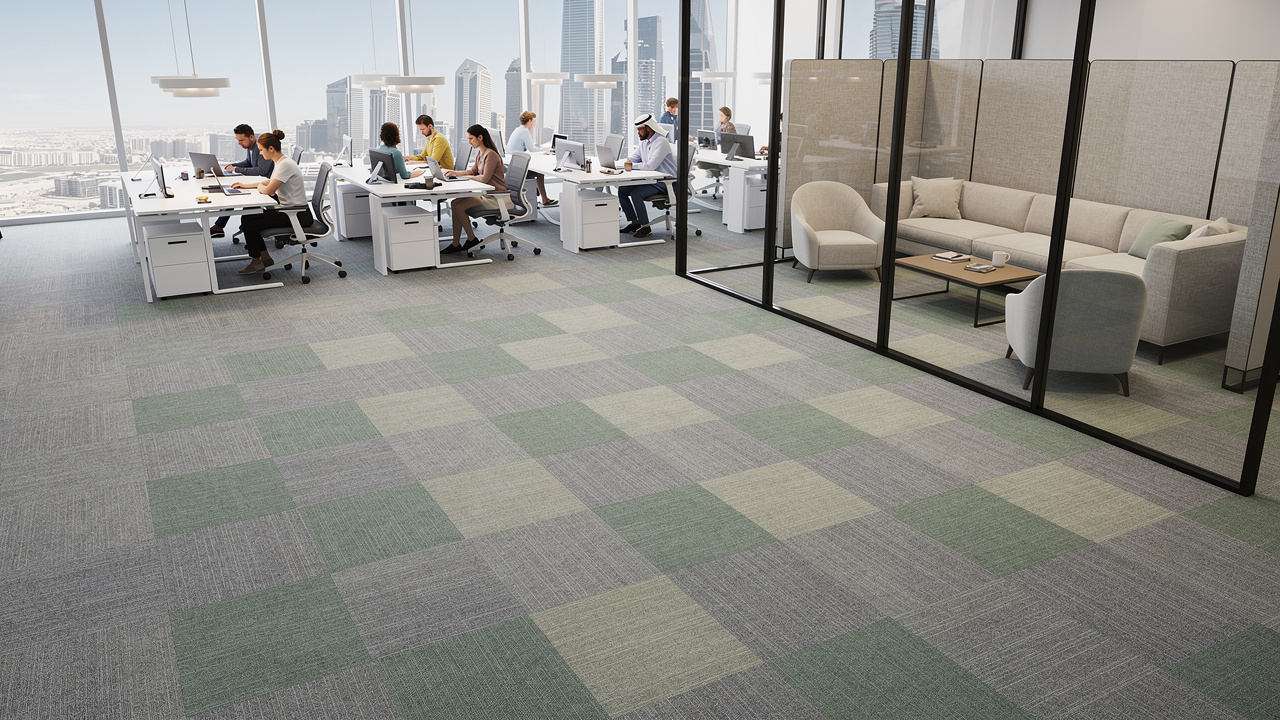
In open plan offices across Dubai, Abu Dhabi and Sharjah, acoustic carpets reduce distracting conversations and keyboard noise that travel across hard floors. By absorbing mid to high frequencies and calming footsteps, they support focus, privacy and speech clarity in meeting rooms.
Workplace surveys from Leesman show that noise and lack of privacy sit among the top three complaints in many offices worldwide.
Hard finishes such as porcelain, marble and exposed concrete reflect sound, which lengthens reverberation time in open spaces. Acoustic carpets absorb some of that energy on every step and help bring reverberation closer to the ranges recommended by groups like WELL Building Standard. Clearer speech helps teams follow meetings, hybrid calls and training sessions without fatigue.
Modular acoustic carpet tiles give extra benefits for facility managers and fit out contractors. Tiles lift and replace easily during churn, expansion or changes to cabling layouts, which protects both the acoustic layer and the program. DE Sound supplies office grade acoustic carpets that match common workstation grid sizes, so reconfigured spaces still keep consistent pattern and performance.
How To Choose The Right Acoustic Carpet For Your Project
To choose the right acoustic carpets, start by finding which type of noise causes the biggest problem in each room. Spaces with complaints from neighbors below need floor systems that raise IIC ratings, while echo inside meeting rooms calls for higher NRC values. Hotel corridors, gyms and multi story offices often focus on impact control, so designers favor thick cut pile carpets paired with dense rubber or composite underlays.
Conference rooms, training spaces and podcast studios usually care more about airborne sound, so high pile weight and cut pile construction become priorities, a principle supported by research into Sierpiński carpet-inspired hierarchical patterning of porous materials that demonstrates how surface geometry and density interact to maximize sound absorption. Look for commercial acoustic carpets with pile weight from around 600 grams per square meter upward, as indicated by manufacturer data from DE Sound partner mills and groups like Interface. Higher density gives more fiber surface to catch and slow sound waves.
Fire safety, indoor air quality and cleaning demands also matter for Gulf projects. According to the US Green Building Council, low VOC carpets and underlays can support LEED v4 material credits and healthier interiors. For hotels, schools and malls in the UAE, always confirm Civil Defence fire classifications and ask suppliers for test reports and safety data sheets.
What Role Does The Underlay Play In Acoustic Performance?
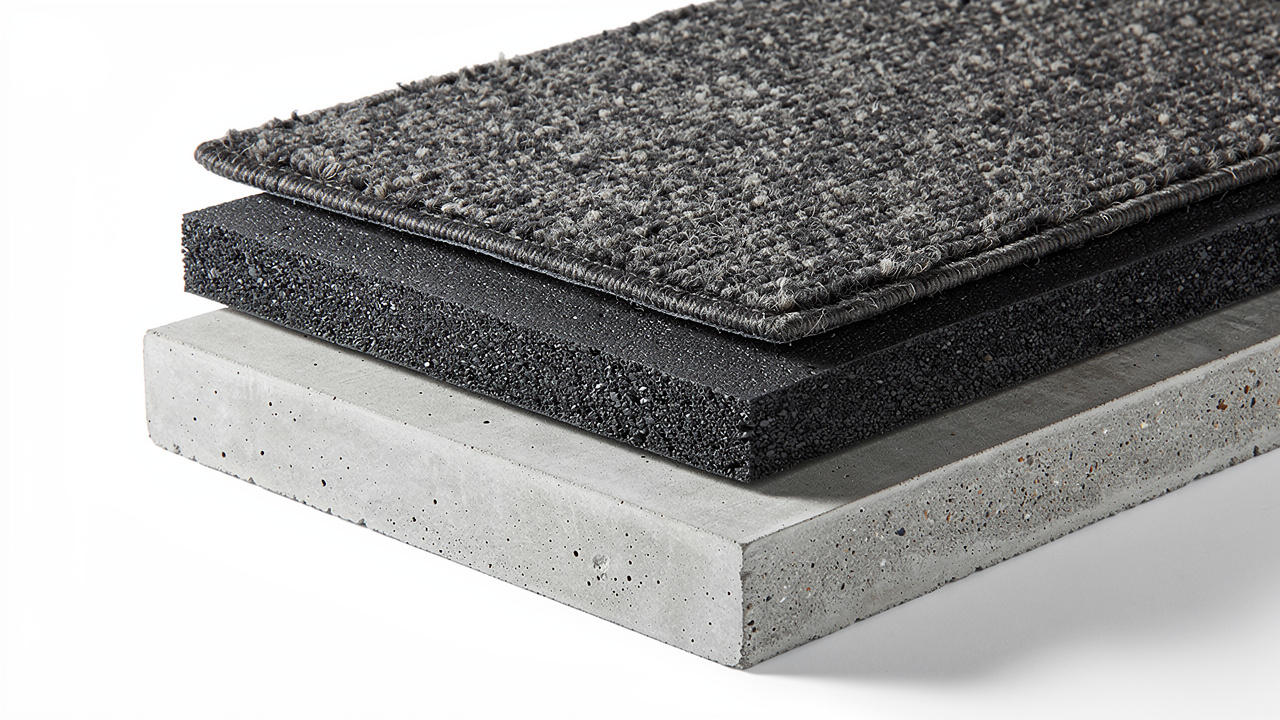
Underlay often delivers around half of the acoustic performance of a carpet system, especially for impact noise between floors. By adding mass and spring, it increases how much the floor build up can damp footfall, trolleys and dropped objects.
| Underlay Type | Best Use | Acoustic Focus | Extra Notes |
|---|---|---|---|
| Recycled rubber | High traffic corridors and gyms | Strong impact noise control | Handles heavy loads and frequent wheeled traffic |
| Polyurethane foam | Offices and bedrooms | Balanced impact control | Soft underfoot and friendly to many budgets |
| Felt or wool blend | Premium hotels and studios | Added airborne absorption | Natural fiber option with sustainability appeal |
As a rule of thumb, total thickness of carpet plus underlay above 12 to 15 millimeters gives strong IIC gains on concrete slabs. In UAE high rise projects, installers should test slab moisture before laying underlay, as temperature differences can push vapor into the floor build up.
Why Source Acoustic Carpets Through DE Sound In The Gulf Region?
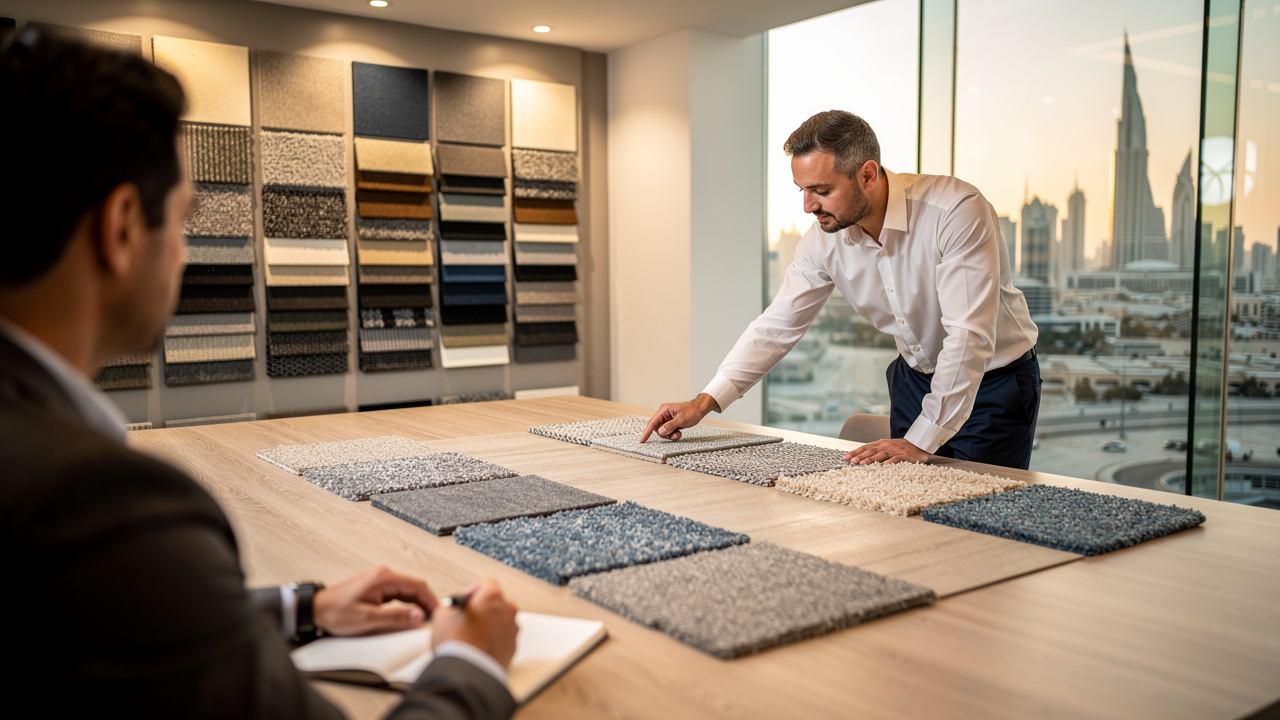
When clients source acoustic carpets through DE Sound, Gulf projects receive tested materials, factory direct pricing and support from specialists who focus only on acoustics. The company supplies carpets, underlays and complementary wall and ceiling treatments to hotels, offices, schools and studios across six GCC countries.
Because DE Sound works at wholesale scale, interior designers and contractors can cover long corridors, ballrooms or open offices without pushing budgets over target. Bulk deliveries from warehouses serving Dubai, Abu Dhabi and Riyadh help keep fit out programs on schedule. All products arrive with acoustic test data, fire reports and safety documentation that support local approvals.
A key advantage is DE Sound‘s free technical consultation for early design stages. Acoustic specialists review floor build ups, help balance NRC and IIC targets, and suggest matching wall panels or ceiling elements where needed. This guidance reduces the risk of late changes once Dubai Municipality or other authorities review drawings and specifications.
Lưu Ý Kết Luận / Wrapping Up
Acoustic carpets give offices and hotels a simple way to control both airborne sound and impact noise through one visible design element. Their dense pile, backing and underlay turn hard slabs into quieter, more comfortable floors for guests, staff and residents.
The most successful projects treat selection as a technical choice, not only a color or pattern decision. When teams match NRC and IIC targets to each zone, pick the right underlay and check fire and VOC ratings, performance stays reliable.
When these choices happen early in the design phase, acoustic carpets rarely cost more than standard flooring once guest comfort and staff productivity are counted. For projects across the UAE and GCC, DE Sound stands ready to help with acoustic calculations, material selection and fast regional deliveries.
Frequently Asked Questions
This section addresses common questions about acoustic carpets for offices and hotels in the UAE.
Question: What is the difference between NRC and IIC ratings for acoustic carpets?
Answer: NRC measures how much airborne sound a carpet absorbs, while IIC measures how well a floor build up blocks impact noise between levels. In most projects, corridors and gyms focus on IIC, and meeting rooms or offices focus more on NRC values.
Question: Do acoustic carpets work without a separate underlay?
Answer: Yes, many commercial carpet tiles include an acoustic backing that already improves impact and airborne sound performance. For hotels, high rise apartments and heavy traffic offices, adding a separate dense rubber or composite underlay usually gives higher IIC ratings and better comfort for the rooms below.
Question: Are acoustic carpets suitable for hotel lobbies and high-traffic areas?
Answer: Yes, loop pile and cut and loop acoustic carpets suit lobbies, corridors and other busy spaces. Nylon fibers and high pile weight keep the surface looking fresh under heavy suitcase and trolley traffic while still cutting impact and airborne noise.
Question: How do acoustic carpets contribute to UAE green building standards?
Answer: Low VOC acoustic carpets and underlays help projects that aim for LEED or Estidama ratings by supporting healthier indoor air. Their thermal insulation also reduces cooling demand, which aligns with guidance from groups such as the World Green Building Council.
Question: Can DE Sound supply acoustic carpets for large-scale hotel or office fit-outs across the GCC?
Answer: Yes, DE Sound focuses on wholesale orders for hotels, offices and schools across the GCC. The team arranges factory direct pricing, bulk deliveries, matching batches and technical guidance so designers and facility managers stay confident from tender through handover.