
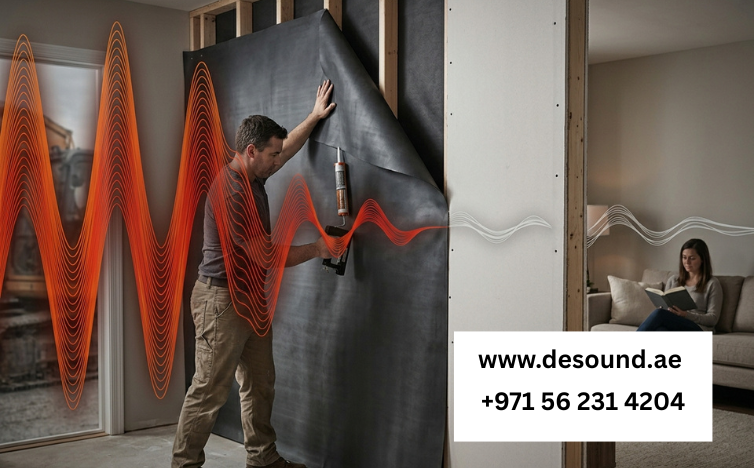
Low-frequency noise is one of the most difficult acoustic problems to solve. Sounds like heavy bass, generators, traffic rumble, and industrial machinery do not behave like regular noise. They carry more energy, travel longer distances, and pass through walls, ceilings, and floors with ease. This is why many common soundproofing materials fail to control them effectively. In such cases, Mass Loaded Vinyl (MLV) stands out as one of the most reliable solutions for blocking low-frequency noise.
MLV is specifically engineered as a dense, flexible barrier that targets sound transmission rather than just surface reflection. Unlike lightweight materials, it is designed to resist the movement of sound waves, especially at lower frequencies where most standard solutions fall short.
Understanding Why Low Frequencies Are Hard to Block
Low-frequency sound waves are longer and more powerful than high-frequency waves. Because of this, they do not get easily absorbed by thin or porous materials like foam or fabric panels. Instead, they pass through structures and even cause vibrations in walls and floors.
This is why treating low-frequency noise requires materials that can either absorb significant energy or physically block sound transmission. Standard acoustic panels are effective for echo and mid-range frequencies, but they are not designed to handle deep bass or mechanical noise.
The Role of Mass in Soundproofing
The effectiveness of MLV is based on a simple but critical acoustic principle: the more mass a barrier has, the harder it is for sound to pass through it. This is particularly important for low-frequency noise, which requires much more resistance to be controlled.
Mass Loaded Vinyl is manufactured with high-density materials that give it significant weight without making it excessively thick. When low-frequency sound waves hit this dense barrier, they lose energy and are less able to transmit through the structure. This makes MLV far more effective than standard building materials when it comes to blocking deep, heavy noise.
Flexibility That Reduces Vibration Transfer
One of the unique advantages of MLV is that it is not rigid like wood or drywall. Instead, it is flexible, which allows it to act as a “limp mass” barrier. This flexibility plays a crucial role in controlling low-frequency noise.
Rigid materials can sometimes vibrate when exposed to low-frequency sound, allowing noise to pass through or even amplify certain frequencies. MLV, on the other hand, absorbs and dampens these vibrations instead of transferring them. This reduces both airborne noise and structure-borne vibration, which is essential in environments with heavy equipment or strong bass sounds.
High Performance Without Excess Thickness
Traditional methods of blocking low-frequency noise often involve adding thick walls or multiple heavy layers of construction materials. While effective, these solutions are not always practical, especially in existing spaces.
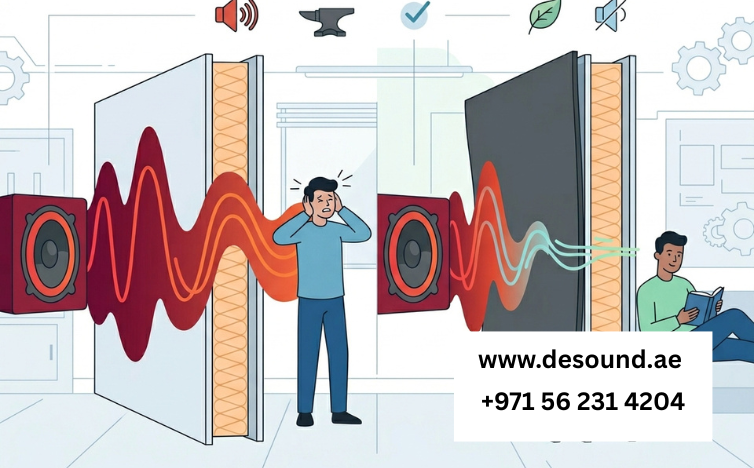
MLV provides a high level of sound insulation in a relatively thin form. This allows it to be installed inside walls, behind drywall, under flooring, or within ceilings without significantly increasing the overall thickness of the structure. As a result, it is widely used in both new construction and retrofit projects where space is limited.
Best Applications for MLV
Mass Loaded Vinyl is particularly effective in environments where low-frequency noise is a major concern. This includes generator rooms, industrial facilities, recording studios, home theaters, and offices located near heavy traffic or construction areas.
In these situations, MLV is often installed as part of a layered system, combined with insulation materials and structural barriers. This approach ensures that both sound transmission and internal reflections are properly controlled.
Why MLV Works Best in Combination
Although MLV is highly effective on its own, it performs even better when used with other soundproofing materials. Combining it with insulation such as mineral wool helps absorb sound energy, while adding drywall or other dense layers increases overall mass.
This layered system approach addresses multiple aspects of sound control, including blocking, absorption, and vibration isolation. As a result, it delivers far better performance than relying on a single material.
Call us: Contact DeSound Soundproofing Expert in Dubai For Soundproofing: +971 56 231 4204
Conclusion
Mass Loaded Vinyl is one of the most effective solutions available for controlling low-frequency noise. Its high density, flexibility, and ability to block sound transmission make it ideal for handling deep, powerful noise that other materials cannot manage.
For spaces affected by bass, machinery, or structural vibration, MLV provides a practical and efficient way to improve soundproofing without major structural changes. When used correctly, it transforms noisy environments into controlled, comfortable spaces with significantly reduced sound levels.