
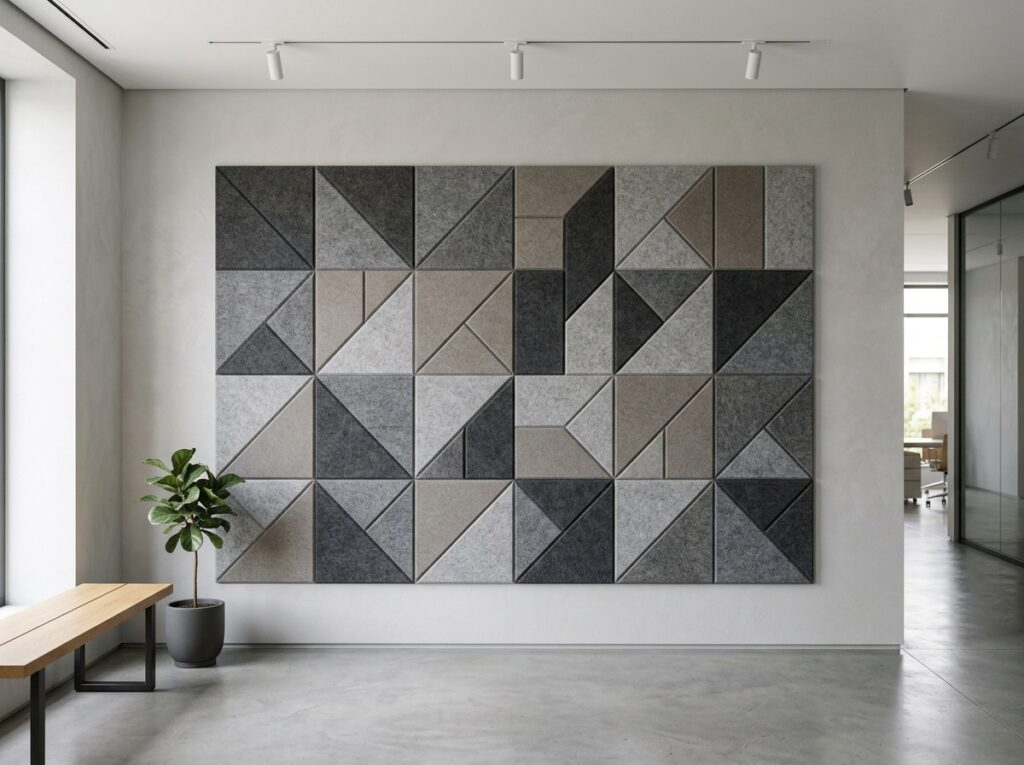
Modern interiors in Dubai, UAE are designed around openness, visual appeal, and functionality. Corporate offices, restaurants, hotels, educational facilities, healthcare environments, studios, and residential properties often feature glass partitions, polished floors, exposed ceilings, concrete surfaces, and large open areas.
These materials contribute to contemporary architecture, but they can also create acoustic challenges.
When sound repeatedly reflects from hard surfaces, conversations can become difficult to understand and background noise can quickly build up. Instead of making the entire space quieter through structural soundproofing, many projects require a carefully planned acoustic treatment service that improves the way sound behaves inside the room.
Acoustic PET panels can form an important part of this type of solution.
Understanding PET Acoustic Treatment
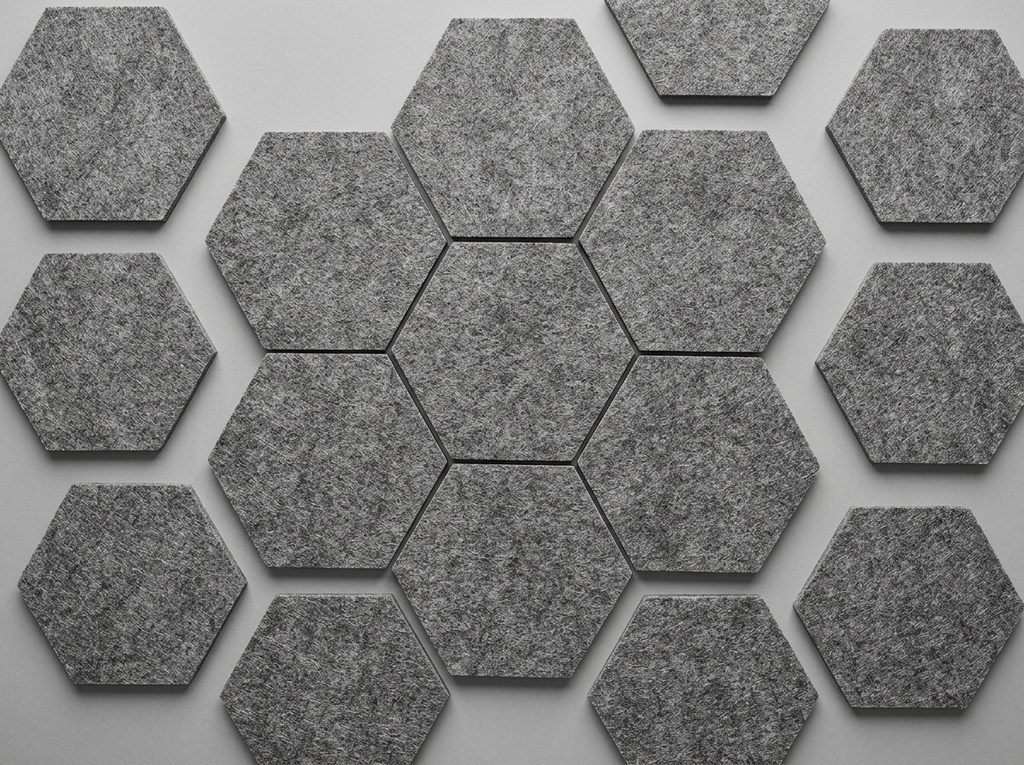
PET acoustic panels are sound-absorbing elements manufactured from polyethylene terephthalate fibres.
Their structure is designed to interact with reflected sound, helping reduce the amount of acoustic energy that continues bouncing around the room.
Unlike materials intended primarily for sound isolation, PET acoustic treatment focuses on the internal acoustic environment.
A properly designed system can help address:
- Excessive reverberation
- Echo
- Reflected speech
- Poor speech intelligibility
- High perceived background noise
- Acoustically uncomfortable rooms
The panels can be incorporated into walls, ceilings, partitions, suspended features, and custom architectural installations.
Why Dubai Interiors Often Need Acoustic Treatment
Many commercial and residential interiors in Dubai make extensive use of reflective finishes.
Large glass surfaces, marble, porcelain tiles, concrete, and other hard materials can contribute to strong sound reflections.
Consider an open office containing several teams.
One employee is on a phone call, another is participating in a video conference, and several groups are discussing projects.
Without enough sound absorption, these sounds can overlap and continue reflecting around the room.
The result may be an environment that feels unnecessarily loud despite relatively normal conversations.
This is where professional acoustic planning becomes valuable.
Our Acoustic PET Panel Approach
Rather than treating PET panels as a standalone product, acoustic treatment should begin with understanding the space.
A professional service can evaluate:
Room dimensions → Existing surfaces → Noise sources → Occupancy → Reverberation → Required acoustic improvement
This information helps determine where absorption should be introduced.
Depending on the project, treatment may involve wall-mounted panels, ceiling elements, acoustic partitions, or a combination of different acoustic systems.
PET Acoustic Treatment for Dubai Offices
Dubai’s offices range from compact private workplaces to large open-plan corporate environments.
Open offices can experience significant sound activity throughout the working day.
Common sources include:
- Telephone conversations
- Team discussions
- Video conferences
- Employee movement
- Office equipment
- Visitors
- Reception activity
PET acoustic treatment can be planned around workstations, collaboration areas, meeting rooms, and other high-activity zones.
The objective is to create a more balanced acoustic environment without eliminating the open and collaborative character of the workplace.
Meeting Room Acoustic Solutions
A meeting room may appear visually impressive but still perform poorly acoustically.
Glass walls and hard tables can create multiple reflective paths, making speech less clear.
Strategically designed PET treatment can be incorporated into walls or ceilings to help manage these reflections.
This can be particularly useful for:
- Boardrooms
- Executive meeting rooms
- Conference rooms
- Video conferencing rooms
- Training rooms
- Presentation spaces
Rather than covering every available surface, treatment can be positioned according to the room’s acoustic requirements.
Restaurants and Hospitality Spaces
Acoustics can have a major effect on the atmosphere of a restaurant.
As customer numbers increase, conversations can combine with music, kitchen activity, staff movement, and other sounds.
In a highly reflective restaurant, this can result in an increasingly loud environment.
Acoustic PET treatment can be incorporated without making the interior look like a conventional acoustic installation.
Possible approaches include:
Decorative Wall Treatment
Custom PET panels can become part of a feature wall or visual composition.
Suspended Elements
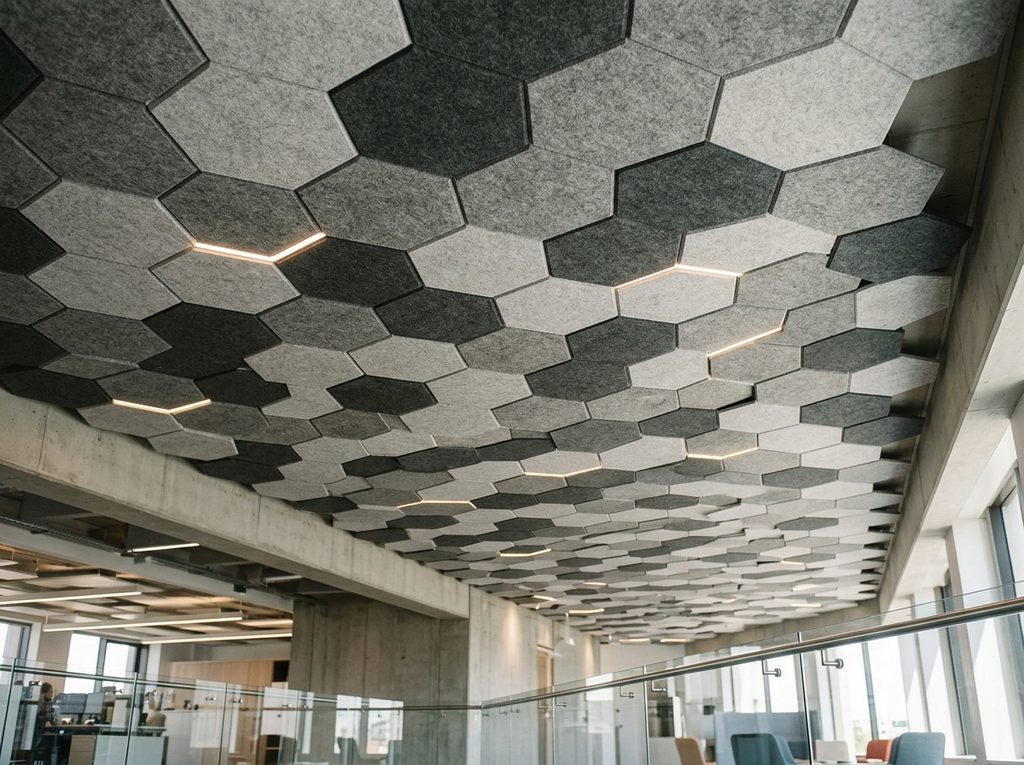
Ceiling-mounted PET features can provide additional absorption where wall space is limited.
Acoustic Zoning
Panels can help define particular dining or lounge areas while contributing to sound control.
PET Acoustic Services for Hotels
Hotels require a combination of aesthetics, comfort, and functionality.
Large lobbies, restaurants, lounges, conference rooms, and event spaces can all present different acoustic challenges.
A professional acoustic treatment service can develop solutions for:
- Hotel reception areas
- Lobbies
- Restaurants
- Lounges
- Conference facilities
- Event rooms
- Business centres
PET materials can be incorporated into the design so that acoustic treatment complements the hotel’s overall architectural identity.
Educational and Training Environments
Clear speech is especially important in classrooms and training spaces.
If a room has excessive reverberation, students may struggle to distinguish a teacher’s voice from reflected sound.
Acoustic PET treatment can be considered for:
- Classrooms
- Training rooms
- Lecture spaces
- Libraries
- Seminar rooms
- Study areas
The treatment strategy should consider room size, ceiling height, furniture, student capacity, and the existing acoustic characteristics.
Acoustic Treatment for Healthcare Environments
Healthcare facilities contain many different sources of sound, from conversations and movement to equipment and operational activity.
Waiting rooms, consultation areas, offices, and meeting spaces can each require different acoustic strategies.
PET acoustic treatment can be incorporated into suitable areas to help manage reflected sound while maintaining a clean interior appearance.
For healthcare projects, the selected materials and installation method should also meet the facility’s specific requirements for cleaning, hygiene, fire performance, and durability.
Custom PET Acoustic Design
One of the biggest advantages of using PET as part of an acoustic service is its design flexibility.
Treatment does not have to consist of identical rectangular panels.
Depending on the project, acoustic features can be developed as:
- Geometric patterns
- Curved shapes
- Decorative compositions
- Branded elements
- Acoustic screens
- Ceiling baffles
- Wall features
- Room dividers
This allows acoustic treatment to become part of the architecture instead of appearing as an afterthought.
Acoustic PET Partitions for Open Spaces
Many Dubai workplaces use open layouts because they encourage collaboration and flexible working.
However, completely open environments can allow sound to travel freely between different areas.
PET acoustic partitions can provide an alternative to permanent walls.
They can be used to:
- Separate workstations
- Define meeting zones
- Create quiet areas
- Divide collaboration spaces
- Improve visual privacy
- Reduce direct sound reflections
This can be particularly useful for offices where the layout may need to change in the future.
Ceiling-Based Acoustic Treatment
Walls are not the only surfaces that influence room acoustics.
A large ceiling can contribute significantly to sound reflection, especially in spacious commercial interiors.
PET acoustic elements can be incorporated into ceiling designs through suspended panels, baffles, or other configurations.
This approach can be useful where wall space is occupied by:
- Windows
- Screens
- Artwork
- Furniture
- Doors
- Architectural features
Ceiling treatment can also be coordinated with lighting and interior design elements.
Acoustic Treatment Is Not Soundproofing
One of the most important distinctions in acoustic planning is the difference between absorption and sound isolation.
PET panels are primarily designed to improve the acoustic environment inside a room.
They can help control:
Echo + Reverberation + Reflected Sound
They are not intended to completely stop noise travelling through a wall, floor, ceiling, door, or window.
If the objective is to prevent sound from entering or leaving a room, a separate soundproofing system may be required.
Depending on the building, this could involve:
- Mass Loaded Vinyl
- Acoustic insulation
- Resilient channels
- Multiple board layers
- Acoustic doors
- Acoustic glazing
- Acoustic sealants
A professional assessment can determine which approach is appropriate.
Why Acoustic Assessment Comes First
Installing acoustic panels without analysing the room can result in either insufficient treatment or unnecessary material.
A professional assessment considers the entire environment.
Room Geometry
The size and shape of the space affect how sound behaves.
Reflective Surfaces
Glass, marble, concrete, and tile can significantly influence reverberation.
Occupancy
A busy restaurant behaves differently from an empty room.
Noise Sources
The location and type of sound sources affect treatment placement.
Existing Furnishings
Furniture, curtains, carpets, and other elements already contribute to sound absorption.
This information helps create a more targeted treatment plan.
Complete Acoustic PET Panel Services in Dubai
A professional acoustic service can cover the project from initial assessment through implementation.
Services can include:
- Acoustic consultation
- Existing-condition assessment
- Room acoustic planning
- PET panel specification
- Custom acoustic design
- Wall treatment
- Ceiling treatment
- Acoustic partitions
- Decorative acoustic installations
- Installation planning
- Professional installation
The goal is to provide a solution based on the actual acoustic requirements of the space.
Maintaining Acoustic PET Installations
Once installed correctly, PET acoustic systems generally require straightforward routine care.
Depending on the specific material and finish, maintenance may involve:
- Regular dust removal
- Gentle vacuuming
- Careful removal of surface marks
- Avoiding excessive moisture
- Using manufacturer-approved cleaning methods
- Periodic inspection for physical damage
Maintenance requirements can vary depending on the selected PET system and its installation environment.
Frequently Asked Questions
What are PET acoustic panels designed to do?
They are primarily designed to absorb reflected sound and help reduce reverberation inside rooms.
Can PET panels eliminate echo?
They can significantly help control excessive reflections and reverberation when appropriately specified and positioned.
Can PET treatment be used in offices?
Yes. It can be designed for open-plan offices, meeting rooms, boardrooms, reception areas, and collaboration spaces.
Can PET panels be used as room dividers?
Yes. PET can be incorporated into acoustic screens and partitions for open-plan environments.
Do PET panels soundproof a room?
No. They primarily provide sound absorption. Preventing sound transmission requires a dedicated sound isolation system.
Professional Acoustic Treatment for Dubai Projects
Every project has different acoustic requirements.
A restaurant may need to control the combined sound of customers and background music. An office may require improved speech clarity, while a conference room may need more controlled reverberation for presentations and video calls.
Professional acoustic services can assess these requirements and develop a treatment strategy accordingly.
This ensures PET panels are used where they can provide meaningful acoustic improvement rather than simply being installed for decorative purposes.
Conclusion
Acoustic PET panels offer a flexible approach to improving interior room acoustics while allowing considerable freedom in architectural design.
For offices, restaurants, hotels, educational facilities, healthcare environments, studios, and residential interiors in Dubai, professionally planned PET acoustic treatment can help reduce excessive reverberation, improve speech clarity, and create more comfortable spaces.
The most effective results come from combining proper acoustic assessment, strategic treatment placement, suitable materials, and professional installation.
Rather than treating acoustic panels as an isolated product, a complete acoustic service can develop a solution around the building, its occupants, and the specific sound-related challenges of the space.