
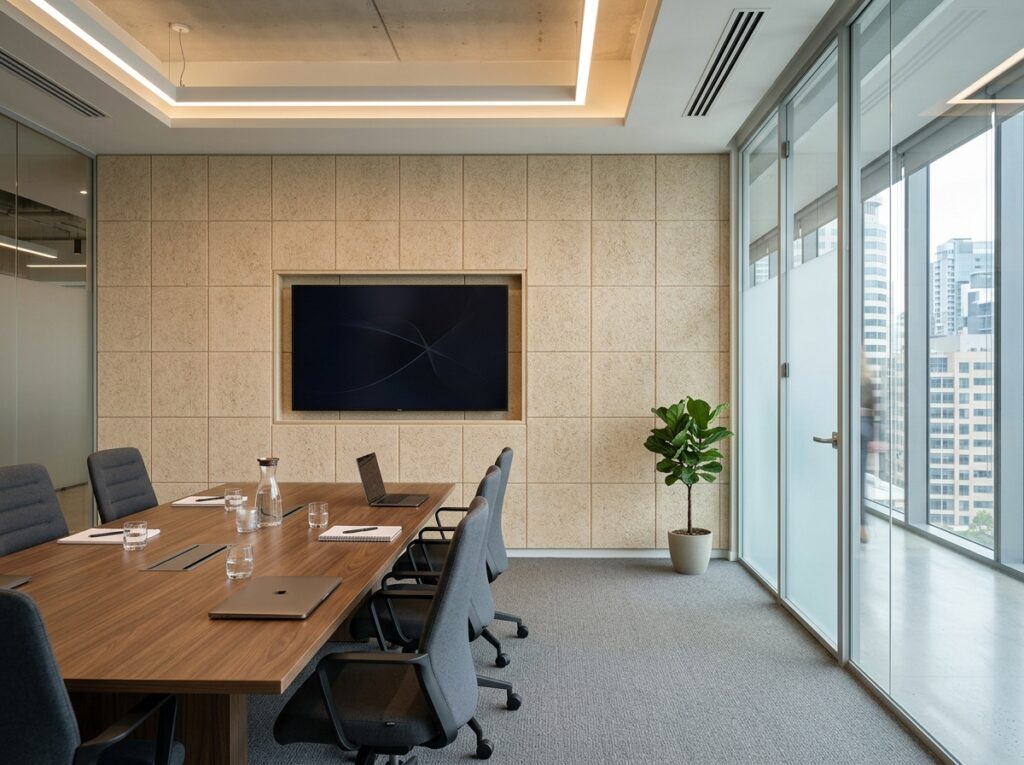
Modern buildings across Saudi Arabia are placing greater emphasis on comfortable and well-designed indoor environments. Offices, hotels, educational facilities, restaurants, conference spaces, and residential developments often combine glass, concrete, stone, and other hard finishes. While these materials create a contemporary appearance, they can also cause excessive sound reflection.
Acoustic wood wool panels provide a practical way to manage these reflections while introducing a textured architectural finish. Their fibre-based structure helps absorb unwanted sound within a room, making them suitable for spaces where echo and reverberation affect communication and comfort.
From corporate offices in Riyadh to hospitality venues, educational buildings, and residential interiors, wood wool acoustic panels can combine acoustic performance with modern design.
Understanding Wood Wool Acoustic Panels
Wood wool acoustic panels are manufactured from slender wood fibres bonded together to create a rigid, porous board. The open structure of the fibres gives the panel its characteristic appearance while providing a surface capable of absorbing sound energy.
Rather than allowing sound waves to repeatedly bounce between hard surfaces, the panel helps absorb a portion of those reflections.
This makes wood wool particularly useful for controlling:
- Room echo
- Reverberation
- Speech reflections
- General background sound
- Excessive acoustic buildup
Why Wood Fibre Works as an Acoustic Material
The structure of the panel plays an important role in its acoustic behaviour.
When sound reaches a conventional hard surface, much of the energy is reflected back into the room. A wood wool panel presents a more acoustically absorbent surface, allowing sound energy to enter the fibre structure.
This can reduce repeated reflections and help create a more balanced acoustic environment.
The result is especially noticeable in spaces with large open areas and limited soft furnishings.
Advantages of Acoustic Wood Wool Panels
Improved Room Acoustics
Wood wool panels can help reduce excessive reverberation, making speech and everyday communication easier to follow.
Natural Textured Appearance
The visible fibres give the material a distinctive finish that can add depth to walls and ceilings.
Architectural Versatility
The panels can be incorporated into different interior concepts, from minimalist offices to more decorative hospitality environments.
Durable Board Structure
Their rigid construction makes them suitable for demanding interior applications when properly installed and maintained.
Multiple Design Options
Depending on the selected product, wood wool panels can be available in different:
- Thicknesses
- Colours
- Dimensions
- Edge configurations
- Installation patterns
- Wall and ceiling arrangements
Where Can Wood Wool Panels Be Installed?
Wood wool acoustic panels can be used in many types of buildings.
Corporate Offices
Open-plan workplaces can contain multiple conversations, phone calls, and meetings simultaneously. Excessive reflections can make the environment feel noisy.
Strategically placed acoustic panels can help control these reflections and create a more comfortable workspace.
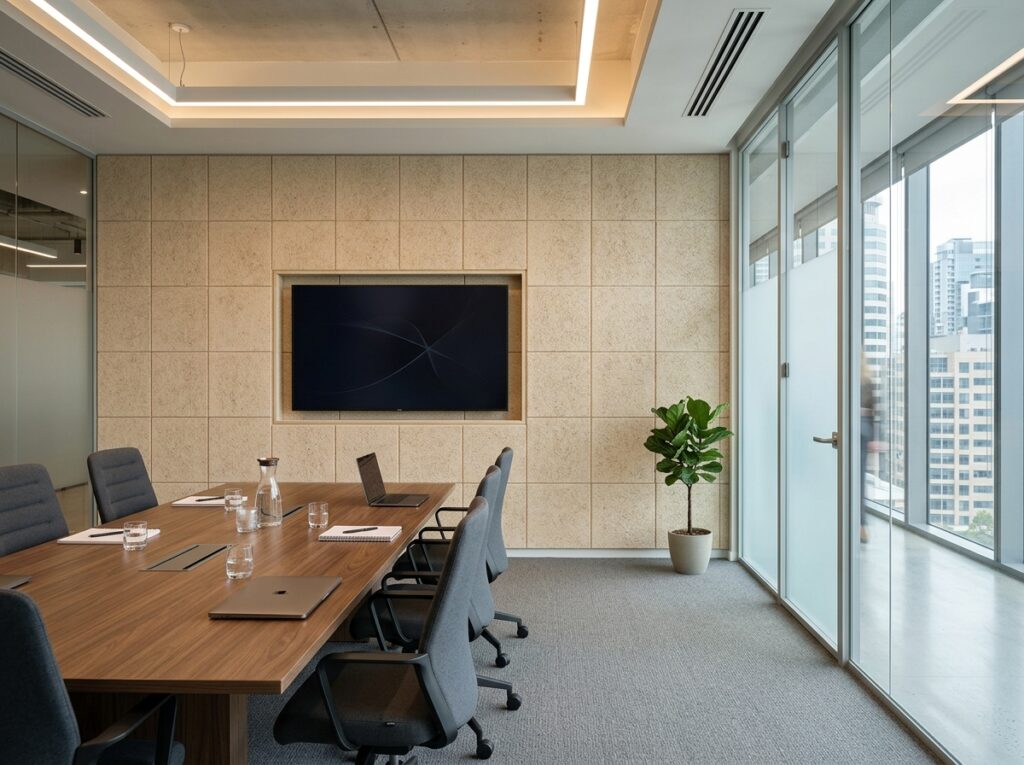
Conference and Meeting Rooms
Clear communication is essential during presentations and meetings. Wood wool panels can help reduce reverberation and improve speech intelligibility.
Hotels
Hotels can use acoustic panels in lobbies, restaurants, conference facilities, lounges, and other shared areas where acoustic comfort is important.
Restaurants
Busy restaurants can become particularly loud because of the combination of people, music, furniture, and reflective finishes. Acoustic treatment can help create a more pleasant dining environment.
Educational Facilities
Classrooms, lecture rooms, libraries, and training spaces benefit from controlled acoustics because excessive reverberation can make spoken instruction harder to understand.
Wood Wool Panels as a Design Feature
Acoustic treatment does not have to be hidden.
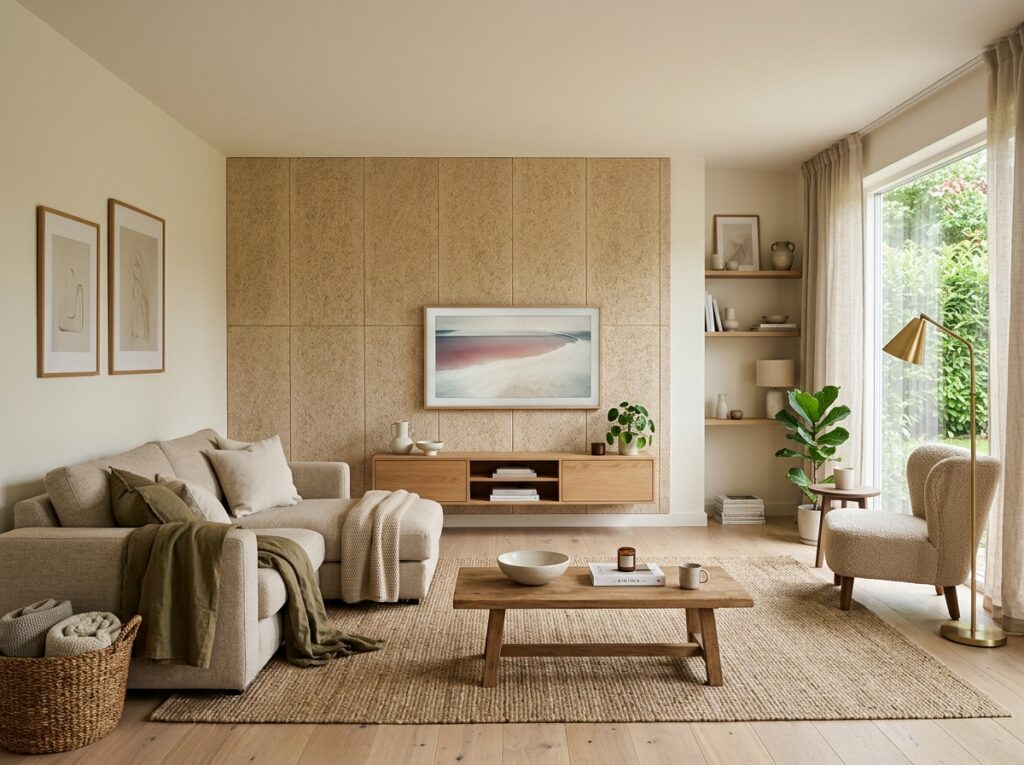
The textured appearance of wood wool allows it to become part of the visual identity of a space.
Feature Walls
Panels can cover selected sections of a wall to create a distinctive architectural focal point.
Ceiling Applications
Large ceiling areas can be treated with wood wool panels, particularly in rooms where wall space is already occupied by furniture, windows, or displays.
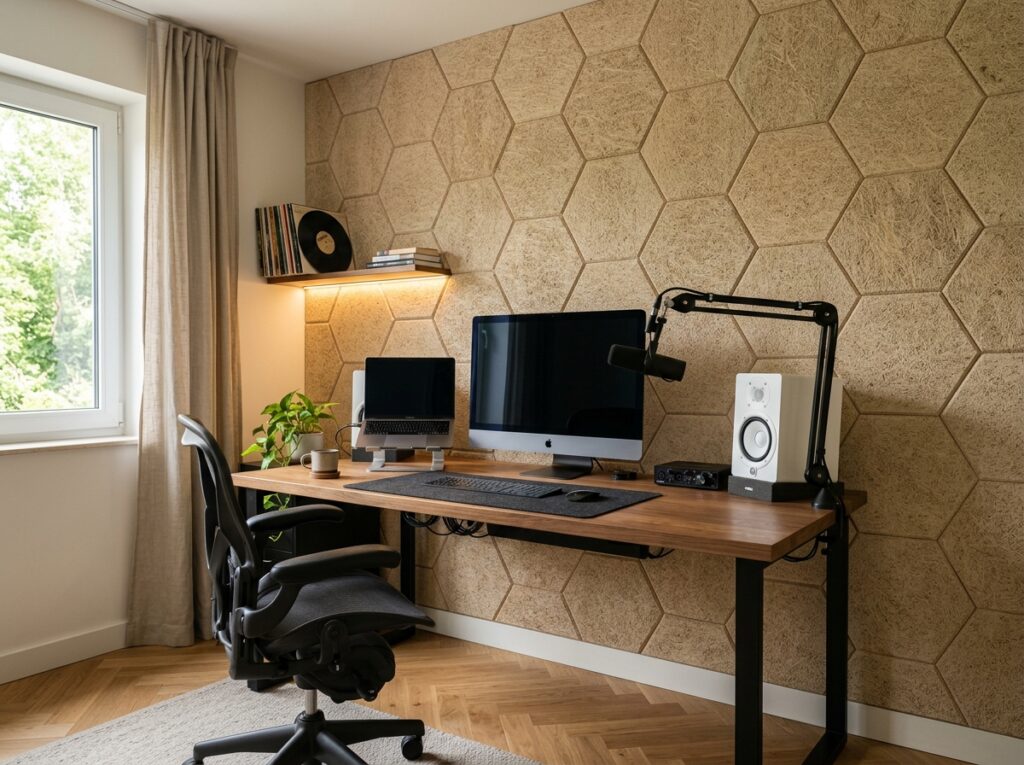
Patterned Arrangements
Panels can be positioned in different layouts to create geometric or linear designs.
Colour Coordination
Different panel colours can be selected to complement the surrounding furniture, flooring, lighting, and architectural finishes.
Acoustic Wood Wool for Riyadh’s Modern Interiors
Riyadh has experienced substantial growth in commercial, hospitality, residential, and institutional construction. Modern interiors frequently incorporate large rooms, open-plan layouts, glass partitions, stone surfaces, and other materials that can contribute to sound reflection.
Wood wool panels can be integrated into these environments without requiring the interior to sacrifice its architectural character.
They can be considered for:
- Corporate headquarters
- Hotels
- Restaurants
- Educational facilities
- Conference centres
- Libraries
- Healthcare interiors
- Residential developments
- Multipurpose halls
The panels can be selected and positioned according to the acoustic and aesthetic requirements of each space.
Wood Wool Panels for Large Open Areas
Large rooms can be particularly challenging acoustically because sound has more space to travel and reflect.
Auditoriums, multipurpose halls, event areas, and large offices can benefit from carefully positioned absorption.
Wood wool panels can be installed across suitable wall or ceiling surfaces to help control the overall reverberation of the room.
The amount of material required depends on factors such as:
- Room dimensions
- Ceiling height
- Existing finishes
- Furniture
- Occupancy
- Intended use
- Existing acoustic conditions
Selecting the Right Acoustic Wood Wool Panel
Choosing the correct panel involves more than selecting a preferred appearance.
Consider Panel Thickness
Different thicknesses provide different acoustic characteristics. The appropriate option should be selected according to the room and desired level of absorption.
Evaluate the Installation Surface
Determine whether the panels will be installed on walls, ceilings, or another suitable surface.
Consider Room Size
Larger rooms may require greater acoustic coverage than smaller spaces.
Match the Interior Design
Colour, panel orientation, and layout should complement the surrounding architecture.
Identify the Acoustic Problem
A room suffering from excessive echo requires an absorption strategy, while noise passing through a wall requires a sound isolation approach.
Wood Wool Absorption vs. Soundproofing
It is important to understand the difference between acoustic treatment and soundproofing.
Wood wool panels are primarily designed to improve the acoustics inside a room. They help absorb reflected sound and reduce reverberation.
They are not intended to completely stop sound from travelling through a wall or ceiling.
For sound isolation projects, wood wool panels may be combined with materials such as:
- Mass Loaded Vinyl
- Acoustic insulation
- Gypsum board
- Resilient channels
- Acoustic sealants
- Soundproof doors
- Acoustic glazing
The appropriate combination depends on whether the project requires absorption, sound isolation, or both.
Maintenance of Wood Wool Acoustic Panels
Keeping wood wool panels clean generally requires simple routine care.
Recommended maintenance includes:
- Dusting with a soft brush.
- Using a suitable vacuum attachment when necessary.
- Removing minor marks carefully.
- Avoiding excessive water.
- Avoiding harsh or abrasive chemicals.
- Checking panels periodically for damage.
Following the manufacturer’s maintenance instructions is recommended to preserve the appearance and performance of the panels.
Frequently Asked Questions
What are wood wool acoustic panels used for?
They are primarily used to absorb reflected sound and reduce echo and reverberation inside rooms.
Can wood wool panels improve speech clarity?
Yes. By controlling excessive reflections, they can help create an environment where spoken communication is easier to understand.
Can they be installed on walls and ceilings?
Yes. Both wall and ceiling installations are common applications.
Are wood wool panels suitable for restaurants?
Yes. They can help control the sound reflections created by conversations, music, and hard interior finishes.
Do wood wool panels replace soundproofing?
No. They provide acoustic absorption rather than complete sound isolation. A dedicated soundproofing assembly is required when the objective is to reduce sound transmission between spaces.
Conclusion
Acoustic wood wool panels combine sound absorption with a distinctive textured finish, making them suitable for interiors where acoustic performance and visual design are equally important. Their rigid construction, design flexibility, and fibre-based surface allow them to be incorporated into a wide range of architectural environments.
For offices, hotels, restaurants, schools, conference facilities, and residential developments across Riyadh and Saudi Arabia, wood wool panels can help reduce excessive reverberation and improve the overall acoustic experience.
When correctly selected and strategically positioned, they can transform reflective interiors into more comfortable spaces while adding a natural and contemporary architectural element.