
Introduction
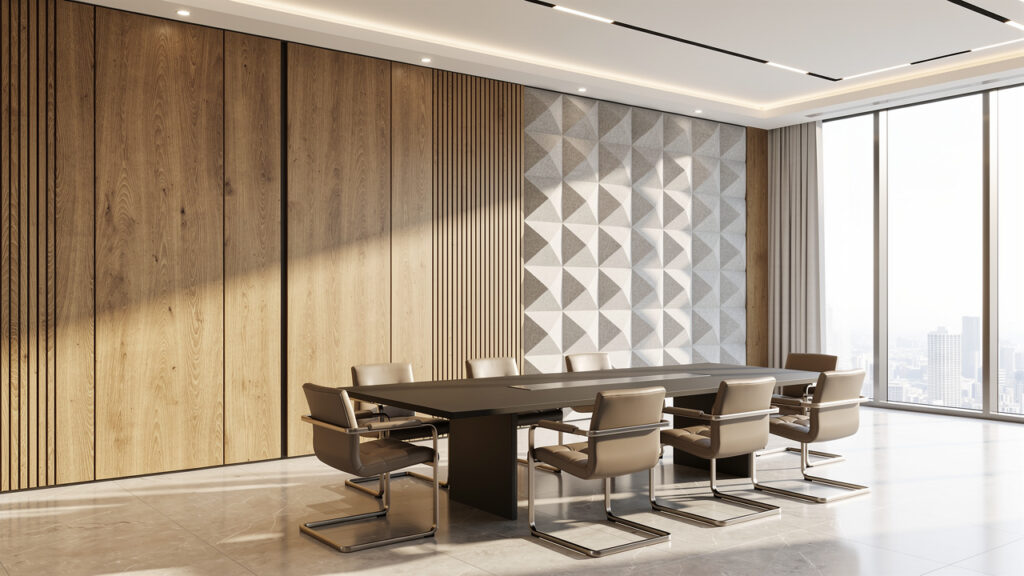
Hard marble floors, glass partitions, and buzzing HVAC units turn many GCC interiors into loud, tiring spaces. Conversations blur, meetings drag, and guests leave with a sense of strain they cannot explain. Acoustic comfort drops even when the design looks impressive.
Acoustic wall panels give those same rooms controlled sound, clear speech, and a calmer background. These engineered wall finishes absorb echo far better than paint, gypsum, or decorative cladding. They help offices, hotels, schools, and studios reach the sound quality people expect from high-end interiors.
In this guide, we compare the best acoustic wall panels for commercial interiors in the GCC and show when to choose PET, wood, or stretch fabric systems.
Keep reading to see how these panel types perform, where they fit, and how DE Sound supports GCC projects from design through delivery.
Key Takeaways
Here are the key points.
Acoustic wall panels now appear in most GCC specs. Offices, schools, hotels, and studios request them at design stage. Noise control has shifted from a nice-to-have to a basic performance requirement.
Three main panel families serve GCC commercial projects: PET, wood, and stretch fabric. Matching them to office, hospitality, or education spaces starts with target NRC and visual goals.
Wholesale GCC supply strongly affects budgets and timing. Regional stock and predictable shipping cut the risk of site delays. Factory direct pricing from DE Sound protects margins on large quantities.
“People remember how a space made them feel far more than how it looked. Good acoustics are a big part of that feeling.” — DE Sound Technical Team
What Are Acoustic Wall Panels And Why Do GCC Commercial Interiors Need Them?
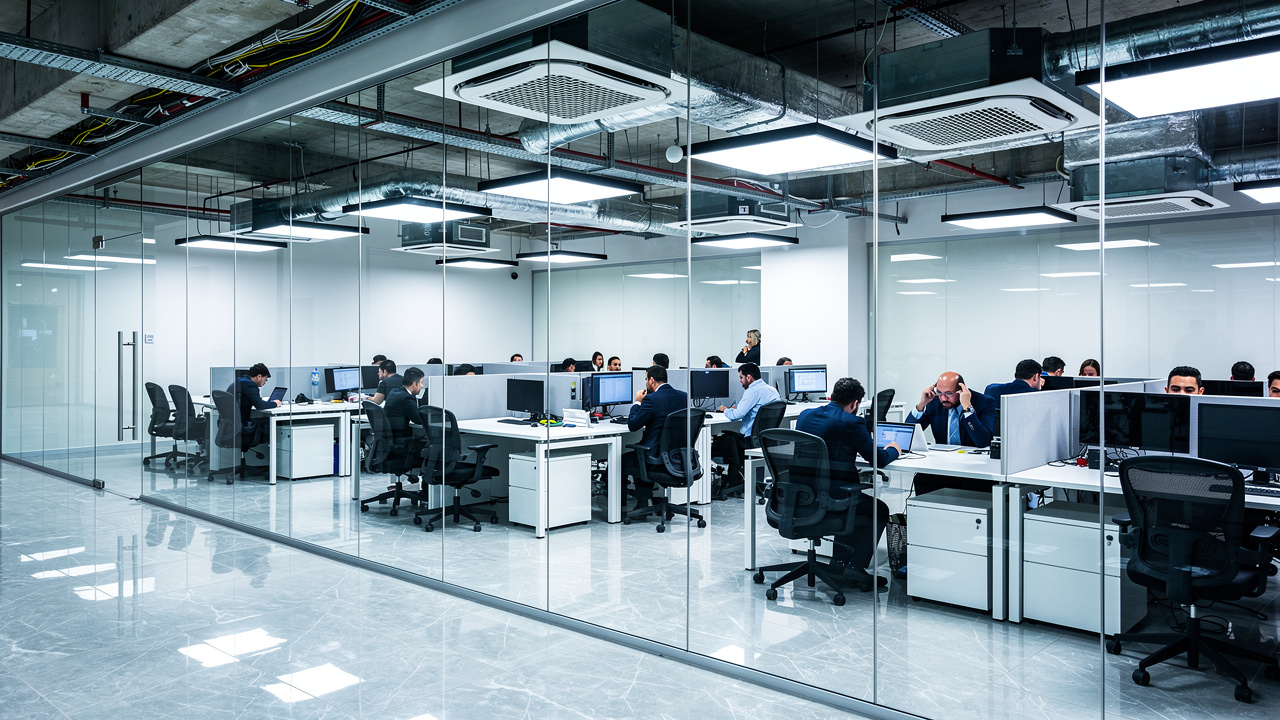
Acoustic wall panels are engineered wall elements that absorb sound energy so GCC interiors achieve quieter, clearer spaces. Instead of bouncing noise back into the room, these panels convert part of that energy into tiny amounts of heat. The result is lower reverberation and easier conversation for people using the room.
Most systems use a fibrous or foam core, such as mineral wool, fiberglass, or recycled PET, behind a fabric or wood finish. The key performance number is the Noise Reduction Coefficient (NRC), which tells you how much sound the panel absorbs on a scale from zero to one. For speech-focused rooms in offices, schools, and clinics, designers in Dubai and Abu Dhabi often target NRC values of 0.75 or higher to keep echo under control. In simple terms, higher NRC numbers mean more sound is absorbed and less is reflected back into the room.
In the GCC, hard materials such as marble, glass, and painted gypsum already dominate lobbies, corridors, and boardrooms. Open layouts and powerful air conditioning units raise background noise even more, so staff need to speak louder to be heard. Research from Nielsen Norman Group reports that noise is the top complaint for employees in open-plan offices, which shows how strongly poor acoustics affect daily work.
For guest comfort and wellbeing, this matters. The WHO links long-term exposure to excess noise with higher stress and sleep disturbance, especially in urban centers. Acoustic wall panels help commercial interiors in Riyadh, Doha, and Sharjah lower reverberation time, improve speech clarity, and create spaces that feel calmer without changing the visible architecture.
Best Types Of Acoustic Wall Panels For Commercial Projects In The GCC
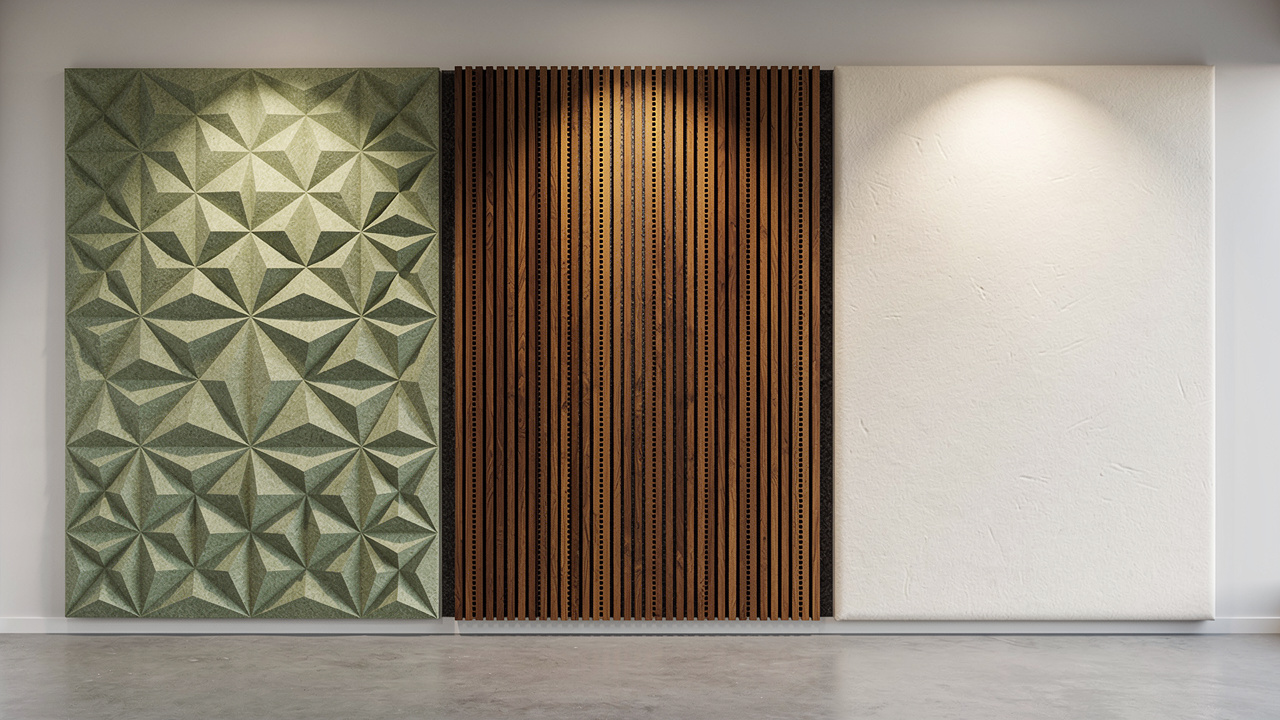
The best types of acoustic wall panels for GCC commercial interiors fall into three main groups that cover most projects. PET felt panels, wood acoustic panels, and stretch fabric systems each balance performance, look, and cost differently. Choosing between them depends on how the space feels, looks, and sounds.
DE Sound supplies all three categories across the UAE, Saudi Arabia, Qatar, Kuwait, Bahrain, and Oman. The short sections below explain how each panel family behaves in real spaces so designers and contractors can line them up with offices, hotels, and education projects.
DE Sound PET Acoustic Panels — Eco-Friendly Performance For Modern Commercial Spaces
DE Sound PET acoustic panels use compressed recycled polyester fiber to absorb sound while keeping weight low. The material is impact resistant, moisture tolerant, and available in many thicknesses, so it fits busy corridors as well as open-plan offices. Because PET contains a high percentage of recycled content, it supports LEED, Estidama, and WELL building targets without extra paperwork.
Design teams in Dubai and Abu Dhabi often shape PET panels into 3D tiles or baffles to create feature walls that tame echo at the same time. According to the US Green Building Council, recycled materials help projects reach points for green ratings, which makes PET panels attractive for corporate clients. Through factory-direct supply, DE Sound delivers large PET quantities quickly for offices, retail units, and co-working hubs across the GCC.
Common reasons specifiers choose PET acoustic panels include:
Light weight for faster installation.
Durability for schools, corridors, and public areas.
Recycled content and color range that support environmental and branding goals.
DE Sound Wood Acoustic Panels — Premium Aesthetics For Hospitality And Executive Spaces
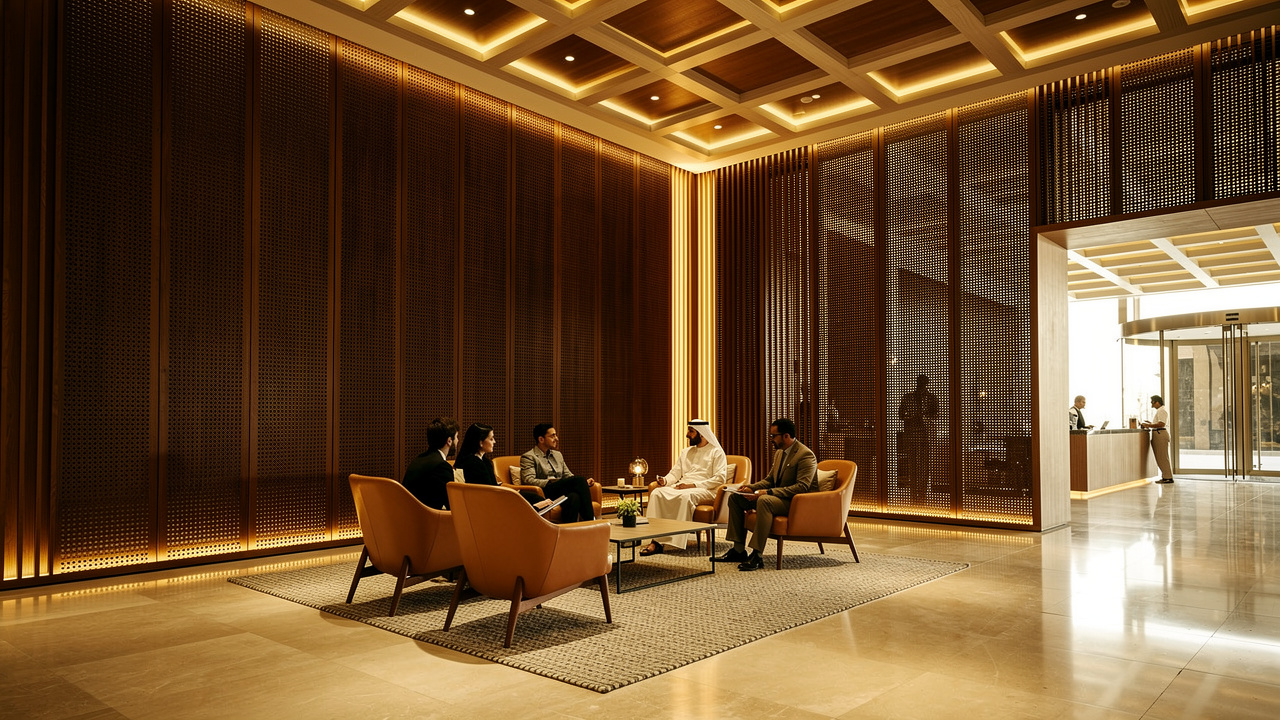
DE Sound wood acoustic panels combine a perforated or slotted timber face with an absorbent backing of mineral wool or felt. The visible surface carries natural oak, walnut, or veneer finishes that match premium joinery in hotels and executive suites. Behind that surface, the perforation pattern allows sound to reach the core and raises the NRC rating far above that of plain cladding.
These panels appear often in lobby walls, auditorium side walls, and high-end restaurants across Dubai, Riyadh, and Muscat. Guests experience warm timber visuals instead of fabric, yet speech intelligibility improves for conferences, speeches, and live music. DE Sound supplies wood panels in standard modules and custom sizes, with test data ready for consultants and hotel operators who request proof of acoustic performance.
DE Sound Stretch Fabric Acoustic Panels — Flexible, Customizable Systems For Corporate Interiors
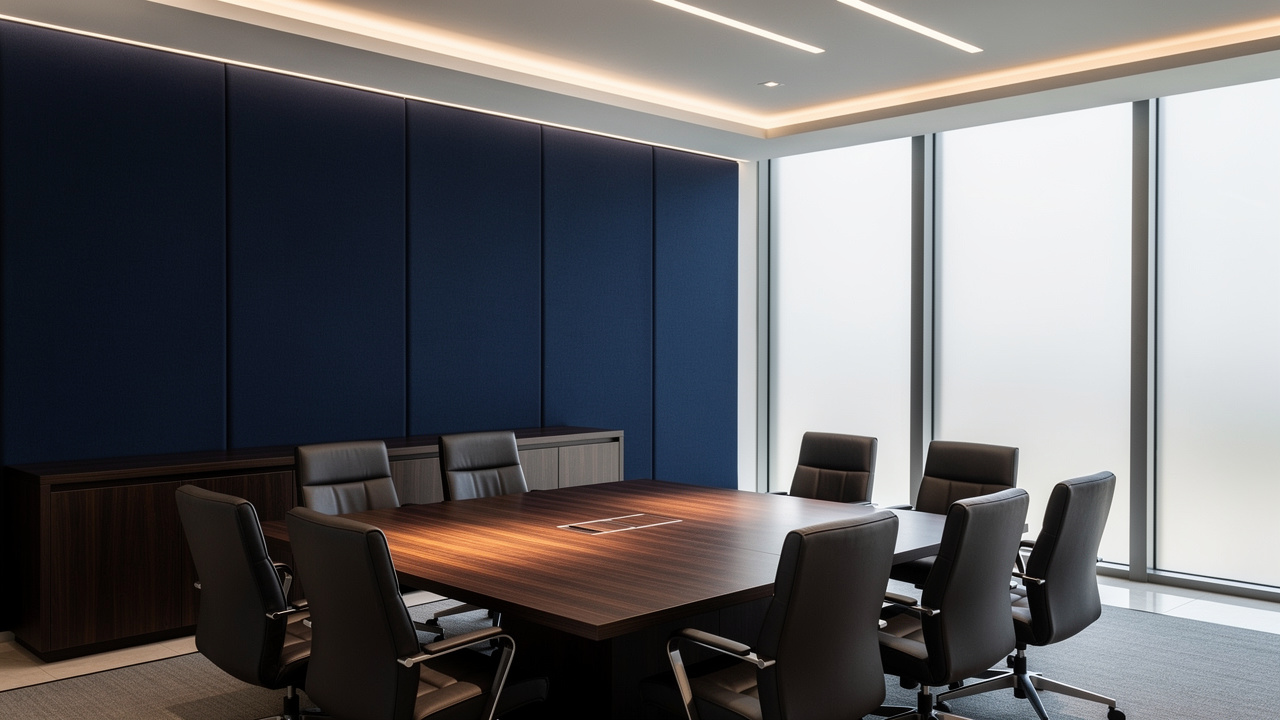
DE Sound stretch fabric acoustic panels use a rigid fiberglass or mineral wool core held inside an on-site track frame. Installers stretch acoustically transparent fabric across that frame, which produces a seamless surface that follows any wall shape. Because the fabric is replaceable, corporate clients in Abu Dhabi Global Market or Dubai Media City can refresh branding without removing the acoustic core.
These systems excel in boardrooms, training rooms, and hotels where brand colors and artwork need to align with the interior scheme. According to the Acoustical Society of America, well-treated meeting rooms improve speech intelligibility scores, which reduces listening effort for occupants. DE Sound offers stretch fabric panels in many acoustic cores and fabric options, paired with layout advice so installers achieve the specified coverage and NRC.
How To Choose The Right Acoustic Wall Panel For Your Commercial Space

Choosing the right acoustic wall panel for a GCC commercial space starts with how the room is used. From there, designers weigh NRC, fire rating, thickness, aesthetics, and sustainability against budget and schedule. A short conversation with an acoustic consultant or supplier often clarifies the brief.
Key points to consider include:
Room Function
Office focus rooms, classrooms, hotel lobbies, and restaurants all behave differently, so panel coverage and thickness vary from space to space.Acoustic Performance
For speech-led rooms such as meeting spaces or lecture halls, higher NRC values and thicker panels help voices cut through background noise. Entertainment or lounge areas may use slightly lower NRC panels, combined with ceiling treatment and soft furniture, to avoid an over-damped feel.Fire, Standards, And Sustainability
In the UAE, Saudi Arabia, and Qatar, commercial interiors typically need Class A or Class 1 fire-rated materials to pass Civil Defense review. ANSI classroom standards from the American National Standards Institute describe target reverberation times around 0.6 seconds, which often requires panels with NRC of 0.75 or above on enough wall area. Designers also check VOC data and recycled content when projects follow LEED or Estidama guidelines.
“Tip: Discuss acoustic coverage early in design. Moving panels on drawings is easy; moving them on a finished site is not.” — Guidance from GCC acoustic consultants
Once the requirements are clear, a quick matrix helps narrow the choice. The table below links common GCC commercial spaces with a starting panel type from the DE Sound range.
| Space Type | Recommended Panel Type | Key Reason |
|---|---|---|
| Open Plan Office | PET acoustic panels | Strong absorption, light weight, straightforward maintenance |
| Executive Boardroom Or Conference Room | Stretch fabric panels | Seamless walls, high NRC, easy color matching |
| Hotel Lobby Or Restaurant | Wood acoustic panels with local PET panels | Warm timber surfaces with reliable sound control |
| Classroom Or Training Room | PET or stretch fabric panels | Clear speech for students with tested fire safety |
Why DE Sound Is The GCC’s Trusted Wholesale Supplier For Acoustic Wall Panels
DE Sound is a GCC-focused wholesale supplier of acoustic wall panels that supports commercial projects from design to handover. The company combines factory-direct pricing, certified materials, and six-country logistics so contractors receive consistent stock without budget shocks. That mix matters when fit-out teams work under pressure on complex sites.
Large fit-outs in Dubai, Jeddah, and Doha often run on tight timeframes and margins. Research from McKinsey & Company found that big construction projects can take about 20 percent longer than planned and cost far more when supply issues appear. By cutting out extra distributors, DE Sound keeps acoustic wall panels at stable wholesale rates, which protects contractors from late markups on key finishes.
All DE Sound panel systems arrive with acoustic test reports, NRC data, and fire certificates suitable for UAE Civil Defense review. That documentation gives architects, consultants, and facility managers clear evidence that the chosen products align with client standards and green building targets such as LEED, Estidama, and WELL. When needed, DE Sound engineers review drawings, advise on panel layout, and suggest combinations with ceilings or bass traps for studios.
Compared with smaller local distributors or global brands that ship from Europe or Asia, DE Sound focuses only on GCC acoustic supply. The team supports projects in the UAE, Saudi Arabia, Qatar, Kuwait, Bahrain, and Oman from one coordinated platform. That focus, plus clear pricing and responsive advice, has turned DE Sound into a long-term partner for many interior designers and fit-out companies across the region.
A quick summary of why project teams specify DE Sound:
Factory-direct pricing for PET, wood, and stretch fabric panels.
Regional warehouses for shorter lead times across the GCC.
Certified performance data that speeds approvals with consultants and authorities.
Technical support from first drawings through to site installation.
The Bottom Line
The bottom line for GCC projects is simple. PET, wood, and stretch fabric acoustic wall panels cover most commercial interiors when matched carefully to room use. Working with DE Sound adds certified stock, regional delivery, and pricing built for bulk orders, which helps projects stay on budget and on schedule.
Frequently Asked Questions
These quick answers cover common questions about acoustic wall panels in GCC commercial projects. Each reply stands alone for fast reference, so you can scan them without reading the full guide.
Question 1: What NRC Rating Should I Look For In Acoustic Wall Panels For A Commercial Office In The UAE?
For UAE offices and meeting rooms, choose acoustic wall panels with NRC around 0.75 to 0.85. That range cuts echo so speech stays clear. Studios and control rooms often need NRC closer to 0.90 or 1.0.
Question 2: Do Acoustic Wall Panels Meet UAE Fire Safety Regulations?
Yes, acoustic wall panels can meet UAE Civil Defense fire rules when they carry Class A or Class 1 ratings. DE Sound PET, wood, and stretch fabric systems ship with certificates approved by GCC authorities, so consultants can review data quickly during design and approvals.
Question 3: Can Acoustic Wall Panels Be Customized For Branded Corporate Interiors In The GCC?
Acoustic wall panels fit corporate interiors across the GCC very well. Stretch fabric panels accept custom sizes, curves, and fabrics that match brand colors or printed artwork. PET panels from DE Sound can form logos, 3D features, and pattern walls that control sound and reinforce identity at the same time.
Question 4: What Is The Minimum Order Quantity For Bulk Acoustic Panel Supply In The GCC?
Minimum order levels vary by project, because panel type and mix affect logistics. DE Sound works with pallet and container quantities for hotels, offices, and schools. Share drawings and schedules with the team to confirm MOQ, lead time, and best pricing.
Question 5: How Quickly Can Acoustic Wall Panels Be Delivered Across The GCC?
Delivery for acoustic wall panels varies with stock levels and custom work. DE Sound PET, wood, and stretch fabric panels ship quickly from regional warehouses in the GCC. Custom colors or sizes need extra lead time, so share project milestones early with the supply team.
Conclusion
Thoughtful use of acoustic wall panels turns GCC offices, hotels, schools, and studios into calmer, more productive spaces. PET, wood, and stretch fabric systems each answer a different mix of performance, appearance, and budget. By working with DE Sound for wholesale supply, technical advice, and fast regional delivery, project teams reduce risk and hand over quieter interiors on time.