
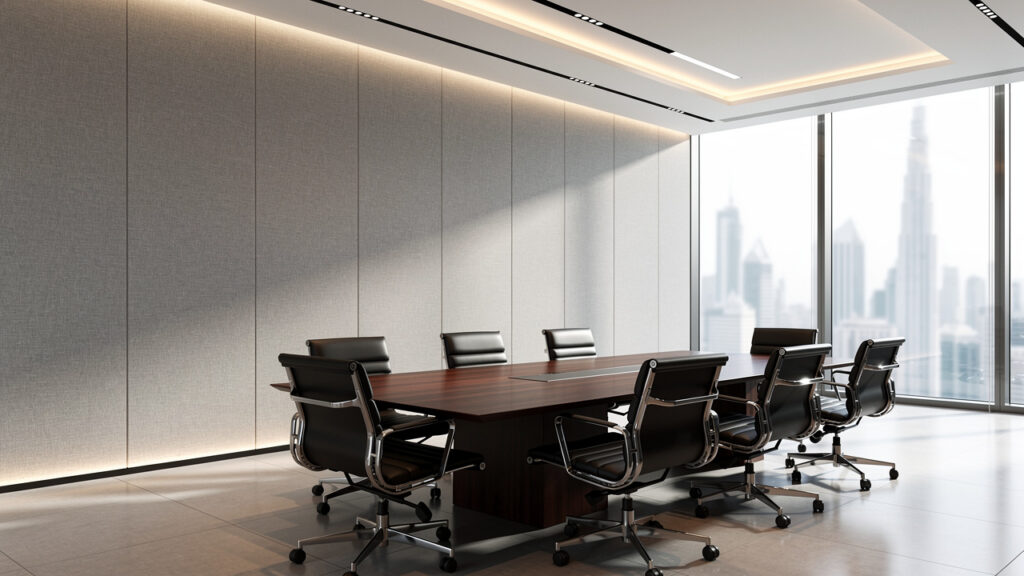
Introduction
Echoey lobbies, noisy open offices, and harsh-sounding studios can spoil even the best interior design. Acoustic stretch fabric panels address that by combining a tensioned fabric face with a hidden acoustic core. They keep walls and ceilings looking modern while cutting down on reflections and background noise.
Hard finishes like glass, stone, and concrete bounce sound around. That makes meetings tiring, recordings messy, and guest areas uncomfortable. In busy UAE interiors, the problem grows as spaces get bigger and busier.
Acoustic stretch fabric panels form a complete wall or ceiling system that absorbs sound without visible joints or bulky boxes. This article explains how these systems work, why designers across Dubai and Abu Dhabi choose them, where they fit best, and how to specify them correctly. You will also see how DE Sound supports projects across the UAE and the wider GCC.
Tip from DE Sound’s project team: think about acoustics at the same time as lighting and HVAC, not after ceilings and finishes are already fixed.
When sound comfort, visual quality, and delivery deadlines all matter on one project, the details you read next can make decisions much easier.
Key Takeaways
Stretch fabric panels use a perimeter track, acoustic core, and tensioned fabric skin. Sound reaches the core instead of bouncing off hard surfaces, so rooms feel calmer and speech sounds clearer.
The track system lets designers create seamless walls, curves, and even backlit features. That helps match strict brand standards and keeps ceilings and walls free from visible joints.
These panels suit offices, hotels, studios, schools, and high-end homes across the UAE and GCC. The same system handles very different acoustic needs while keeping a consistent visual language.
DE Sound supplies tested panels at factory-direct prices across Gulf countries and provides free technical advice on placement and performance. That support reduces risk for designers and contractors.
What Are Acoustic Stretch Fabric Panels And How Do They Work?
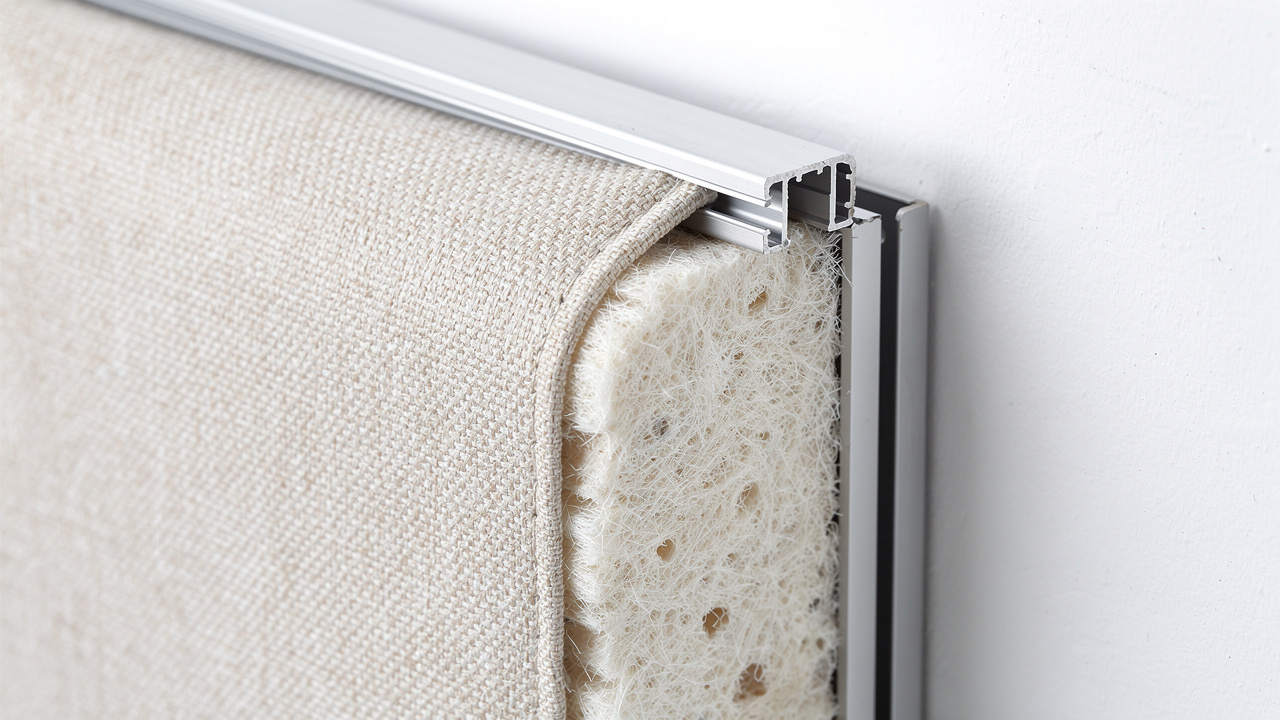
Acoustic stretch fabric panels are wall and ceiling systems that hide an acoustic core behind a tightly tensioned fabric surface. The system combines three main parts that work together to reduce echo and reverberation, giving modern interiors a quiet, controlled sound without sacrificing a smooth finish.
Each system typically includes:
Perimeter Track
Usually made from extruded aluminum or rigid PVC, the track is fixed to the wall or ceiling and grips the fabric. It defines the panel edge, allows clean junctions with other finishes, and can follow straight or curved lines.Acoustic Core (Infill)
Inside the frame, installers place the sound-absorbing infill, often mineral wool, rockwool, or recycled PET fiber. This acoustic core converts sound energy into a small amount of heat as it passes through the fibers, which reduces reflections in the room.Acoustically Transparent Fabric
The final layer is the fabric face. Its weave lets sound pass through to the core instead of reflecting off the surface. Designers can choose from many colors and textures, or even printed graphics, as long as the fabric remains acoustically open.
According to the Acoustical Society of America, this performance is measured using the Noise Reduction Coefficient (NRC), which runs from 0 to 1. An NRC of 0.90 means the material absorbs about 90 percent of incident sound at key speech frequencies.
Independent tests published by manufacturers such as Armstrong Ceilings show that 50 millimeter mineral wool or PET infill often reaches NRC values between 0.85 and 1.00. That level suits most offices, classrooms, and hotel areas. For music studios and cinemas across the UAE, designers often select 100 millimeter cores or deeper cavities to improve low-frequency control.
For projects seeking LEED points from the US Green Building Council or WELL Building Standard credits from the International WELL Building Institute, documented NRC reports are important. DE Sound supplies acoustic stretch fabric panels with full test data and fire certificates suitable for UAE Civil Defense approvals, which helps consultants and procurement teams document compliance.
Why Acoustic Stretch Fabric Panels Are A Top Design Choice For UAE Interiors
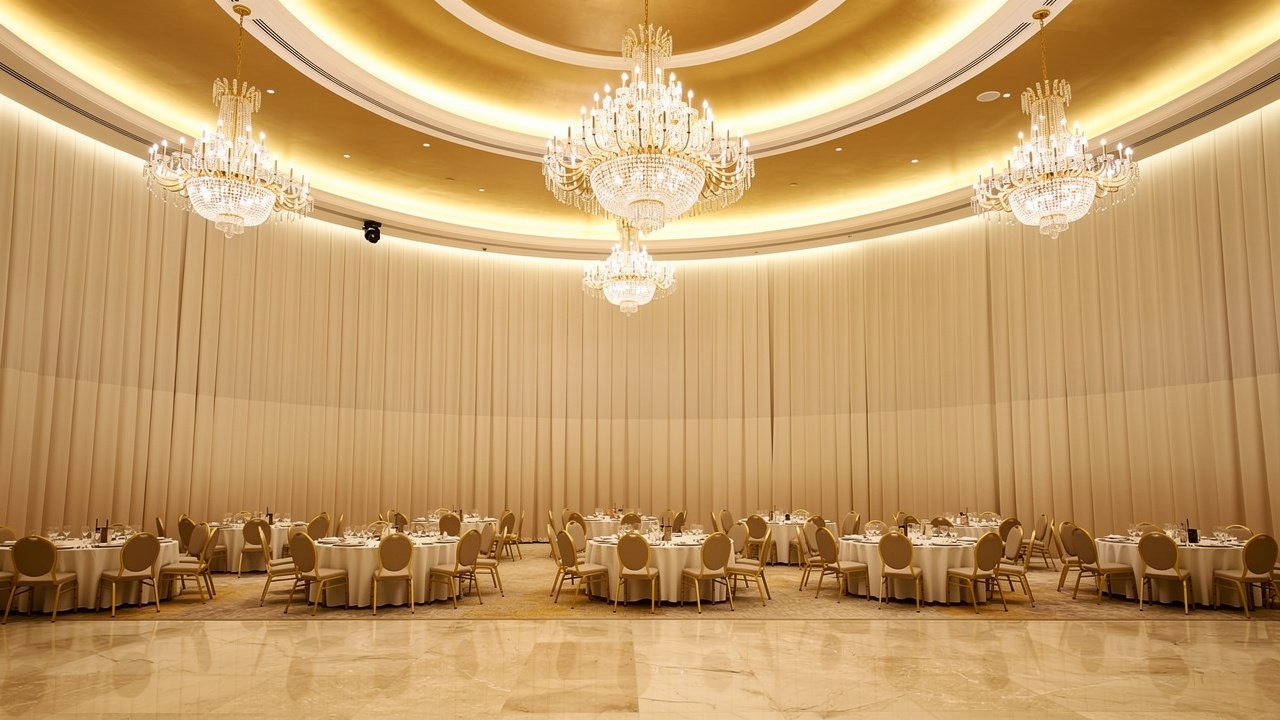
Acoustic stretch fabric panels give UAE interiors a mix of high acoustic performance and a clean, continuous visual surface in the same system. Designers in Dubai, Abu Dhabi, and Sharjah often select them when a space must sound controlled and look premium at the same time. The track-and-fabric concept makes that balance realistic even across very large areas.
Because the fabric locks into a slim perimeter track, installers can cover long walls or full ceilings without visible joints. That suits hotel ballrooms, corporate boardrooms, and luxury apartments where small panel gaps feel out of place. Curved tracks also allow soft arcs, column wraps, and feature ceilings that align with expressive architecture across the Gulf.
The same track cavity can hold LED strips or panels behind the fabric. This creates backlit acoustic ceilings or glowing feature walls that double as lighting elements. It reduces clutter in ceilings crowded with ductwork and makes coordination with MEP teams simpler on dense fit-out programs in Dubai or Riyadh.
Noise control has a direct business impact. Research from Oxford Economics found that office workers in noisy spaces lose up to 86 minutes of productive time per day due to sound distractions, and studies on band importance for speech-in-speech recognition further confirm how background noise degrades communication in shared environments. When acoustic stretch fabric panels control reverberation in open-plan offices, that lost time can shrink, and conversations become less stressful.
“When people work in peaceful, well-designed spaces, their stress falls and their focus improves.” – Summary of findings inspired by workplace studies from Oxford Economics
Compared with other treatments offered by Gulf suppliers such as DE Sound, Acoustica Middle East, or Ecotone Systems UAE, stretch systems often sit in a strong middle ground for looks, performance, and cost.
| Treatment Type | Aesthetics | Performance (Typical NRC) | Installation Style | Maintenance | Cost Level |
|---|---|---|---|---|---|
| Acoustic Stretch Fabric Panels | Seamless, color matched or printed | High, around 0.85–1.00 | Dry fit with track and core | Easy, demountable | Medium |
| Standard Fabric-Wrapped Panels | Modular, visible joints | High, around 0.75–1.00 | Direct fixing in modules | Moderate | Medium |
| Acoustic Foam Tiles | Utilitarian, exposed foam | Moderate, mid and high | Simple adhesive placement | Hard to clean | Low |
| Timber Slatted Acoustic Panels | Warm, linear timber finish | Moderate, about 0.40–0.75 | Batten and clip system | Easy surface cleaning | Medium |
For many UAE interiors that mix glass, stone, and metal, acoustic stretch fabric panels provide a refined look while still giving serious control over sound.
Where Are Acoustic Stretch Fabric Panels Used Across Gulf-Region Projects?

Acoustic stretch fabric panels appear in almost every major building type across the UAE and wider GCC. The same core system adapts to offices, hospitality, education, studios, and private homes with different thicknesses, fabrics, and layouts — and facade design decisions, such as those analyzed in work analyzing the window-to-wall ratio in school buildings, underscore how interior acoustic treatment must account for the envelope’s sound-reflective properties. Each sector faces its own noise issues, and the panels address them in slightly different ways.
In corporate offices in Dubai Media City or Abu Dhabi Global Market, hard surfaces and open plans make speech privacy difficult. Stretch fabric panels on key wall surfaces and as ceiling rafts shorten reverberation times so meetings feel focused and calls remain clearer. Facility managers in multinational headquarters appreciate that the smooth finish matches high corporate standards.
Hotels and resorts across the Gulf, from Jumeirah properties in Dubai to brands in Ras Al Khaimah, use these panels in ballrooms, corridors, and restaurants. Guests experience calmer lobbies and less corridor noise at night, even when marble and glass dominate the design. Brand teams like the wide fabric palette, which helps match global color guidelines for Marriott, Hilton, and other groups.
Recording studios, podcast rooms, and content spaces in areas such as Dubai Studio City rely on broadband absorption for clean sound. Acoustic stretch fabric panels with 75 or 100 millimeter mineral wool or PET cores help control flutter echo and early reflections. Their neat appearance suits on-camera backgrounds for YouTube creators and broadcasters working for MBC or Abu Dhabi Media.
The World Health Organization recommends that background noise in classrooms remain below 35 dB for effective learning. (World Health Organization)
Schools and universities in Dubai, Sharjah, and Doha gain clear benefits when they approach that guideline. When classrooms use stretch fabric panels with recycled PET infill, speech intelligibility improves and teachers strain their voices less.
High-end villas and penthouses across the Palm Jumeirah, Downtown Dubai, and The Pearl in Doha often include home cinemas and music rooms. Owners want strong bass control without bulky foam on the walls. Discreet acoustic stretch fabric panels with dark fabrics give cinema-quality sound while keeping interiors aligned with work from firms like Gensler or Perkins&Will.
On the sustainability side, many PET cores in DE Sound systems use a high percentage of recycled content, reflecting a broader industry shift documented in research on acoustic panels from clothing industry waste and their growing role in sustainable interior fit-outs. The panels fix mechanically, without wet adhesives, which supports low-emitting materials credits under LEED and ESTIDAMA Pearl. Because the fabric and cores can be replaced separately, material waste drops when clients refurbish spaces after several years.
How To Specify Acoustic Stretch Fabric Panels: Key Factors To Evaluate
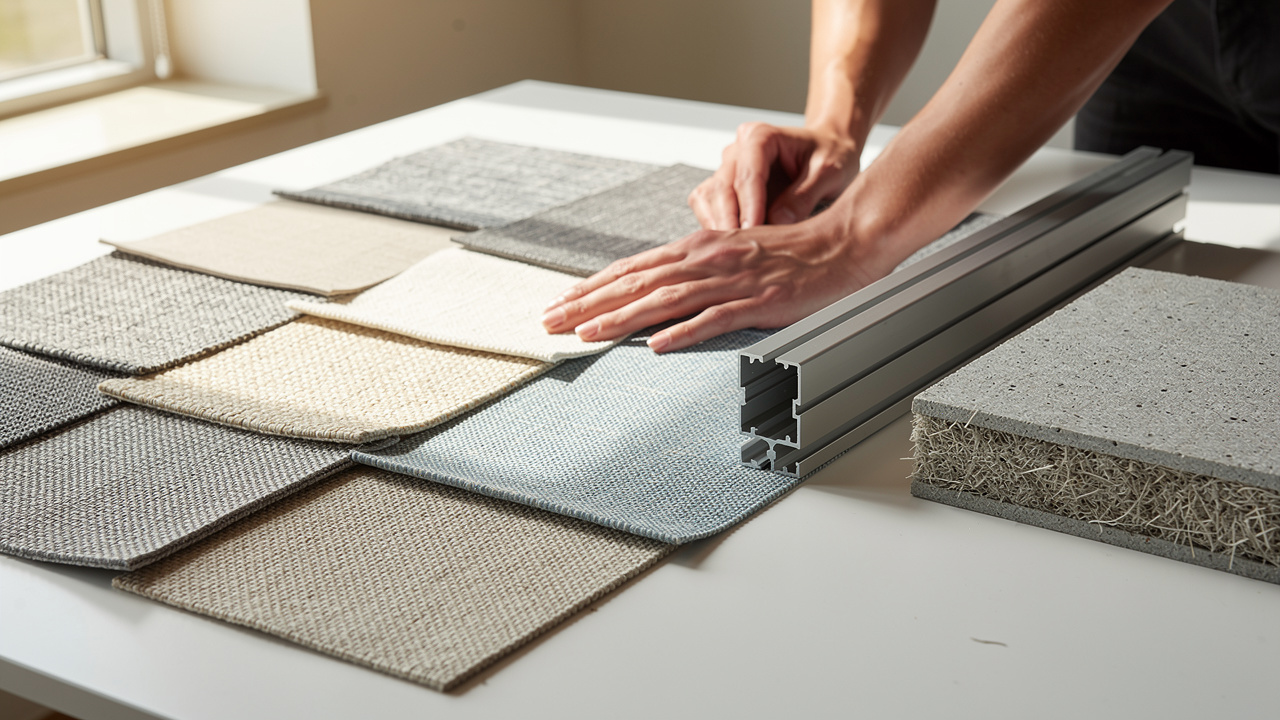
Specifying acoustic stretch fabric panels correctly means matching acoustic targets, fire rules, fabrics, and substrate conditions. A simple framework helps interior designers, acoustic consultants, and contractors line up technical and visual requirements on UAE projects. Getting these points right avoids rework and supports approvals from local authorities.
When you prepare a specification, focus on:
Acoustic Goals
Acoustic performance comes first. For open-plan offices or hotel lobbies, designers commonly target NRC values around 0.80–0.90 with 50 millimeter mineral wool or PET cores. Music studios, cinemas, and control rooms in Dubai or Jeddah often need deeper cavities or 100 millimeter cores for better low-frequency control, consistent with research on low-frequency sound transmission loss in panel systems with advanced core configurations. Room use and volume should guide those choices.Coverage And Placement
Treating only a small feature wall often leaves reverberation high. As a simple starting point, many consultants treat 20–40 percent of the combined wall and ceiling area in offices and classrooms. More exact figures come from RT60 calculations and computer models. DE Sound offers free project reviews that help teams choose logical coverage without overspending.Fabric Selection
Fabric choice combines acoustic transparency, color, and durability. Designers should ask suppliers for airflow resistance tests to confirm that the chosen fabric allows sound to pass into the core. Values below about 200 Pa·s/m² usually keep acoustic performance strong. In projects with large glazed facades in places like Dubai Marina, UV-stable fabrics prevent fading from intense sunlight — a concern supported by studies on the seasonal effects of window-to-wall ratio and glazing combinations on building performance across climates.Fire Performance And Local Codes
Fire performance and local code compliance stay non-negotiable for malls, hotels, schools, and hospitals. Panels should use cores and fabrics that meet Class A or equivalent fire ratings accepted by UAE Civil Defense, Saudi Civil Defense, and Qatar Civil Defense — a material consideration also discussed in research examining how thickness and elastane ratio impact acoustic absorption properties in panel systems. DE Sound shares full test reports and data sheets, which speeds up consultant reviews and authority submissions.Substrate And Fixing Details
Substrate and fixing details complete the picture. On concrete or blockwork walls common in Gulf towers, installers drill and plug the aluminum track. On drywall partitions they often need hidden noggins or extra studs to hold heavier loads. Good shop drawings from the fit-out contractor, reviewed with DE Sound’s technical team, keep these details clear before site work begins.
Tip from DE Sound’s technical team: send reflected ceiling plans and wall elevations early so acoustic layouts can be coordinated with lighting, sprinklers, and access panels.
How DE Sound Supports Acoustic Stretch Fabric Panel Projects Across The UAE And GCC

DE Sound works as a wholesale acoustic supplier focused on Gulf-region projects that need acoustic stretch fabric panels and related materials. The company supports interior designers, architects, and contractors from early concept stages through delivery and installation guidance. That approach saves time compared with dealing only with remote manufacturers in Europe or Asia.
Because DE Sound buys directly from factories, pricing remains at wholesale level. This helps fit-out firms in Dubai, Riyadh, and Muscat apply enough acoustic coverage without cutting panel quantities late in the program. Procurement officers in hotel groups and school operators can secure consistent pricing across multi-site rollouts in several GCC countries.
Product quality and documentation sit at the center of the offer. DE Sound supplies stretch fabric systems, PET panels, and wood acoustic panels, all with lab-tested NRC data and fire certificates. This supports projects targeting LEED or WELL certification, where the US Green Building Council and International WELL Building Institute require clear evidence for acoustic and material credits.
Logistics matter in fast Gulf construction programs. Long overseas lead times from international brands can delay opening dates for hotels on the Palm Jumeirah or office towers in King Abdullah Financial District. DE Sound holds stock of common cores, tracks, and fabrics within the UAE and plans phased deliveries for large schemes, which helps main contractors keep programs on schedule.
Technical support is another key advantage DE Sound offers compared with generic distributors such as SoundAway UAE or Akinco Acoustics Dubai. DE Sound’s team reviews drawings, suggests panel layouts, and helps tune NRC targets for each room type. That practical help reduces the risk of installing beautiful panels that fail to solve the real sound problems.
For studio owners, content creators, and podcast producers across Dubai and Abu Dhabi, DE Sound can suggest room layouts and panel depths based on experience with local broadcasters. For schools, hospitals, and corporate campuses, the same team adjusts recommendations for safety, cleaning, and long-term maintenance.
The Bottom Line
Acoustic stretch fabric panels give modern Gulf interiors a rare mix of smooth design, strong sound absorption, and practical installation. They handle the echo from stone, glass, and concrete while still matching the brand standards of hotels, offices, schools, studios, and private villas.
For projects across the UAE and GCC, DE Sound stands out as a wholesale partner that combines factory-direct pricing, certified materials, fast regional delivery, and clear technical advice. That mix helps interior designers, fit-out contractors, and facility managers move from noisy, echoey spaces to calm, high-performing rooms without guesswork. For bulk pricing or a free layout review on your next acoustic project, reach out to DE Sound’s team.
Frequently Asked Questions
Question: What is the typical NRC rating for acoustic stretch fabric panels?
The typical NRC rating for acoustic stretch fabric panels sits between 0.75 and 1.00. Values around 0.85 with 50 millimeter PET or mineral wool work for most offices, classrooms, and hotel areas. Studios, cinemas, and control rooms often use 100 millimeter cores to improve bass control and create a more neutral listening field.
Question: How are acoustic stretch fabric panels installed on UAE commercial fit-outs?
Installers first fix the aluminum track to concrete, blockwork, or drywall, then place the acoustic core into the cavity. After that they stretch the fabric and lock it into the track with a tucking tool, working from centers to corners for even tension. Panels should go in only after air conditioning runs and rooms reach stable temperature and humidity, which helps prevent later sagging.
Question: Can acoustic stretch fabric panels be used on curved walls and ceilings?
Yes, acoustic stretch fabric panels work very well on curved walls and ceilings. Many aluminum tracks bend to radius, so installers can follow arcs, domes, and column wraps without special framing. The fabric stretches smoothly over the curve, creating continuous acoustic surfaces that suit expressive hotel lobbies, prayer halls, and feature ceilings across the UAE hospitality sector.
Question: How do acoustic stretch fabric panels compare to acoustic foam tiles?
Acoustic stretch fabric panels look far more refined than exposed foam tiles and usually reach NRC values around 0.85–1.00 instead of moderate mid-frequency absorption only. Their seamless, fabric-faced finish suits corporate, hospitality, and residential interiors. Panels also clean easily and can be demounted for access, while foam tiles often discolor, collect dust, and prove harder to replace discreetly.
Question: Does DE Sound supply acoustic stretch fabric panels for projects outside the UAE?
Yes, DE Sound supplies acoustic stretch fabric panels across all six GCC countries, including Saudi Arabia, Qatar, Kuwait, Bahrain, and Oman. The company plans project-specific deliveries for hotels, offices, schools, and studios spread across several cities. That regional coverage, combined with wholesale pricing and technical support, helps clients handle multi-site acoustic programs under a single supplier.