
Introduction
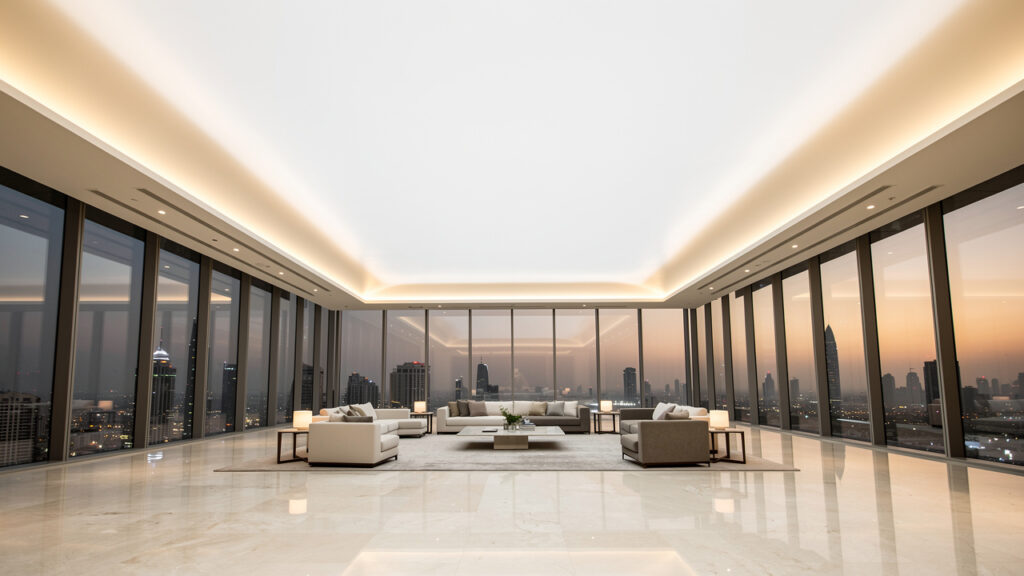
Many UAE interiors sound harsh because of marble floors, glass walls, and high concrete ceilings.
Conversations echo, meetings feel tiring, and recordings lack clarity.
Stretch Ceiling Acoustic Panels add a tensioned fabric or PVC skin in front of hidden acoustic infill. Sound passes through the membrane and is absorbed instead of bouncing around the room, which cuts echo and background noise. The result is cleaner speech and more controlled music without bulky visible panels. This guide explains how the systems work, where they perform best, and how DE Sound supports projects across the GCC.
Keep reading for practical specs, real use cases, and sourcing tips that fit UAE projects.
Key Takeaways
Keep these practical points in mind throughout this guide. They summarize how stretch ceilings change sound and highlight checks for design and procurement.
Panels use a thin membrane with hidden acoustic infill. Sound energy passes through and dies out instead of reflecting back into the room.
NRC and SAA show absorption; RT60 shows how long sound lingers. Hitting the right values gives clear speech and a comfortable noise level.
Smart sourcing starts with acoustic targets and certified data. Third party test reports confirm performance, and factory direct supply from DE Sound stabilizes big Gulf fit out budgets.
What Are Stretch Ceiling Acoustic Panels And How Do They Work?
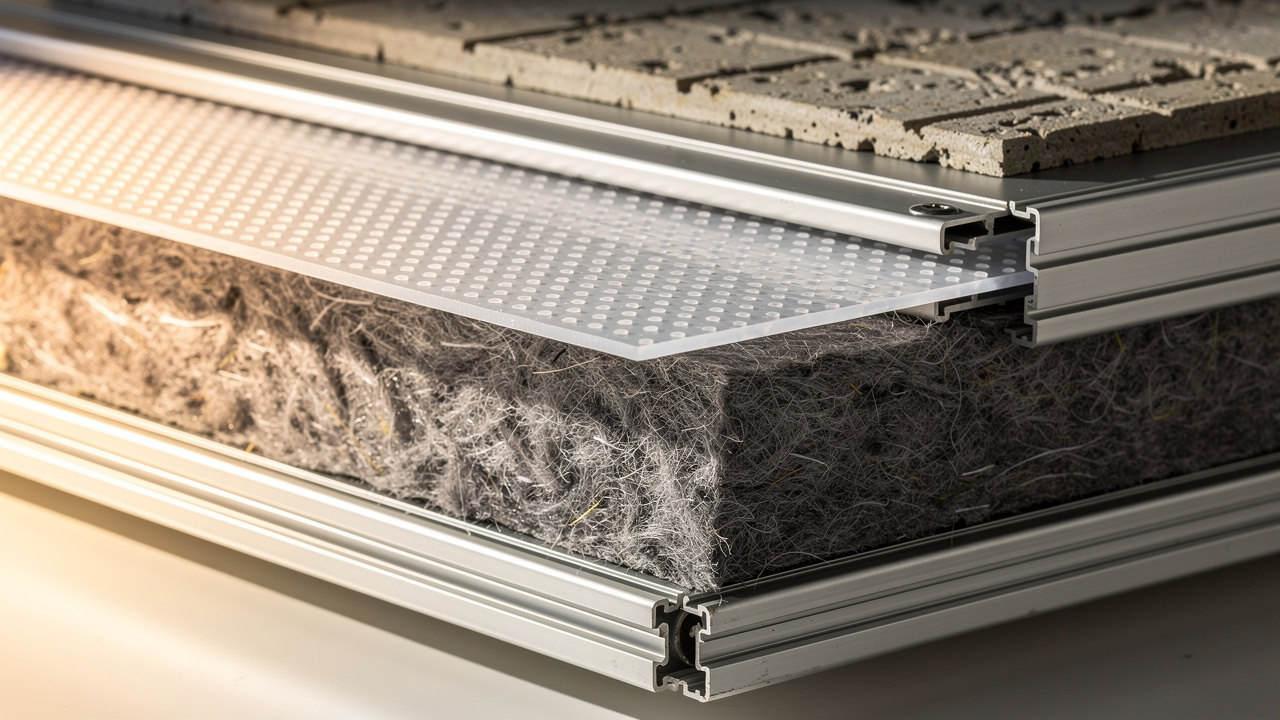
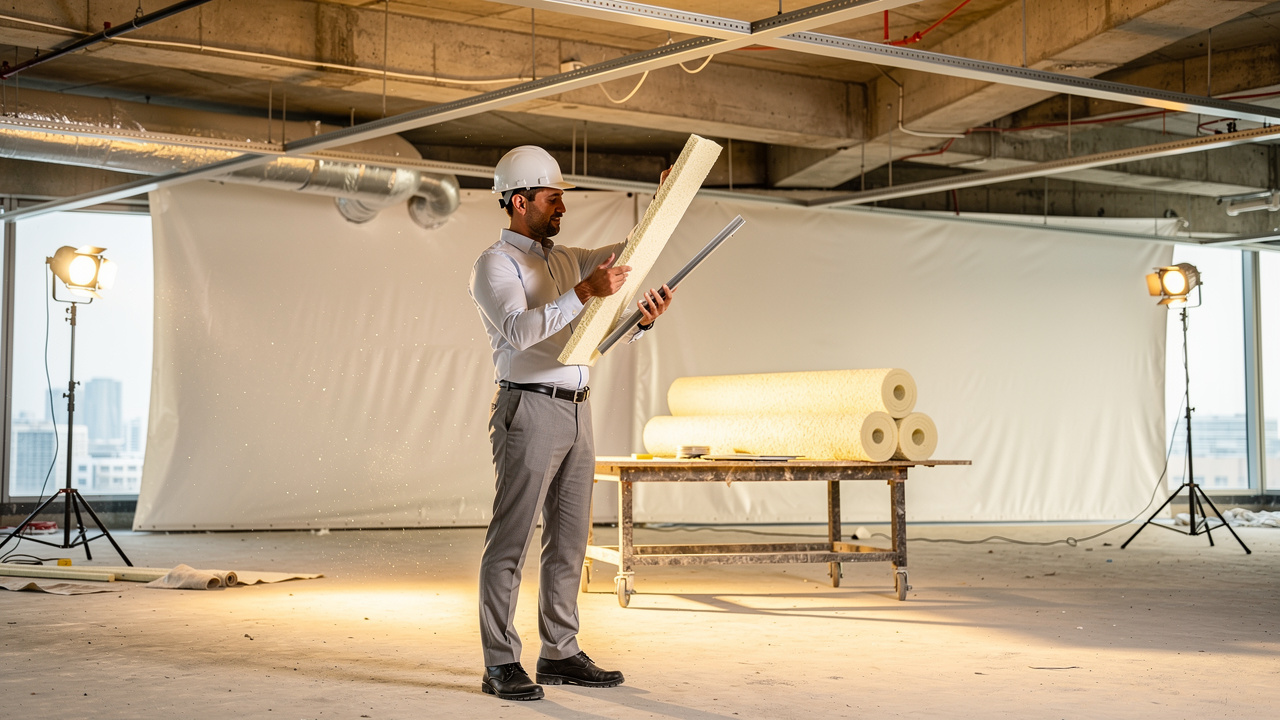
Stretch ceiling acoustic panels combine a tensioned membrane with hidden absorbers to improve sound quality without spoiling the ceiling surface. The system hangs a thin PVC or polyester skin from perimeter tracks below the main slab. Behind this skin sits a layer of mineral wool, rock wool, or PET polyester fiber, leaving an air gap between the infill and the structural ceiling.
When people speak, music plays, or background noise builds up, sound waves hit the membrane first. Because the membrane is microperforated PVC or open weave fabric, most of that sound passes through instead of bouncing back into the room. The energy then meets the infill, which soaks it up by turning motion in the air into a small amount of heat. Less sound returns to the room, so reverberation and echo drop.
This behavior is measured with ratings such as Noise Reduction Coefficient (NRC) and Sound Absorption Average (SAA). High grade stretch ceiling acoustic panels often reach NRC values between 0.75 and 0.95 when paired with suitable infill thickness. Laboratory data from manufacturers like Rockwool show mineral wool boards achieving NRC 0.90 or higher, so pairing them with an acoustic membrane gives strong absorption.
Compared with plain gypsum ceilings or exposed foam tiles, a stretch system controls sound while keeping a continuous, elegant finish. Lighting, sprinklers, and air diffusers can sit behind or through the membrane with neat rings, so the ceiling still looks clean. DE Sound supplies complete systems in this format across the UAE and GCC, giving project teams architectural freedom and reliable acoustic data for design reports.
These ratings describe absorption inside the room, so for isolation between offices or hotel rooms designers still need mass loaded ceilings or separated structures above the stretch system.
The Three Components That Determine Acoustic Performance
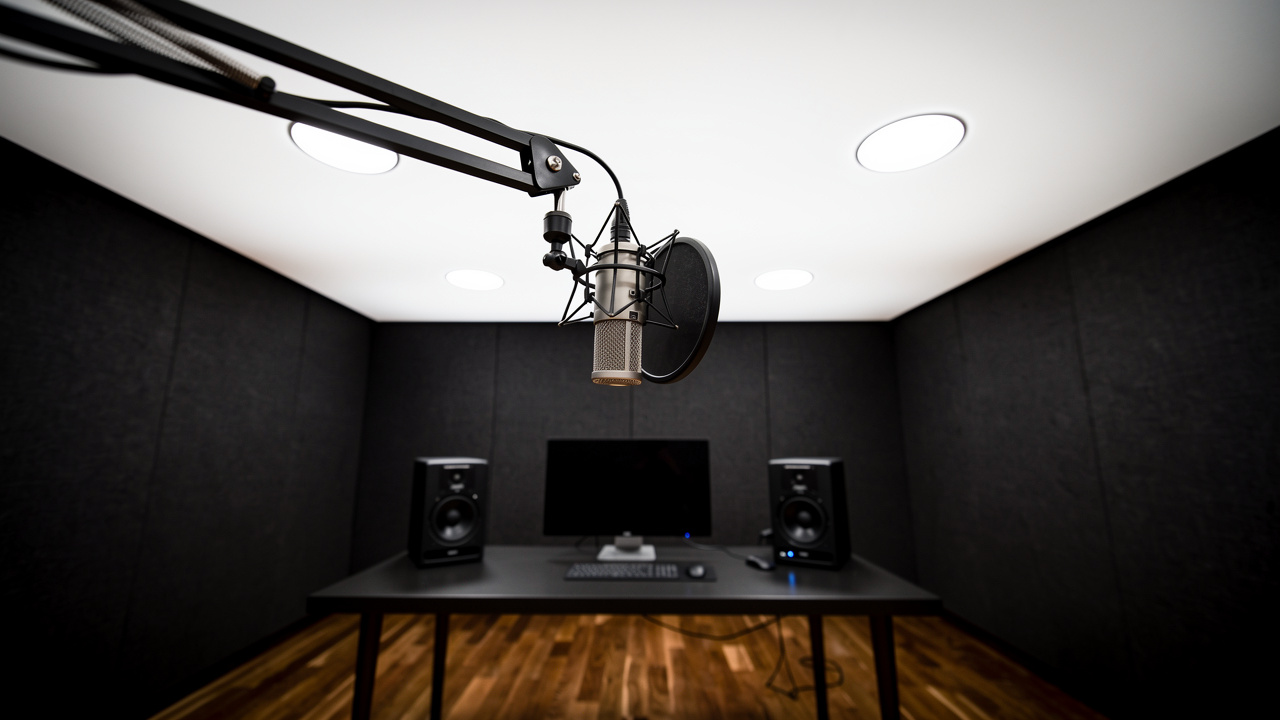
Three main components decide how well a stretch ceiling system absorbs sound:
The membrane
The visible membrane is stretched across perimeter tracks. Acoustic grade PVC is microperforated and polyester fabric has an open weave, so sound can pass through rather than bounce back.The air cavity
Behind the membrane sits an air cavity between the membrane and the slab. When that cavity is closer to 100 to 200 millimeters, the system works on mid range speech and some lower frequency rumble instead of only higher tones.The infill
The infill inside that cavity sets the absorption level:Mineral wool and rock wool offer high NRC values with good fire performance.
PET polyester fiber suits schools and healthcare spaces where low dust and easy handling matter.
Typical density ranges from 40 to 80 kilograms per cubic meter at 50 to 100 millimeters thickness.
Membrane type, cavity depth, and infill only work well when specified together as one acoustic package, not as isolated components.
How Stretch Ceiling Acoustic Panels Reduce Echo, Reverberation, And Background Noise

Stretch ceiling acoustic panels cut echo, reverberation, and background noise by turning the ceiling into a large sound absorber. Instead of hard concrete or gypsum reflecting energy, the acoustic membrane and infill soak it up and shorten how long sound lingers. This change is most obvious in spaces with high ceilings or many hard finishes, such as hotel lobbies, open offices, and school halls.
Acoustic consultants describe this behavior using reverberation time, usually written as RT60. RT60 is the time it takes for sound to decay by 60 decibels after a source stops. Guidance from the Acoustical Society of America suggests offices and classrooms perform best when RT60 stays under one second. Designers often model the effect of stretch ceiling acoustic panels with RT60 calculators or full acoustic simulations before tender.
Recommended RT60 targets by space type commonly look like this:
| Space Type | Recommended RT60 |
|---|---|
| Open Plan Office | 0.4–0.6 seconds |
| Classroom / Lecture Room | 0.4–0.7 seconds |
| Hotel Lobby / Restaurant | 0.8–1.2 seconds |
| Recording Studio / Podcast Room | 0.2–0.4 seconds |
| Conference Room / Boardroom | 0.4–0.6 seconds |
Panels with absorption classified as Class A under ISO 11654 absorb a high share of incident sound across speech frequencies. When these systems are installed across most of the ceiling, the room sounds quieter, conversations feel clearer, and HVAC noise blends into the background.
That said, absorption inside a room is different from isolation between rooms. To stop sound leaking from one space into another, designers still need mass, airtight construction, and sometimes resilient channels along with the stretch ceiling system.
“Reducing RT60 to within the recommended range for a given space type is often the single most impactful acoustic improvement a designer can make, and the ceiling is the place to start.”
— Common guidance from building acoustics engineers
Where Stretch Ceiling Acoustic Panels Deliver The Most Impact
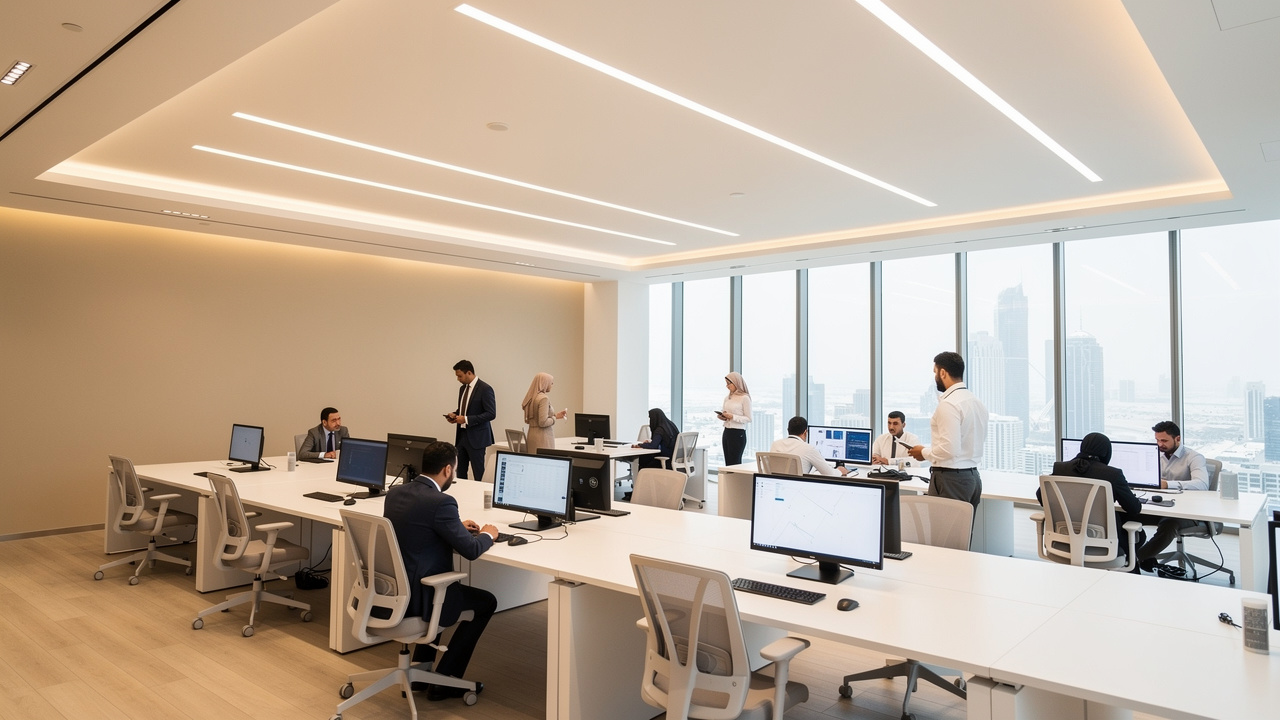
Stretch ceiling acoustic panels deliver the most impact in spaces that need both good acoustics and refined ceilings. Across the UAE and Gulf, that means hotels, corporate offices, schools, recording facilities, and high end homes. In all of these, the same system cuts reverberation while replacing a decorative ceiling layer.
Hotels and hospitality
Hotels and hospitality venues in Dubai and Abu Dhabi often mix marble floors, glass facades, and double height lobbies. That combination looks impressive but leaves guests raising their voices and staff repeating themselves. Acoustic stretch ceilings help reduce that “busy lobby” feel while keeping a premium look.Offices and meeting rooms
In open plan offices and boardrooms, background noise and echo reduce focus and make video calls tiring. Research summarized by the World Green Building Council links good acoustic comfort to productivity gains of up to around 11 percent, so reducing RT60 with acoustic stretch ceilings has a direct business benefit.Schools and universities
Schools and universities across networks such as GEMS, Taaleem, and SABIS teach many second language learners. Poor room acoustics reduce speech clarity for these students most of all, especially in big classrooms and multi purpose halls. Acoustic stretch ceilings with PET polyester infill give strong absorption without loose fibers, which suits education and healthcare environments. DE Sound supports school projects with systems aligned with ANSI S12.60 classroom guidelines.Studios, content spaces, and high end homes
Recording studios, podcast rooms, and content creation spaces around Media City or Yas Island need camera ready, well controlled rooms. Stretch ceiling acoustic panels hide the absorbers behind a smooth, even ceiling that lights well on video. Similar systems work in home cinemas and music rooms in areas like Palm Jumeirah and Emirates Hills, where owners want high performance sound without a technical appearance. DE Sound supplies these projects through fit out partners across the GCC, combining acoustic performance with finishes that match premium interiors.
How To Choose And Source The Right Stretch Ceiling Acoustic Panels In The UAE
Choosing stretch ceiling acoustic panels in the UAE starts with the acoustic target, not the color chart. Decide how quiet the room should feel for its intended use. Then match membrane type, cavity depth, and infill to that goal while meeting fire and hygiene rules.
Measured data matters more than catalog promises. Studies from McKinsey & Company show that unclear specifications drive budget and schedule overruns on large construction projects. Clear acoustic targets and verified test reports cut change orders and last minute design shifts on fast track Gulf fit outs.
Work through these steps when specifying:
Confirm target NRC or SAA values for the room type.
Offices and lobbies often aim around 0.75, while studios and podcast rooms benefit from values close to 0.90. Use these numbers to decide how much ceiling area you require and whether you need Class A absorption.Specify an acoustic grade membrane and realistic cavity depth.
Choose microperforated PVC or polyester fabric rather than standard decorative PVC. Decide what cavity depth you can keep while avoiding clashes with ducts and sprinklers. Aim for at least 100 millimeters; extra depth improves control of mid and lower frequencies.Select infill based on fire rating, air quality, and frequency range.
Mineral wool or rock wool suit commercial applications that need strong fire performance. PET polyester fiber helps in schools and offices that prefer low dust materials and easier handling on site.Request independent test reports and fire certificates.
Ask for third party test reports to ASTM C423 or ISO 354 so claimed NRC values are verified. Check fire certificates such as EN 13501 1 Class B s1, d0 plus any UAE Civil Defence letters. Ask suppliers for track details and shop drawings to simplify coordination with Dubai Municipality and other authorities.
Tip: Start design discussions by agreeing on RT60 and NRC targets before selecting finishes. Color and print choices are much easier to adjust than acoustic performance.
— DE Sound technical team
Standard membranes and tracks often reach UAE sites in two to three weeks, while custom colors or printing may take four to eight weeks. DE Sound works as a factory direct wholesale supplier across six GCC countries, with clear pricing, fast delivery, and free consultation for stretch ceiling acoustic panels.
The Bottom Line
Stretch ceiling acoustic panels give designers, contractors, and facility managers in the UAE a combination of clean aesthetics and serious sound control. By turning the ceiling into a broadband absorber, they reduce RT60, improve speech clarity, and tame background noise in hotels, offices, schools, studios, and high end homes.
Real performance still depends on matching membrane type, cavity depth, infill, and certification to the acoustic target for each space. DE Sound supports projects across six GCC countries with factory direct pricing, tested systems, and free technical consultation for stretch ceiling acoustic panels.
Frequently Asked Questions
Question 1: What is a good NRC rating for stretch ceiling acoustic panels?
A good NRC rating for stretch ceiling systems is usually between about 0.75 and 0.95. Offices and classrooms can target around 0.75, while studios and podcast rooms benefit from values close to 0.90, which the Acoustical Society of America describes as highly absorptive.
Question 2: Can stretch ceiling acoustic panels replace traditional acoustic tiles in commercial spaces?
Yes, stretch ceiling acoustic panels can replace conventional acoustic tiles in most commercial projects. They provide comparable or better absorption when correctly specified and installed. They also give a seamless ceiling surface and allow integration of lighting, HVAC grilles, speakers, and sprinkler heads.
Question 3: Are stretch ceiling acoustic panels suitable for UAE climate conditions?
Stretch ceiling acoustic panels perform well in UAE conditions when the right materials are chosen. High temperature rated PVC membranes, moisture tolerant mineral wool infill, and sealed perimeter tracks help with heat, humidity, and dust. DE Sound supplies systems configured for these climate challenges.
Question 4: Do stretch ceiling acoustic panels provide sound isolation between floors?
No, stretch ceiling acoustic panels mainly control reverberation inside a room, not sound transfer between rooms or floors. For isolation, projects need extra mass, airtight layers, and sometimes resilient channels or separate ceiling structures above the panel system.
Question 5: How long does it take to install stretch ceiling acoustic panels in a commercial project?
Installation time depends on room shape and the number of service penetrations. As a guide, an experienced two person crew can often install around 50 to 100 square meters of membrane per day. DE Sound supplies track layouts and coordination drawings that help installers reach those rates consistently.