
Introduction
Noise inside Gulf homes, offices, and studios often feels overwhelming. Hard surfaces and open layouts make every sound linger.
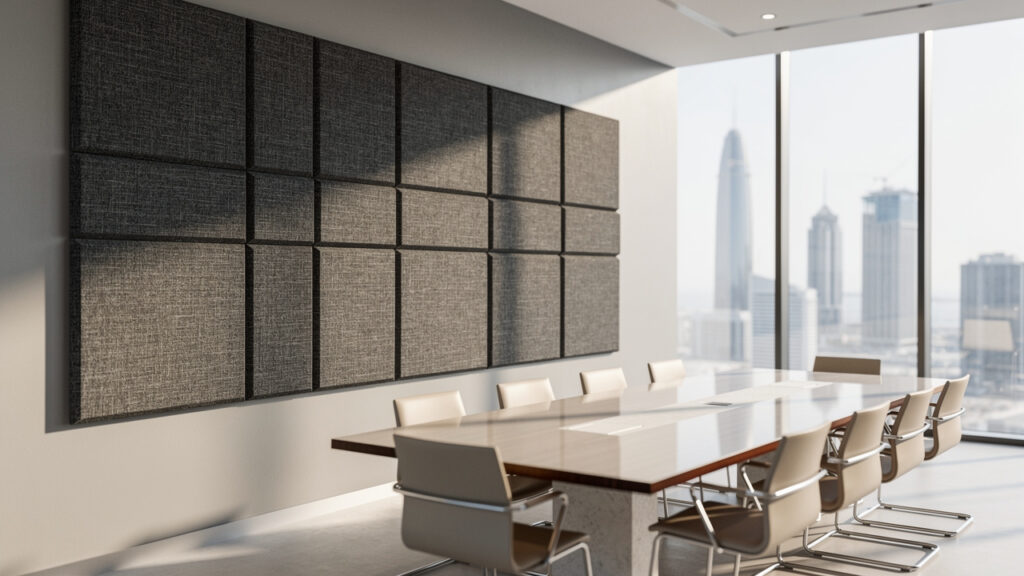
Fiberglass acoustic panels give designers and contractors a direct way to cut echo and control reverberation. A dense fiberglass core absorbs sound inside the room, improving clarity rather than blocking noise between rooms. This guide explains what these panels are, how they work, where they fit best, how they compare to other materials, and how DE Sound supports projects across the UAE and GCC.
Keep reading to match the right panel type, layout, and supplier to your next fit-out or studio build.
Key Takeaways
Fiberglass acoustic panels use a porous glass-fiber core that absorbs sound energy inside the room instead of letting it bounce, leading to lower echo, clearer speech, and a calmer background.
Different panel formats suit different spaces: wall panels for offices and classrooms, ceiling clouds and baffles for high rooms, and bass traps for corners in studios and theaters where low notes build up.
Compared with foam, PET, and Rockwool, fiberglass often offers higher absorption—especially at mid frequencies—plus dependable fire performance that matches UAE Civil Defense expectations.
Proper installation and coverage matter as much as panel choice. Mounting method, air gaps, and treated surface area change the result, and DE Sound helps teams choose layouts, densities, and thicknesses for UAE and GCC projects.
What Are Fiberglass Acoustic Panels And How Do They Work?

Fiberglass acoustic panels are rigid or semi-rigid boards made from compressed glass fibers. They sit on walls or ceilings and absorb sound inside the room. Compared with soft foam tiles, they usually provide stronger control across a wide range of speech and music frequencies.
Sound enters the tiny gaps between the glass fibers. As air moves through this network, sound energy turns into a small amount of heat through friction, a mechanism explored in an in-depth study on acoustic design principles and their application in workspace environments. Reflections from walls and ceilings reduce, reverberation time drops, and speech becomes easier to follow. According to Armstrong Ceiling, quality fiberglass panels often reach Noise Reduction Coefficient (NRC) values between 0.85 and 1.0, meaning they absorb most of the sound that reaches them.
Panel performance depends on several physical factors:
Thickness: typically 25–100 millimeters. Thinner panels handle mid and high frequencies, while thicker boards or corner traps help with bass.
Density: usually 24–96 kilograms per cubic meter. Higher density boards give better low-end control and crisper edges for detailing.
It helps to separate sound absorption from sound blocking. Fiberglass acoustic panels treat sound inside the space by trimming echo; they do not replace heavy walls, decoupled partitions, or specialized glass that raise Sound Transmission Class (STC) ratings. In many UAE offices, studios, and hotels, teams pair proper wall build-ups for isolation with fiberglass panels on the room side for clarity.
What Types Of Fiberglass Acoustic Panels Are Available?
Fiberglass acoustic panels in the UAE market appear in several formats, so teams can match both acoustic performance and interior design goals. Each format suits specific room shapes, ceiling heights, and usage patterns.
Most suppliers, including DE Sound in Dubai and Abu Dhabi, keep standard sizes such as 600 × 1200 millimeters and 1200 × 1200 millimeters. For feature walls in hotels or schools, they also offer custom cuts, special fabrics, and printed faces that follow the project concept.
| Panel Type | Typical Use | Common Locations | Key Notes |
|---|---|---|---|
| Fabric wrapped wall panels | General reverberation control | Corporate offices, classrooms, meeting rooms in DIFC and Business Bay | Many fabric colors, neat edges, easy to align in grids |
| Ceiling clouds and baffles | High ceilings with strong echo | Open plan offices, restaurants, airport lounges across the GCC | Hang from soffits, leave services visible, strong impact on RT60 |
| Corner bass traps | Low frequency control | Recording studios, podcast booths in Al Quoz, home theaters | Thick, high density, sit in corners where bass builds up |
| Perforated gypsum faced panels | Durable surfaces with absorption behind | Schools, hospitals, corridors in Abu Dhabi and Sharjah | Hard front face with holes, fiberglass backing, paintable finish |
| Custom shaped or printed panels | Branded or decorative acoustic features | Hotels, cinemas, retail stores in Dubai Mall and beyond | Circles, hexagons, logos, or full wall graphics with fiberglass cores |
Designers who need exact color matches for corporate spaces in Dubai Media City or hospitality projects on Saadiyat Island can request special fabrics. DE Sound supports these cases with factory-level fabrication, so panel sizes, edge details, and mounting hardware follow the drawings.
Where Are Fiberglass Acoustic Panels Most Commonly Used In The UAE?
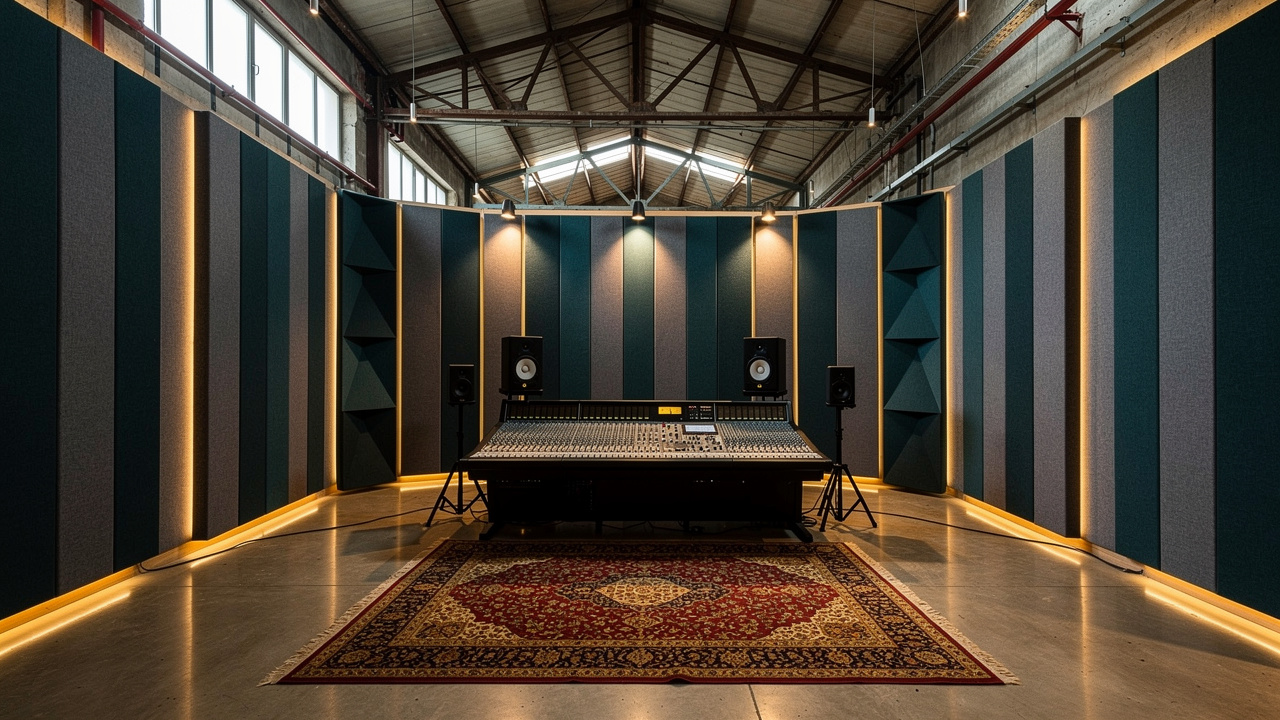
Fiberglass acoustic panels suit UAE interiors because they balance strong absorption with clean visual lines. Hard finishes such as marble, glass, and concrete dominate many projects from Dubai Marina to Lusail in Qatar, so echo builds up fast without acoustic help; these panels reduce that effect without spoiling the design.
“Excessive noise seriously harms human health and interferes with people’s daily activities.” — World Health Organization, Environmental Noise Guidelines
Corporate offices and boardrooms benefit from fiberglass panels on key wall and ceiling zones. Panels lower reverberation time, so meetings in DIFC, Business Bay, and Abu Dhabi Global Market sound clear even with glass partitions. Research on when sound helps or hurts office work confirms that distracting noise can significantly reduce complex task performance, so better acoustics support both comfort and productivity.
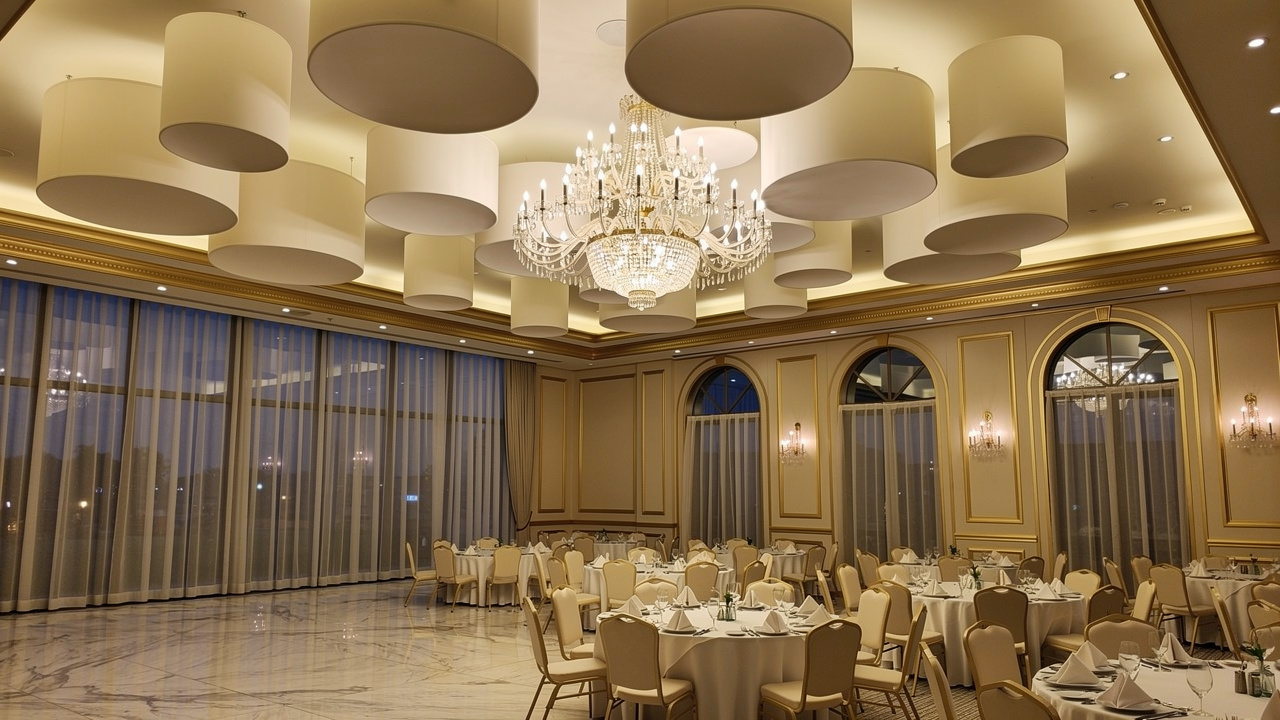
Hotels and hospitality venues need quiet, pleasant sound for guests. Fabric-wrapped fiberglass panels fit well in ballrooms, pre-function areas, lobbies, and guest corridors across brands such as Jumeirah, Marriott, and Accor, breaking up harsh reflections from stone floors and high ceilings while hiding behind rich fabrics.
Recording studios and content rooms rely on fiberglass for neutral control. Podcast suites in Al Quoz, broadcast spaces in Dubai Media City, and music studios in Riyadh use wall panels with matching bass traps in corners. This setup yields even response across mid and low frequencies, so mixes translate well to headphones, cars, and cinemas.
Educational buildings need clear speech so every student hears instructions. Classrooms and lecture halls in the UAE and Saudi Arabia often aim for reverberation times between 0.4 and 0.6 seconds, as highlighted in a comprehensive assessment of room acoustics for achieving acoustic comfort and speech intelligibility. Fiberglass panels near the teacher and on side walls help reach those values without major structural changes.
Houses of worship, including mosques and churches, often have domes, arches, and tile that reflect sound for a long time. Slim fiberglass panels finished in neutral fabrics along upper wall bands help worshippers hear sermons and recitations more clearly, while keeping attention on architectural details.
Across all these sectors, DE Sound advises architects, interior designers, and facility managers on layout, coverage, and fire approvals so each space meets both performance targets and authority rules.
How Do Fiberglass Acoustic Panels Compare To Alternative Materials?
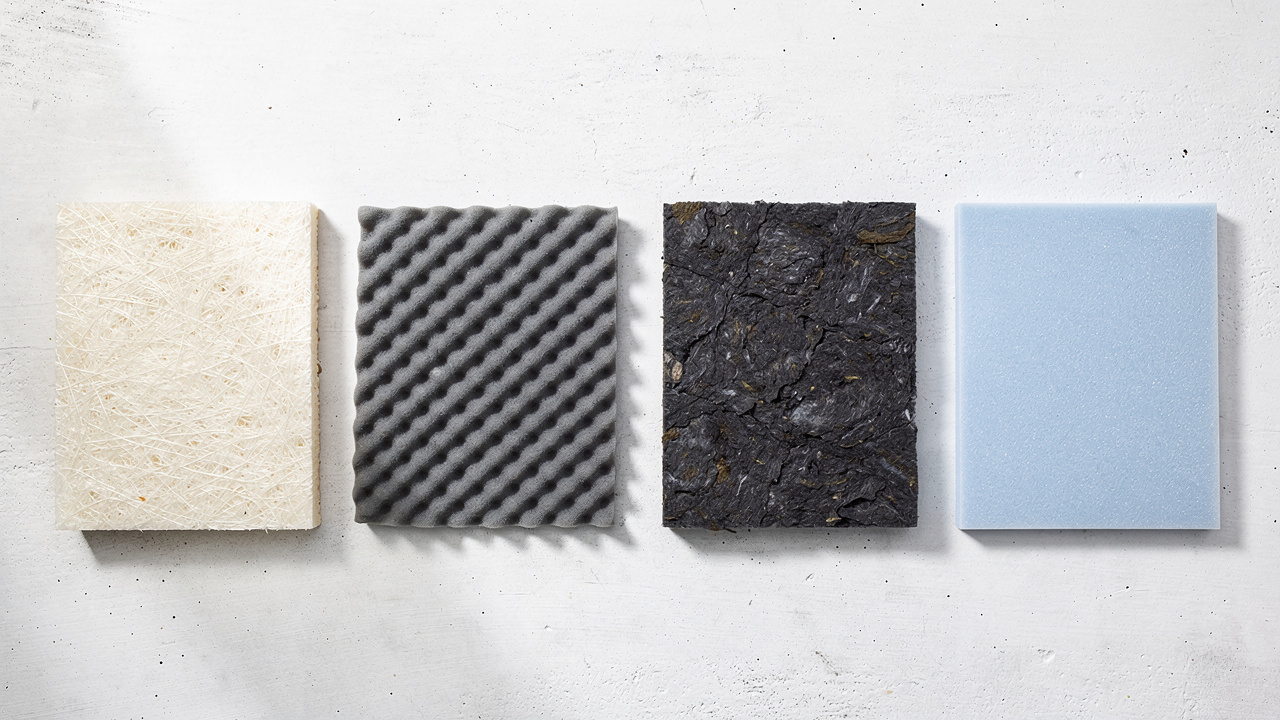
Designers and procurement teams in the UAE often weigh fiberglass against foam, Rockwool, and polyester panels. Each material has pros and cons for cost, performance, and appearance, and improving building acoustics with sustainable fiber composites is an increasingly explored direction in construction. The table below gives a clear side-by-side view.
| Material | Acoustic Performance | Durability and Appearance | Fire Safety and Compliance |
|---|---|---|---|
| Fiberglass panels | High NRC, often 0.85 to 1.0, strong mid and high control, good low end with added thickness | Rigid boards hold shape, accept many fabric finishes, suit premium interiors | Inherently non-combustible, Class A or Class 1 ratings common, fits UAE Civil Defense and NFPA expectations |
| PU foam tiles | Lower NRC in many ranges, often below 0.80, weak bass control | Can yellow or crumble over time, limited fabric options, informal look | Fire performance often weaker, some foams not accepted for commercial work |
| Rockwool or mineral wool boards | Similar absorption to fiberglass at equal density and thickness | Slightly heavier, edges more fragile, usually hidden behind fabric or perforated faces | Very good fire performance, often used in rated wall assemblies |
| PET polyester panels | Decent broadband absorption at modest thickness, but mid range often below fiberglass at the same size | Impact resistant, easy to cut on site, colors through the core support simple detailing | Class B or similar ratings in many cases, check data for each supplier |
Fiberglass acoustic panels stand out on fire classifications and tested acoustic data, with acoustic performance optimization of natural-fiber micro-perforated panels offering additional benchmarks for comparing modern acoustic materials. According to UL, Class A or Class 1 surface ratings reflect low flame spread and smoke production, which is vital for malls, hotels, schools, and offices in Dubai and the wider GCC. DE Sound keeps third-party test reports on file so consultants and authorities can review exact ratings and methods.
How To Source And Install Fiberglass Acoustic Panels In The UAE
Correct panel choice and correct installation work together. When density, thickness, layout, and fixing all align with the space, fiberglass panels solve noise issues without trial and error. For teams in Dubai, Abu Dhabi, Doha, or Muscat, two topics matter most: how panels go on the surface, and which supplier backs the order.
Installation Methods And Coverage Guidelines
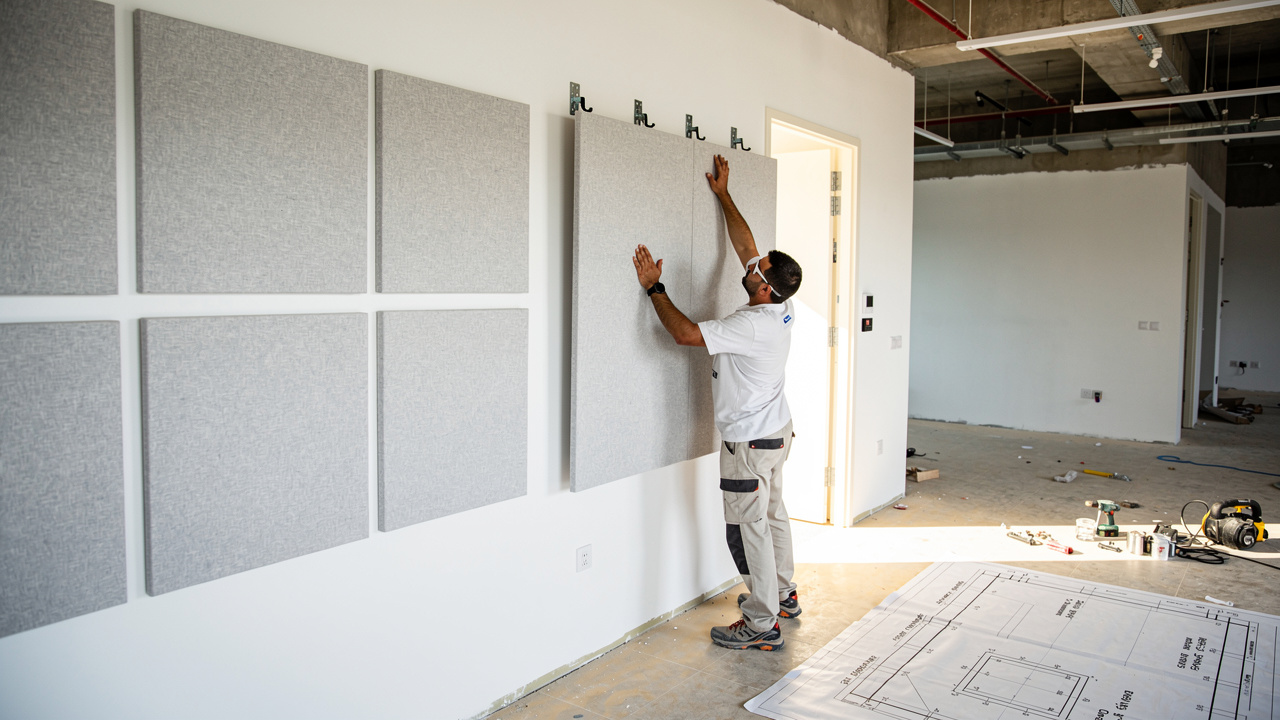
Installers in the Gulf region use a few standard methods to fix fiberglass panels safely and neatly. Each method fits certain substrates, panel weights, and access needs.
Direct wall mounting suits light fabric-wrapped panels on gypsum or block walls. Installers apply compatible adhesive to the back and press panels into place; impaler clips can add mechanical support where extra security is needed. This method works well for fast upgrades in finished offices.
Z-clip or French cleat systems hang panels on interlocking metal strips. One strip fixes to the wall, the other to the panel back, so panels lift on and off like framed art. This allows future access to services behind the panel zone and suits leased spaces where tenants may remove panels at handover.
Standoff mounting uses brackets or timber battens to hold panels away from the wall. A gap of 50–100 millimeters behind the fiberglass core improves low-frequency absorption, often giving better bass control in studios and boardrooms without thicker panels while hiding small defects on existing walls.
Suspended ceiling systems carry panels as clouds or baffles under slabs. Wire or rod kits connect panels to anchors in concrete or steel. In offices with exposed MEP, this treats sound above workstations while keeping ducts and pipes visible. Lay-in fiberglass tiles in T-bar grids give a similar effect in more traditional ceilings.
Coverage matters almost as much as fixing detail, and effects of area of walls and internal surfaces on built-up spaces underscore why surface calculations are critical in acoustic planning. Many acoustic guides, such as those from Ecophon, recommend treating roughly 25–40 percent of the combined wall and ceiling area in hard-surfaced rooms. UAE interiors heavy on glass and stone usually need coverage near the higher side of that band.
Tip: Start by treating first-reflection points (around meeting tables, teaching positions, and mix positions) before adding more panels elsewhere.
Why DE Sound Is The Trusted Acoustic Partner Across The GCC
Sourcing from a specialist supplier saves time, cost, and risk. DE Sound focuses on acoustic materials for projects across the UAE, Saudi Arabia, Qatar, Kuwait, Oman, and Bahrain, so its team knows regional codes and project pressures very well.
Factory-direct pricing keeps fiberglass acoustic panels competitive for both small studios and large hotel towers. DE Sound works closely with manufacturers to keep quality high while cutting out extra markups, helping procurement teams hit budget targets without lowering acoustic performance.
Tested and certified products arrive with full documentation packs, including NRC test reports, Class A fire certificates, and Material Safety Data Sheets ready for consultants, main contractors, and UAE Civil Defense. This documentation smooths approval for brands like Emaar, Aldar, and Nakheel.
Fast delivery spans six GCC countries through local warehousing and regional logistics partners. Standard panels often ship from stock, while custom work follows clear lead times. This combination reduces the risk of project delays for fit-out firms and design-build contractors.
Free acoustic consultation supports teams from concept to handover. DE Sound compares fiberglass with PET, wood, and stretch panel options in its own range, then recommends practical mixes. The team also shares layout sketches and fixing details so installers on site can follow clear guidance.
Lõpetuseks
Fiberglass acoustic panels give UAE and GCC projects strong sound absorption, reliable fire performance, and wide design freedom. With NRC values that often reach 0.85 and higher, they help offices, hotels, schools, studios, and homes cut echo and control noise without heavy structural changes.
Good results depend on more than the panel itself. Thickness, density, placement, and coverage across walls and ceilings all shape the final sound of the room. Careful installation with the right fixings keeps panels safe, straight, and effective for many years.
DE Sound supports design and construction teams through these choices with tested products, factory-direct pricing, and clear technical support. For upcoming projects anywhere in the Gulf, a quick call or email to DE Sound can secure expert advice, project pricing, and dependable supply for fiberglass acoustic panels.
Frequently Asked Questions
Question: What thickness of fiberglass acoustic panel should I use for a UAE office project?
Use 25‑millimeter panels for mainly high-frequency issues such as sharp speech reflections, 50‑millimeter panels for most open-plan offices and meeting rooms, and 75–100‑millimeter panels where strong bass is present, such as studios or cinema rooms.
Question: Are fiberglass acoustic panels fire-safe for UAE commercial projects?
Yes. Fiberglass acoustic panels suit UAE commercial work when they carry Class A or Class 1 surface ratings, usually tested to ASTM E84 or BS 476, which show low flame spread and smoke and align with UAE Civil Defense and NFPA requirements. Always request current certificates from your supplier before final approval.
Question: How many fiberglass acoustic panels do I need to treat a room?
Most projects treat between 25 and 40 percent of the combined wall and ceiling area, with marble, glass, or bare concrete rooms near the top of that range. For precise figures, ask an acoustic supplier such as DE Sound to review room dimensions, finishes, and target reverberation time.
Question: How long does delivery of fiberglass acoustic panels take in the UAE and GCC?
Lead time depends on whether panels come from stock or custom production. DE Sound can ship standard sizes quickly from UAE and regional warehouses, while custom sizes, fabrics, and printed panels usually need around two to four weeks from order confirmation.
Question: Can fiberglass acoustic panels be customized for hospitality or branded interiors in the UAE?
Yes. Fiberglass panels work well in design-led interiors in hotels, cinemas, and retail spaces, and can be wrapped in custom fabrics, cut into special shapes, or printed with full-color artwork; DE Sound supports this with in-house fabrication and printing across the UAE and wider GCC.