
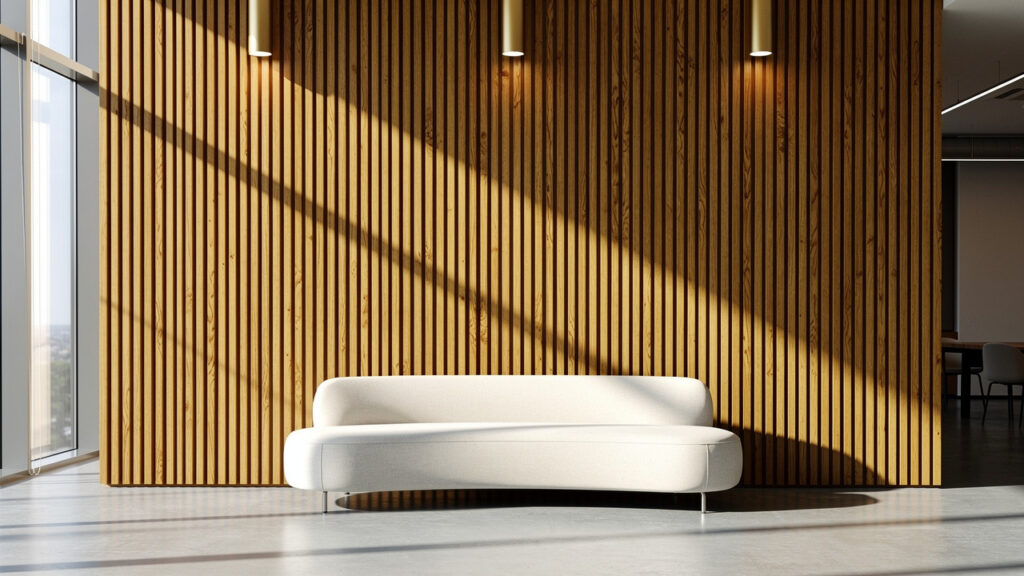
Many UAE interiors look impressive yet sound harsh, echoey, and tiring all day. Hard marble, glass, and concrete bounce back every voice, phone ring, and chair scrape.
That constant noise wears down focus in offices, ruins guest comfort in hotels, and makes content studios sound unprofessional. Demand for acoustic wood panels has therefore surged across Dubai, Abu Dhabi, and the wider GCC.
Acoustic wood panels settle that clash between beauty and sound. These engineered timber panels control echo and reverberation while adding warm, modern lines to walls and ceilings. In this guide you will see what acoustic wood panels are, why they dominate current interior design, where they work best in UAE projects, and how to pick the right panel with confidence.
If you design or manage interiors across the Gulf, the next sections show how this single material can upgrade both sound and style.
Key Takeaways
Before looking at details, it helps to see the main reasons designers now favor timber acoustics over plain gypsum or foam. These points summarize the value for quick review.
Acoustic wood panels improve reverberation and speech clarity while acting as a visible design feature. You do not have to hide them behind drywall. One product handles noise control and visual impact together.
Biophilic design trends favor natural materials and textures. Real or veneered timber softens LED-heavy interiors and supports calmer moods. Studies shared by the World Green Building Council link better indoor environments with higher comfort and productivity for staff.
They suit the noisiest, most public rooms. Common winners include open plan offices, boardrooms, hotel lobbies, restaurants, studios, classrooms, and luxury villas. These spaces struggle most with echo and overlapping speech. Timber panels on key walls cut noise and give a more premium look.
Green building standards reward acoustic comfort and low emissions. Programs such as LEED, Estidama, and WELL value both. Wood-based systems can support credits for sound and indoor air when specified correctly, keeping designers aligned with client sustainability commitments.
Local specialist support reduces risk. A Gulf-based partner such as DE Sound can provide data sheets, samples, fire and acoustic test reports, plus layout advice. That support cuts guesswork for designers and contractors.
“Noise is the most impertinent of all forms of interruption.” — Edmund Burke
What Are Acoustic Wood Panels and How Do They Work?
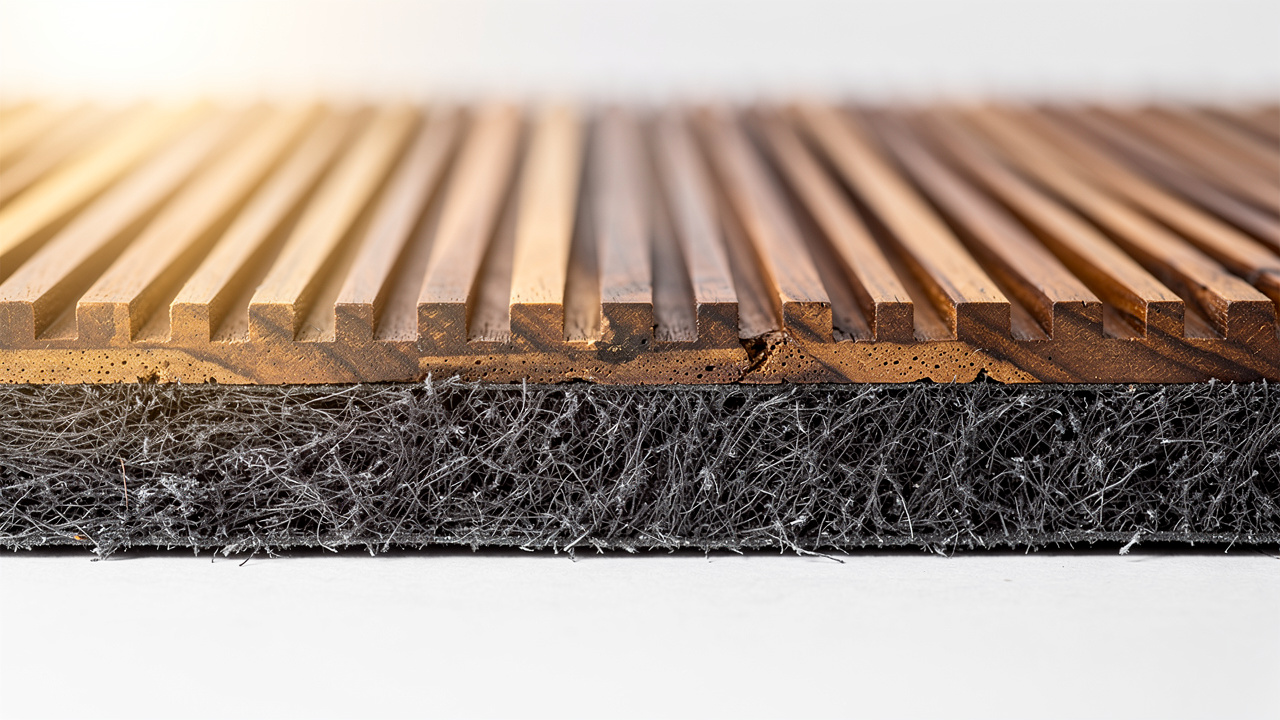
Acoustic wood panels are engineered wall and ceiling elements that control sound while presenting a natural wood surface. Each panel combines a timber or wood composite face with an acoustic backing that soaks up reflected sound energy.
Most systems have three main parts, and their combined acoustic effect is well documented — for example, studies on Application of Hybrid Absorptive–Diffusive panels demonstrate how layered timber constructions achieve variable acoustic characteristics across frequencies.
Face layer — MDF, plywood, solid timber, or a veneered slatted profile that you actually see.
Openings — slots, perforations, or gaps between slats that let sound pass through.
Acoustic backing — felt, mineral wool, or polyester fiber that turns sound energy into a small amount of heat instead of letting it bounce around the room.
For design teams, the key performance number is the Noise Reduction Coefficient (NRC). This rating runs from 0 for total reflection to 1 for high absorption. Quality acoustic wood panels from specialist manufacturers often test between 0.55 and 0.85 NRC, which suits most offices, classrooms, and hospitality spaces. Research shared by the Acoustical Society of America shows that materials in this range already cut reverberation very noticeably.
Typical NRC ranges and how they feel in a room:
| NRC Range | Perceived Effect In A Furnished Room* |
|---|---|
| 0.30–0.45 | Slight improvement, still lively but less harsh |
| 0.55–0.70 | Noticeably calmer speech, better meeting room clarity |
| 0.75–0.85 | Strong control of echo for boardrooms, studios, and classrooms |
Actual results depend on room size, shape, and other finishes.
Acoustic wood panels mainly treat noise inside a room, not sound transmission between rooms. They shorten reverberation time, so speech sounds clearer and background clatter fades quicker. For privacy between hotel rooms or stacked apartments, you still need extra mass in the wall build-up, such as double studs or acoustic membranes, alongside the visible timber finish. Ceiling clouds and wall panels work together to treat reflections from multiple directions.
In the UAE, suppliers such as DE Sound pair tested panel constructions with clear data sheets, so specifiers can match NRC values to project briefs. Projects in Dubai and Abu Dhabi often request lab reports based on ISO 354 or ASTM E1050 test methods, which these systems follow. That gives interior designers and facility managers a solid technical base instead of pure catalog guesswork.
Pro Tip From The DE Sound Design Team: Treat at least two large surfaces in a room—often the ceiling and one long wall—to avoid a “boomy” sound.
Why Acoustic Wood Panels Are Dominating Modern Interior Design

Acoustic wood panels lead current interior design trends because they satisfy both human comfort and visual expectations. Designers across Dubai, Abu Dhabi, and the wider GCC can treat noise issues without giving up the warm look clients expect from premium spaces.
Natural timber surfaces connect directly to biophilic design, which uses cues from nature to support wellbeing. Studies compiled by the World Green Building Council report productivity gains of up to 11 percent when workplaces improve factors such as daylight, acoustics, and indoor air, a finding supported by Meta‐Analysis and Regression Modeling of indoor environmental quality metrics on office performance. By replacing cold, echo-heavy gypsum or bare concrete with textured wood, offices and hotels feel calmer and support better focus for guests and staff.
Older acoustic treatments often meant exposed foam tiles, fabric-wrapped boards, or messy spray coats. Those options control sound but rarely match the finish level of a five-star hotel or a Grade A office in DIFC or Business Bay. Slatted acoustic wood panels, in contrast, read as an intentional design choice that frames reception desks, feature ceilings, and media walls while quietly reducing reverberation.
Wellness-focused standards such as the WELL Building Standard and Fitwel ask project teams to include sound within overall health, a priority also documented in research on The Role of Integrated indoor environmental quality in shaping employee outcomes in hybrid workplaces. Research highlighted by the Center for the Built Environment shows that noise and lack of privacy sit at the top of occupant complaints in open offices, consistent with a broader Assessment between indoor environmental quality aspects and productivity found in a recent systematic literature review. When ceiling heights, glass partitions, and polished floors are fixed, acoustic wood panels often give the most practical path to better speech privacy.
Research from the Center for the Built Environment consistently links poor acoustics with lower workplace satisfaction.
Sustainability policy also drives this trend. Many UAE developers now pursue LEED, Estidama Pearl, or local green guidelines from authorities in Abu Dhabi and Dubai. The US Green Building Council awards points for acoustic performance and low-emission materials, so when teams switch from pure plastic foam to wood-based systems they can support both categories. DE Sound responds by stocking panel lines that use low-VOC finishes and recycled acoustic backers, which helps compliance without slowing tight fit-out programs across the GCC.
Where Are Acoustic Wood Panels Being Used Across the UAE?
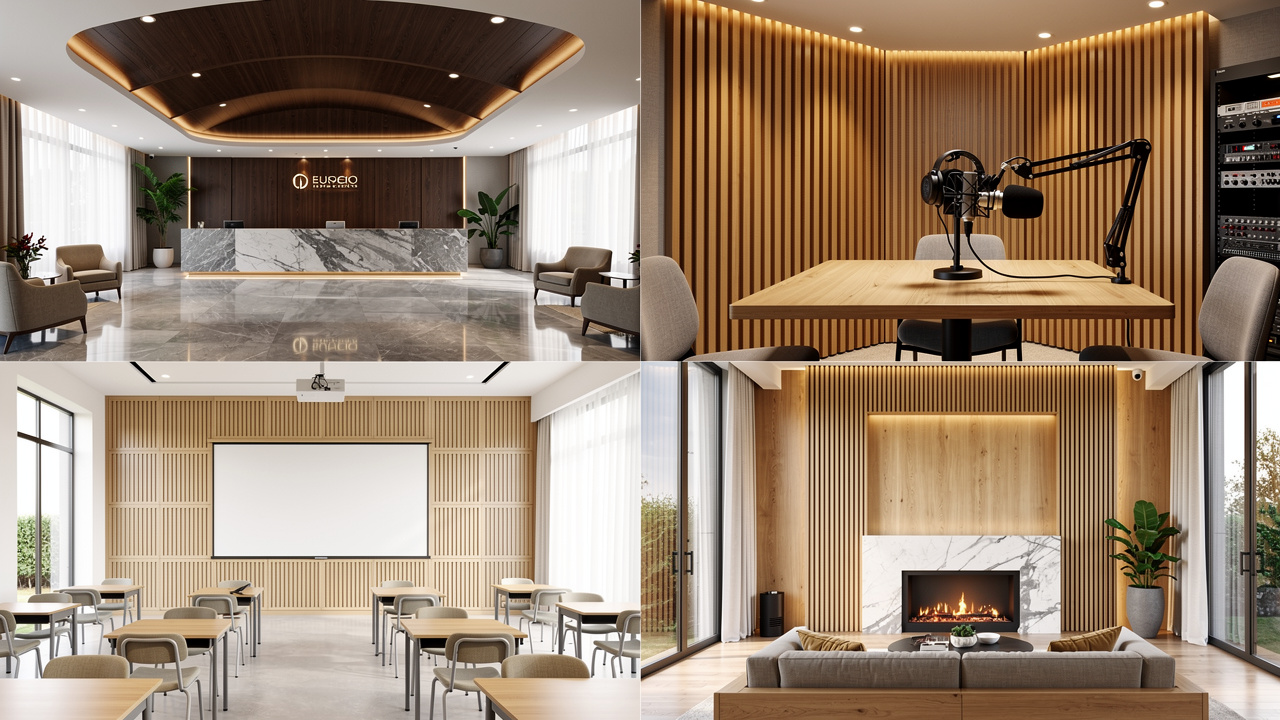
Across the UAE, acoustic wood panels now turn noisy rooms into comfortable ones in offices, hotels, studios, schools, and luxury homes. Designers call on them whenever echo, overlapping conversations, or hollow-sounding floors start to hurt comfort and speech clarity, as workspace benchmarking research on Measuring what matters: A benchmarking system for occupant satisfaction confirms acoustic comfort is a leading driver of workspace quality scores. Research from the Center for the Built Environment shows noise and lack of privacy near the top of office complaints, while J.D. Power reports that noise appears again and again in poor hotel reviews. Classroom guidance from the American Speech Language Hearing Association also stresses low reverberation, so education clients pay attention too.
These are the main sectors where acoustic wood panels deliver quick gains.
Corporate offices and boardrooms use acoustic wood panels on focus walls, ceilings, and around meeting pods. These surfaces absorb speech energy in open zones and long corridors. Staff gain better concentration and confidential talks stay inside rooms instead of spilling across floors. Panels also help video calls sound clearer for hybrid teams.
Hotels and hospitality venues line lobbies, restaurants, ballrooms, and guest corridors with timber acoustics. Guests hear conversation rather than hard reflections from marble and glass. Calm sound levels feed directly into higher comfort scores and more positive online reviews. Restaurants can also run background music at a pleasant level instead of turning it up to fight echo.
Recording studios, podcast rooms, and content suites depend on accurate sound. Slatted absorbers and timber diffusers tune reverberation so microphones pick up clean voices and music. At the same time, the wood look gives a professional backdrop on camera for YouTube or streaming platforms and helps talent feel relaxed.
Educational facilities apply acoustic wood panels in classrooms, lecture halls, and libraries. Lower reverberation helps students understand teachers without strain, including learners with hearing challenges or second-language needs. Durable wood faces also stand up to years of student traffic better than soft fabrics or painted plaster.
Residential luxury projects bring these panels into living rooms, home cinemas, and home offices from Dubai Marina to Palm Jumeirah. Residents enjoy quieter evenings even in dense towers or villa communities, a benefit explored in research on The Spatial Logic of privacy and acoustic patterns in shared housing environments. Designers match veneer tones with doors, floors, and joinery for a coordinated feel and may combine them with concealed strip lighting for extra drama, while layout decisions increasingly draw on data-driven insights such as those found in research on User Preferences on Toilet features and spatial functionality in buildings, which highlights how even secondary spaces benefit from user-centered acoustic and layout planning.
How to Choose the Right Acoustic Wood Panel for Your Project
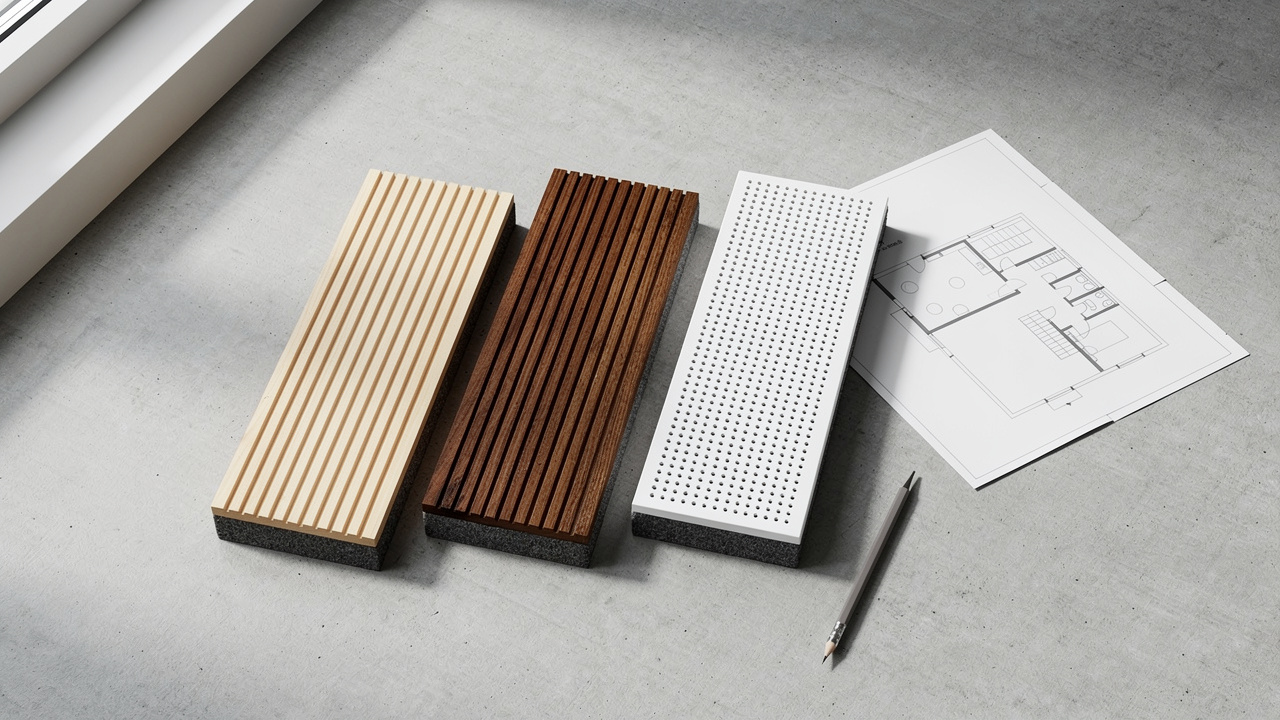
To choose the right acoustic wood panel for a project, start with a clear acoustic brief and finish with trusted test data. When you follow a simple checklist, the panel you order will match both performance and design needs.
Identify the main sound problem in the room. If voices sound blurry and echo lingers, focus on absorption and reverberation time. If neighbors hear everything through the wall, combine acoustic wood panels with upgraded partitions and doors, not panels alone.
Match panel type and NRC rating to your goal. Slatted or grooved panels work well for balanced absorption and a strong linear look, while perforated sheets fit cinemas, lecture halls, and large ceilings. Diffuser-style timber blocks help studios or performance rooms keep some life without creating flutter echoes.
Check fire and code compliance early. Confirm UAE Civil Defense requirements before you place any orders. Many commercial interiors need panels tested to Class B or Class C under standards such as EN 13501 or BS 476. A reputable supplier will provide fire test reports alongside acoustic lab data so approval teams feel comfortable.
Balance design ambition with budget, lead time, and site support. Standard stocked panels suit fast-track offices or restaurants, while custom veneers and patterns might need four to eight weeks for manufacture. DE Sound helps teams across the GCC compare options, read test reports, and plan layouts, while keeping costs down through factory-direct pricing and regional warehousing.
Plan for installation and maintenance. Decide early whether panels will run full height or partial height, how they will meet skirting and ceilings, and how cleaning will be handled. Many systems can be vacuumed or wiped with a damp cloth, which keeps them looking fresh over the long term.
Use this quick guide to combine common noise problems with panel choices:
| Main Problem | Typical Symptoms | Panel Strategy | Notes |
|---|---|---|---|
| Echo and poor clarity | Room sounds “ringy”; people repeat themselves | High-NRC slatted or perforated panels on walls/ceiling | Aim to treat at least 20–40% of hard surfaces |
| Lack of privacy | Conversations overheard next door | Combine acoustic panels with heavier partitions, seals, and solid doors | Panels alone do not stop sound passing through walls |
| Very high ceilings | Loud, lingering chatter in lobbies or atriums | Ceiling rafts or baffles plus feature walls | Focus first on the ceiling area people talk under |
| Small media/podcast rooms | “Boxy” recordings, flutter echo | Mix absorption and limited diffusion around the talk position | Leave some reflective surfaces behind listeners |
Frequently Asked Questions
These short answers cover everyday questions clients ask about acoustic wood panels in UAE projects.
Question: Are acoustic wood panels effective for home use, or are they only for commercial spaces?
Acoustic wood panels work well in homes as well as commercial spaces. Slatted options in living rooms, home cinemas, and home offices reduce echo while matching doors, floors, and joinery for a warm residential character. Many homeowners start with a single feature wall behind the sofa or desk and notice the difference straight away.
Question: What is the difference between acoustic wood panels and regular wood wall cladding?
Acoustic wood panels include an acoustic backing and openings that absorb sound, while regular wood cladding is usually just solid boards. Standard cladding reflects most noise and hardly changes reverberation. Acoustic panels are tested for performance (for example with an NRC rating), so you know what effect to expect.
Question: Do acoustic wood panels require professional installation?
Professional installation is recommended for best acoustic performance, especially on large ceilings and complex walls. Installers who understand clip systems, air gaps, and services can position panels well and avoid rattles. For small residential feature walls, experienced DIY clients may handle basic installation, but support from the supplier is still helpful. DE Sound supports contractors and homeowners with shop drawings and fixing advice.
Question: How long do acoustic wood panels last in the UAE’s climate?
Well-made acoustic wood panels last many years in the UAE climate. Stable cores and protected finishes resist warping, while light dusting or vacuuming of slats and perforations keeps surfaces clean. In very humid areas, look for panels with moisture-resistant cores and always follow the manufacturer’s care instructions.
Question: How many acoustic wood panels does a typical room need?
There is no single number, but a common starting point is to cover around one fifth to two fifths of the main hard surfaces with acoustic material. High-noise spaces such as cafeterias may need more coverage, while small meeting rooms might need less. A supplier such as DE Sound can review room dimensions and uses to suggest a practical layout.
Question: Are acoustic wood panels environmentally friendly?
They can be, depending on the product. Many modern systems use cores from responsibly sourced timber, low-VOC lacquers, and backings with recycled content — a formulation approach explored in research on the Development of a Mineral binder for wood wool acoustic panels with a reduced carbon footprint. When you compare options, ask for environmental data sheets and formaldehyde ratings so your specification supports project sustainability goals.
The Bottom Line

The bottom line on acoustic wood panels in interior design is simple: they calm noisy rooms while still looking premium. Few other acoustic options give this mix of sound control, wellness support, and warm visual character.
As Gulf projects target healthier and greener interiors, timber acoustics sit neatly beside LEED, Estidama, and WELL requirements. Offices, hotels, studios, schools, and villas across Dubai already show how quickly panels lift comfort and perceived quality.
If you plan a new fit-out or refurbishment, speak with a specialist supplier early in the design process. DE Sound offers free advice, certified acoustic wood panels, and fast GCC delivery so your next space sounds and looks balanced from day one.