
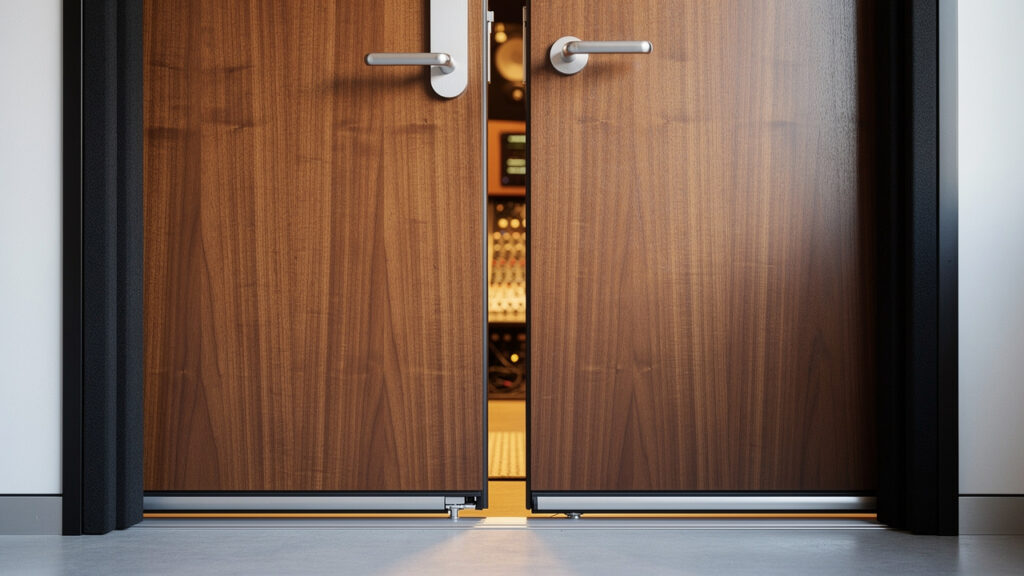
Noise leaking through studio and office doors ruins recordings and private meetings fast. The best wooden soundproof doors stop that noise at the entrance. They combine solid cores, proper seals, and tested Sound Transmission Class (STC) ratings so both sides of the door stay quiet.
Thin, hollow doors in many UAE projects simply cannot cope with traffic, building noise, and loud conversations. That gap between expectation and reality often appears only after handover. By then, fixes are expensive and disruptive.
In this guide, best wooden soundproof doors means acoustic-grade timber doors with proven sound ratings, climate-ready materials, and correct sealing systems. You will see how STC works, how different door types compare, which ratings fit studios or offices, and how DE Sound supports UAE and GCC projects with wholesale supply and clear technical advice.
Keep reading to match the right door to your next recording studio, office, hotel, or school project with confidence.
Key Takeaways
Choosing between different wooden acoustic doors becomes much easier once a few core ideas are clear. A short summary up front helps designers, contractors, and facility managers check if they are on the right track. Use these takeaways as a quick checklist before you issue specs or place orders.
STC ratings are your main benchmark. STC shows how much sound a door blocks for a given room type. An STC in the mid‑30s fits many offices, while STC 50 and higher is common for studios and broadcast suites. Treat STC as the shared language between consultants, suppliers, and site teams. It keeps expectations realistic for both clients and occupants.
Solid cores beat hollow cores every time. Solid core construction sits at the heart of every serious acoustic wooden door. Hollow-core leaves might be light and cheap, but they offer little real isolation. A solid core adds mass, which directly improves sound blocking. For professional workspaces, solid cores are not a luxury; they are the baseline.
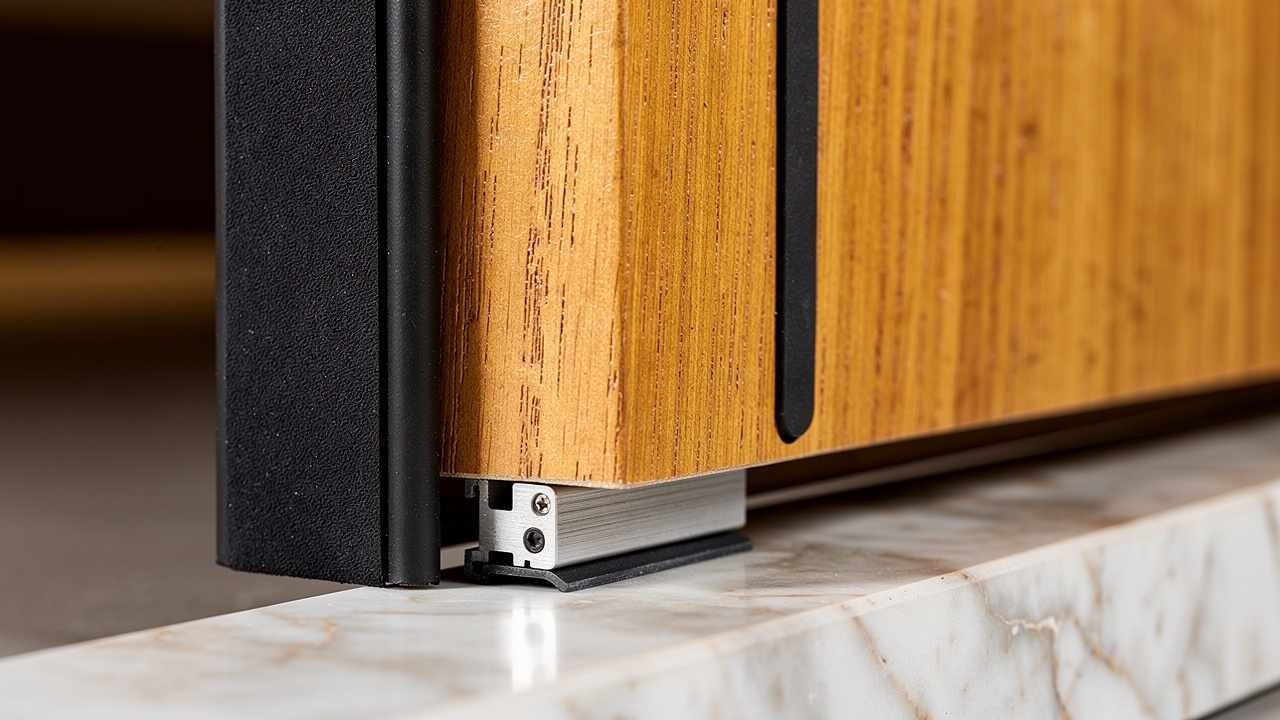
Seals make or break performance. Sealing systems are just as important as the door panel itself. Even a tiny gap at the threshold or frame can slash acoustic performance. Compression gaskets, automatic drop seals, and well-installed frames turn a heavy leaf into a high-performing system. Without them, lab-tested STC numbers will never show up on site.
Climate-ready materials matter in the Gulf. High heat, humidity, and air conditioning can twist poor-quality timber. Engineered cores and moisture-resistant finishes hold their shape in Dubai, Abu Dhabi, and Riyadh conditions. Stable doors keep their seals tight and their STC rating close to the test report.
DE Sound supports projects from design to delivery. DE Sound backs Gulf-region projects with free expert consultation and factory-direct pricing. That mix helps design teams select the right STC class, choose suitable finishes, and avoid costly rework. For bulk orders across the UAE and six GCC countries, DE Sound combines acoustic know-how with reliable logistics.
“Noise seriously harms human health and interferes with people’s daily activities.”
— World Health Organization, Guidelines For Community Noise
What Makes a Wooden Door Truly Soundproof?
A wooden door becomes truly soundproof when its structure, rating, and seals work together to block noise between rooms. In practice, that means looking beyond appearance and checking the STC value, core build, and sealing details as a single package.
The Sound Transmission Class (STC) is the main number used to describe how well a door blocks airborne sound. A typical hollow-core interior leaf sits around STC 20–25, which barely slows traffic noise or conversations. Acoustic timber doors for studios and private offices usually start around STC 40 and can reach STC 55 and above in Gulf projects from Dubai Media City to twofour54 in Abu Dhabi. According to the Acoustical Society of America, a reduction of about 10 decibels sounds roughly like half the loudness, which explains why moving from STC 35 to STC 45 feels like a big step on site.
A simple guide helps link STC ranges to real spaces in the UAE and wider GCC:
| STC Range | Approximate Performance | Typical Use In UAE Projects |
|---|---|---|
| 25–30 | Light reduction | Basic residential interiors, low-priority rooms |
| 31–40 | Noticeable reduction | Standard offices, meeting rooms, classrooms |
| 41–50 | Strong reduction | Boardrooms, clinics, hotel corridors, better studios |
| 51–55+ | Very strong reduction | High-end studios, broadcast rooms, cinema suites |
Behind these numbers stand three acoustic principles that any serious wooden soundproof door must follow.
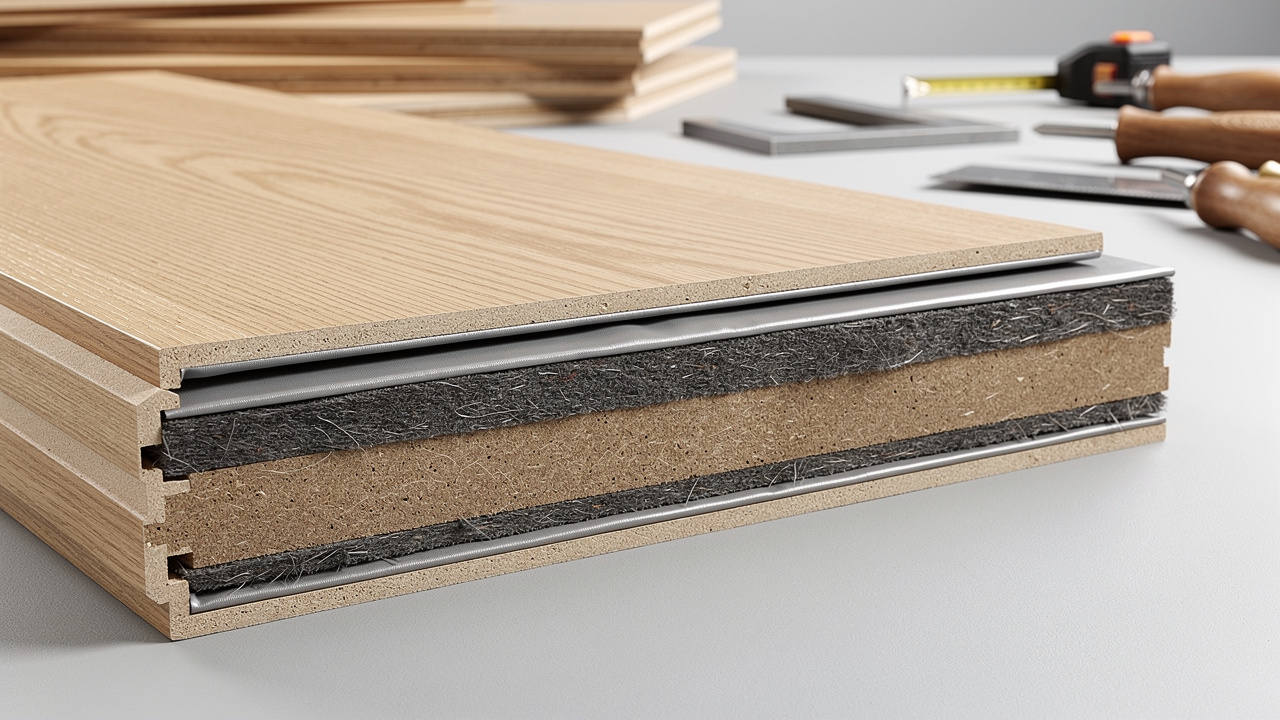
Mass matters because heavier, denser doors move less when sound hits them. Solid timber or engineered wood cores outperform light honeycomb fills by a wide margin. When you add materials like MDF skins or high-pressure laminate, you add more mass without changing the footprint much. That is why studio builders in areas like Al Quoz and Jumeirah often choose thick, heavy leaves even in tight frames.
Damping is about turning vibration into harmless heat inside the door leaf. Materials such as mineral wool, acoustic foam, or mass-loaded vinyl sit between timber layers and soak up energy. Without damping, a door leaf can act like a drum skin and pass sound straight through. With good damping, the same leaf becomes a quiet barrier between offices or control rooms.
Decoupling helps interrupt rigid paths that sound loves to follow. Many high‑STC doors use layered constructions where inner and outer skins do not share every fixing point. That small break makes it harder for vibration to move from one side to the other. When you combine decoupling with compression seals around the frame and an automatic drop seal at the bottom, you close the main paths sound uses to escape.
In short, a wooden door only deserves the label soundproof when a dense core, damped layers, decoupled build, and airtight seals all work together.
Tip: When reviewing submittals, always check the entire door system—leaf, frame, seals, and hardware—not just the leaf construction or veneer sample.
Which Type Of Wooden Soundproof Door Is Right For Your Project?

The right wooden soundproof door type depends on how the room is used, the target STC, and the look the design team wants. In the UAE market, most acoustic doors for studios and offices fall into four clear families, each with its own strength. Matching these options to the brief keeps both cost and performance under control.
Interior designers working on hotel towers in Dubai Marina or offices in DIFC often start from the desired finish, then check which construction can support the needed STC. At the same time, contractors in Sharjah, Riyadh, or Doha must think about door weight, frame strength, and hardware life. Research from Steelcase found that office workers can lose around 86 minutes per day to noise distractions, which shows how much well-specified doors matter in open-plan workplaces.
A quick overview of main door types and typical STC bands looks like this:
| Door Type | Typical STC Range | Common Gulf Applications |
|---|---|---|
| Solid core wooden | 30–38 | Guest rooms, standard offices, meeting rooms |
| Laminated acoustic wooden | 40–52 | Conference rooms, clinics, studios, schools |
| Steel-lined wooden acoustic | 50–55+ | Broadcast rooms, cinemas, music rehearsal spaces |
| Acoustic sliding or folding wooden | 38–45 | Flexible boardrooms, partitioned event spaces |
Now to the details that matter on drawings and on site.
Solid core wooden doors use a continuous timber or composite core without hollow pockets. That extra mass lifts them far above hollow domestic leaves. In towers from Downtown Dubai to Abu Dhabi Corniche, these doors handle most guest room entries and internal offices. When paired with proper seals, they suit projects that need privacy without studio-level isolation.
Acoustically rated laminated wooden doors stack several dense layers together. You may see veneers, MDF, and mass-loaded vinyl combined in one leaf to tune performance into the low 40s or even low 50s STC. Designers gain more flexibility with finishes, from classic oak and walnut veneers to painted MDF that matches brand colors in call centers or clinics. This type balances strong acoustic performance with a refined interior look.
Steel-lined wooden acoustic doors hide a steel or lead sheet inside a timber-clad leaf. The metal layer adds serious mass without creating an oversized slab. These models suit broadcast studios, dubbing rooms, cinema suites, and rehearsal spaces in creative hubs like Dubai Studio City. With the right frame, they handle heavy use while keeping spill to adjacent offices and public zones under control.
Acoustic sliding and folding wooden doors give flexible rooms in hotels, co-working spaces, and training centers more options. Their seals are more complex, because moving parts have more paths for leaks. Good systems include perimeter gaskets and active bottom seals that engage fully when panels close. In venues from Business Bay to West Bay in Doha, they allow one large hall to become smaller rooms while still keeping parallel meetings reasonably private.
When you compare samples, check three things side by side: the claimed STC rating, the third-party test report, and the proposed sealing system. All three should match the needs of the project brief.
Application-Specific STC Recommendations For UAE Studios And Offices
Application-specific STC targets for UAE studios and offices help you pick the best wooden soundproof doors for each room instead of guessing. By tying STC ranges to real spaces, you can brief consultants, contractors, and suppliers like DE Sound with clear technical intent.
Recording rooms in Dubai Media City, boardrooms in Abu Dhabi Global Market, and classrooms in Sharjah all have very different noise risks and privacy needs. At the same time, Gulf climate, fire codes, and landlord rules add more constraints. Guidelines from the World Health Organization suggest that classroom background noise should stay near 35 dB to protect learning, which shows why schools in the UAE need better doors than basic hollow-core models.
Here is how STC choices usually break down for common UAE project types:
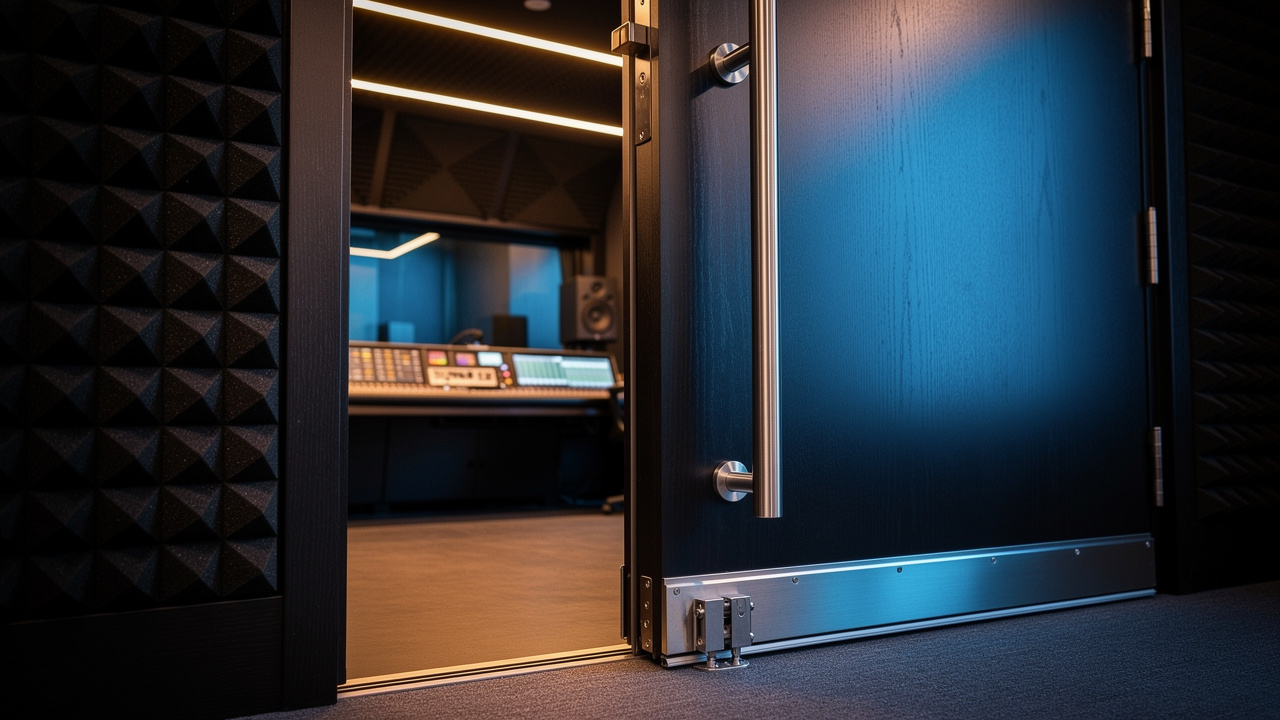
Recording studios and podcast production suites in places like twofour54 or Dubai Production City work with high sound levels inside sensitive shells. Main recording rooms usually start at STC 50 for doors, with many projects adding a second leaf to form a sound lock. Loud instruments can go well above 100 dB, and the Occupational Safety and Health Administration warns that long exposure above about 85 dB can damage hearing, so isolation protects people outside as well as the talent inside.
Corporate offices and conference rooms in DIFC, Downtown Dubai, or Abu Dhabi commercial towers often mix open-plan desks with private rooms. Boardrooms and C‑suite offices tend to sit between STC 38 and 45 for doors, especially when confidential finance or legal conversations happen daily. Many projects also add vision panels with laminated acoustic glass so light flows through without sacrificing privacy. In flexible co-working spaces, acoustic sliding doors give teams a way to re-size rooms while keeping call noise under control.
Luxury hotels and serviced apartments along Palm Jumeirah, Dubai Marina, and Saadiyat Island live or die by guest satisfaction scores. Corridor and interconnecting doors commonly fall in the STC 40–45 band. These leaves usually carry premium veneers like walnut or oak to match joinery, and they must perform consistently across hundreds of rooms. Procurement teams in regional chains across the GCC need suppliers who can deliver large runs with the same acoustic test data, finish quality, and hardware prep.
Schools, universities, and healthcare facilities in the UAE and Saudi Arabia care about focus, comfort, and privacy more than showpiece finishes. Classrooms, libraries, and offices often target STC 35–42, while music rooms, lecture theaters, and counseling spaces move up to STC 45 or more. Consulting rooms and treatment rooms in hospitals and clinics also benefit from STC 40–48 doors so patient discussions stay private. UAE Civil Defense rules usually require at least FD30 fire rating in these zones, so combined acoustic fire-rated wooden doors make both compliance and ordering easier.
Quick rule: if confidential conversations must stay inside a room, aim for at least STC 45 on the door. If you record audio professionally, start around STC 50 and add a sound lock for the main studio entrance.
Why DE Sound Is The Go-To Supplier For Wooden Soundproof Doors In The UAE
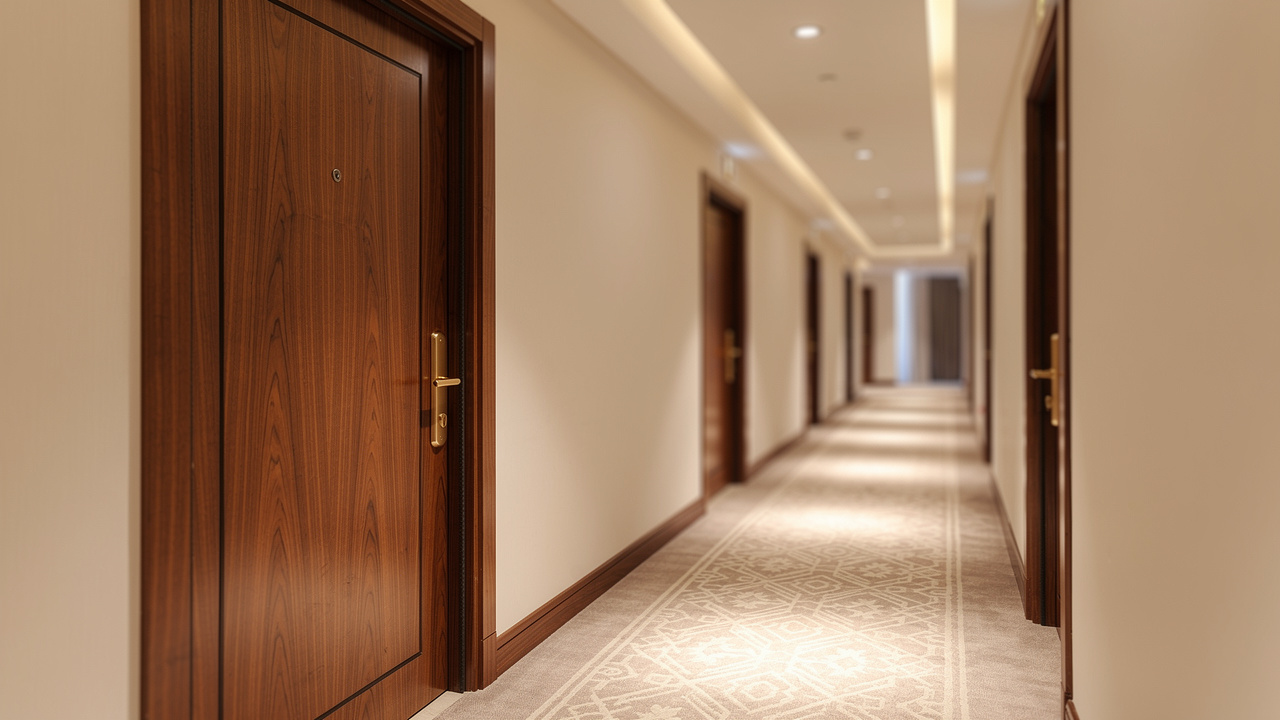
DE Sound is a specialist acoustic materials partner for UAE and GCC projects that need reliable wooden soundproof doors for studios and offices. The company focuses on factory-direct supply, tested products, and clear technical advice so project teams across Dubai, Abu Dhabi, Riyadh, Doha, Muscat, and Manama can move fast without guesswork.
For interior designers and fit-out contractors, one of the biggest worries is specifying a door that looks right on drawings but underperforms after handover. DE Sound reduces that risk by linking every recommended door class to real STC test data and by talking through how frames, seals, and walls work together. For procurement officers in hotel groups or education providers, the wholesale model and regional warehouse network keep both pricing and delivery time under control.
Here is how DE Sound supports project teams:
Factory-direct pricing on acoustic products removes unnecessary steps for contractors working on tight budgets. This helps hotel fit-out teams in Dubai Marina or school projects in Al Ain stretch funds further without dropping to weak hollow-core doors. It also simplifies bulk orders for 200‑room towers or multi-campus education schemes across the GCC.
Tested acoustic materials form the core of the range, including wooden doors that match specified STC bands when installed correctly. DE Sound works with labs that follow standards such as ASTM E90 and ISO 10140, so specifiers can point to real reports instead of marketing claims. This kind of documentation supports approvals with consultants, landlords, and local authorities.
Free expert consultation is a key part of the DE Sound offer. Acoustic specialists help clients choose between solid core, laminated, or steel-lined wooden doors, and select seal sets that make sense for each opening. This guidance is especially helpful for studio owners, podcast producers, and first-time fit-out teams who have not handled high‑STC doors before.
Fast delivery across six GCC countries supports time-sensitive programs in places like Expo City Dubai, King Abdullah Financial District in Riyadh, and Lusail in Qatar. By shipping doors along with matching acoustic panels and insulation, DE Sound helps keep logistics simple for main contractors and MEP coordinators. With fewer vendors to deal with, site teams can focus on correct installation instead of chasing deliveries.
“Choosing the wrong door specification can cost more in retrofits than the door itself. DE Sound’s free consultation service helps project teams get it right the first time.”
Across studios, corporate offices, hotels, schools, and clinics, DE Sound combines acoustic expertise, regional experience, and practical support so the best wooden soundproof doors perform as promised in real Gulf buildings.
Frequently Asked Questions
Question 1: What STC rating do I need for a recording studio door?
The best practice for a main recording studio door is to start at STC 50. Many UAE studios also use a second door to form a sound lock, which can give isolation near the low 60s in practice. Automatic drop seals and tight compression gaskets are essential.
Question 2: Are wooden soundproof doors suitable for the UAE’s hot and humid climate?
Yes, wooden acoustic doors work well in the UAE when they use engineered cores and moisture-controlled materials. Cross-laminated or finger-jointed timber resists warping better than solid sawn leaves. Moisture-resistant finishes and durable EPDM or silicone seals keep frames tight, even in coastal areas like Palm Jumeirah or Abu Dhabi Corniche.
Question 3: Do acoustic wooden doors need to meet fire rating requirements in the UAE?
Most commercial, hospitality, and institutional projects in the UAE require doors to meet local fire codes, often FD30 or FD60. Combined acoustic fire-rated wooden doors answer both needs at once. Intumescent strips in the frame and leaf expand in heat, closing gaps for both smoke and sound.
Question 4: How do I know if a wooden soundproof door’s STC rating is reliable?
A reliable STC rating always comes with a third-party test report from an accredited lab. Ask suppliers such as DE Sound for documents based on ASTM E90 or ISO 10140 methods. Remember that field performance can be 5–10 points lower than the lab number if walls, frames, or seals are weak.
The Bottom Line
Picking the best wooden soundproof doors for studios and offices in the UAE starts with three checks: the right STC rating, a solid and stable core, and a complete sealing system. When those pieces line up with proper frames and walls, real rooms start to match the performance promised in brochures.
Installation quality then decides whether that performance lasts. Heavy leaves need strong frames, correct hinges, and accurate seal adjustment, especially with final floor finishes in place. Climate-ready materials keep gaps from opening as buildings go through hot summers and heavy air-conditioning cycles across Dubai, Abu Dhabi, and the wider GCC.
If you want more confidence before ordering, speak with DE Sound for free acoustic advice, factory-direct pricing, and coordinated supply of wooden doors and matching acoustic materials across the region. That way, your next studio, office, hotel, or campus project sounds as good as it looks.