
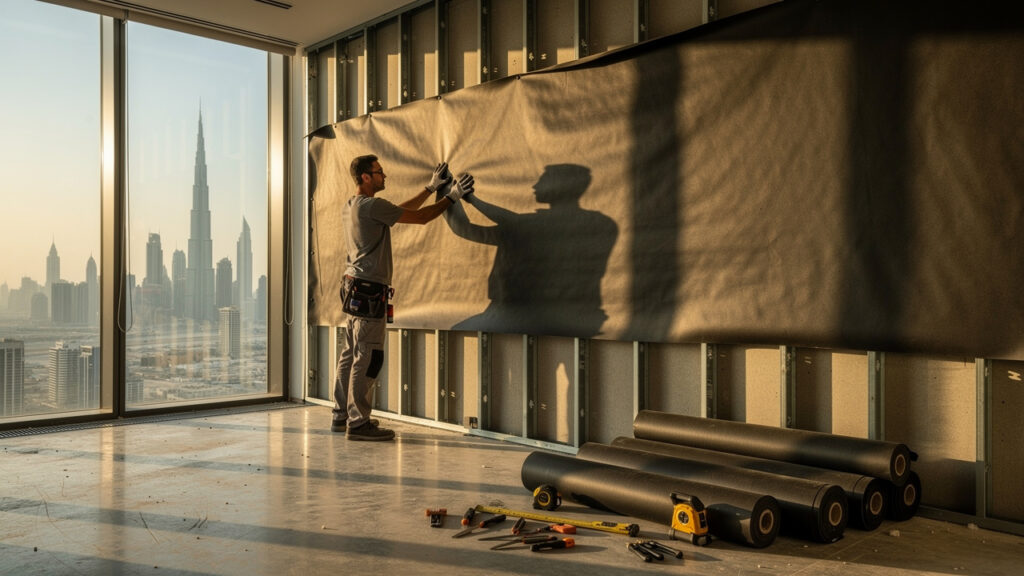
Noise problems in busy Gulf offices, hotels, and studios often show up late in a project, when fixing them is expensive and messy. Walls feel thin, HVAC hum leaks between floors, and privacy complaints pile up.
Mass loaded vinyl (MLV) in commercial soundproofing gives designers and contractors a slim, heavy barrier that blocks noise without changing layouts or structure. It is a flexible sheet that adds significant mass to walls, floors, ceilings, and ducts so sound struggles to pass through. In this article, you will see what MLV is, where it works best in UAE projects, how to choose grades, and how to install it correctly, with DE Sound as a regional partner.
If you work on offices, hotels, studios, schools, hospitals, or plant rooms across the GCC, the next sections give clear, practical ways to apply MLV and get predictable acoustic results.
Key Takeaways
Mass loaded vinyl is a dense, flexible barrier sheet. It blocks sound by adding mass while staying limp, so it resists vibration instead of ringing. That limp behavior helps across low and high frequencies that are common in Gulf buildings.
Mass loaded vinyl in commercial soundproofing fits many project types. Offices, hotels, studios, schools, hospitals, and plant rooms all gain better isolation when MLV is built into walls, floors, ceilings, and ductwork. This keeps one noisy space from disturbing another nearby space.
Choosing the right MLV grade matters for performance and budget. Lighter grades suit partitions and duct wrap, while heavier grades fit studios, plant rooms, and floor underlays. Fire rating, temperature resistance, and low VOC content also matter for UAE projects.
Installation quality can make or break an MLV system. Poorly sealed seams, gaps at sockets, or rigid fixing can cut sound reduction far below the lab rating. Careful overlap, sealing, and decoupling help the material reach its published performance.
DE Sound gives Gulf contractors and designers more than just product supply. The team offers wholesale pricing, fast GCC delivery, and free project support so MLV, acoustic panels, and other materials arrive on time and work together as one tested system.
What Is Mass Loaded Vinyl And How Does It Work In Commercial Settings?
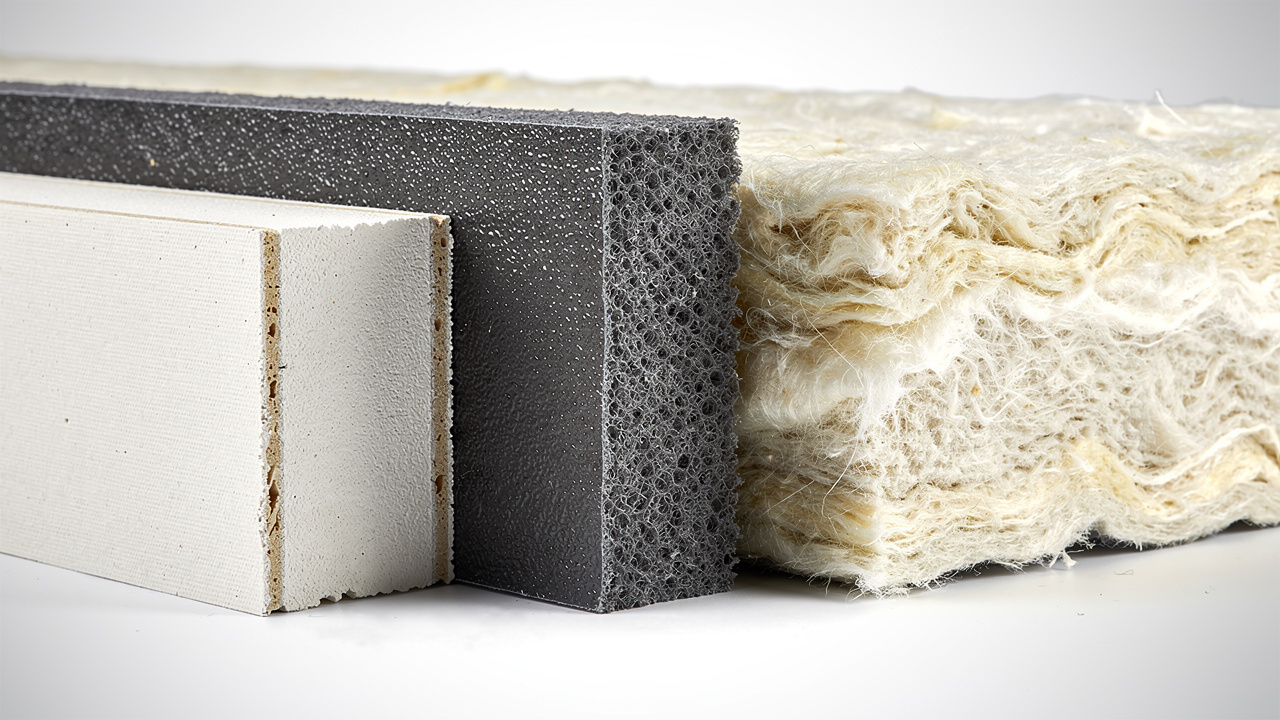
Mass loaded vinyl is a thin, heavy membrane that blocks sound in commercial settings by adding mass without much bulk. It is made from flexible vinyl mixed with dense mineral fillers such as barium sulfate or calcium silicate, and its acoustic performance can be evaluated through methods outlined in Soundbox-based sound insulation measurement techniques used in composite panel research. The result is a limp sheet that hangs like rubber yet weighs far more than standard building plastics, so designers can improve airborne sound insulation even where space is tight.
Top Applications Of Mass Loaded Vinyl In UAE Commercial Projects
Mass loaded vinyl in commercial soundproofing has its greatest value where different activities sit side by side in the same building. In the UAE and wider GCC, that often means high-rise offices, hospitality towers, mixed-use developments, schools, hospitals, and media spaces. In each case, MLV goes into slightly different assemblies but relies on the same principle of added mass and limp behavior.
Office Fit-Outs And Corporate Environments
Office projects in Dubai, Abu Dhabi, and Sharjah often combine open work areas with glass meeting rooms and phone booths. Noise from calls and video conferences leaks through partitions and above suspended ceilings, hurting focus and privacy. Research from Nielsen Norman Group shows that noise and lack of privacy rank among the top complaints in open offices worldwide.
MLV helps by raising STC between rooms when placed between layers of gypsum board inside demountable partitions. It can also line the plenum side of partitions that stop at the ceiling grid so sound does not bypass walls through the ceiling void. Wrapping main supply and return ducts with MLV further cuts fan noise and cross talk between floors in tall office towers.
Hotels, Hospitality Venues, And Serviced Apartments
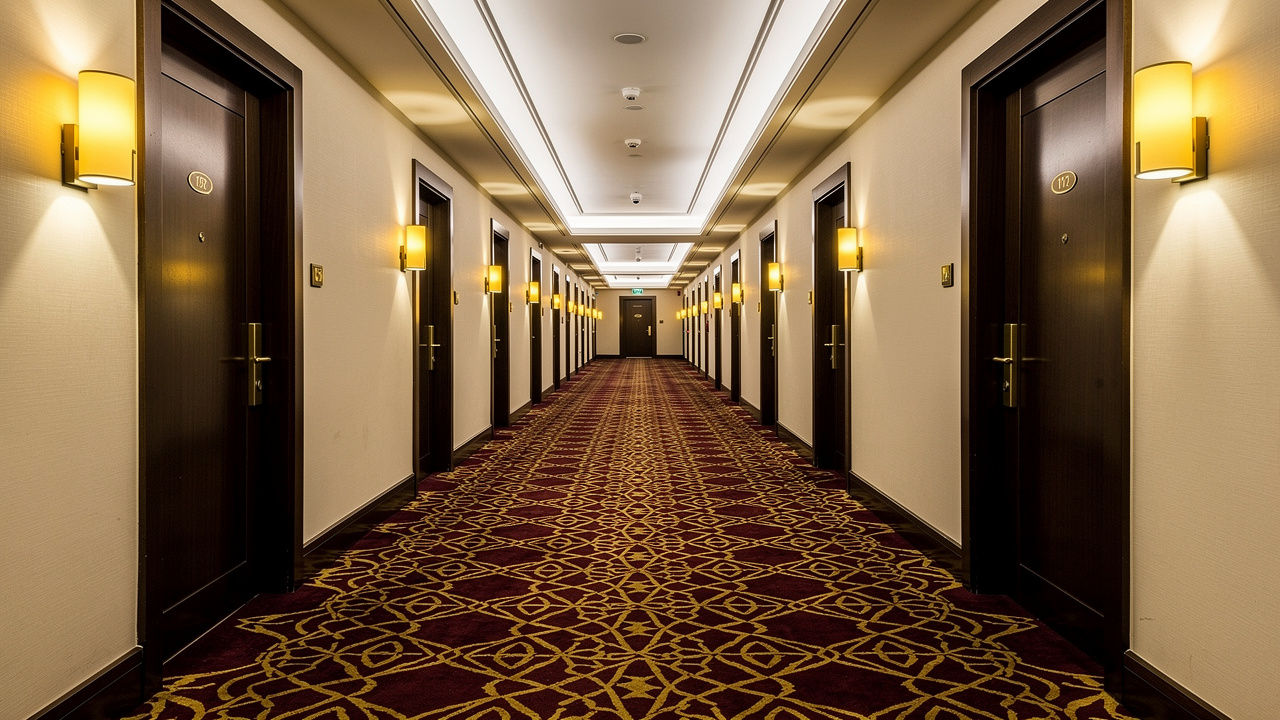
In UAE hospitality work, acoustic comfort links directly to guest reviews and brand standards, and a A Design Methodology Incorporating sound insulation prediction, LCA, and thermal insulation can guide consultants in selecting optimal wall assemblies for these environments. Corridors, guest rooms, back-of-house service zones, and entertainment areas all sit close together, so even small weak points stand out. A single noisy party wall or plant room can generate many complaints during peak seasons.
MLV is widely used between interconnecting guest room walls and around doors to adjoining rooms. Under corridor and room flooring, MLV underlay limits footfall noise reaching rooms on the slab below. Around mechanical rooms that hold air handling units or pumps, MLV inside wall and ceiling assemblies raises isolation so service noise stays hidden from suites and public areas. DE Sound often supports hotel consultants in matching MLV grades to brand acoustic targets on large properties.
Recording Studios, Podcast Studios, And Content Creation Spaces
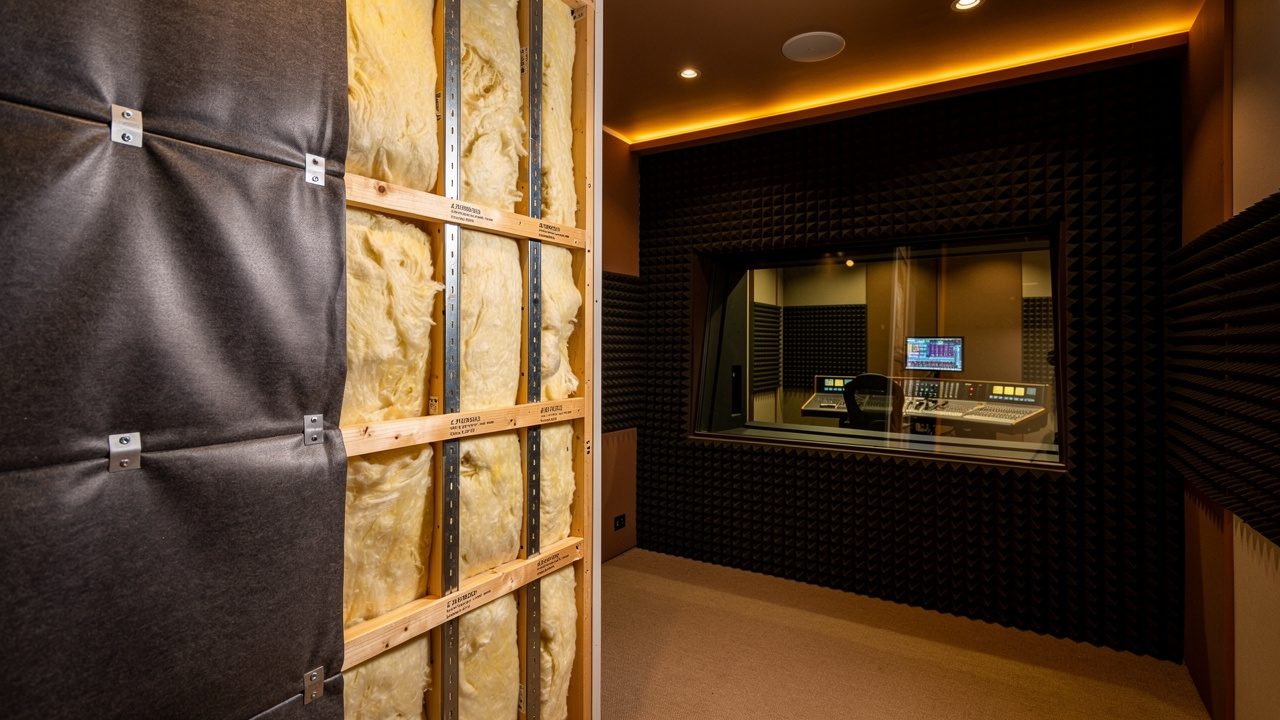
Media production in the Gulf has grown quickly, with more recording studios, podcast rooms, and streaming spaces across Dubai Media City and similar hubs. These spaces need very low noise floors so microphones only capture clean audio. Thin office partitions or glass alone cannot meet that need.
Here, MLV usually sits inside a room-within-a-room build, where inner walls and ceilings are structurally separate from the base building. The MLV layer runs between two layers of drywall, supported on resilient channels or clips, while cavities are filled with mineral wool. This type of assembly can reach STC values above 60, enough to block city traffic and neighboring rooms. For content creators converting existing offices, MLV also works as a retrofit inside new stud linings, improving isolation without heavy structural work.
Schools, Universities, And Healthcare Facilities
New schools and universities across the GCC aim for quiet classrooms where speech is clear at every desk. The World Health Organization recommends average background noise in classrooms below 35 dB so students can hear teachers without strain. High noise reduces comprehension and especially harms younger students and those with hearing challenges.
MLV inside classroom partitions and above ceilings helps stop noise spilling between rooms and corridors. Music rooms, auditoriums, and labs often receive heavier MLV assemblies to contain drums, instruments, and equipment. In hospitals and clinics, MLV in consultation room walls and around imaging suites protects speech privacy and reduces stress from equipment hum. Studies summarized by Harvard Medical School link hospital noise to poorer sleep and patient satisfaction, so strong isolation is a design priority.
“Noise is an underestimated threat that can cause a number of short and long term health problems.”
— World Health Organization, Environmental Noise Guidelines
Mechanical Rooms, HVAC Duct Wrapping, And Pipe Lagging
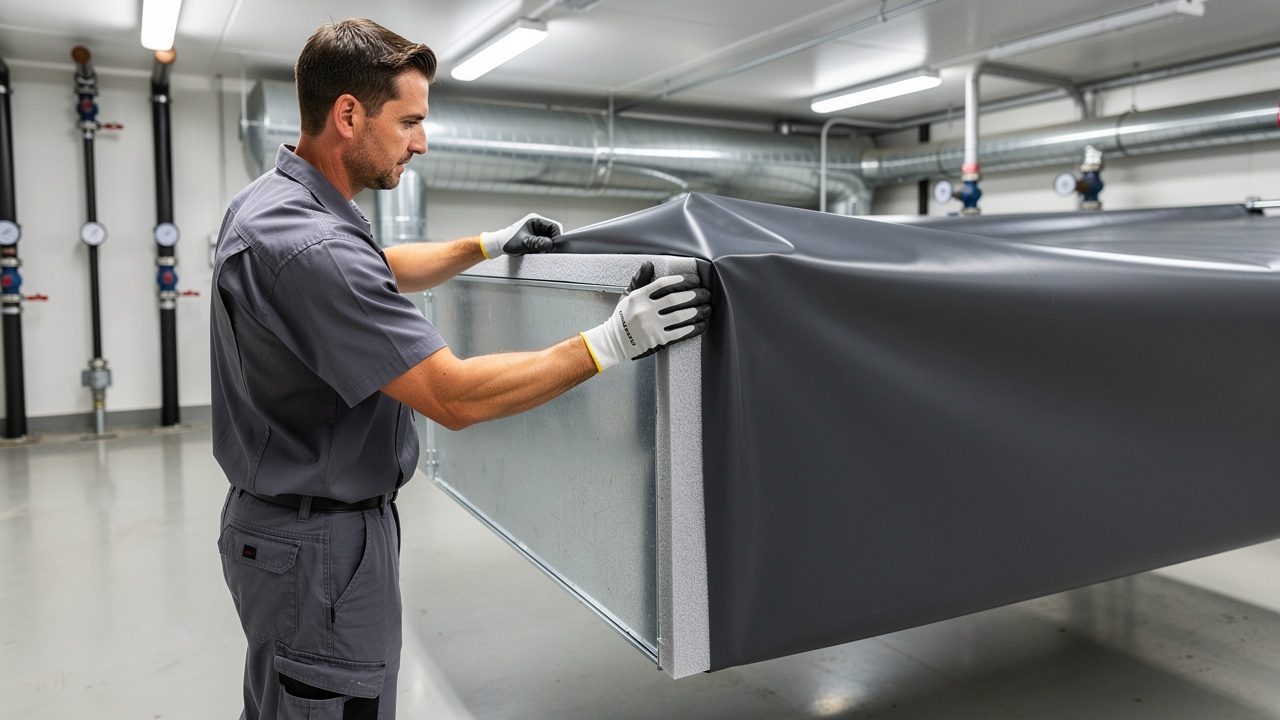
Mechanical plant and long duct runs are common sources of complaints in large malls, office towers, and industrial buildings from Dubai to Dammam. Fans, pumps, and chillers create low-frequency rumble that carries through concrete and steel into offices, hotel rooms, and apartments. Standard thermal insulation alone rarely solves this problem.
How To Select The Right MLV Grade For Your Project
Selecting the right mass loaded vinyl in commercial soundproofing means balancing weight, thickness, fire safety, and climate performance. The grade you choose affects both acoustic results and buildability, especially on large surfaces. Most commercial work in the GCC uses either 1 pound per square foot or 2 pound per square foot products, and innovations in materials science — including work on Improving Building Floor Acoustics with inorganic sound insulation coatings — continue to expand the options available to specifiers.
Here is a simple comparison.
| Grade | Thickness | STC Contribution | Best Use Case |
|---|---|---|---|
| 1 lb/sq. ft. | About 1/8 inch | STC mid 20s on its own | Office partitions, duct wrap, light wall upgrades |
| 2 lb/sq. ft. | About 1/4 inch | Better low-frequency control | Studios, plant rooms, floor underlays |
For many office and hospitality partitions, 1 pound MLV provides a good balance of performance and handling. Heavier 2 pound sheets give stronger low-frequency blocking that fits music rooms, studios, and noisy mechanical enclosures. The International Code Council lists STC 50 between dwelling units as a common target in model codes, so commercial partitions that approach or beat this figure are usually comfortable.
Installation Best Practices That Maximize MLV Performance
Good installation is just as important as product choice for mass loaded vinyl in commercial soundproofing. Even small gaps or rigid bridges can drop real-world isolation far below lab numbers. Contractors who follow a few simple rules get far more reliable results across offices, hotels, and schools.
Overlap and seal every seam carefully. Adjacent sheets should overlap by at least 25–50 millimeters, with acoustic sealant or MLV tape along the full joint. Perimeter edges around floors, ceilings, and columns also need continuous sealant. Even a narrow crack can act as a shortcut for sound and undo much of the barrier effect.
Keep MLV decoupled from rigid framing where possible. The best results come when MLV sits between two gypsum layers fixed on resilient channels or clips. If it must be fixed directly to studs or concrete, use as few fasteners as practical and seal each head. The goal is to avoid giving vibration a hard path through the assembly.
Maintain continuous coverage at penetrations. Electrical boxes, data outlets, and pipe sleeves are common weak spots in commercial fit outs. Cut MLV neatly around them, then seal the cut edges to the hardware with non-hardening acoustic caulk. Backer boxes or putty pads behind outlets can raise performance even more.

Follow correct floor underlay practice. For impact noise control, roll MLV flat over the slab without gaps, running edges slightly up the wall before installing screed or finishes — an approach supported by research on the Acoustic Absorption Behavior of multilayer assemblies, which highlights how layered configurations affect overall acoustic performance. After flooring is complete, trim the excess at the wall base so the barrier fully wraps the slab edge. This simple detail greatly reduces flanking between floors.
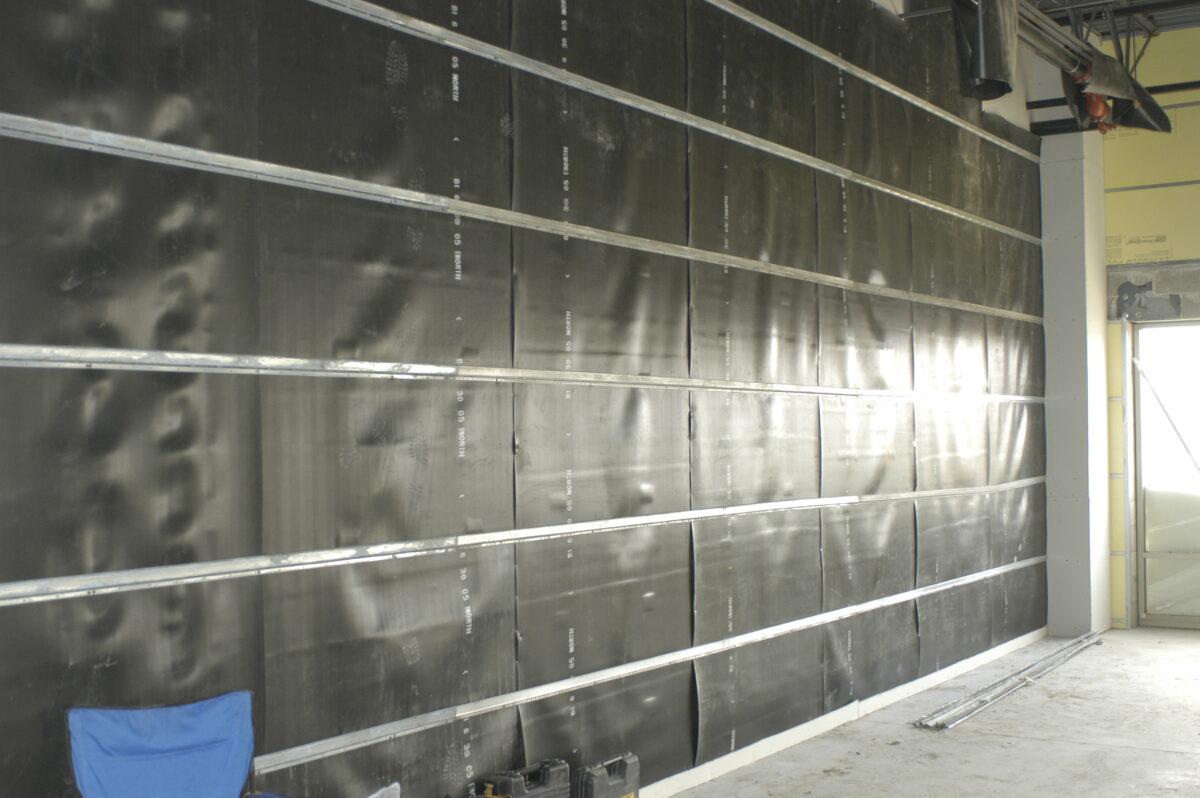
Studies from test labs such as Riverbank Acoustical Laboratories show that unsealed gaps can cut wall sound isolation by more than 10 dB, which listeners notice immediately. Working with a specialist supplier like DE Sound during design and pre-installation meetings helps site teams choose details that protect the investment in MLV.
Why Gulf Contractors And Designers Choose DE Sound For Commercial MLV Supply
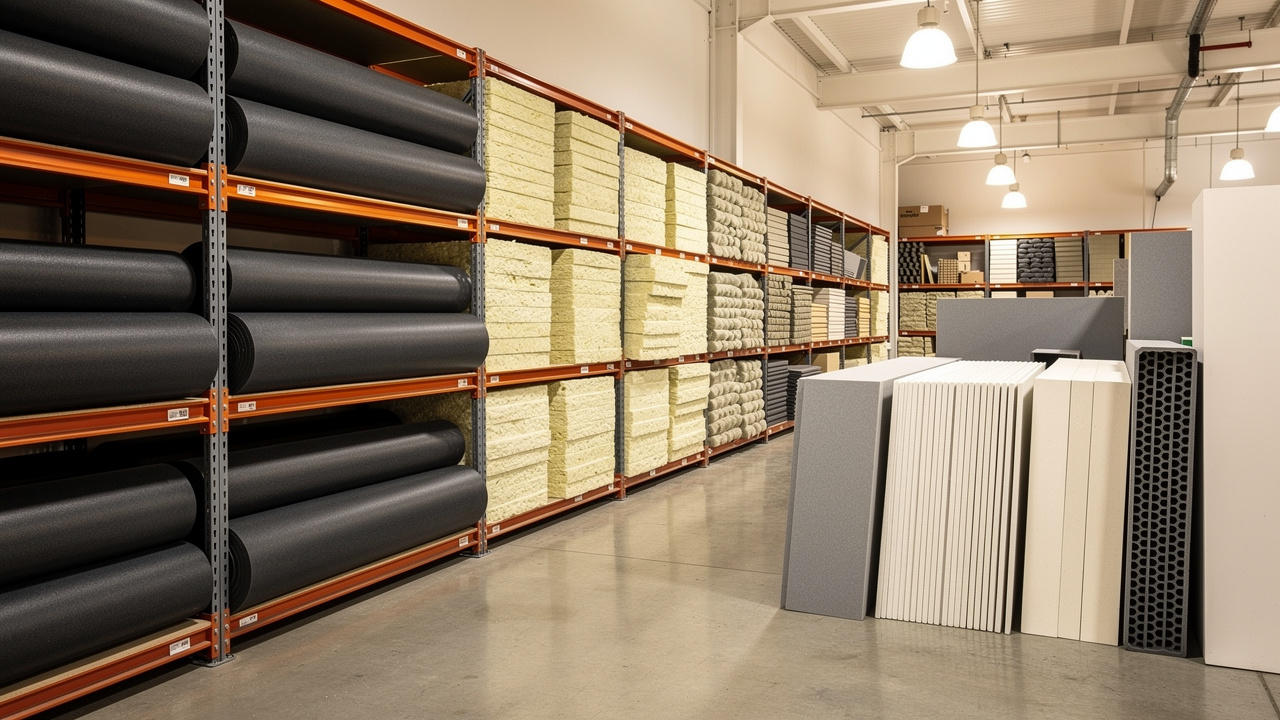
Gulf contractors, designers, and facility managers often need large volumes of mass loaded vinyl in commercial soundproofing on tight programs. DE Sound focuses on this need with wholesale supply, regional logistics, and practical technical support. That combination reduces risk compared with buying through general building merchants who treat acoustic materials as side items.
DE Sound sources MLV and related products directly from manufacturers, which supports factory-level pricing on bulk orders for hotels, corporate offices, schools, and studios. All acoustic materials come with test reports and certifications, so architects and procurement teams can document STC, fire performance, and VOC levels during submittals. Free consultations by DE Sound’s technical team help clients match MLV grades and accessories to real assemblies on projects from Dubai Marina to Riyadh and Doha.
Fast delivery across six GCC countries keeps programmes on track when ceilings need to close or finishes must start. Because DE Sound also supplies acoustic panels, foam, and damping compounds, specifiers can build full wall or floor systems from one supplier, confident that each layer has been tested together in similar configurations.
“Open plan offices consistently produce high levels of complaints about noise and lack of privacy.”
— Nielsen Norman Group, UX Research Firm
Wrapping Up
Mass loaded vinyl in commercial soundproofing gives Gulf projects a slim but heavy barrier that fits inside modern partitions, ceilings, floors, and ductwork. Offices, hotels, studios, schools, hospitals, and plant rooms all benefit when MLV is chosen and installed with care.
The right grade, correct fire and climate ratings, and good installation practice matter just as much as the roll itself. When those pieces line up, noise complaints drop and spaces feel calmer and more private. For design teams and contractors across the UAE and GCC, DE Sound is ready to help with expert advice, certified products, and wholesale supply on MLV orders of any scale.
Frequently Asked Questions
Question: What is the difference between 1 lb and 2 lb MLV for commercial projects?
Answer: One pound MLV suits standard office partitions, duct wrapping, and lighter wall upgrades, where moderate isolation is enough. Two pound MLV adds more low-frequency control for studios, plant rooms, and floor underlays. The heavier grade gives higher performance but adds extra material weight and cost that must be checked against structure and budget.
Question: Does MLV need to be combined with other acoustic materials?
Answer: Yes. MLV works best as part of a layered system. It blocks sound between rooms, while materials like mineral wool, acoustic foam, and damping compounds control echo and cavity resonance. Combining barrier and absorber layers usually delivers higher STC ratings and far better listening comfort than any single product on its own.
Question: Is MLV compliant with UAE fire safety regulations?
Answer: Fire-retardant MLV products are designed to meet ASTM E84 Class A or B flame spread ratings, which align with UAE Civil Defence requirements for many interior uses. Specifiers should always ask for FR certificates and test reports, then match these documents to local authority guidelines for the exact project type and location.
Question: How is MLV installed on HVAC ducts in commercial buildings?
Answer: Installers wrap MLV around the outside of rectangular or round ducts, often over a foam or fiberglass decoupling layer. Joints are overlapped and taped so there are no gaps in the barrier. The wrap is tied or banded securely so it stays tight over time, even in hot mechanical rooms or ceiling voids.
Question: Can DE Sound supply MLV for large-scale commercial projects across the GCC?
Answer: Yes. DE Sound supplies mass loaded vinyl in commercial soundproofing quantities for projects across the UAE, Saudi Arabia, Qatar, Kuwait, Bahrain, and Oman. The team supports design reviews, product selection, and installation details, then delivers bulk orders quickly so acoustic work can keep pace with overall construction and fit out schedules.