
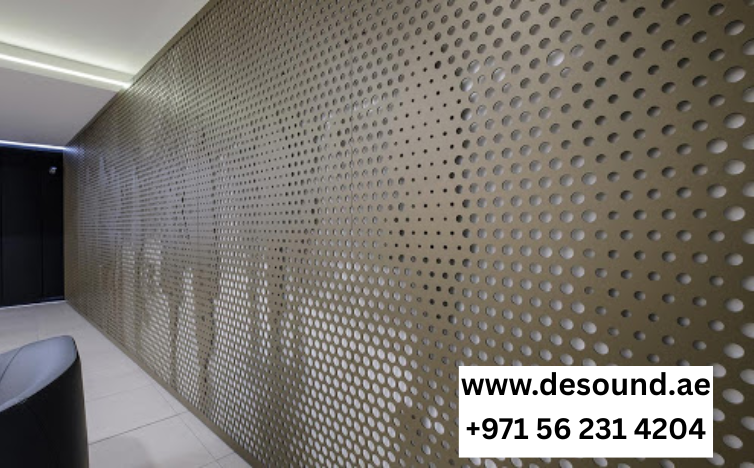
Designers working on interior sound control frequently look for accuracy, creative freedom, and speed. CNC cutting has become a preferred method because it supports all three. Whether the project involves corporate offices, studios, auditoriums, or home theaters, CNC technology offers unmatched precision for producing custom acoustic panel shapes. This article explains why designers choose CNC cutting, how it elevates project outcomes, and how providers like DeSound contribute to premium acoustic performance. The article’s title also reflects the growing importance of digital fabrication in the acoustic industry.
Precision That Traditional Cutting Cannot Match
One of the primary advantages of CNC cutting is unmatched precision. Modern acoustic designs require exact curves, angles, perforations, and geometrical patterns. Manual cutting cannot achieve this level of detail consistently.
CNC routers follow digital designs with millimetric accuracy, ensuring every acoustic panel is produced exactly as envisioned. This precision directly affects sound absorption, airflow movement, and overall noise-control performance. When designers work with DeSound for acoustic services, they gain access to equipment capable of delivering consistent accuracy at scale.
Greater Freedom for Complex Custom Shapes
Architects and interior designers often create signature spaces using unique shapes and patterns. CNC cutting enables these creative concepts without limitation. Whether the design includes 3D contours, rounded edges, slotted patterns, or layered geometries, CNC machinery executes these designs smoothly.
This capability ensures that even highly complex acoustic panel shapes—previously impossible or too expensive using manual methods—can now be produced efficiently. Designers appreciate the flexibility because it allows them to integrate both aesthetics and acoustic performance into a single element. The article’s title captures this shift toward advanced fabrication.
Efficiency and Fast Turnaround for Large Projects
For commercial layouts such as auditoriums, restaurants, schools, and corporate offices, quick delivery is essential. CNC cutting is significantly faster than manual fabrication, especially when producing large quantities of identical or mirrored acoustic elements.
The automated process ensures:
- High production speed
- Repeatable accuracy
- Lower chances of errors
- Predictable timelines
Designers choose CNC cutting because it supports project delivery without compromising quality. When working with acoustic service providers such as DeSound, the combination of CNC efficiency and professional installation streamlines the entire workflow.
Material Compatibility for a Wide Range of Acoustic Solutions
CNC routers work with several materials commonly used in acoustic treatments, such as:

- MDF boards
- Plywood
- PET acoustic panels
- Foam sheets
- Fabric-wrapped substrates
- Composite boards
This versatility makes CNC cutting suitable for everything from wall panels and ceiling rafts to acoustic baffles and diffusers. Designers appreciate the ability to select materials that match both performance requirements and aesthetic goals. It also allows acoustic providers like DeSound to create solutions that fit a variety of design themes, from minimalist interiors to bold architectural styles.
Superior Consistency for Large-Scale Installations
When an acoustic design includes repeating shapes—such as hexagon panels, wave patterns, slats, or perforated motifs—consistency becomes critical. Even minor deviations can disrupt the visual rhythm or reduce acoustic performance.
CNC cutting ensures that:
- Every panel is identical where needed
- Shapes align flawlessly during installation
- Edges remain clean and smooth
- Finishing requires less manual correction
This level of uniformity is one of the main reasons designers choose CNC fabrication for architectural acoustic applications.
Cost-Effective for Customization and Mass Production
Although CNC machines are advanced tools, they are also cost-efficient in both custom and bulk production. The reduced labor requirement, minimal material waste, and faster turnaround make CNC an economical option for designers and acoustic service companies.
Even highly customized shapes that would be costly to cut by hand can be produced at competitive prices. This balances design ambition with project budgets, making custom acoustic panels accessible for residential, commercial, and industrial environments.
Improved Aesthetic Integration in Modern Interiors
Today’s interior design trends combine acoustics with visual storytelling. CNC cutting allows acoustic panels to double as decorative elements—featuring engraved patterns, geometric cuts, and sculpted details that complement the overall interior.
This approach allows spaces to maintain their functional acoustic improvement without sacrificing style. With proper finishing and installation, the panels become part of the design identity, not just noise-control elements.
How DeSound Supports CNC-Based Acoustic Projects
Acoustic service providers such as DeSound use CNC cutting to deliver tailored solutions aligned with architectural expectations. From design development and digital modeling to cutting, finishing, and on-site installation, DeSound ensures a streamlined experience.
By combining acoustic expertise with CNC precision, the company helps designers achieve custom shapes that deliver superior sound performance and visual appeal. Whether the project involves decorative acoustic panels, CNC-cut ceiling features, or complex perforated structures, the process is built around reliability and exactness.
Call us: Contact DeSound Soundproofing Expert in Saudi Arabia For Soundproofing: +971 56 231 4204
Conclusion
Designers choose CNC cutting for custom acoustic panel shapes because it offers unparalleled precision, creative flexibility, speed, and consistency. The technology enables complex patterns, supports diverse materials, and aligns with modern interior aesthetics. With service providers like DeSound using advanced CNC fabrication, projects can achieve both acoustic excellence and architectural beauty. The article title reflects this ongoing industry preference and the shift toward digital manufacturing for premium sound solutions.