
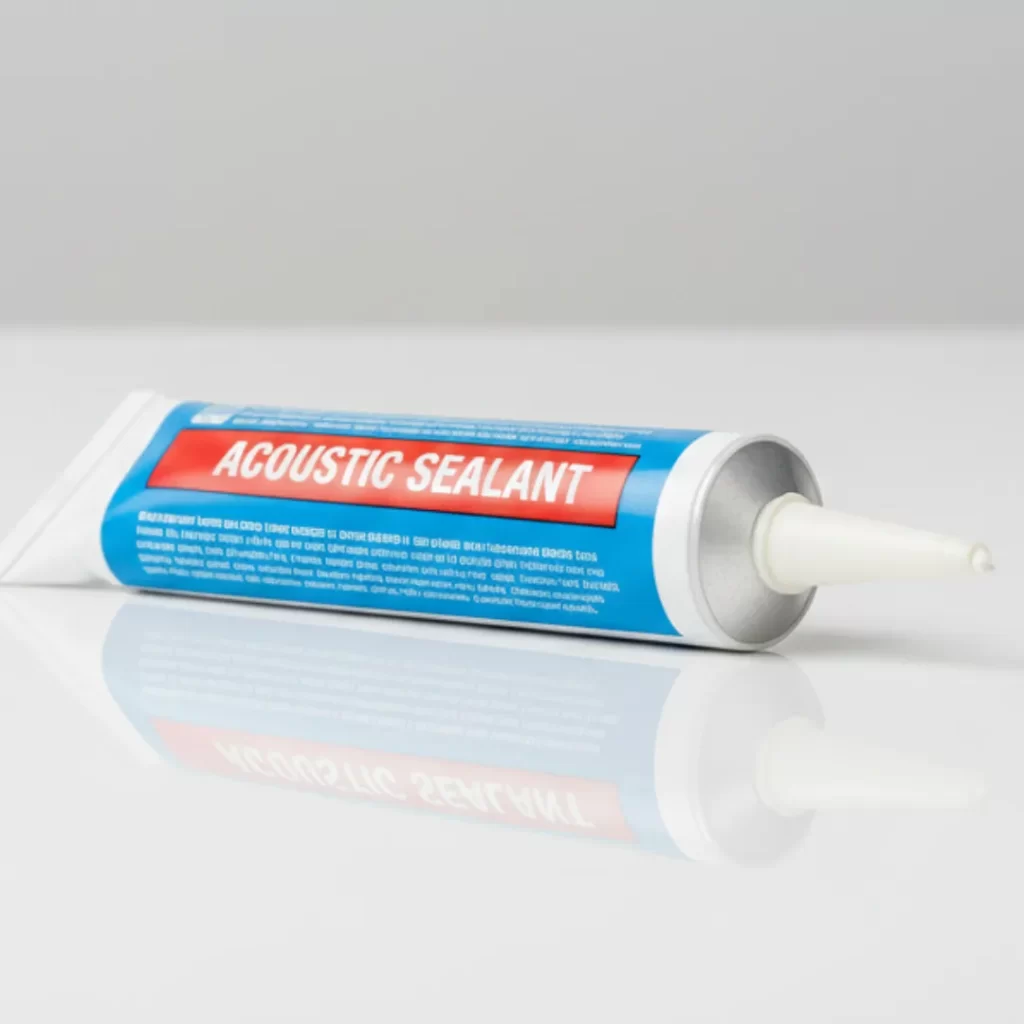
Acoustic Sealant
AED 14 per tube | In stock
Color: Off-white (paintable)
Type: Water-based, flexible acoustic caulk
Recommended Use: Walls, ceilings, floors, door frames, penetrations
Adhesion: Gypsum, concrete, metal, wood, PVC
VOC Level: Low VOC / Interior-safe
Acoustic Sealant is a specialized gap-filling material designed to stop sound leakage in walls, ceilings, and flooring systems. Any small opening can reduce the effectiveness of a soundproofing build, and this sealant closes those gaps permanently. It stays flexible after curing, ensuring joints remain sealed even as the building moves, helping you create a stronger acoustic barrier with better overall performance.
Whether you’re working on a home studio, office partition, classroom, apartment, or commercial fit-out, acoustic sealant is an essential component of a reliable soundproofing system.
What is Acoustic Sealant?
Acoustic Sealant is a flexible, sound-reducing caulk used to fill gaps, seams, and cracks in acoustic and drywall systems. It prevents noise from passing through openings around edges, corners, electrical boxes, pipes, and frames.
Once applied, it creates an airtight seal that boosts the STC rating of walls and ceilings. Because it remains elastic after drying, it prevents future cracking, shrinking, or separation, making it ideal for long-term acoustic stability.
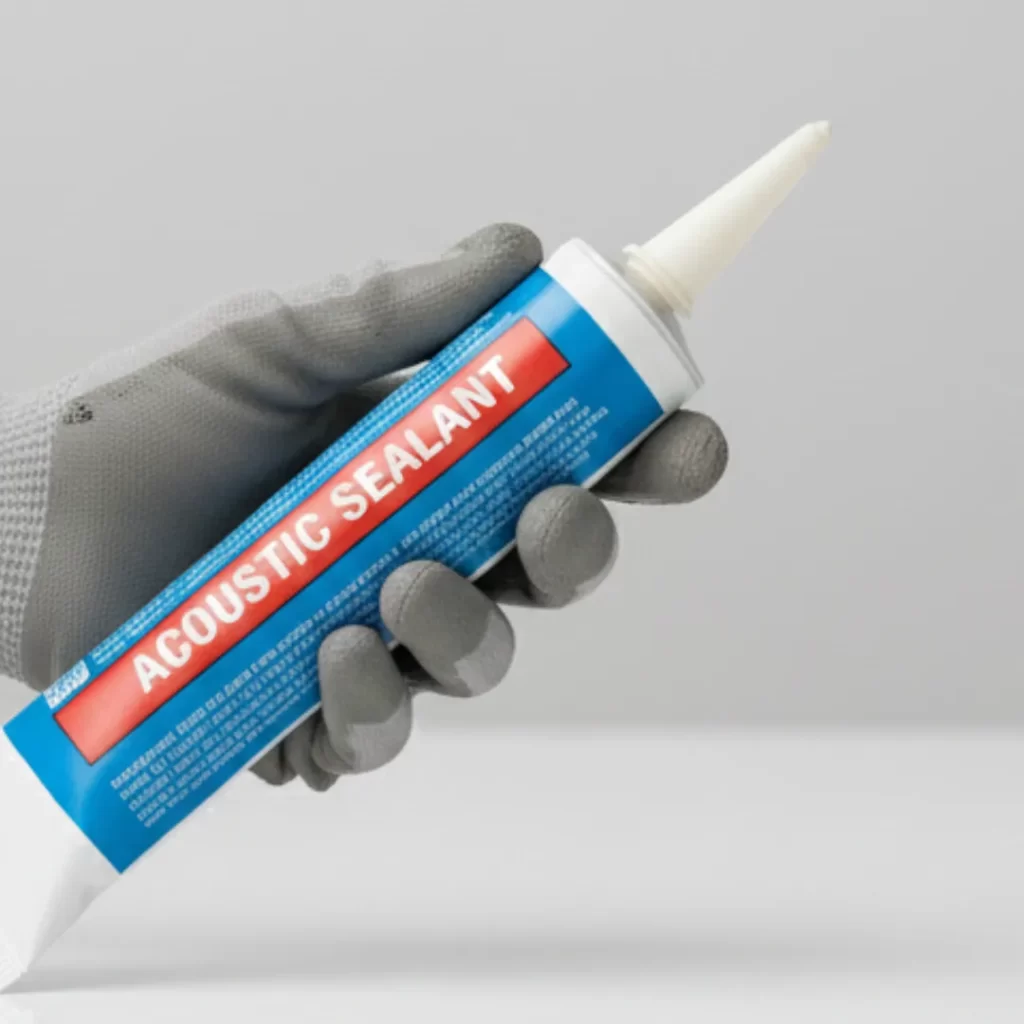
Key Features of Acoustic Sealant
Reduces Sound Leakage
Designed to seal openings that allow airborne sound to pass through, improving the overall sound insulation of the system.
Flexible After Curing
Maintains elasticity after drying, preventing cracks or separation caused by movement, humidity changes, or vibration.
Strong Adhesion
Bonds effectively to gypsum board, metal studs, concrete, timber, PVC conduits, acoustic boards, and insulation materials.
Paintable & Smooth Finish
Dries to a clean, smooth surface that can be painted to match surrounding walls and trims.
Low Odor, Low VOC
Safe for indoor environments such as schools, clinics, homes, and commercial spaces.
Easy Application
Applies with a standard caulking gun and cleans with water before curing, making site work fast and simple.
Why Choose Acoustic Sealant?
Acoustic sealant is one of the most important, yet often overlooked, elements in a soundproofing system. Even the best panels and insulation won’t work properly if gaps are left unsealed.
Benefits
Better Noise Isolation — eliminates sound leaks
Improved Privacy — ideal for offices, bedrooms, studios
Supports All Soundproofing Builds — drywall, acoustic boards, insulation
Long-Term Performance — stays flexible for years
Safe Indoors — low VOC, low odor formula
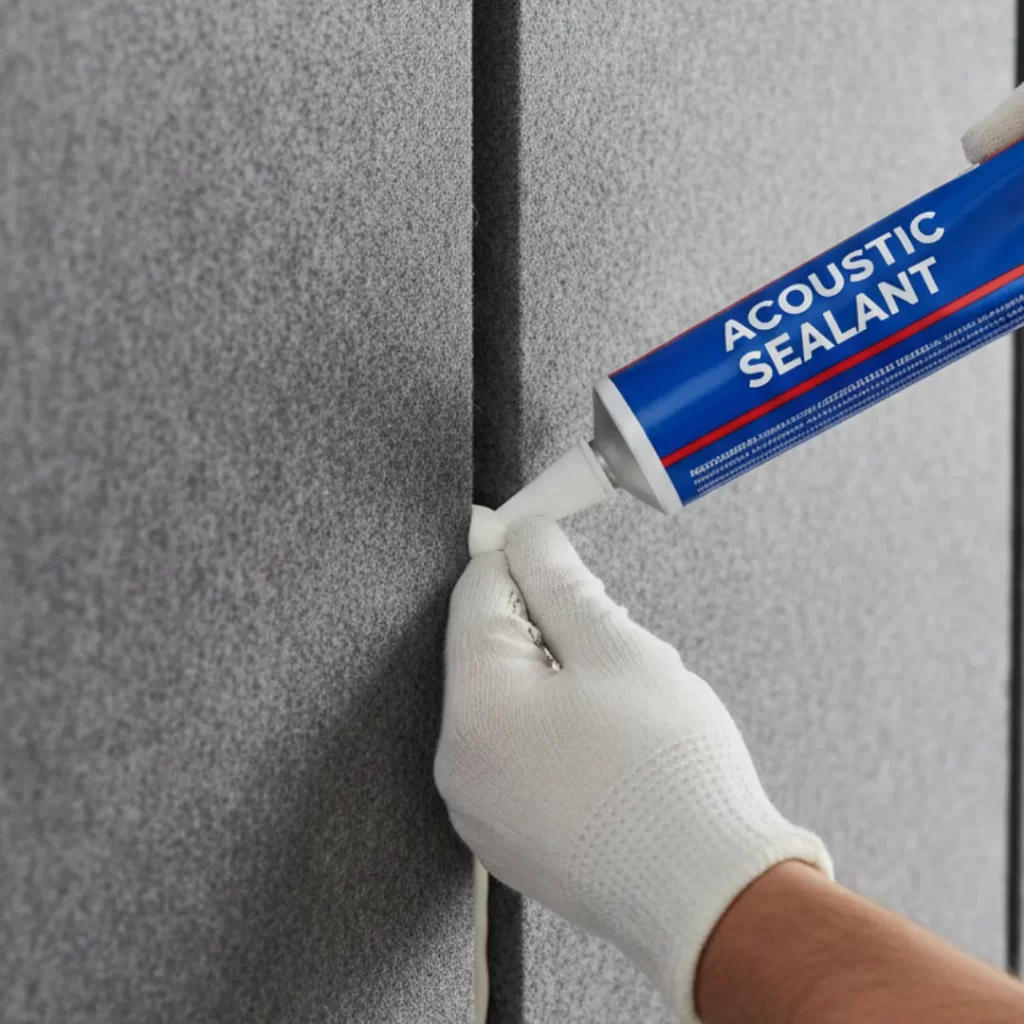
Applications of Acoustic Sealant
Commercial Spaces
Ideal for offices, meeting rooms, clinics, and co-working spaces where speech privacy matters.
Residential Areas
Reduces noise transfer between bedrooms, apartments, and living spaces.
Studios & Media Rooms
Essential for sealing perimeter gaps in recording rooms, mixing rooms, home theaters, and rehearsal spaces.
Educational Facilities
Creates quieter classrooms, libraries, training centers, and study areas by limiting sound transmission.
Installation Process
Our professional team applies acoustic sealant with precision to ensure maximum acoustic performance.
1. Surface Preparation
Gaps, corners, and joints are cleaned of dust and loose materials to ensure strong adhesion.
2. Sealant Application
We apply the sealant evenly along seams, perimeters, electrical boxes, pipe entries, and frame edges.
3. Smoothing & Shaping
The sealant is smoothed for a clean finish and optimal sealing performance.
4. Curing & Final Check
After settling, the sealant is inspected to confirm full coverage and air-tightness.
FAQ'S About Acoustic Pods
It seals gaps and joints in walls, ceilings, and floors to prevent sound leakage.
Yes. Most formulas are low-VOC and suitable for homes, offices, and schools.
Absolutely. It is commonly used around drywall edges, seams, and metal tracks.
High-quality acoustic sealant remains flexible and effective for many years.
Yes — sealing gaps significantly increases the STC rating of any assembly.
You can, but professional application ensures complete coverage and better results.