
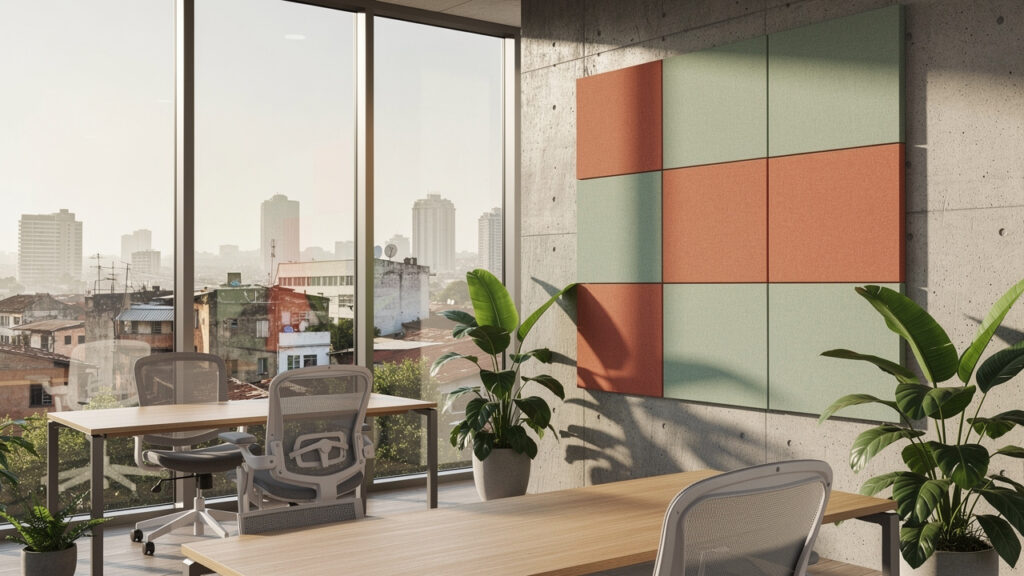
Noise, hard surfaces, and plastic waste now collide inside many African buildings. If you have ever walked into a new office or classroom and felt sound bounce around the room, you know the issue. Client comfort and ESG expectations still pull in different directions.
Traditional acoustic boards often rely on foam and fiberglass.
PET acoustic panels are rigid, sound‑absorbing boards made from recycled plastic bottles. They calm echo, cut office and classroom noise, and tick the same green boxes investors now track across Lagos, Nairobi, and Johannesburg. This guide explains what PET panels are, why they fit African interiors, where they work best, and how DE Sound supplies them at wholesale scale.
Read on to see how one material can reset acoustic and sustainability standards across African projects.
Key Takeaways
Short on time? These points show how PET acoustic panels support better, greener African interiors.
Panels reuse plastic bottles. They cut echo indoors, which suits rapid urban growth.
Factory-direct pricing keeps orders affordable. Large projects stay within budget, and certified lab tests back performance and safety.
DE Sound provides expert guidance. The team supports design, selection, and documentation. Reliable supply links Gulf stock to African project needs.
What Are PET Acoustic Panels and Why Do They Matter for African Interiors?
PET acoustic panels are rigid boards that absorb sound while turning recycled plastic into useful interior surfaces for African projects. They matter because they reduce echo, support green targets, and still respect design intent in offices, schools, hotels, and homes.
These panels use fibers made from polyethylene terephthalate (PET), the same polymer found in drink bottles. Under heat and pressure, the fibers compress into dense, self‑supporting boards without itchy glass fibers. Typical thickness ranges from 9 to 24 millimeters, with 12 millimeters common for offices and classrooms. The boards cut easily, mount on walls or ceilings, and come in a wide color range that matches modern palettes.
Africa’s cities now grow faster than those in any other region. According to the World Bank, the continent’s urban population could more than double by mid‑century. That means more offices in Lagos, more malls in Nairobi, and more housing blocks in Accra, often built with concrete, glass, and tiles that bounce sound around. PET acoustic panels give designers a simple way to calm that noise while reusing plastic that might otherwise reach landfills or waterways.
For developers under pressure from global investors, this single material can tick several boxes at once. It improves speech comfort, lines up with international green building frameworks, and avoids health concerns linked to some older acoustic products. DE Sound already supplies PET panels at scale across the Gulf, and that experience translates well to the needs of African interior projects.
How PET Panels Absorb Sound Without Foam or Fiberglass
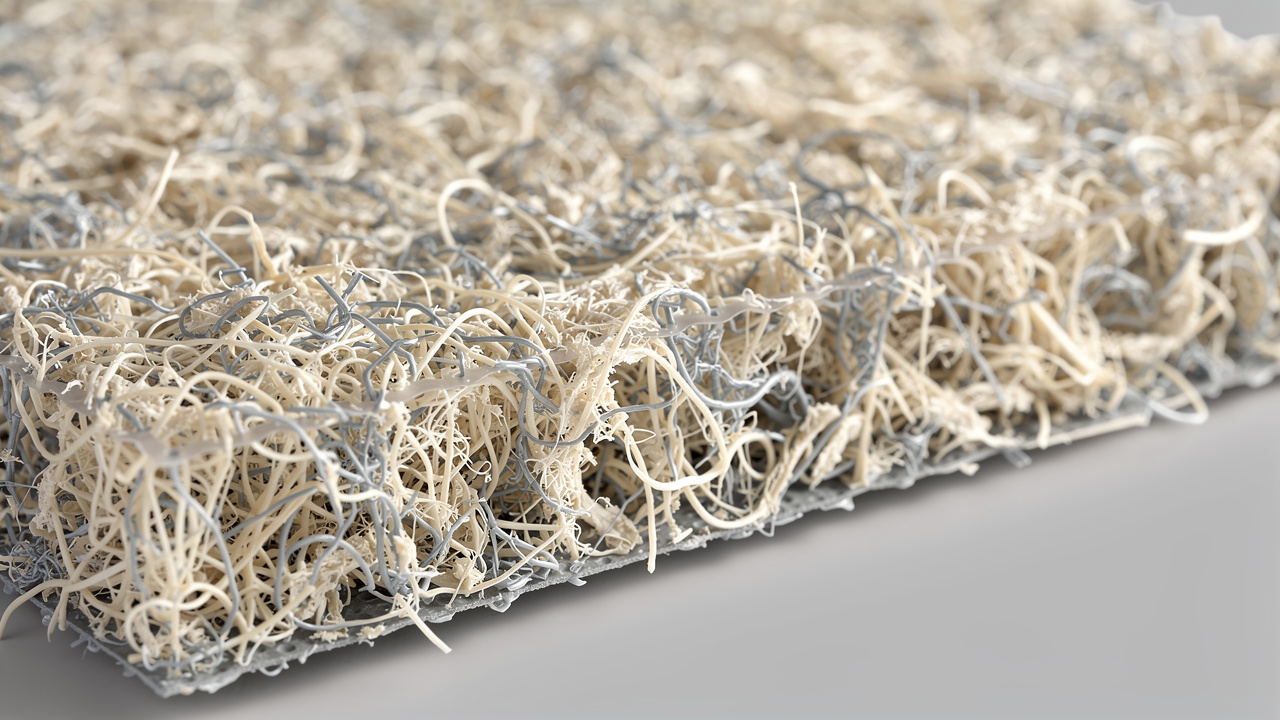
PET acoustic panels work by turning sound energy into a tiny amount of heat inside their fiber network. When sound waves hit the board, air moves through thousands of small gaps between fibers. Friction in those gaps slows the air movement and removes energy from the sound wave before it can bounce back into the room. Research from the Acoustical Society of America describes this process as classic porous absorption.
Standard 12 millimeter panels often reach Noise Reduction Coefficient (NRC) values between 0.70 and 0.85, meaning they absorb most mid‑range speech frequencies. Thicker 24 millimeter boards can reach 0.90 and above, which suits demanding listening rooms such as studios or high‑end home cinemas.
One point needs clear language. PET acoustic panels handle sound absorption inside a room, not sound isolation between rooms. For hotel bedrooms, cinemas, or medical consulting rooms, designers often pair PET panels with:
heavy gypsum layers on walls and ceilings
high‑performance acoustic doors
cavity insulation inside partitions
DE Sound’s team helps project groups combine these elements in a practical way.
The Sustainability Case – Why Recycled PET Panels Align With Africa’s Green Building Ambitions
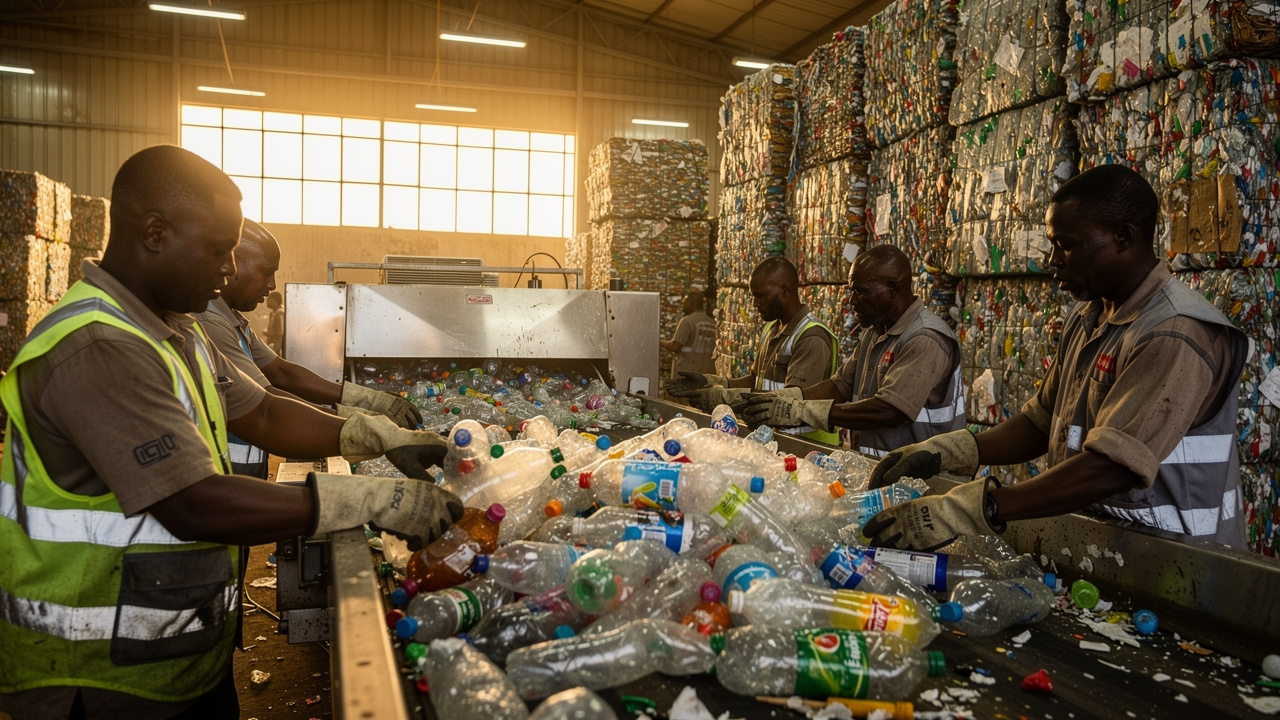
The sustainability case for PET acoustic panels rests on three pillars: recycled content, clean chemistry, and end‑of‑life recycling.
Recycled content: Each standard board can contain the plastic from dozens of bottles collected in sorting plants. Many products reach 60 to 100 percent recycled content, which speaks directly to green procurement rules now appearing from Kigali to Johannesburg.
Clean production and recycling: PET can be recycled again at the end of its service life, reducing pressure on landfills and informal dump sites.
According to the UN Environment Programme, buildings and construction account for over a third of energy‑related carbon emissions worldwide, and studies analyzing CO2 emissions by construction category confirm that material selection is one of the highest-leverage decisions a project team can make.
Because PET boards are formaldehyde‑free and low in volatile organic compounds (VOCs), they support healthy indoor air in offices and classrooms. This links neatly with rating systems such as LEED from the U.S. Green Building Council, EDGE from the International Finance Corporation, and Green Star Africa led by the Green Building Council South Africa. The World Green Building Council reports that green buildings can cut energy use and carbon emissions by up to 50 percent across a project’s life, and high‑performance materials like PET help teams reach those numbers.
“Sustainable building materials have historically been cost‑prohibitive in developing markets. DE Sound’s factory‑direct wholesale model removes unnecessary markups, making PET panels financially accessible for large‑scale African interior projects.” — DE Sound pricing and procurement team
Compared with many foam products, PET panels keep their color, shape, and acoustic performance for years. Foam often yellows, crumbles, and can release chemicals into the air. Fiberglass boards absorb sound well but release irritating particles during cutting and require masks and full protective clothing. PET boards avoid these issues, which matters for installers and daily users in schools, clinics, and call centers, and they can be cleaned with simple vacuuming or a damp cloth.
Africa also spans many climates, from humid coastal cities like Dar es Salaam to hot, dry centers like Khartoum, and a harmonized dataset of embodied lifecycle assessment results for buildings in North America illustrates how climate-appropriate material choices reduce long-term environmental burden. PET acoustic panels resist moisture and do not support mold, so they suit both conditions. That stability supports long service life and reduces replacement cycles, which lowers embodied carbon over time and strengthens ESG reports for owners and investors.
“Buildings are responsible for a large share of global emissions, so better materials are essential for climate goals.” — UN Environment Programme, Global Status Report For Buildings And Construction
Where PET Acoustic Panels Deliver the Most Impact Across African Projects

PET acoustic panels deliver the strongest impact where hard surfaces and human voices meet, which describes many new African interiors. Offices, hotels, classrooms, and clinics often share one problem: high reverberation that makes speech blur together. PET boards absorb that excess energy so people hear more and shout less.
In open‑plan offices from Sandton in Johannesburg to Victoria Island in Lagos, constant calls and online meetings raise stress. Studies gathered by the Leesman Index show that noise ranks among the top complaints in offices worldwide. Mounting PET acoustic panels on key walls and as ceiling baffles shortens reverberation time and improves speech clarity. Staff feel less drained, and teams handle hybrid meetings with fewer audio issues.
“Start by treating the surfaces people face or speak toward before covering every wall. Well‑placed panels often improve clarity more than full‑room coverage.” — DE Sound acoustic design tip
Here is a quick reference for common sectors.
| Sector | Key Acoustic Challenge | PET Panel Application |
|---|---|---|
| Corporate Offices | Open-plan speech noise and phone calls | Wall panels and ceiling baffles over work zones |
| Hotels And Hospitality | Reverberation in lobbies and dining areas | Colorful feature walls and floating ceiling clouds |
| Schools And Universities | Classroom clarity for second-language learners | Rear and side wall panels near listening height |
| Healthcare And Wellness | Privacy and stress in waiting areas and wards | Cleanable wall panels in corridors and treatment rooms |
For education, clear speech makes an even bigger difference. The World Health Organization recommends classroom background noise below 35 decibels, a level many bare rooms fail to reach. PET acoustic panels on side and rear walls help teachers reach learners at the back, including students who study in English or French as a second language in cities like Dakar or Kinshasa.
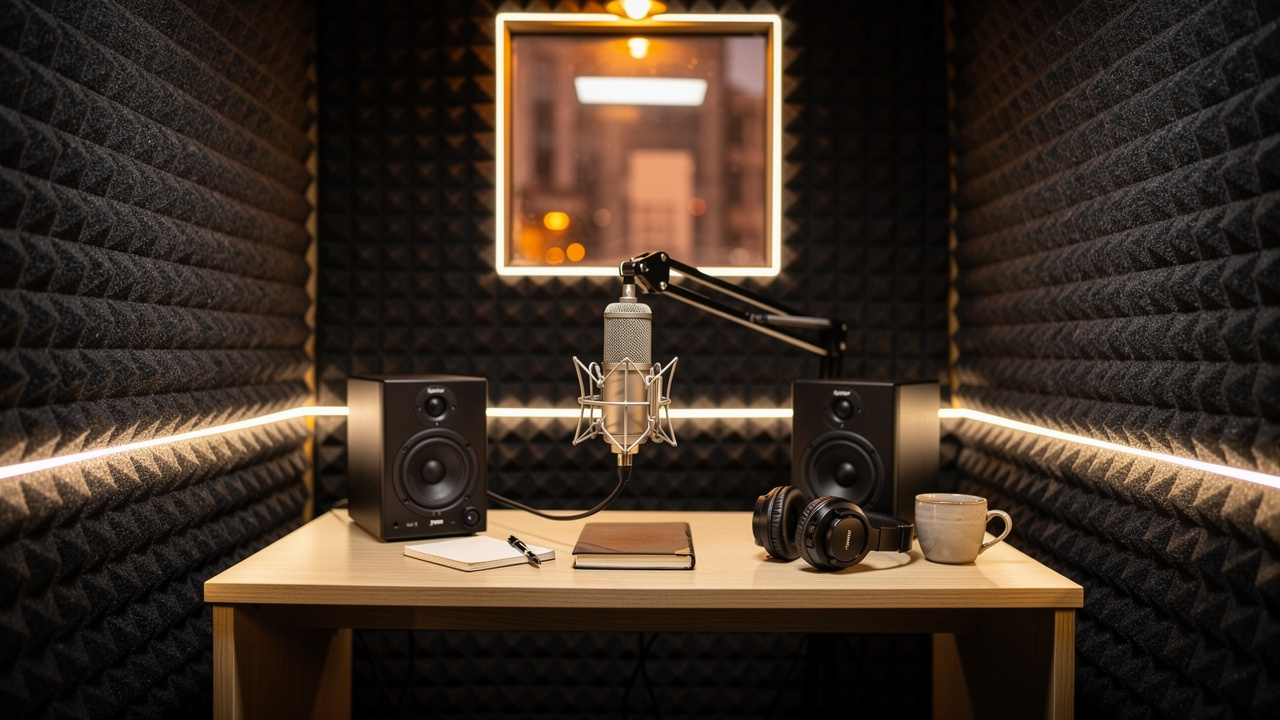
Africa’s growing creator economy also benefits. Podcast studios in Nairobi, radio booths in Accra, and small video rooms for fintech firms in Cairo all need tight, even acoustics. Thicker PET boards around 24 millimeters, combined with bass traps, help content sound clean on Spotify and YouTube. DE Sound already supports similar studios in Dubai Media City and can apply the same product mix to African media hubs.
How DE Sound Makes PET Acoustic Panels Accessible for Large-Scale African Projects

DE Sound makes PET acoustic panels practical for African projects by pairing factory‑direct pricing with strong technical support and proven logistics. The company acts as a wholesale acoustic supplier across the Gulf region, with a model that translates well to African interiors aiming for greener standards.
According to the International Finance Corporation, green buildings can cut energy use by 20 to 30 percent compared with standard buildings, which means material upgrades often pay back over time. The challenge in many African markets is the upfront cost. Here is where DE Sound’s approach matters.
Factory‑direct PET panel supply keeps prices lean. By working closely with manufacturers, DE Sound cuts out several layers of markups. That helps contractors in price‑sensitive markets deliver recycled acoustic materials without blowing through fit‑out budgets. It also supports developers who want LEED or EDGE credits but still track every dollar.
Technical guidance removes guesswork for specifiers. DE Sound shares datasheets, NRC curves, and fire certificates that facility managers in Nairobi or Abuja can show to regulators and insurers. The team compares PET panels with wood wool and stretch fabric systems so architects can match each room to the right acoustic option instead of guessing. This level of support suits both senior designers and first‑time fit‑out contractors.
Logistics and training support long‑distance projects. DE Sound already ships acoustic materials quickly across six GCC countries, including the United Arab Emirates and Saudi Arabia. That experience with customs, packing, and stock planning strengthens regional exports into ports like Mombasa and Tema. The company also runs product briefings that help local installers cut, place, and fix PET acoustic panels correctly the first time.
By combining these strengths, DE Sound moves PET acoustic panels from a niche green choice into a realistic everyday material for African corporate towers, hotels, schools, and clinics.
The Future of Sustainable Interiors in Africa Starts With the Right Specification
The future of sustainable African interiors rests on smart material choices, and PET acoustic panels tick several key boxes in one step. They calm noisy rooms, reuse plastic waste, support major rating systems, and give designers flexible colors and shapes.
For owners and asset managers, that mix builds comfort for users while strengthening ESG stories for lenders and investors. DE Sound stands ready to supply certified PET panels at wholesale prices, backed by design advice and logistics experience from across the Gulf. To explore pricing, samples, or layout ideas, project teams can reach out and start with a simple conversation.
Frequently Asked Questions
This section answers common questions about PET acoustic panels so project teams can act with more confidence. Each reply stands on its own, so feel free to skim to the point that fits your current task.
Question 1: Are PET Acoustic Panels Safe For Use In Schools And Healthcare Facilities?
Yes, PET acoustic panels are safe for schools and healthcare facilities when they come from certified sources. They are:
Formaldehyde‑free
Low in VOCs
Free from itchy, loose fibers
High‑quality boards carry Class A fire ratings that align with international codes. DE Sound supplies tested panels with the documentation needed for institutional approvals.
Question 2: What Is The Difference Between PET Acoustic Panels And Foam Panels?
PET acoustic panels differ from common foam in three important ways:
Durability: PET panels keep their shape, color, and acoustic performance for many years, while many foams yellow and crumble.
Indoor air quality: Foam can release chemicals into the air, but PET boards are chemically stable and easier to clean.
Sustainability and design: PET offers high recycled content and stronger color choices, which helps designers integrate acoustics into visible finishes.
Question 3: Can PET Acoustic Panels Contribute To Green Building Certifications?
Yes, PET acoustic panels can support green building targets when specified correctly. Their recycled content and low emissions help with Materials and Resources and Indoor Environmental Quality credits under LEED from the U.S. Green Building Council. They also align with EDGE and Green Star Africa schemes. DE Sound can provide Environmental Product Declarations or recycled content letters for submission packs.
Question 4: How Do I Determine How Many PET Acoustic Panels My Project Needs?
A simple rule is to treat roughly 25 to 40 percent of the combined wall and ceiling area. Typical targets are:
Offices: reverberation times below 0.6 seconds
Classrooms: around 0.4 to 0.6 seconds
DE Sound offers free consultation to map panel coverage and placement to your actual room sizes and finishes.
Question 5: Does DE Sound Supply PET Acoustic Panels For Projects Outside The Gulf Region?
Yes, DE Sound currently serves six GCC countries with fast delivery and is open to wider regional partnerships. Its established supply chain and warehouse network form a solid base for African sourcing agreements. Project teams across the continent can contact DE Sound to discuss volumes, lead times, and shipping options for PET acoustic panels.