

Modern gyms are high-energy environments, but they also rank among the most acoustically challenging commercial spaces. Hard surfaces, heavy equipment, loud music, and simultaneous activities often create excessive noise and reverberation. This not only affects member experience but can also compromise communication, safety, and overall operational efficiency. In this article, we explore common acoustic challenges in gyms and how professional treatment strategies solve them. The title of this topic reflects a problem every fitness operator faces and a solution that can transform both functionality and brand perception.
As a leading provider of acoustic services, Desound offers solutions tailored specifically for gyms and fitness environments. Their services, available at https://desound.ae/services/, help facility owners achieve effective sound control without compromising aesthetics or performance.
The Unique Acoustic Profile of Gyms
Gyms differ from typical commercial interiors because of their high-impact activities and architectural choices. Most fitness centers use concrete floors, glass walls, metal equipment, and open layouts. While these materials are durable and visually appealing, they create poor acoustic conditions by amplifying and reflecting sound.
When sound waves bounce repeatedly across flat surfaces, reverberation time increases. This leads to blurred speech, elevated background noise, and an overall chaotic environment. Members may struggle to hear instructions, staff may find communication difficult, and the constant echo can cause discomfort or fatigue. Professional acoustic solutions are essential to address these problems effectively.
Impact of Excessive Noise on Member Experience
A fitness facility’s success is heavily influenced by customer satisfaction. Noise plays a critical role in shaping this experience. Excessive sound levels can:
- Reduce concentration during workouts
- Increase stress and sensory overload
- Make group classes feel disorganized
- Disrupt personal training sessions
- Create negative first impressions for new visitors
In high-intensity areas like weightlifting zones, the clanging of metal plates and dropping of dumbbells can peak above safe decibel levels. Without acoustic control, these sounds travel across the facility, disturbing other training zones such as yoga, cycling, rehabilitation, or stretching areas.
Members expect a motivating, energetic environment—not one that feels noisy or uncomfortable. Implementing the right acoustic strategy directly enhances retention and overall user satisfaction.
Safety and Staff Efficiency Concerns
Beyond comfort, noise in gyms can affect safety and operations. Staff members must be able to communicate instructions, respond to emergencies, and supervise multiple areas simultaneously. In loud conditions, instructions can be misheard or ignored, increasing the risk of accidents.
From a managerial standpoint, sound clarity also matters for smooth front-desk operations, sales conversations, and customer support. Acoustic treatment helps maintain a professional atmosphere that supports efficient interactions.
Professional Acoustic Treatments That Solve Gym Noise Issues
Professional acoustic treatments address root-level problems rather than masking the noise. They reduce reverberation, improve speech intelligibility, and create balanced sound distribution throughout the facility. Solutions typically include:
1. Acoustic Wall Panels
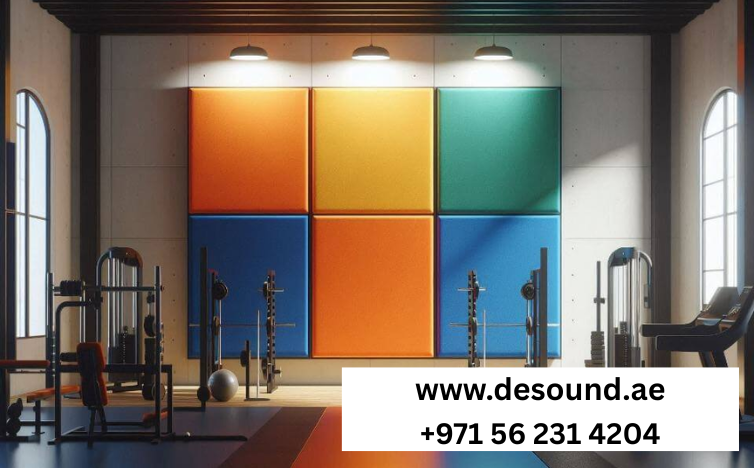
Acoustic wall panels are essential for absorbing mid- and high-frequency sounds generated by voices, music, and equipment. These panels come in various finishes and colors, allowing gyms to match their branding without compromising sound performance. Strategic placement helps break up sound reflections and reduce overall reverberation.
2. Ceiling Baffles and Clouds
Ceiling treatments are highly effective for open-plan gyms with high ceilings. Hanging baffles or clouds capture sound energy before it disperses throughout the space. This is especially useful in group classes and cardio zones where multiple audio sources occur simultaneously.
3. Rubber and Acoustic Flooring Systems
Flooring plays a major role in impact noise control. Rubber flooring, acoustic underlayment, and vibration-isolating mats prevent structure-borne noise caused by dropping weights, running machines, or high-intensity training. This also protects the building structure and reduces noise transmission to neighboring units.
4. Acoustic Enclosures for High-Noise Zones
Certain zones—such as weightlifting areas or spinning studios—may require dedicated noise-controlled enclosures. These reduce sound bleed into quieter areas and ensure specialized classes maintain their acoustic identity.
5. HVAC and Mechanical Noise Control
Gyms often contain heavy HVAC systems to maintain airflow and temperature. Acoustic linings, duct silencers, and vibration isolators help minimize low-frequency noise generated by mechanical equipment.
Why Work with Desound for Gym Acoustic Treatment
Desound specializes in designing and implementing acoustic solutions that comply with performance, visual, and safety requirements for commercial gyms. Their services include complete assessments, custom treatment planning, and professional installation. With deep experience across the UAE market, Desound ensures optimal results that enhance member experience, protect staff, and elevate the facility’s brand value.
Call us: Contact DeSound Soundproofing Expert in Dubai For Soundproofing: +971 56 231 4204
Conclusion
Noise control is no longer optional for modern gyms—it is a core component of operational excellence, customer satisfaction, and long-term facility performance. By addressing the distinct acoustic challenges found in fitness environments, gym owners can create safer, more enjoyable, and more productive spaces. Professional treatments, particularly those provided by Desound, deliver the precision and effectiveness required to transform noisy gyms into acoustically balanced environments.