
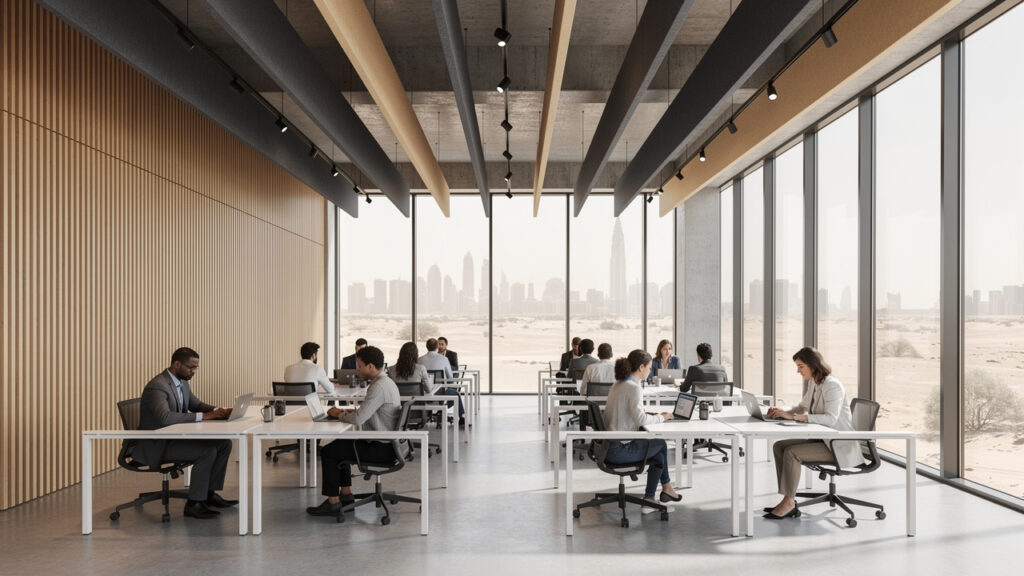
Open offices across the GCC look impressive, but constant noise slowly erodes focus and privacy. Hard glass, concrete, and tiles bounce every phone call, keyboard tap, and side chat around the floor. A full day of that background buzz turns simple tasks into mental marathons.
Acoustic panels solve this by absorbing sound inside the room so it stops bouncing between hard surfaces. Rather than blocking sound between rooms, they cut echo and reverberation right where people sit, turning visually impressive spaces into places where people can hear, think, and collaborate.
This article explains what acoustic panels are, why Gulf offices struggle with acoustics, and how better sound control links to productivity and wellness. You will see which panel types suit commercial floors, what procurement teams should check before ordering, and how DE Sound supports office acoustic treatment at scale across the GCC.
The aim is simple: make impressive offices more productive through better sound control, not more rules about staying quiet.
Key Takeaways
Modern GCC offices face a specific acoustic challenge that standard design guidelines rarely fix. The points below give a quick view of what matters before you plan your next fit out.
Hard finishes amplify noise. GCC open offices often combine glass partitions, exposed ceilings, and hard flooring. This mix reflects sound so staff hear nearby conversations clearly even when they are not involved. Over time, this constant noise reduces focus and creates fatigue.
Acoustic panels calm rooms without adding walls. They absorb sound, cut echo from hard surfaces, and shorten reverberation time. That means fewer repeated questions in meetings and clearer calls in shared spaces, without building new rooms.
Better office acoustics support productivity and well-being. Research from Leesman shows that noise is one of the top complaints in open offices. When noise is controlled, employees report higher satisfaction and better ability to focus, which links directly to performance and staff retention.
Different zones need different panel types. Office projects in Dubai, Riyadh, and Doha use wall panels, PET panels, wood slat systems, and ceiling baffles in different areas. The best schemes combine several types so reception areas, focus rooms, and collaboration zones all sound right.
The right supplier matters for large GCC projects. Design teams need tested performance data, fire certificates, and help sizing coverage. Wholesale partners like DE Sound add value by pairing certified materials with expert guidance and reliable delivery across all six GCC countries.
What Are Acoustic Panels and Why Do GCC Offices Need Them?

Acoustic panels are sound-absorbing elements that cut echo and noise reflections inside a room. Made from fibrous or porous materials, they turn sound energy into heat instead of bouncing it back into the workspace.
These panels are different from soundproofing, which aims to stop sound passing through walls or slabs. Most office issues come from internal reverberation, not noise leaking from outside rooms. For that reason, acoustic panels are usually the first step for open offices, meeting rooms, and call areas.
Panel performance is described with the Noise Reduction Coefficient (NRC). An NRC of 0 means full reflection, while 1 means near total absorption. Office products often sit between 0.65 and 0.95. Research on Table 3 Reverberation time calculations across surface materials confirms that offices work well when reverberation time stays around half a second, which high‑NRC panels help achieve.
GCC offices are especially prone to poor acoustics. Large floor plates in Dubai, Riyadh, and Doha often use exposed concrete slabs, glass partitions, and ceramic tiles, all highly reflective — a challenge well documented in Measurement and Prediction of airborne sound insulation performance studies for vertical partition walls in indoor environments. Once open seating and frequent online meetings are added, noise builds quickly and spreads across long distances.
Without acoustic treatment, every conversation travels across the floor. Staff raise their voices to be heard on video calls, which increases overall background noise even more. Acoustic panels interrupt this chain by absorbing sound at wall and ceiling level so it cannot keep bouncing across the office.
How Acoustic Panels Boost Productivity and Well-Being in the Workplace

Acoustic panels support productivity and well-being by lowering unwanted noise and making speech clearer. When people can hear properly without straining, they work faster and feel less drained. That matters for both performance and health.
Workplace research from Leesman shows that noise levels and sound privacy sit among the main factors dragging down employee satisfaction. Studies reviewed by the World Health Organization link long-term exposure to unwanted sound with higher stress and fatigue. In busy GCC offices, that effect can build up across long days and long weeks.
“Excessive noise seriously harms human health and interferes with people’s daily activities.” — World Health Organization
By absorbing reflections from hard surfaces, acoustic panels lower ambient sound by several decibels in treated rooms. That change may look small on paper, yet it greatly improves how the space feels. Staff repeat themselves less often, and phone or video calls feel calmer, even in shared spaces.
Better sound control also supports new working models. Many companies across the UAE and wider GCC now use hybrid and activity-based layouts. These depend on clear zoning between focus areas, team spaces, and social hubs. With the right mix of wall panels and ceiling baffles — informed by a Review of Modelling and prediction methods for flanking transmissions — each zone can have its own acoustic character while staying part of the same open floor.
Panels also help workplace wellness plans. Fewer noise distractions reduce mental load, especially for tasks that demand concentration. Research published by Harvard Business Review notes that constant interruptions and noise can cut productive time for knowledge workers by large margins. A modest investment in acoustic treatment often pays back quickly through fewer errors and higher quality work.
Which Types of Acoustic Panels Work Best in Commercial Office Spaces?
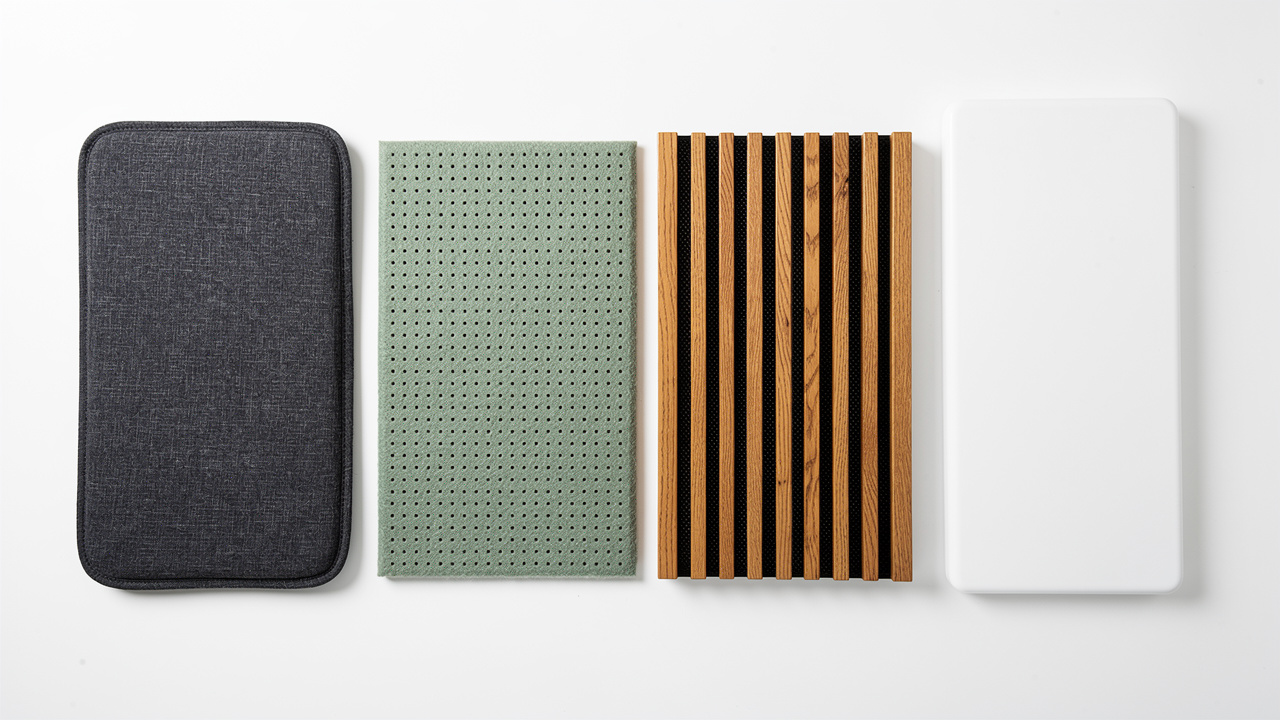
The best acoustic panels for GCC offices are those that match the role of each zone while still fitting the design. Different areas need different types, so most projects use a mix of formats and materials.
Standard acoustic wall panels form the core of many schemes. These flat panels sit at ear height along open work areas and corridors, absorbing reflections from conversations and phone calls. In meeting rooms, they help everyone hear the same message, even at the back of the room.
PET acoustic panels made from recycled polyester suit offices that target LEED or WELL certification. They are light, impact resistant, and available in many colors and shapes. Research into Multifunctional performance assessment of waste-based bioplastic wall panels confirms strong acoustic, thermal, and structural results for interior applications, reinforcing why recycled-content products are increasingly specified by Gulf developers.
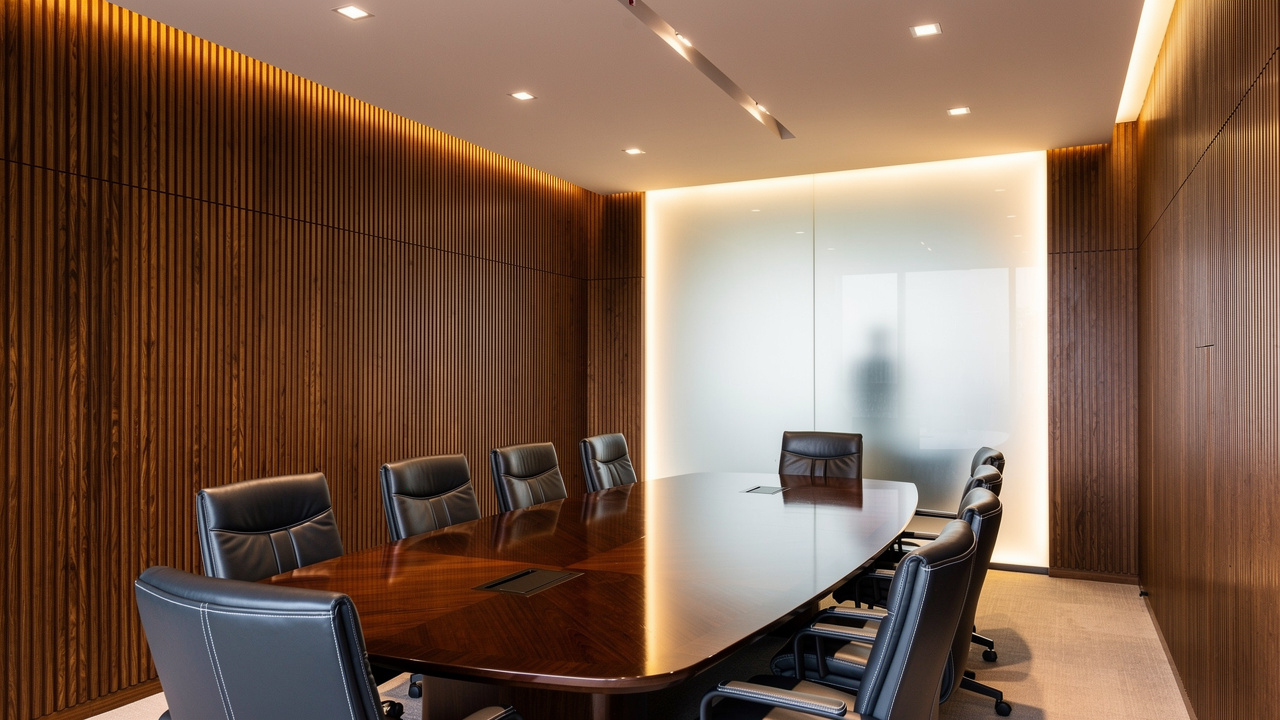
Wood slat panels and perforated wood systems are popular for boardrooms and reception spaces. They combine a warm timber look with hidden acoustic backing behind the slats or perforations, a design approach supported by research on the Application of Hybrid Absorptive–Diffusive panels with variable acoustic characteristics based on wooden overlays. Stretch fabric panels fill another need in conference rooms, project spaces, and training rooms where designers want large, clean surfaces in brand colors, and studies on Acoustic performance optimization of natural-fiber micro-perforated panels demonstrate how advanced fabric and fiber composites can achieve high absorption ratings in precisely these interior settings.
Ceiling baffles and clouds are especially helpful on large open floors with high ceilings. They hang from the slab and absorb sound that would otherwise reflect between floor and ceiling. Research from Gensler on open offices highlights that overhead sound control is key when desks sit under tall structural grids.
A simple way to compare options is to link each type to its ideal use:
| Panel Type | Best Office Use | Main Benefit |
|---|---|---|
| Wall panels | Open work areas and meeting rooms | Strong speech clarity and reduced echo at ear level |
| PET panels | Sustainable projects and desk screens | Eco‑friendly and versatile shapes and colors |
| Wood slat panels | Boardrooms and reception zones | Premium look with hidden absorption behind timber |
| Ceiling baffles and clouds | High-ceiling open floors | Strong control of vertical reflections that spread noise |
DE Sound supplies all of these panel types in GCC‑ready formats. Designers and contractors can match products across an entire project while keeping acoustic performance and visual style aligned.
What To Look For When Sourcing Acoustic Panels For Large-Scale GCC Projects
Sourcing acoustic panels for a full office floor or tower needs more than picking colors from a catalog. Procurement teams must check technical performance, safety, climate fit, and commercial terms before placing orders.
NRC rating. For general open office areas, panels with an NRC above about 0.65 usually give clear improvement. Meeting rooms and focus pods may need higher values. Responsible suppliers share third‑party lab reports listing absorption data across several frequencies, not just a single number — an approach consistent with guidance on Improving Building Acoustics with fiber composites for sustainable construction systems.
Fire performance. UAE Civil Defense and other GCC authorities require interior finishes to meet defined fire classes. Many office projects need Class A or Class B fire ratings under EN 13501‑1 or similar tests. DE Sound only supplies acoustic panels with valid test certificates, which helps design teams pass local approvals more smoothly.
Suitability for Gulf climate. High humidity and strong temperature swings around building edges can damage low‑grade products. Mineral wool cores with good facings, PET boards, and treated wood systems generally hold up better than low‑density foam that can sag or crumble over time — a material distinction explored in research on the Application of Hybrid Absorptive–Diffusive panels designed with durable wooden overlays for variable acoustic characteristics.
Commercial model. Wholesale and factory‑direct supply make large area treatment realistic. Buying through a regional specialist like DE Sound gives access to bulk pricing, predictable lead times, and coordinated deliveries that align with fit out phases. That reduces the risk of missing ceiling or partition dates because panels arrive late.
Design support. When acoustic specialists help plan coverage and placement, you avoid both under-treatment and wasteful over-specification. DE Sound offers this type of guidance as part of its service to GCC interior designers and contractors.
How DE Sound Makes Professional Acoustic Treatment Achievable Across the GCC
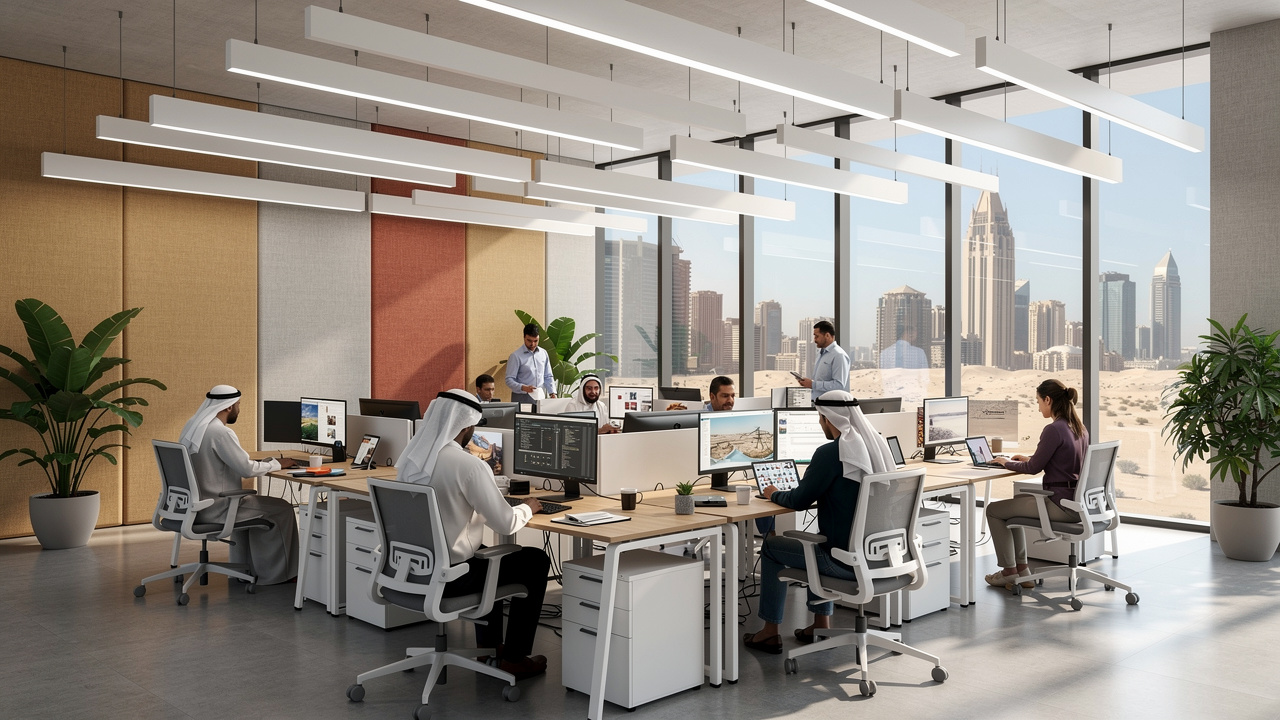
DE Sound focuses on one goal in modern GCC offices: making professional acoustic treatment simple and affordable at scale. The company acts as a regional partner for designers, contractors, and facility managers who need reliable acoustic materials, not one‑off retail orders.
The product range covers the full mix of panels used in commercial offices. This includes fabric‑wrapped wall panels, PET boards, wood slat systems, stretch fabric walls, and ceiling baffles and clouds. Each product line comes with acoustic test data and fire certificates suited to approvals in the UAE, Saudi Arabia, Qatar, Kuwait, Bahrain, and Oman.
Because DE Sound works on a wholesale and factory‑direct basis, pricing suits large floor plates and multi‑level projects. Procurement teams can price full acoustic packages early in the design stage and keep those numbers stable through value‑engineering rounds. Clear quotations help avoid surprises late in the fit out program.
Expert support is a central part of the offer. DE Sound consultants help project teams:
Estimate required coverage for each zone
Pick suitable NRC ranges
Choose materials that support green targets like LEED and WELL
This guidance cuts down trial and error on site and keeps acoustic performance aligned with workplace strategy.
“From open-plan workspaces to executive boardrooms, DE Sound provides the products, expertise, and supply chain reliability that GCC design professionals need to deliver exceptional acoustic results at wholesale pricing, without compromise.”
With logistics links across all six GCC countries, DE Sound can align deliveries with project milestones. That mix of stock, knowledge, and regional reach makes it easier to treat acoustics properly instead of leaving noise control to chance.
Don’t Let Noise Sabotage Your Office
Office noise in the GCC is not just a minor irritation. It quietly drains focus, weakens meetings, and undercuts the image that premium workplaces aim to present. Acoustic panels offer a proven and cost‑effective way to turn loud, echo‑filled floors into calm and productive environments.
With the right blend of wall panels, PET systems, wood features, and ceiling baffles, you can tune each office zone for its real use. DE Sound provides the certified products, wholesale pricing, and acoustic guidance needed to do this at project scale across the Gulf.
If you are planning a new office or upgrading an existing floor, contact DE Sound for a free acoustic consultation or a wholesale quotation matched to your layout.
Frequently Asked Questions
Question: What is the difference between acoustic panels and soundproofing?
Acoustic panels absorb sound inside a room to reduce echo and reflections. Soundproofing blocks sound from passing through walls, floors, or ceilings. Most open office problems relate to internal reverberation, so absorption products are usually the right starting point. Thick walls or extra layers are needed only when sound leakage between rooms is the main issue.
Question: How many acoustic panels does a typical GCC office space need?
Most offices see clear improvement when about 25–50% of the combined wall and ceiling area has acoustic treatment. Exact coverage depends on room size, finishes, and noise sources. DE Sound offers free consultations that use simple acoustic models and floor plans to suggest sensible panel quantities for each project.
Question: Are acoustic panels suitable for open-plan offices with high ceilings?
Yes. Acoustic panels work very well in high‑ceiling open plans when used as ceiling baffles or suspended clouds. These hanging elements intercept sound that travels upward and then back down, which wall panels alone cannot handle. Many GCC offices combine overhead panels with some wall treatment for balanced results.
Question: Do acoustic panels need to comply with UAE or GCC fire safety standards?
Yes. All acoustic materials in commercial fit outs must meet local fire ratings, often Class A or B under EN 13501‑1 or similar tests. Authorities such as UAE Civil Defense request valid reports during approvals. DE Sound supplies only tested and certified products and provides the related documentation with each project order.
Question: Can acoustic panels support LEED or WELL certification for GCC office projects?
Yes. Acoustic panels, especially PET products made from recycled fibers, can support points related to indoor environmental quality and materials. DE Sound offers eco‑focused panels that help project teams align with LEED and WELL requirements. Full technical and environmental documentation is available to support sustainability submissions and audits.