
High-rise apartments dominate Dubai’s residential landscape. With vertical living becoming increasingly dense, noise transmission between floors has emerged as a serious concern for residents, developers, and property managers. Footsteps, furniture movement, and everyday activities can easily travel through concrete slabs, disrupting the comfort of neighboring apartments.
In premium developments, where residents expect a quiet and refined lifestyle, uncontrolled impact noise can quickly lead to dissatisfaction. This has made acoustic floating floors for high-rise apartments in Dubai an essential solution rather than a luxury upgrade.
What Are Acoustic Floating Floors
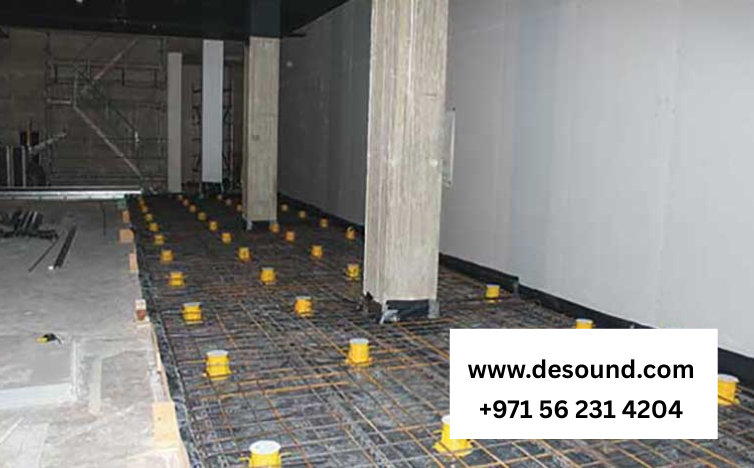
Acoustic floating floors are specialized flooring systems designed to reduce structure-borne sound, particularly impact noise. Unlike conventional flooring methods that are fixed directly to the concrete slab, floating floors are installed over a resilient acoustic layer. This layer absorbs vibration and prevents sound energy from transferring into the building structure.
The system effectively “decouples” the finished floor from the slab, allowing sound to dissipate within the acoustic underlay. This technology is especially effective in multi-story residential buildings where sound transmission paths are continuous across floors.
Why High-Rise Apartments in Dubai Need Acoustic Floating Floors
Dubai’s architectural trends favor hard surface flooring such as marble, porcelain tiles, and engineered wood. While visually appealing, these materials amplify impact noise if not acoustically treated. In tall residential towers, even normal daily movement can become a disturbance for occupants below.

Additionally, many Dubai apartments are designed for short-term rentals or mixed-use occupancy. This increases foot traffic and activity levels, making impact noise control even more critical. Installing acoustic floating floors Dubai projects rely on helps address these challenges at the structural level, rather than relying on temporary or ineffective solutions.
Impact Noise vs Airborne Noise in Apartments
Understanding the difference between impact noise and airborne noise is key to selecting the right acoustic solution. Airborne noise includes sounds such as speech, music, or television, which travel through the air. Impact noise, on the other hand, is caused by direct physical contact with the floor surface.
In high-rise apartments, impact noise is typically the most problematic. Standard insulation methods do little to control it. Acoustic floating floors are specifically engineered to target impact sound, making them one of the most effective solutions available for vertical residential buildings.
Benefits for Residents and Property Owners
For residents, the most noticeable benefit is improved living comfort. Reduced footstep noise leads to better sleep quality, increased privacy, and an overall sense of calm within the apartment. This is particularly important in family-oriented or luxury developments.
Property owners and developers also gain long-term value. Buildings with effective acoustic control experience fewer noise complaints, higher tenant retention, and improved market perception. In competitive real estate markets like Dubai, acoustic performance can be a deciding factor for buyers and tenants alike.
Acoustic Floating Floors and Building Standards
While acoustic regulations in Dubai vary by project and developer, many high-rise developments follow international best practices for sound insulation. Acoustic consultants often specify minimum impact sound reduction values that cannot be achieved with standard flooring systems alone.
Professional acoustic floating floor systems help projects meet these specifications without compromising on design or floor height limitations. When installed correctly, they integrate seamlessly with modern construction methods and interior finishes.
Desound Acoustic Floating Floor Solutions
At Desound, we provide professional acoustic services tailored to high-rise residential environments in the UAE. Our acoustic floating floor system is designed to deliver reliable impact noise reduction while maintaining structural integrity and long-term performance.
Why Professional Installation Matters
Even the highest-quality acoustic products can underperform if not installed correctly. Proper edge isolation, material continuity, and load distribution are critical factors in achieving effective noise reduction.
Desound’s expertise ensures that acoustic floating floors are implemented according to best practices, minimizing the risk of acoustic bridging and performance loss. This professional approach is essential for high-rise buildings where acoustic failures can affect multiple units.
Call us: Contact DeSound Soundproofing Expert in DubaiFor Soundproofing: +971 56 231 4204
Conclusion
As Dubai continues to grow vertically, noise control has become a fundamental aspect of residential comfort and building quality. Acoustic floating floors for high-rise apartments in Dubai provide a proven, long-term solution to impact noise challenges that traditional flooring systems cannot address.