
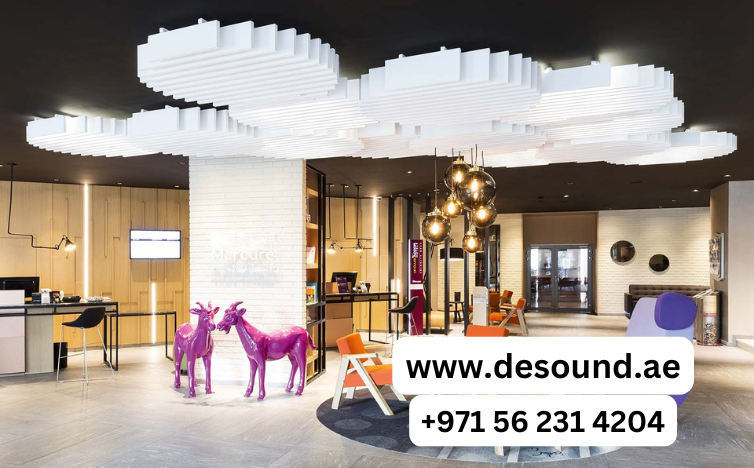
When it comes to soundproofing and acoustic treatment, selecting the right product for your specific needs is crucial. Two common solutions are acoustic baffles and ceiling clouds. Although they both help in controlling noise, their design, installation, and effectiveness vary depending on the environment. In this article, we’ll compare these two popular options acoustic baffles vs ceiling clouds, helping you decide which one is best suited for your space.
What Are Acoustic Baffles?
Acoustic baffles are sound-absorbing panels typically suspended vertically from ceilings. They are designed to reduce noise by absorbing sound energy, particularly in large spaces where echoes and reverberation are issues. Due to their vertical orientation, baffles are excellent for areas with high ceilings such as gyms, warehouses, and industrial facilities.
- Design & Installation: Acoustic baffles hang from ceilings and can be installed in rows or staggered patterns. They allow for effective noise control without taking up floor or wall space.
- Best For: Large open spaces where reducing reverberation is critical. Ideal for industrial settings, large event halls, or gymnasiums.
What Are Ceiling Clouds?
Ceiling clouds are horizontal acoustic panels installed close to the ceiling, effectively controlling noise by absorbing sound waves that rise. These panels are ideal for reducing overall noise levels and improving speech clarity in spaces where aesthetics are important, as they can be designed to match the interior decor.

- Design & Installation: Installed parallel to the ceiling, ceiling clouds are easy to integrate into existing spaces. They can be customized in size, shape, and color to blend with the design of the room.
- Best For: Conference rooms, auditoriums, restaurants, and offices where speech clarity is essential, and aesthetic integration is a priority.
Key Differences Between Acoustic Baffles and Ceiling Clouds
1. Orientation and Function
- Acoustic Baffles: Suspended vertically, they excel in large spaces by reducing sound reflection from the sides.
- Ceiling Clouds: Mounted horizontally, they address sound waves that reflect off ceilings, making them perfect for controlling overhead noise.
2. Best Applications
- Baffles are better for environments where the primary issue is excessive echo and reverberation in open areas.
- Clouds are typically used in settings like offices and restaurants where clarity and aesthetics matter just as much as noise control.
3. Aesthetic Considerations
- Baffles are more functional and may not offer as much in terms of design appeal.
- Clouds can be customized to match the room’s decor, making them a better option for visually-focused spaces.
See Also: 7 Key Benefits of Installing Acoustic Baffles in Any Space
When to Choose Acoustic Baffles
Choose acoustic baffles if:
- You need to control noise in large, open spaces.
- Echo and reverberation are your primary concerns.
- You prefer a solution that hangs vertically, leaving walls and floors free.
Best Applications:
- Gymnasiums
- Factories
- Large open office spaces
- Event halls
When to Choose Ceiling Clouds
Choose ceiling clouds if:
- You want an aesthetically pleasing acoustic solution.
- You need to control noise primarily from overhead sound waves.
- You want customizable designs that blend with your existing decor.
Best Applications:
- Conference rooms
- Restaurants and cafés
- Theaters and auditoriums
- Schools and libraries
Call us: Contact DeSound Soundproofing Expert in Dubai For Soundproofing: +971 56 231 4204
Conclusion: Which One Is Right for You?
Both acoustic baffles and ceiling clouds provide excellent noise control, but the choice depends on your specific needs. For large, industrial-style spaces, baffles are more effective, while ceiling clouds offer a more refined aesthetic solution for offices, restaurants, and smaller commercial spaces. Consider your space’s size, noise levels, and design goals when making the decision.
By selecting the right acoustic treatment, you can create a more comfortable, productive, and quieter environment.