
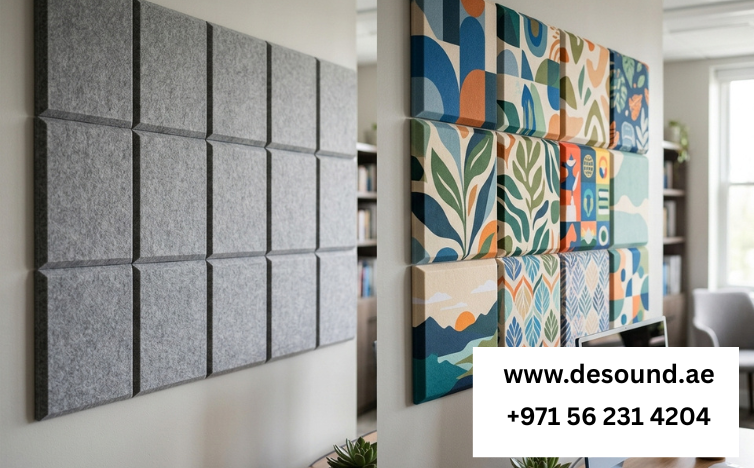
Acoustic panels are no longer used only for noise control. In Dubai, businesses, offices, restaurants, studios, and commercial interiors now expect acoustic solutions to improve both sound quality and interior aesthetics. This has created a growing debate between plain acoustic panels and printed acoustic panels. Both serve the same acoustic purpose, but they deliver completely different visual and branding experiences.
The right choice depends on how the space is used, the design goals, and whether the focus is purely acoustic performance or a combination of acoustics and visual impact.
Why Acoustic Panels Matter in Dubai Interiors
Dubai interiors commonly use reflective materials like marble, glass, concrete, and metal. While these finishes create a premium look, they also reflect sound heavily, causing echo and poor speech clarity.
Acoustic panels help solve this by absorbing sound waves and reducing reverberation. This improves:
- Workplace productivity
- Meeting room clarity
- Restaurant ambiance
- Studio sound quality
- Customer comfort in commercial spaces
Modern acoustic design now focuses on integrating sound control directly into interior architecture rather than treating it as a separate technical feature.
What Plain Acoustic Panels Offer
Plain acoustic panels are the traditional option used in offices, studios, cinemas, and commercial spaces. They are usually available in solid colors and minimal designs, focusing mainly on performance and clean aesthetics.
Their biggest advantages include:
- Simple and professional appearance
- Easy integration into interiors
- Cost-effective installation
- Strong acoustic absorption performance
Plain panels are especially popular in:
- Corporate offices
- Recording studios
- Conference rooms
- Educational facilities
Because of their neutral appearance, they work well in spaces where the goal is subtle acoustic treatment without attracting visual attention.
Why Printed Acoustic Panels Are Growing in Dubai
Printed acoustic panels combine sound absorption with customized graphics, branding, or artwork. Instead of looking like technical acoustic products, they become part of the interior design itself.
Businesses in Dubai increasingly choose printed panels because they:
- Reinforce branding inside offices
- Add decorative value to interiors
- Replace plain wall artwork
- Improve acoustics without sacrificing design
Hotels, cafes, creative workspaces, retail stores, and modern offices often prefer printed panels because they create a more visually engaging environment while still reducing noise.
Acoustic Performance: Is There a Difference?
A common misconception is that printed acoustic panels perform worse than plain panels. In reality, high-quality printed acoustic panels maintain nearly the same sound absorption performance when acoustically transparent printing materials are used.
Both plain and printed panels can effectively reduce:
- Echo
- Reverberation
- Speech distortion
- Background noise buildup
The performance difference usually depends more on:
- Core material quality
- Panel thickness
- Installation placement
- NRC rating
rather than whether the panel is printed or plain.
Which Option Looks Better in Modern Dubai Spaces?
For minimal corporate interiors, plain panels often work better because they maintain a clean and understated appearance. They blend easily into walls and ceilings without becoming a visual distraction.
Printed panels, however, are ideal for spaces where interior identity matters. In Dubai, many businesses use printed acoustic panels to display:
- Company branding
- Abstract artwork
- Nature visuals
- Architectural graphics
- Custom textures and patterns
This transforms acoustic treatment into a decorative feature rather than hiding it.
Cost Differences Between Plain and Printed Panels
Plain acoustic panels are generally more affordable because they involve simpler manufacturing and finishing processes. Printed acoustic panels require additional design preparation and printing technology, which increases cost.
However, printed panels can reduce the need for separate decorative artwork, making them more cost-effective in some commercial interiors.
For many Dubai businesses, the decision comes down to whether aesthetics and branding justify the additional investment.
Which One Works Better for Different Spaces?
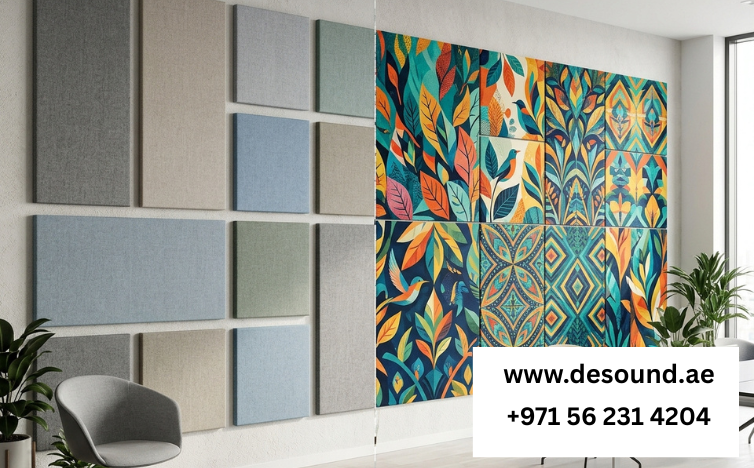
Plain Acoustic Panels Are Better For:
- Corporate offices
- Meeting rooms
- Studios
- Educational spaces
- Minimal interiors
Printed Acoustic Panels Are Better For:
- Creative offices
- Restaurants and cafes
- Retail spaces
- Hotels and hospitality interiors
- Branded commercial environments
The best choice depends on whether the project prioritizes subtle acoustic treatment or visual impact alongside acoustics.
Why Dubai Businesses Are Moving Toward Hybrid Solutions
Many modern projects in Dubai now combine both options. Designers often use plain acoustic panels in functional work areas and printed panels in customer-facing or decorative sections.
This balanced approach allows businesses to:
- Control costs
- Maintain strong acoustic performance
- Improve branding and aesthetics
- Create visually dynamic interiors
Hybrid acoustic layouts are becoming increasingly common in premium office and hospitality projects across the UAE.
Call us: Contact DeSound Soundproofing Expert in Dubai For Soundproofing: +971 56 231 4204
Conclusion
Both plain and printed acoustic panels offer effective sound control, but they serve different design purposes. Plain panels focus on simplicity and subtle integration, while printed panels combine acoustic performance with branding and decorative value.
For Dubai interiors, the best solution often depends on the type of space and the visual goals of the project. Businesses looking for functional acoustic treatment may prefer plain panels, while modern commercial spaces increasingly choose printed acoustic panels to improve both acoustics and interior aesthetics at the same time.