
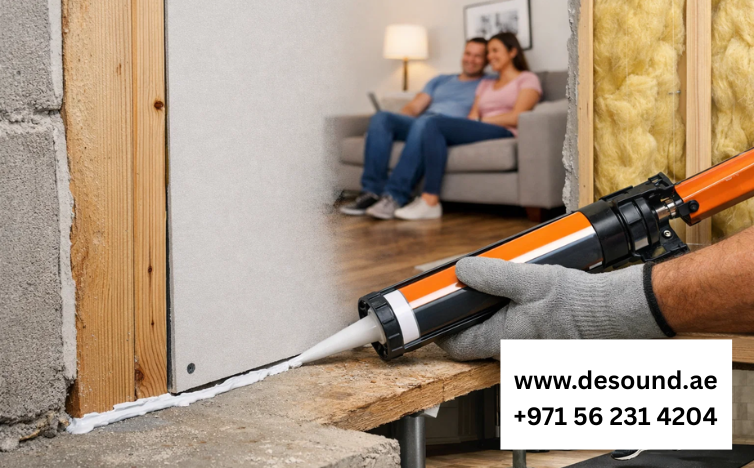
Noise pollution inside buildings generally falls into two primary categories: airborne noise and impact noise. Airborne noise includes sounds that travel through the air, such as voices, television audio, traffic, or music. These sound waves move through walls, ceilings, and floors if there are gaps or weak points in the building structure.
Impact noise, on the other hand, is generated when an object makes physical contact with a structure. Footsteps on upper floors, furniture dragging, or dropped objects are common examples. These vibrations transfer directly through solid building materials and radiate as sound into adjacent spaces.
Both types of noise significantly affect comfort levels in residential, commercial, and hospitality environments. Effective soundproofing requires more than just insulation panels; it demands airtight sealing at all structural joints and penetrations. This is where acoustic sealant becomes a critical component.
What Is Acoustic Sealant?
Acoustic sealant is a specialized, non-hardening, flexible compound designed to block sound transmission by sealing gaps, cracks, and joints in building assemblies. Unlike ordinary silicone or construction caulk, acoustic sealant remains permanently flexible, allowing it to absorb vibrations and prevent sound leakage over time.
In professional acoustic systems, even small openings around electrical outlets, ductwork, door frames, drywall joints, or pipe penetrations can compromise performance. Sound behaves similarly to air; if air can pass through a gap, sound can as well. Sealing these pathways significantly enhances the effectiveness of sound insulation systems.
At desound, our acoustic sealant is engineered specifically for high-performance soundproofing applications, ensuring reliable sealing without shrinkage or cracking.
How Acoustic Sealant Reduces Airborne Noise
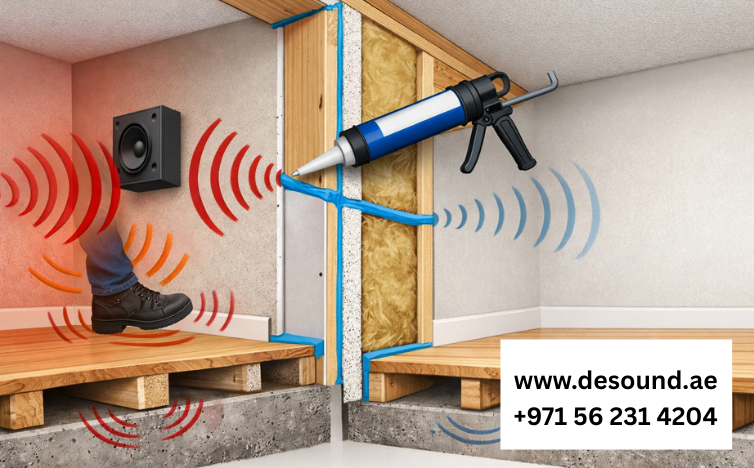
Sealing Air Gaps and Flanking Paths
Airborne sound primarily travels through openings. When drywall panels, ceilings, or partition walls are installed, microscopic gaps often remain between materials. These weak points allow sound waves to pass through easily.
Acoustic sealant fills these voids completely, creating an airtight barrier. By eliminating air movement through joints and seams, the sound transmission path is interrupted. This improves the Sound Transmission Class (STC) rating of walls and partitions.
Enhancing Insulation Performance
Soundproofing materials such as mineral wool, mass-loaded vinyl, or double-layer drywall systems are only effective when the assembly is airtight. Even a small unsealed crack can reduce the overall acoustic performance dramatically.
By applying acoustic sealant along perimeter joints, electrical boxes, and drywall seams, the entire soundproofing system works as intended. The result is noticeable reduction in voices, music, and external traffic noise.
Maintaining Long-Term Flexibility
Buildings naturally expand and contract due to temperature changes and structural movement. Standard sealants can dry out, crack, or shrink, reopening sound paths.
Acoustic sealant remains flexible over time, adapting to structural shifts without losing its sealing properties. This ensures long-term airborne noise control without maintenance issues.
How Acoustic Sealant Reduces Impact Noise
Impact noise travels as vibration through solid materials. While floor underlays and resilient channels help absorb these vibrations, acoustic sealant plays a supportive but important role.
Isolating Structural Connections
Where walls meet floors or ceilings, rigid connections can transmit vibration directly. Applying acoustic sealant at these junctions creates a flexible buffer layer. This reduces vibration transfer between building components.
Supporting Floating Floor Systems
In floating floor constructions, perimeter gaps must remain sealed while maintaining flexibility. Acoustic sealant prevents sound leakage around edges without restricting movement, preserving the effectiveness of impact sound insulation systems.
Minimizing Secondary Noise Leakage
Impact noise can convert into airborne noise once it passes into adjacent cavities. By sealing gaps within these cavities, acoustic sealant reduces the secondary transmission of sound.
Key Application Areas
Acoustic sealant is used in multiple building environments, including:
- Residential apartments and villas
- Offices and conference rooms
- Hotels and hospitality spaces
- Recording studios and media rooms
- Hospitals and healthcare facilities
Typical application points include:
- Drywall perimeter joints
- Ceiling-to-wall intersections
- Electrical outlet boxes
- HVAC duct penetrations
- Door and window frames
At desound, we integrate acoustic sealant into complete acoustic services to ensure maximum soundproofing efficiency in both new construction and retrofit projects.
Installation Best Practices
To maximize the benefits of acoustic sealant, correct application is essential.
Surface Preparation
Ensure surfaces are clean, dry, and free from dust or debris. This promotes proper adhesion and long-lasting performance.
Continuous Bead Application
Apply a continuous bead along all joints and gaps. Incomplete coverage leaves weak points that allow sound transmission.
Do Not Compress Fully
Unlike rigid fillers, acoustic sealant should not be over-compressed. Its flexibility is crucial for vibration absorption.
Combine With Acoustic Systems
For optimal performance, use acoustic sealant alongside insulation boards, resilient channels, soundproof drywall, and floor underlays. It is a complementary component, not a standalone solution.
Why Acoustic Sealant Is Essential in Modern Construction
Modern buildings often use lightweight materials that are more susceptible to sound transmission. Open-plan layouts, shared walls, and mixed-use developments further increase noise concerns.
Acoustic sealant addresses one of the most overlooked aspects of soundproofing: small gaps. Without sealing these areas, even premium acoustic materials cannot deliver their rated performance.
By incorporating high-quality acoustic sealant into your project, you:
- Improve overall STC ratings
- Enhance occupant comfort
- Reduce complaints related to noise
- Ensure compliance with acoustic regulations
- Extend the durability of soundproofing systems
Call us: Contact DeSound Soundproofing Expert in Dubai For Soundproofing: +971 56 231 4204
Conclusion
Acoustic sealant plays a fundamental role in reducing both airborne and impact noise within buildings. By sealing gaps, maintaining flexibility, and preventing vibration transfer, it strengthens the performance of complete soundproofing systems.