
When unwanted sound travels between floors, the result is frustration, poor concentration, and a major drop in comfort. This is especially common in residential buildings, offices, studios, gyms, and commercial properties where every footstep can be heard. An acoustic floating floor is one of the most reliable solutions for stopping footstep and impact noise. In this article, you will learn how it works, why it is effective, and how service providers like DeSound use advanced methods to deliver high-performance acoustic flooring. The title of this article reflects the core idea: understanding how the system breaks the path of vibration and stops noise from traveling downward.
What Is an Acoustic Floating Floor?
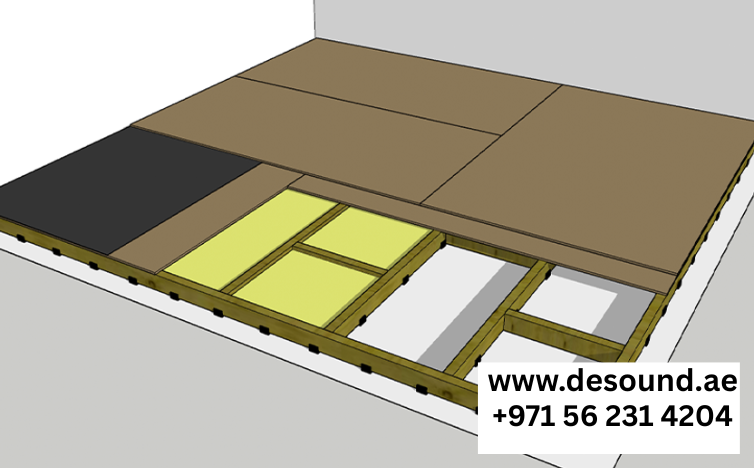
An acoustic floating floor is a specially engineered flooring system designed to reduce impact noise by isolating the floor surface from the building’s main structure. Instead of resting directly on concrete or subfloor, the floor “floats” on a layer of resilient acoustic material.
This resilient layer acts as a shock absorber. When someone walks, drops an object, or moves furniture, the vibrations are absorbed before reaching the structural slab. This prevents noise transmission to the rooms below, creating a quieter and more comfortable environment.
DeSound provides complete floating floor systems tailored for studios, home theaters, offices, hotels, gyms, and industrial projects.
How Footstep and Impact Noise Travels
To understand why a floating floor is effective, it helps to know how impact noise spreads. Footsteps generate mechanical vibrations. These vibrations move through:
- The floor surface
- The concrete slab
- Walls, ceilings, and adjoining structural elements
- Finally into the space below
Because the structure is a continuous, rigid path, noise can travel easily. Conventional flooring materials cannot stop this movement, but a floating floor breaks that path completely.
The Science Behind Acoustic Isolation
The main goal of an acoustic floating floor is to create a separation between the walking surface and the building structure. This technique is known as structural decoupling, and it is the key reason the system works so effectively.
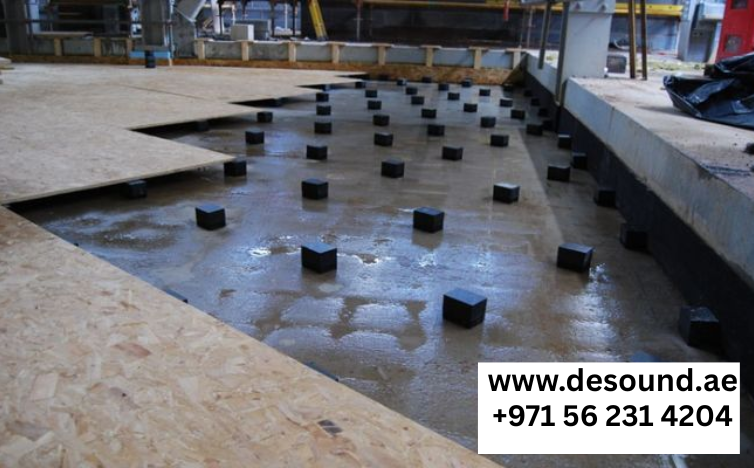
When the top layer of the floor is decoupled from the base, the sound has no solid bridge to travel across. Instead, the noise energy enters the resilient layer and dissipates harmlessly. The materials used for this layer—such as acoustic rubber, mineral wool, high-density foam, or engineered acoustic pads—are designed to absorb and disperse vibration energy.
This combination of decoupling and damping is what dramatically reduces footstep noise.
Key Components of an Acoustic Floating Floor
A well-designed floating floor includes several engineered layers that work together:
1. Resilient Acoustic Underlay
This is the core vibration-absorbing layer. It isolates impact energy and prevents sound transfer. Materials may include recycled rubber, cork, elastomers, or acoustic foam.
2. Separation Membrane
This membrane ensures the floating layer does not touch the structural floor. Even small contact points can allow noise bridges, so proper installation is essential.
3. Rigid Floor Layer
This is usually a plywood, MDF, gypsum board, or concrete screed. It creates a stable, walkable surface for finishing materials such as tiles, carpets, or wood flooring.
4. Perimeter Isolation Strip
Installed around walls and columns, this prevents structural contact at the edges. Without this strip, impact noise could bypass the underlay and travel through the walls.
DeSound focuses on using high-grade materials for each layer, ensuring long-term performance and reliability.
See Also: Acoustic Floating Floors for Quieter Apartments
How Floating Floors Stop Footstep and Impact Noise
Floating floors stop noise through three primary mechanisms:
1. Vibration Absorption
When footsteps hit the floor, the resilient layer acts like a shock absorber. Instead of transferring into the concrete slab, the energy is absorbed within the underlay.
2. Structural Decoupling
The floating floor never touches the base structure. Because the vibration has no direct path, it cannot travel downward.
3. Damping and Dispersion
The acoustic materials convert mechanical energy into low-level heat, spreading the force across the layer and reducing its intensity.
This process stops common noise problems such as:
- Heavy walking
- Children running
- Chair movement
- Gym equipment impact
- Dropping objects
Applications Where Floating Floors Work Best
Recording Studios
They eliminate vibration transfer, ideal for clean recording.
Home Cinemas
They prevent bass and footsteps from disturbing other rooms.
Hotels and Apartments
They improve privacy and guest satisfaction.
Offices
They help maintain a quiet and professional environment.
Gyms and Fitness Areas
They manage heavy-impact activities and equipment vibration.
DeSound regularly installs floating floors for all these applications using project-specific design methods.
Why Choose a Floating Floor Over Other Solutions?
Many soundproofing materials only block airborne noise, not impact noise. A floating floor specifically targets impact sound, which makes it more effective than simple carpets, rugs, or vinyl flooring. It also enhances overall building acoustics, increases comfort, and adds value to the property.
Call us: Contact DeSound Soundproofing Expert in Saudi Arabia For Soundproofing: +971 56 231 4204
Conclusion
An acoustic floating floor is one of the most powerful solutions for stopping footsteps and impact noise. By using resilient materials, decoupling techniques, and proper installation methods, the system completely breaks the vibration pathway. Companies such as DeSound deliver advanced floating floor solutions customized for studios, homes, hotels, offices, and commercial spaces, ensuring long-term noise control and improved comfort.