
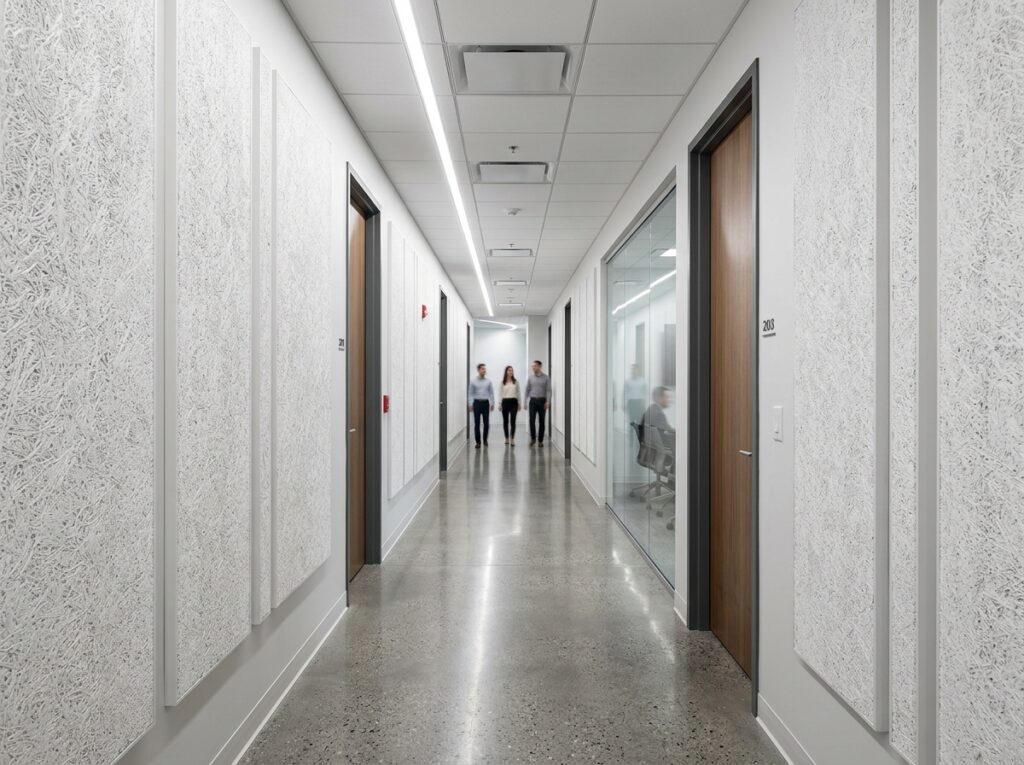
Modern buildings in Dar es Salaam, Tanzania are increasingly incorporating open-plan layouts, contemporary furniture, glass partitions, tiled floors, and large interior spaces. While these design choices can create attractive and functional environments, they can also contribute to unwanted sound reflections.
Offices, hotels, restaurants, schools, conference venues, and residential properties may experience excessive reverberation when sound repeatedly reflects from hard surfaces.
Acoustic wood wool panels provide a practical solution for introducing sound absorption while maintaining a natural and architectural appearance. With thoughtful placement, they can become part of the interior design while helping create more comfortable acoustic environments.
What Are Acoustic Wood Wool Panels?
Acoustic wood wool panels are manufactured from fine wood fibres that are formed into a structured panel with sound-absorbing properties.
Their textured construction allows sound waves to interact with the panel rather than simply reflecting from a hard surface.
They are primarily used to improve room acoustics, helping control:
- Echo
- Reverberation
- Reflected sound
- Speech clarity
- Excessive background noise
Depending on the selected system, wood wool panels can be incorporated into walls, ceilings, feature areas, and other interior surfaces.
Why Acoustic Treatment Is Important in Dar es Salaam
Many contemporary interiors use materials such as glass, concrete, tile, stone, and plasterboard.
These materials are generally reflective.
When a room has too many reflective surfaces and not enough sound absorption, conversations and other sounds can continue bouncing around the space.
This can create an environment where:
- Conversations are harder to follow
- Speech becomes less distinct
- Background noise builds up
- Echo becomes noticeable
- Occupants experience greater acoustic discomfort
Wood wool treatment introduces an absorbent surface that can help bring the room’s acoustic characteristics under better control.
Key Advantages of Acoustic Wood Wool
Natural Textured Appearance
The visible wood-fibre surface provides a distinctive architectural finish.
Sound Absorption
Wood wool can absorb reflected sound and help reduce excessive reverberation.
Architectural Flexibility
Panels can be incorporated into both wall and ceiling designs.
Decorative Potential
Rather than appearing purely technical, the panels can become part of the interior aesthetic.
Suitable for Various Environments
Wood wool can be considered for commercial, hospitality, educational, and residential spaces.
Wood Wool Panels for Offices
Workplaces can contain numerous simultaneous sources of sound.
Employees may be talking, making calls, attending online meetings, or collaborating with colleagues throughout the day.
In an open-plan office, these sounds can become more noticeable when the surrounding surfaces are highly reflective.
Wood wool panels can be strategically incorporated into:
- Open-plan workspaces
- Meeting rooms
- Boardrooms
- Reception areas
- Training rooms
- Private offices
- Collaboration spaces
The objective is to introduce absorption where it can make a meaningful difference without unnecessarily covering the entire interior.
Meeting Rooms and Conference Areas
Meeting rooms require good speech intelligibility.
A room with glass partitions, a large conference table, hard flooring, and a reflective ceiling can produce multiple sound reflections.
Wood wool treatment can be incorporated into selected wall or ceiling surfaces to help manage these reflections.
A suitable acoustic design can contribute to:
- Clearer speech
- Reduced reverberation
- More comfortable discussions
- Better listening conditions
- Improved presentation environments
The required treatment depends on the room’s dimensions, construction, furnishings, and intended use.
Acoustic Wood Wool for Restaurants
Restaurants can become significantly louder as more customers enter the space.
Conversations, background music, staff movement, and kitchen activity can all contribute to the overall sound level.
If these sounds continue reflecting from hard surfaces, the room may become acoustically uncomfortable.
Wood wool panels can be integrated into restaurant interiors through:
Feature Walls
A textured acoustic wall can become a visual focal point while contributing to sound absorption.
Ceiling Treatment
Wood wool ceiling systems can introduce absorption where wall space is occupied by windows, artwork, or furniture.
Dining Areas
Strategically positioned treatment can help control reflections around seating zones.
Hotels and Hospitality Spaces
Hotels need to provide environments that are both visually attractive and comfortable.
Large reception areas, lounges, restaurants, and conference facilities can benefit from carefully planned acoustic treatment.
Wood wool systems can be incorporated into:
- Hotel lobbies
- Restaurants
- Lounges
- Conference rooms
- Reception areas
- Event spaces
- Business centres
The textured finish can complement natural, contemporary, minimalist, and luxury-inspired interior designs.
Educational Facilities
Acoustic quality is especially important in spaces where people need to listen to spoken information.
Classrooms and lecture rooms with excessive reverberation can make speech harder to understand.
Wood wool panels can be considered for:
- Classrooms
- Lecture rooms
- Libraries
- Training centres
- Seminar rooms
- Study areas
The acoustic design should consider room volume, student capacity, furniture, ceiling height, and existing finishes.
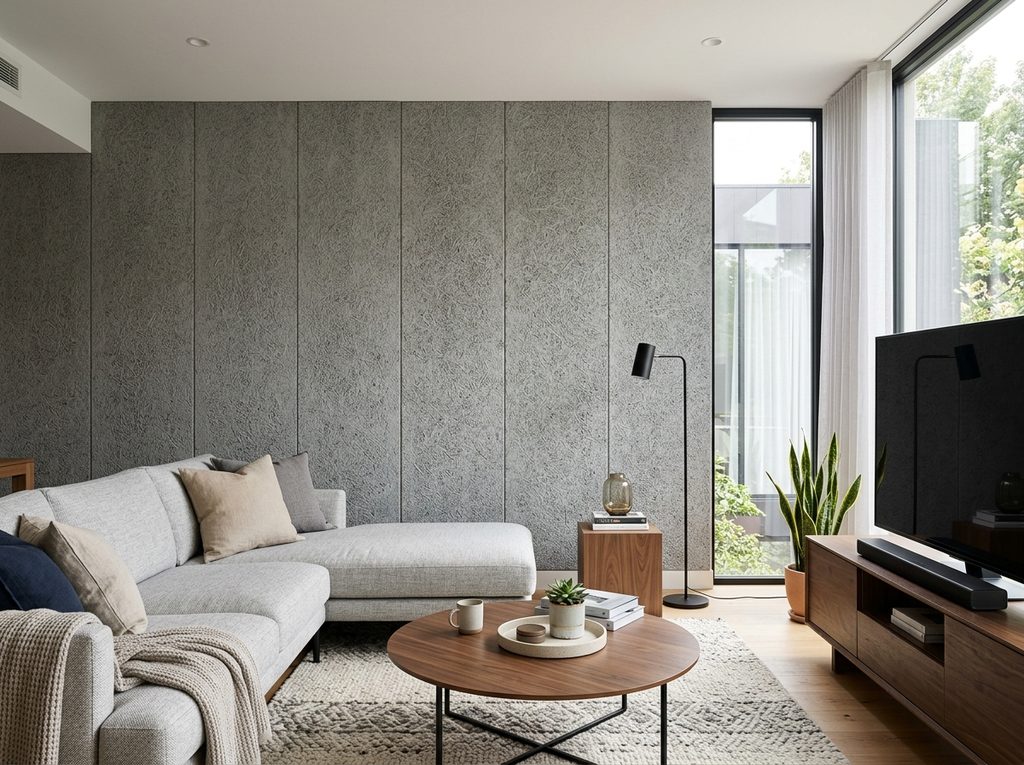
Residential Acoustic Applications
Wood wool acoustic treatment can also be incorporated into homes.
Living Rooms
Large living spaces with hard floors and walls can benefit from additional sound absorption.
Home Offices
Panels can help control reflections during video calls and telephone conversations.
Media Rooms
Wood wool can contribute to a more controlled acoustic environment around televisions and speakers.
Entertainment Areas
Rooms used for music, gaming, or gatherings can require additional absorption to manage reverberation.
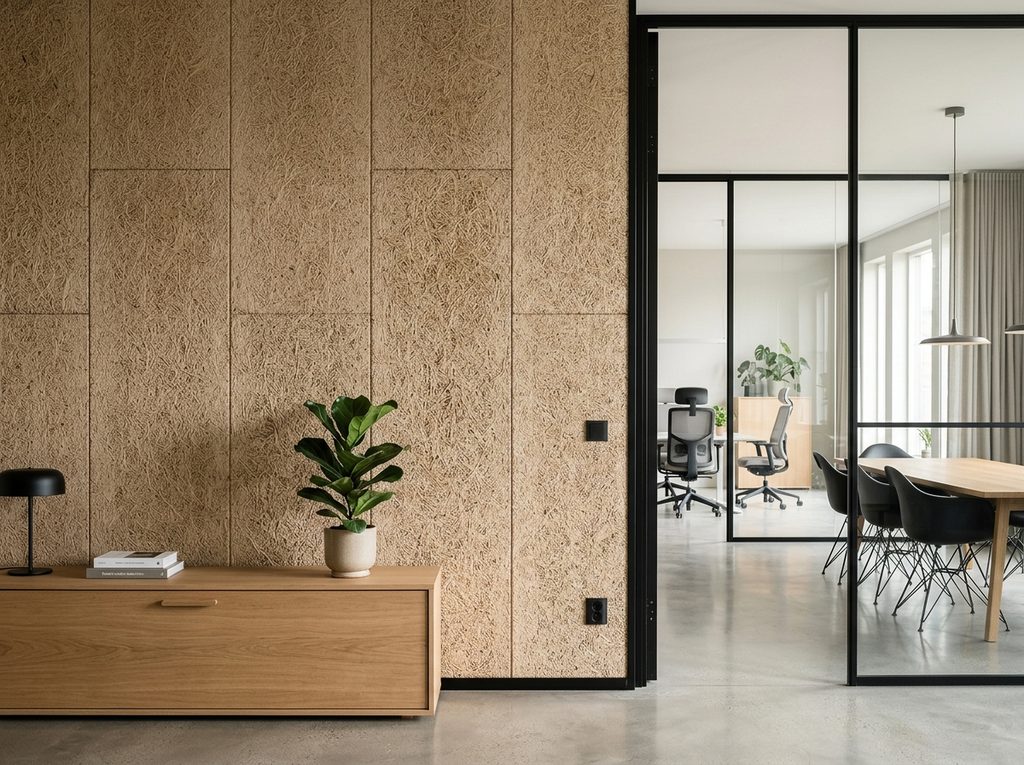
Creating Decorative Acoustic Feature Walls
Wood wool panels can be used selectively to create a distinctive interior feature.
Instead of treating every wall, designers can focus on areas such as:
- Behind reception desks
- Behind television units
- Behind conference tables
- Behind presentation screens
- Along restaurant seating
- Within office collaboration zones
Different panel arrangements can create visual patterns while providing acoustic functionality.
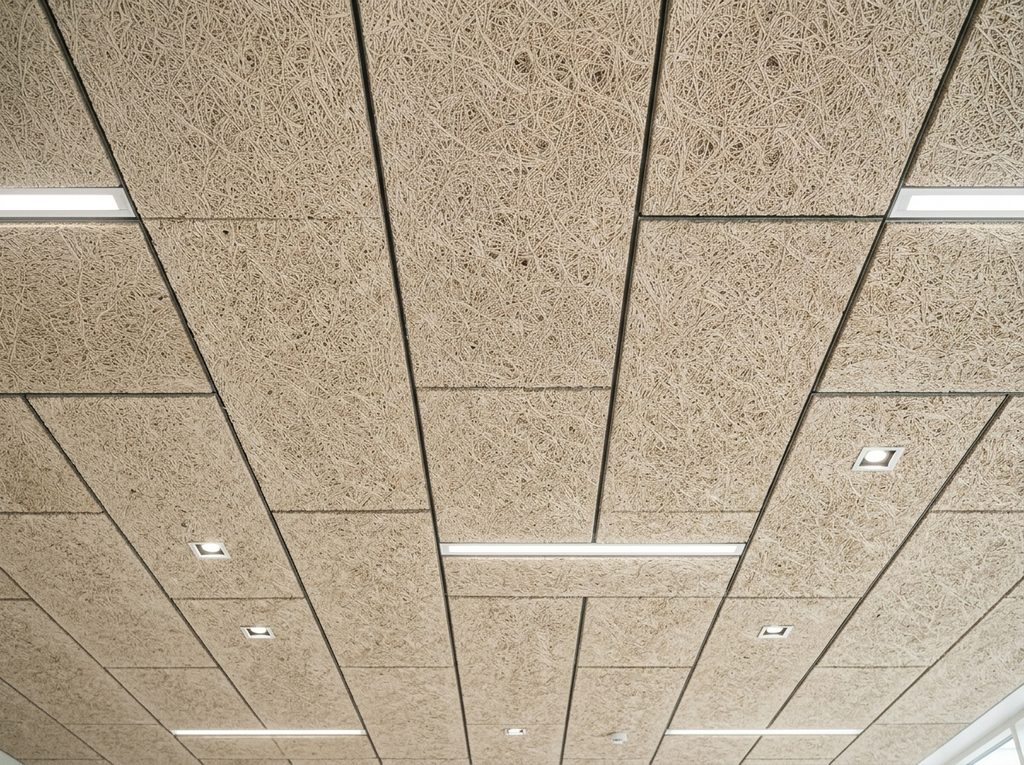
Acoustic Wood Wool Ceiling Applications
A ceiling can represent one of the largest reflective surfaces in a room.
This becomes particularly relevant in large interiors with high ceilings and hard flooring.
Wood wool ceiling treatment can introduce additional sound absorption while creating a visually defined architectural zone.
Applications can include:
- Offices
- Restaurants
- Hotel lounges
- Conference rooms
- Reception areas
- Educational buildings
Ceiling systems can also be coordinated with lighting and other architectural elements.
Choosing the Right Wood Wool System
The appropriate acoustic solution depends on the characteristics of the space.
Important factors include:
Panel Thickness
Different panel constructions can provide different acoustic performance characteristics.
Coverage
The quantity and distribution of acoustic material can influence the final result.
Room Function
A restaurant has different acoustic requirements from a classroom or meeting room.
Existing Surfaces
Glass, tile, concrete, stone, and other reflective materials should be considered.
Installation Location
Wall and ceiling applications may require different mounting systems.
Interior Design
The panel finish should complement the furniture, flooring, lighting, and architectural concept.
Wood Wool Is Not the Same as Soundproofing
It is important to understand the difference between acoustic treatment and soundproofing.
Wood wool panels primarily help control sound inside the room.
They can reduce:
- Echo
- Reverberation
- Reflected sound
They are not designed to completely prevent noise from travelling through a wall, floor, ceiling, door, or window.
If the primary problem is noise transmission between spaces, additional sound isolation measures may be required.
A soundproofing system could incorporate materials such as:
- Mass Loaded Vinyl
- Acoustic insulation
- Multiple board layers
- Resilient channels
- Acoustic sealants
- Soundproof doors
- Acoustic glazing
The correct approach depends on the source and transmission path of the noise.
Why Professional Acoustic Planning Matters
Simply installing acoustic panels does not guarantee the desired result.
A professional acoustic assessment can consider:
Room dimensions + Ceiling height + Surface finishes + Occupancy + Noise sources + Furniture
This information helps determine where sound absorption should be concentrated.
For example, a busy restaurant may require distributed ceiling treatment, while a smaller meeting room may benefit from targeted wall treatment.
The objective is to achieve an appropriate acoustic balance rather than simply installing as much material as possible.
Professional Wood Wool Acoustic Services in Dar es Salaam
Every building has different acoustic requirements.
Professional acoustic services can include:
- Acoustic consultation
- Room acoustic assessment
- Treatment planning
- Wood wool system selection
- Wall acoustic treatment
- Ceiling treatment
- Decorative feature design
- Custom acoustic layouts
- Installation planning
- Professional installation
A project-specific approach helps ensure that the acoustic treatment works with the architecture rather than against it.
Maintenance of Wood Wool Panels
Routine maintenance is generally straightforward.
Basic care can include:
- Removing dust with a soft brush.
- Using an appropriate vacuum attachment.
- Cleaning marks carefully.
- Avoiding excessive moisture.
- Avoiding abrasive cleaning chemicals.
- Inspecting panels periodically for damage.
Specific cleaning requirements should follow the manufacturer’s recommendations for the selected panel and finish.
Frequently Asked Questions
Can wood wool panels reduce echo?
Yes. Their structured surface can absorb reflected sound and help reduce excessive reverberation.
Are wood wool panels suitable for offices?
Yes. They can be used in meeting rooms, open workspaces, reception areas, boardrooms, and training facilities.
Can wood wool be installed on ceilings?
Yes. Suitable systems can be designed for ceiling applications.
Can wood wool panels be used in restaurants?
Yes. They can provide sound absorption while becoming part of the restaurant’s interior design.
Do wood wool panels completely soundproof a room?
No. They are primarily designed for sound absorption. Sound isolation requires a dedicated soundproofing system.
Professional Acoustic Wood Wool Solutions in Dar es Salaam
A successful acoustic project begins with understanding the room and its specific challenges.
A restaurant may need to control customer conversations, while an office may prioritize speech clarity. A classroom may require a different treatment strategy altogether.
Professional acoustic services can assess the environment and determine suitable treatment locations, panel configurations, and installation methods.
This ensures that wood wool is used as part of a considered acoustic solution rather than simply as a decorative material.
Conclusion
Acoustic wood wool panels offer a combination of sound absorption, architectural texture, and design flexibility.
For offices, restaurants, hotels, educational facilities, conference rooms, and residences in Dar es Salaam, they can help manage excessive reflections and reverberation while adding a distinctive visual element to the interior.
When the room is properly assessed and the appropriate panel type, coverage, placement, and installation method are selected, wood wool acoustic treatment can contribute to clearer communication and a more comfortable indoor environment.
From decorative feature walls to carefully planned ceiling installations, wood wool provides a versatile approach to improving room acoustics while maintaining a modern architectural character.