
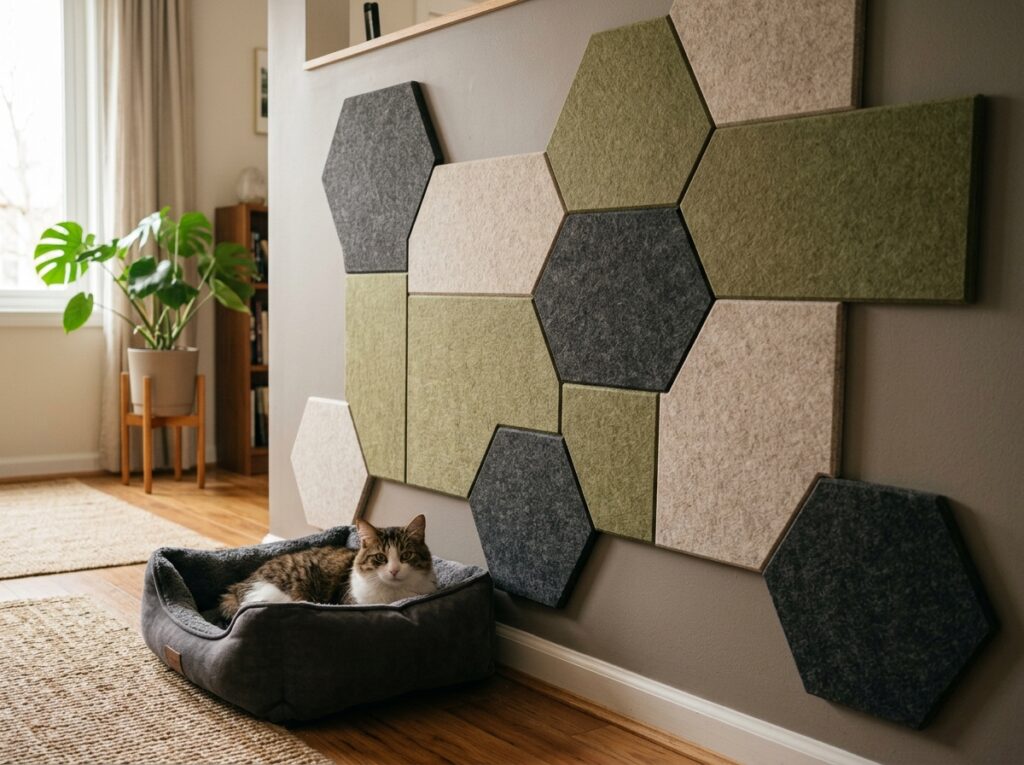
Modern interiors are increasingly designed around open layouts, polished surfaces, glass partitions, and minimalist finishes. While these features can make a space look spacious and sophisticated, they can also create an acoustic problem: sound reflects from one hard surface to another, producing echo and excessive reverberation.
In commercial and residential environments across Accra, Ghana, this can affect offices, restaurants, hotels, classrooms, conference rooms, and entertainment spaces.
Acoustic PET panels offer a practical way to improve these environments by absorbing unwanted reflected sound while also providing a wide range of decorative possibilities.
Understanding Acoustic PET Panels
Acoustic PET panels are manufactured from polyester fibres formed into lightweight, rigid sheets. Many varieties use recycled PET fibres as part of their construction.
The material’s fibrous structure allows sound energy to enter the panel instead of being completely reflected back into the room.
This makes PET panels particularly useful for managing:
- Echo
- Reverberation
- Speech reflections
- Background sound
- Noise buildup within occupied spaces
Their primary role is sound absorption, making them different from materials designed specifically to block sound transmission between rooms.
Why PET Panels Are Becoming Popular
Traditional acoustic treatment can sometimes look purely functional. PET panels provide more flexibility for designers who want acoustic performance to become part of the visual concept.
They can be used as:
- Decorative wall panels
- Ceiling elements
- Feature walls
- Suspended acoustic baffles
- Decorative partitions
- Geometric installations
The ability to combine acoustic functionality with interior design makes PET panels suitable for contemporary architecture.
How PET Panels Help Control Echo
Imagine a room with concrete walls, a tiled floor, a glass partition, and a hard ceiling. When someone speaks, sound waves hit these surfaces and are reflected back into the room.
Multiple reflections can cause speech to become less distinct.
PET panels provide an absorbent surface that captures part of this reflected sound energy.
When panels are strategically positioned across appropriate surfaces, they can help produce:
Less reflection → Lower reverberation → Clearer communication
The amount of improvement depends on the room’s construction, panel specifications, positioning, and total coverage.
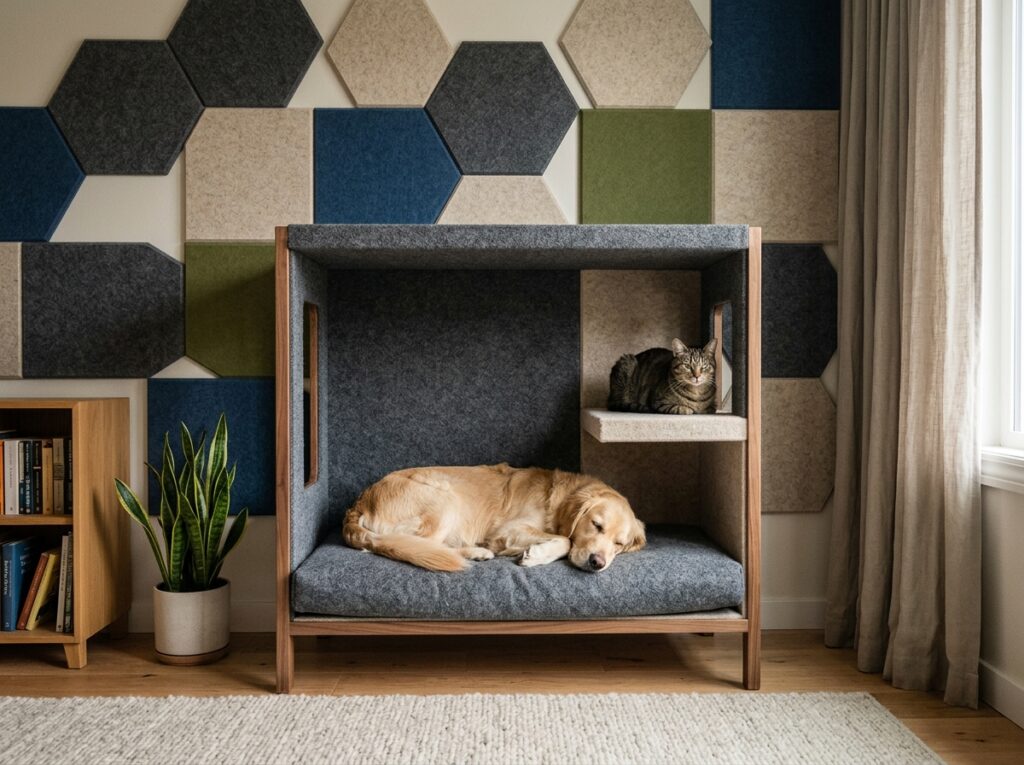
Major Advantages of Acoustic PET Panels
Lightweight Design
PET panels are relatively lightweight, making them convenient for wall and ceiling applications.
Strong Design Flexibility
The material can be produced in different shapes, sizes, colours, and patterns.
Contemporary Appearance
Their clean appearance works well with modern office, hospitality, educational, and residential designs.
Easy Integration
PET panels can be incorporated into existing interiors without requiring major structural changes in many applications.
Sound Absorption
Their fibrous construction helps absorb reflected sound and reduce excessive reverberation.
Recycled Material Options
Many PET acoustic products incorporate recycled polyester fibres, making them attractive for projects where recycled-content materials are preferred.
Applications Across Different Buildings
Offices
Open-plan offices can have numerous simultaneous conversations, phone calls, and meetings. Without adequate acoustic treatment, these sounds can spread across the workspace.
PET panels can be strategically installed around work areas, meeting zones, and ceilings to help control reflected sound.
Restaurants
Restaurants often contain hard floors, glass, tables, and walls. As customer numbers increase, the combined sound from conversations and activity can create a noisy environment.
PET panels can help absorb some of the resulting reverberation.
Hotels
Hotels can incorporate PET panels into lobbies, conference rooms, lounges, restaurants, and other shared spaces.
Their design flexibility makes it possible to match acoustic treatment with the property’s interior concept.
Schools
Classrooms and training rooms depend heavily on clear speech. Reducing excessive reflections can help create a more comfortable environment for communication.
Residential Spaces
PET panels can also be used in home offices, media rooms, entertainment areas, and other rooms where controlling reflected sound is desirable.
Acoustic PET Panels for Accra’s Commercial Interiors
Accra has a growing collection of offices, hospitality venues, restaurants, educational facilities, retail spaces, and contemporary residential developments.
Many of these interiors use modern finishes that can produce strong sound reflections.
PET panels can be introduced selectively rather than covering every surface.
For example, a designer might use acoustic panels:
- Behind a reception desk
- Above collaborative work areas
- Across a conference room wall
- On selected ceiling sections
- Around restaurant seating areas
- As decorative room dividers
This approach allows acoustic treatment to complement rather than compete with the architecture.
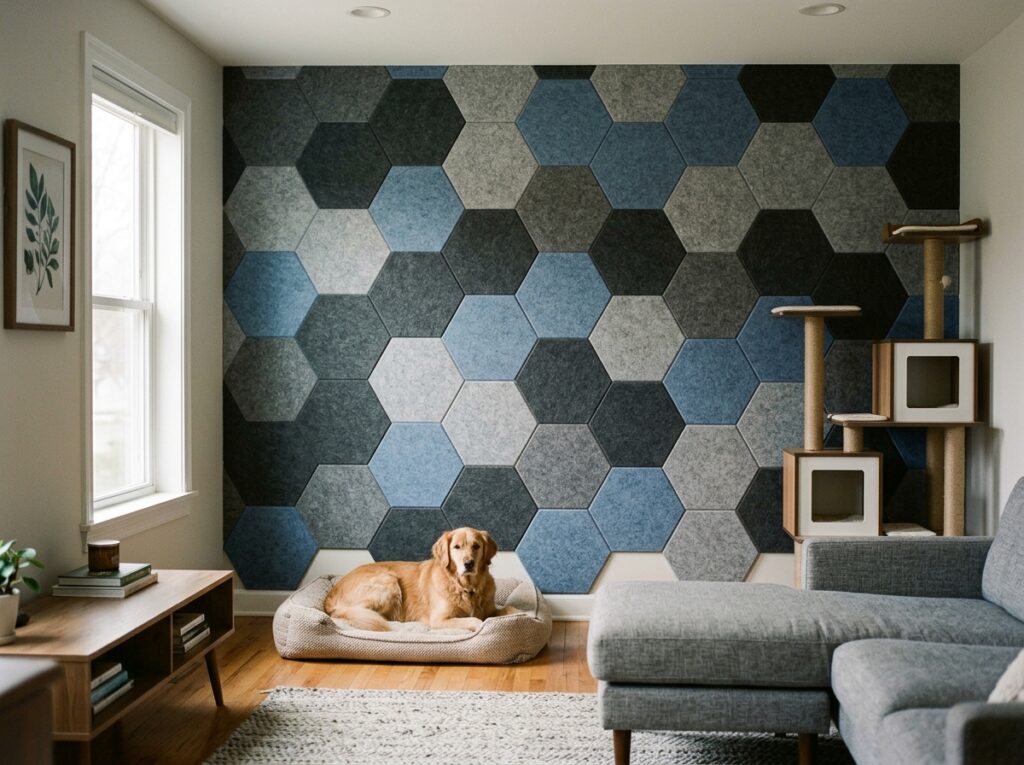
Decorative Acoustic Wall Concepts
PET panels can become a major visual feature rather than simply blending into the background.
Geometric Patterns
Panels can be arranged into triangles, rectangles, hexagons, or other geometric configurations.
Layered Designs
Different panel shapes and depths can create a three-dimensional appearance.
Colour Combinations
Multiple colours can be used to match corporate branding or create a distinctive interior feature.
Logo and Custom Shapes
Depending on the manufacturing process, PET material can be cut into custom shapes for decorative or branding purposes.
This makes the material particularly interesting for offices, hospitality venues, and commercial interiors.
Suspended PET Acoustic Elements
Not all acoustic treatment needs to be attached directly to a wall.
Suspended PET panels can hang from ceilings to provide additional sound absorption in areas with large open spaces.
These installations can be useful in:
- Open offices
- Restaurants
- Atriums
- Conference halls
- Reception areas
- Educational spaces
Suspended elements can also become part of the architectural design, especially when arranged in repeating patterns.
Choosing the Appropriate PET Panel
Several factors should be considered before selecting an acoustic PET panel.
Panel Thickness
Different thicknesses offer different acoustic characteristics. The appropriate option depends on the room and desired level of absorption.
Panel Size
Larger panels can provide broader coverage, while smaller panels may be more suitable for decorative layouts.
Colour
Colour selection should complement furniture, flooring, lighting, and surrounding architectural finishes.
Installation Location
Walls, ceilings, and suspended applications can require different installation methods.
Room Characteristics
Consider:
- Room size
- Ceiling height
- Occupancy
- Existing finishes
- Furniture
- Windows
- Primary noise sources
These factors help determine where acoustic treatment will be most useful.
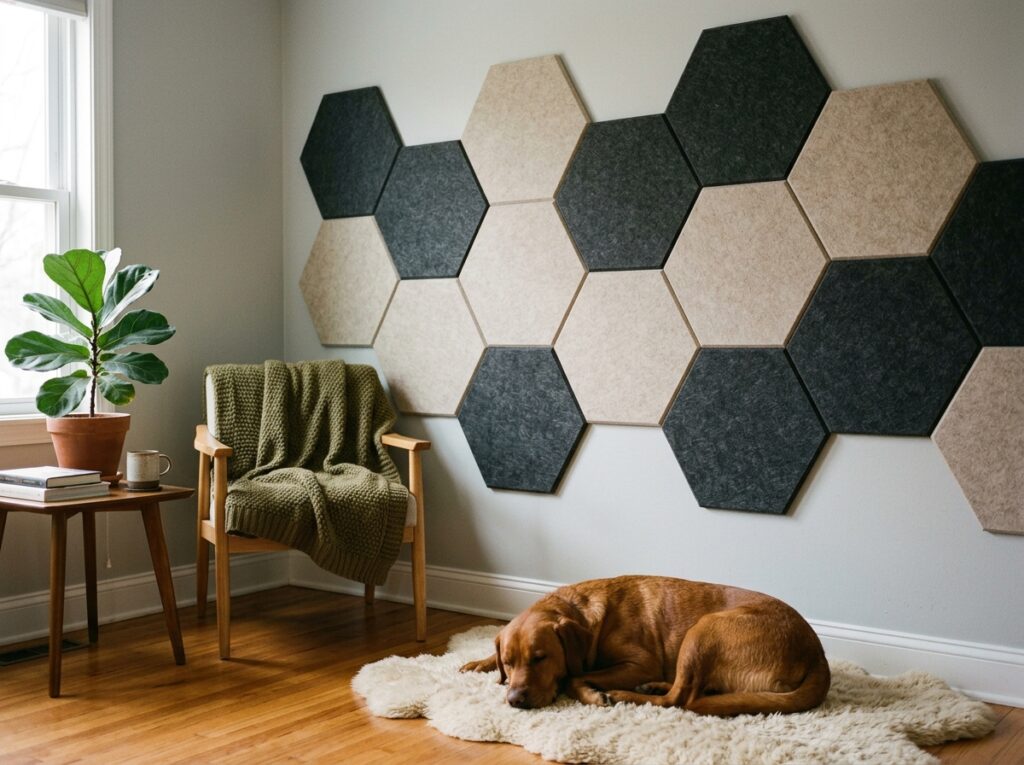
PET Panels Compared With Soundproofing Materials
Acoustic PET panels and soundproofing barriers perform different functions.
PET panels primarily absorb reflected sound inside a room.
Mass Loaded Vinyl, for example, is used as a dense barrier within construction assemblies to help reduce airborne sound transmission.
Similarly, acoustic insulation can be installed within wall and ceiling cavities as part of a sound isolation system.
A project may therefore require different materials depending on whether the main issue is:
Room echo or sound travelling between spaces.
Understanding this distinction is essential when planning an acoustic solution.
Maintaining Acoustic PET Panels
PET panels generally require simple routine maintenance.
To maintain their appearance:
- Remove dust using a soft brush or vacuum.
- Use a lightly damp cloth for suitable marks.
- Avoid soaking the material.
- Avoid abrasive cleaning products.
- Protect exposed edges from impact.
- Follow the manufacturer’s cleaning recommendations.
Regular maintenance can help preserve both the visual appearance and functionality of the panels.
Frequently Asked Questions
What are PET acoustic panels used for?
They are primarily used to absorb reflected sound and reduce echo and reverberation inside rooms.
Can PET panels make an office quieter?
They can help reduce reflected sound and reverberation, which may make an office feel acoustically more comfortable. They do not completely block noise coming from outside the room.
Can PET panels be used on ceilings?
Yes. They can be installed directly on ceilings or suspended as acoustic elements, depending on the product and installation system.
Are PET panels suitable for restaurants?
Yes. They can help manage reverberation caused by conversations, music, and hard interior surfaces.
Can PET panels replace soundproofing?
No. They are primarily sound-absorbing materials. Soundproofing between rooms requires a suitable isolation assembly.
Conclusion
Acoustic PET panels provide a versatile combination of sound absorption, lightweight construction, and contemporary design. Their ability to be shaped, coloured, and arranged in different configurations makes them suitable for both functional acoustic treatment and decorative interior applications.
For offices, restaurants, hotels, schools, conference spaces, and modern residential interiors in Accra, Ghana, PET panels can help control excessive echo and create more comfortable spaces for communication and everyday activities.
From colourful feature walls to suspended ceiling installations, acoustic PET panels offer designers a flexible way to incorporate better acoustics directly into the visual character of a modern interior.