
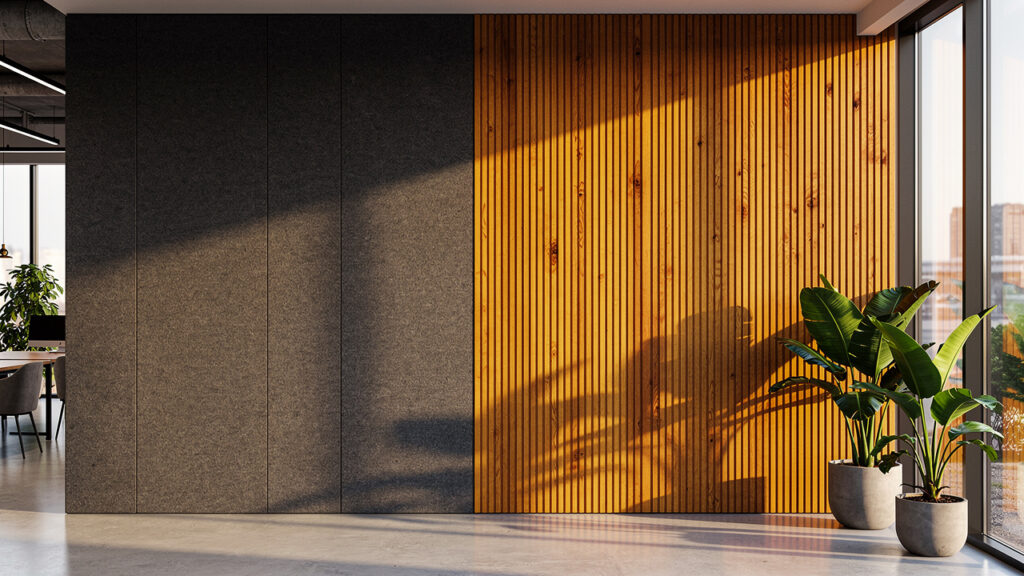
Introduction
Choosing between PET panels and wood panels for Africa can feel risky. Budgets, acoustics, and tough climates all pull in different directions, and one wrong call can mean warped walls, noisy rooms, and complaints long before the space is due for a refit.
For many projects across the continent, PET acoustic panels offer stronger moisture resistance, steadier acoustic performance, and easier care, while wood panels still make sense for prestige feature areas. This guide shows how each material is made, how they react to African climates, what they cost across their life, and which project types suit them best.
As you read, keep a specific project in mind and notice where each material clearly fits. By the end, the PET Panels vs Wood Panels for Africa decision should feel like a planned choice, not a guess.
Key Takeaways
Before getting into details, keep these headline points in mind; they frame the rest of the comparison.
PET acoustic panels and wood acoustic panels both control noise, but they do it in different ways. PET focuses on high sound absorption; wood blends moderate absorption with visual warmth many premium spaces prefer.
Across most African climates, PET performs better on moisture resistance, mold resistance, and dimensional stability. Wood can work in dry, well‑controlled interiors but needs more protection in humid or coastal zones.
PET panels usually win on total cost, durability, and clear sustainability claims. Wood panels still belong where the brief prioritizes natural grain, luxury feel, and high‑impact feature walls over maximum acoustic control.
What Are PET Acoustic Panels and Wood Acoustic Panels?
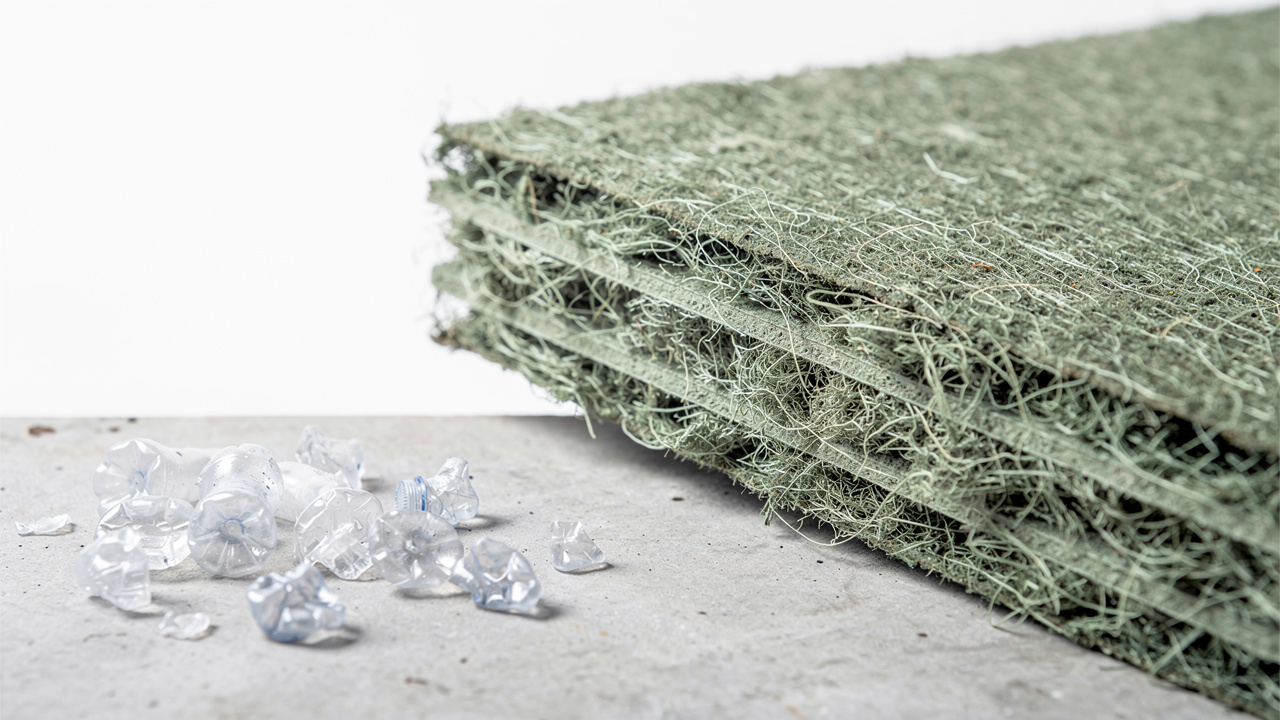
PET acoustic panels and wood acoustic panels are the two main material families for sound control and visual finishes in African projects. To compare PET Panels vs Wood Panels for Africa properly, you need a clear view of how each is made and how it behaves.
PET panels are made from polyester fiber, often sourced from recycled plastic bottles, and research into Development of a Modular sandwich panel system confirms recycled composite cores can meet building-grade structural and acoustic demands. Manufacturers heat and press this fiber into rigid boards that feel like dense felt. Many brands, including DE Sound and global producers such as Autex Acoustics and Refelt, use 60–100 percent recycled PET, giving these panels a strong sustainability story alongside sound control.
On the performance side, PET boards act as porous absorbers: sound energy enters the fiber network and turns into a tiny amount of heat instead of bouncing back into the room. According to data from Armstrong Ceiling Solutions, high‑performance panels can reach Noise Reduction Coefficient (NRC) values of 0.90 or higher, which matches common PET ranges of about 0.75–0.95, depending on thickness, density, and mounting.
Wood acoustic panels cover a broad family of products: perforated MDF boards, slatted systems with timber ribs over black felt, grooved panels, and plain solid timber cladding. The core may be MDF, plywood, or engineered wood with a veneer that shows the grain; appearance is usually the first priority, with acoustics tuned by adding holes, slots, or backing materials.
Because of that structure, wood systems deliver more varied acoustic results. A plain timber panel reflects most sound and may only reach an NRC of around 0.25, while well‑designed perforated or slatted panels installed over mineral wool can achieve roughly 0.75–0.85. Designers often choose wood when they want warmth, prestige, and a lively feel in boardrooms, hotel lobbies, or high‑end reception areas.
How Do PET and Wood Panels Perform in African Climates?
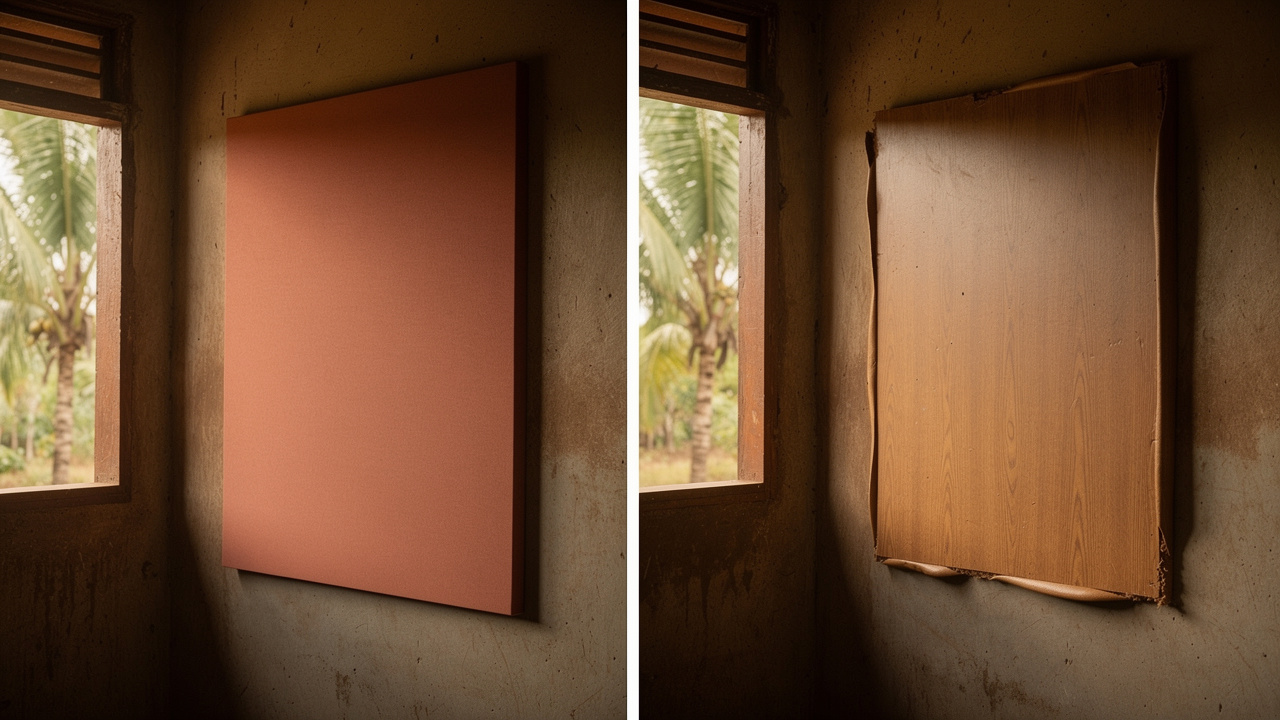
PET and wood acoustic panels react very differently to the humidity, heat, and temperature swings common across African cities. When you weigh PET Panels vs Wood Panels for Africa, this climate behavior often decides which option lasts.
PET boards are plastic‑based and do not soak up water, so they resist swelling, warping, and rot in humid locations — a finding consistent with research on The use of waste PET plastics as wall cladding materials, which confirms their dimensional stability in real building conditions. They also resist mold growth, which matters because the World Health Organization links damp, moldy buildings with around a 50 percent increase in respiratory problems. For schools, clinics, and offices, that health angle is as important as appearance.
Temperature changes affect PET very little. Ceiling clouds or wall panels in offices, call centers, or classrooms keep their shape through hot summers and cooler winters. Cleaning staff can wipe them with a damp cloth and mild detergent without worrying about raised edges or bubbling veneers. DE Sound has seen this same stability across Gulf projects in Dubai, Doha, and Riyadh, where heat and humidity can be even harsher than in many African locations.
Wood‑based panels react in a more complex way. In humid zones, solid timber and MDF both absorb moisture from the air, which can cause edges to swell, faces to ripple, joints to open, or veneers to peel. In drier inland regions, timber can dry out and crack if indoor humidity drops too low. Protective sealers help, but they add cost and must be renewed.
That difference has real impact for facility managers. PET panels usually need only light cleaning across their life, while wood panels demand inspections, touch‑up coating, and occasional replacement where damage shows, adding staff time and material cost over the long term.
Here is a simple climate comparison.
| Climate Factor | PET Acoustic Panels | Wood Acoustic Panels |
|---|---|---|
| Moisture resistance | Do not absorb water, stay stable in humid air | Absorb moisture, can swell or warp without strong sealing |
| Temperature stability | Minimal movement across hot and cool seasons | Expand and shrink; joints and veneers may open or crack |
| Mold and mildew behavior | Fiber does not feed mold growth | Backing and fiber can host mold in damp conditions |
| Maintenance frequency | Occasional cleaning only for most interiors | Periodic sealing, refinishing, and inspection often required |
Cost, Sustainability, and Long-Term Value: Which Panel Wins?
Cost, sustainability, and long‑term value sit near the center of any PET Panels vs Wood Panels for Africa decision. This section looks at money spent on day one, money spent later, and how easily each option supports green building goals.
On purchase price, PET panels usually sit below high‑grade wood systems. The boards are light, ship efficiently, and install with adhesive, basic framing, or simple suspension hardware, so regular drywall teams can handle the work without specialist carpentry.
Wood panels often start with a higher price per square meter, especially when real veneers like oak, walnut, or ash are specified. Slatted systems need careful layout, backing, and trimming, so labor hours grow quickly. Over time, wood also needs more site visits to repair chips, refinish worn faces, or address swelling in humid regions.
From a sustainability view, PET has a clear story. Panels often use a high share of recycled fiber and can themselves reenter the recycling stream. The U.S. Environmental Protection Agency reports that making products from recycled plastic can use about two‑thirds less energy than producing plastic from raw fossil fuels. PET boards also contain no added formaldehyde and very low volatile organic compounds (VOCs), which supports healthy indoor air — an important consideration given that Respiratory incidents in response to air quality deterioration are well-documented and underscore why low-emission building materials matter.
Wood can also support environmental goals when sourced from forests certified by the Forest Stewardship Council (FSC) or PEFC. The challenge is tracking that supply chain into African markets, where documentation can be patchy. MDF cores often rely on urea‑formaldehyde binders, which release VOCs over time unless you pay extra for low‑emitting grades.
To summarize money and value, focus on these factors:
Initial material price
PET panels usually land at a mid‑range price that fits many commercial budgets. Wood acoustic systems, especially slatted or real‑veneer types, sit higher, and the gap widens when you add trims and backing materials.Installation work
PET boards cut easily on site and fix to walls or ceilings with simple tools, so crews can turn around offices, schools, or hotels quickly. Wood panels often need specialist carpenters who focus on alignment, grain direction, and concealed fixing, which slows programs and raises labor cost.Maintenance and lifespan
PET panels tend to keep their form and color for more than a decade with only light cleaning; damage is usually local and easy to replace. Wood needs more careful cleaning, new coats of sealant, and earlier replacement where moisture or wear appear.Sustainability and certification
Recycled PET content, low emissions, and recyclability help projects pursue Green Star South Africa, LEED, and EDGE points, with documentation straightforward from suppliers such as DE Sound. Wood can also contribute, but certification tracking, adhesive emissions, and long transport routes add extra work for project teams.
Which Panel Type Is Right for Your African Project?

Choosing the right panel type for an African project means matching use, climate, and design intent rather than following fashion. This section turns the broad PET Panels vs Wood Panels for Africa debate into clear, project‑based guidance.
For functional, busy spaces such as call centers, classrooms, or clinics, PET usually offers the best mix of performance and practicality, as demonstrated by research into Mechanical Properties of Hybrid particle boards produced from waste PET plastics, which validates the durability of PET-based boards under demanding usage conditions. It cuts echo, copes with frequent cleaning, and suits colorful or branded interiors. Recording studios, podcast rooms, and content‑creator spaces also rely heavily on PET, often in thicker boards, to control mid and high frequencies.
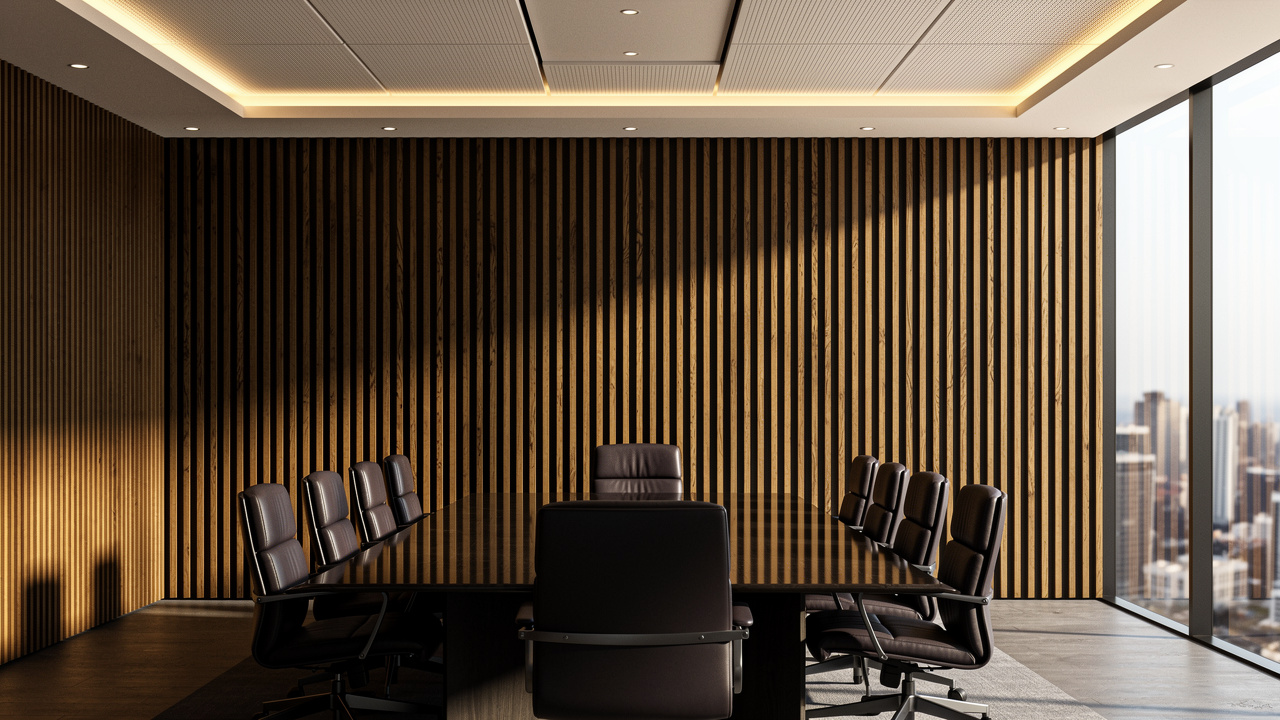
Premium spaces often tilt toward wood. Executive boardrooms or luxury hotel lobbies favor timber slats or perforated timber for their presence and warmth. Here the acoustic need is usually controlled liveliness rather than maximum damping, and budgets can carry higher material and maintenance costs. Many designers combine wood feature walls with PET ceiling clouds so performance and aesthetics share the load.
The learning sector deserves special mention. Research highlighted by the American Speech-Language-Hearing Association shows that poor classroom acoustics can reduce how much speech children understand by as much as 25 percent. For African schools facing large class sizes and concrete structures, PET panels on ceilings and upper walls can make a clear difference to focus and test scores.
Tip from DE Sound: “When in doubt, start by treating the ceiling with high‑absorption PET panels, then add wood features only where the design truly needs them.”
Use this table as a quick reference.
| Project Type | Recommended Panel Choice | Main Reason |
|---|---|---|
| Open plan office in Johannesburg | PET acoustic panels | Strong speech clarity, easy retrofit, and controlled cost |
| Call center or BPO hub | PET acoustic panels | High absorption for many voices and simple maintenance |
| School classroom or lecture hall | PET acoustic panels | Better learning conditions and resistance to frequent cleaning |
| Recording studio or podcast room | Thick PET panels | Precise control over reflections in mid and high frequencies |
| Hospital ward or clinic waiting area | PET acoustic panels | Hygiene‑friendly surface and calm sound levels |
| Large hotel conference room | PET panels with limited wood accents | Balanced absorption, flexible layouts, and subtle prestige where needed |
| Executive boardroom | Wood acoustic panels | Natural grain and high‑end feel for client‑facing spaces |
| Luxury hotel lobby or fine dining venue | Wood acoustic panels | Warm, premium identity that supports the rest of the fit‑out |
| Home cinema or premium residential lounge | Wood panels with PET backing | Rich appearance combined with tuned absorption behind the scenes |
| Co‑working hub or creative studio | PET acoustic panels | Bright colors, graphic cuts, and easy changes when tenants rotate |
Where to Source Quality Acoustic Panels for African Projects
Sourcing reliable PET and wood acoustic panels for African projects is far easier when you partner with a specialist acoustic wholesaler rather than a general finishes distributor. DE Sound operates across six Gulf Cooperation Council countries and brings that tested technical knowledge to anyone comparing PET Panels vs Wood Panels for Africa.
DE Sound supplies both PET acoustic boards and engineered wood panel systems, all with measured acoustic data and fire test reports. Contractors, fit‑out companies, and interior designers can see NRC values, thickness options, and mounting methods up front instead of guessing from catalog photos. The company’s factory‑direct model gives access to wholesale pricing that suits large schools, hotel groups, and corporate rollouts.
Because DE Sound works daily in challenging climates like Dubai, Abu Dhabi, and Doha, its team understands how materials behave in extreme heat and humidity, conditions similar to cities such as Durban, Lagos, or Dar es Salaam. Through free technical consultation, DE Sound helps project teams select the right panel type, thickness, and layout pattern for their use, climate, and budget.
“Green‑certified buildings can cut operating costs by around 25 percent compared with conventional buildings.” — Green Building Council of South Africa
By guiding clients toward recycled PET systems and documented wood options, DE Sound supports those financial and environmental gains while keeping acoustic quality central.
The Bottom Line
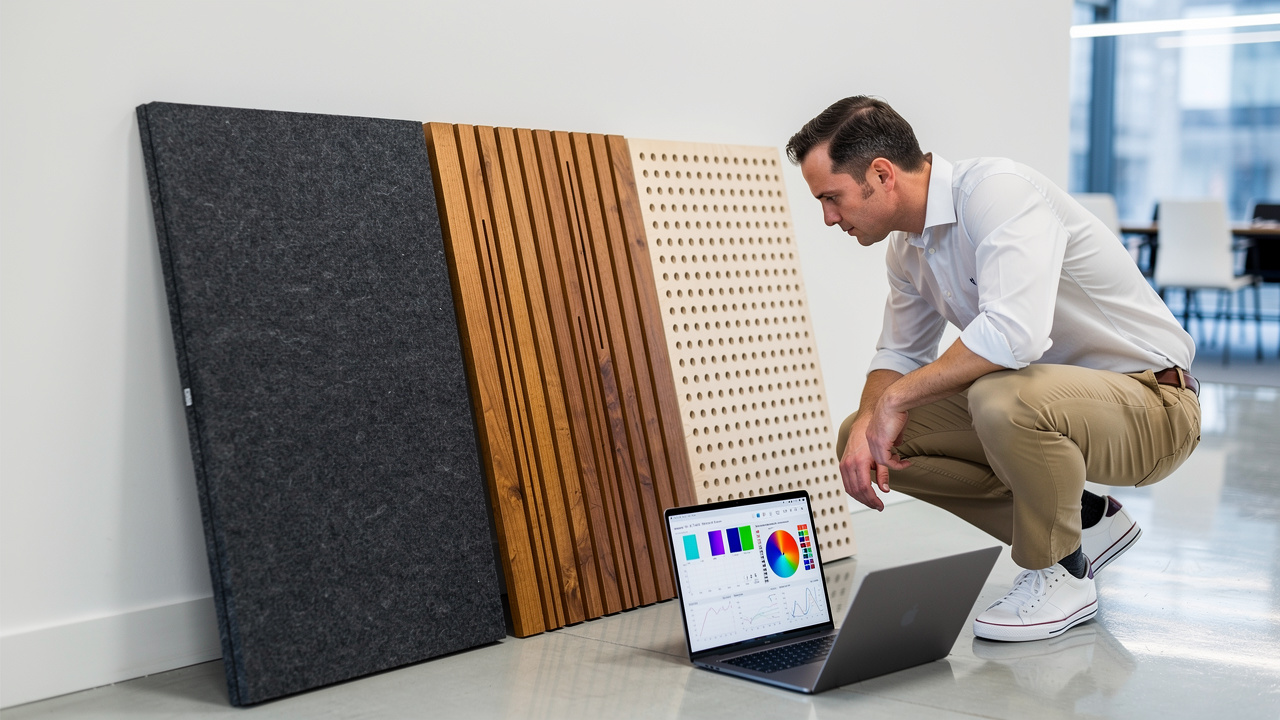
For most everyday African projects, the PET Panels vs Wood Panels for Africa answer is fairly clear. PET acoustic panels usually serve offices, schools, healthcare spaces, studios, and conference venues better because they absorb more sound, resist humidity, and cost less to maintain over their life.
Wood acoustic panels still shine where natural grain, luxury feel, and brand presence sit at the heart of the brief. Executive suites, high‑end hospitality, and premium residential rooms can justify the extra spend and care they need. In many schemes, a smart mix works best, with PET handling most of the acoustic work and wood used as a focused feature.
If you want help matching panels to climate, budget, and performance targets, DE Sound offers free consultation, tested product data, and factory‑direct pricing. That support can make your next African project quieter, more durable, and easier to justify to every stakeholder.
Frequently Asked Questions
Question: Are PET acoustic panels suitable for outdoor or semi‑outdoor spaces in Africa?
Answer: PET acoustic panels are designed mainly for interior use. Their moisture resistance lets them cope with covered semi‑outdoor areas in mild climates, but direct rain, strong sun, and heavy dust will shorten their life. For full exposure you still need cladding and finishes rated for exterior conditions.
Question: Can wood acoustic panels be treated to resist humidity in African climates?
Answer: Yes. Wood acoustic panels can receive sealers, lacquers, and edge treatments that slow moisture uptake. These finishes improve stability but add cost during installation and over time, because many products need fresh coats. In very humid coastal zones, PET panels remain the safer, lower‑effort choice.
Question: What NRC rating should I target for a school classroom in Africa?
Answer: Aim for an NRC of at least 0.70 on the main acoustic surfaces in classrooms. That level keeps reverberation low enough for speech to stay clear across the room. PET panels from around 18 millimeters upward generally reach this range without extra backing, while high‑grade perforated wood can match it only with quality absorbers behind.
Question: Do PET panels comply with green building standards used in South Africa?
Answer: Yes. PET acoustic panels can support Green Star South Africa, LEED, and EDGE goals. Their recycled content, low emissions, and recyclability align well with material and indoor‑air credits. DE Sound supplies PET products with test reports and documentation so project teams can prove those contributions during certification.
Question: Is it possible to combine PET and wood acoustic panels in the same project?
Answer: Very much so. For example, you might use PET ceiling clouds and wall panels for strong absorption, then add a slatted wood feature wall in a reception or boardroom. DE Sound’s consultants help designers plan balanced hybrids that meet both acoustic and visual targets.