
Introduction
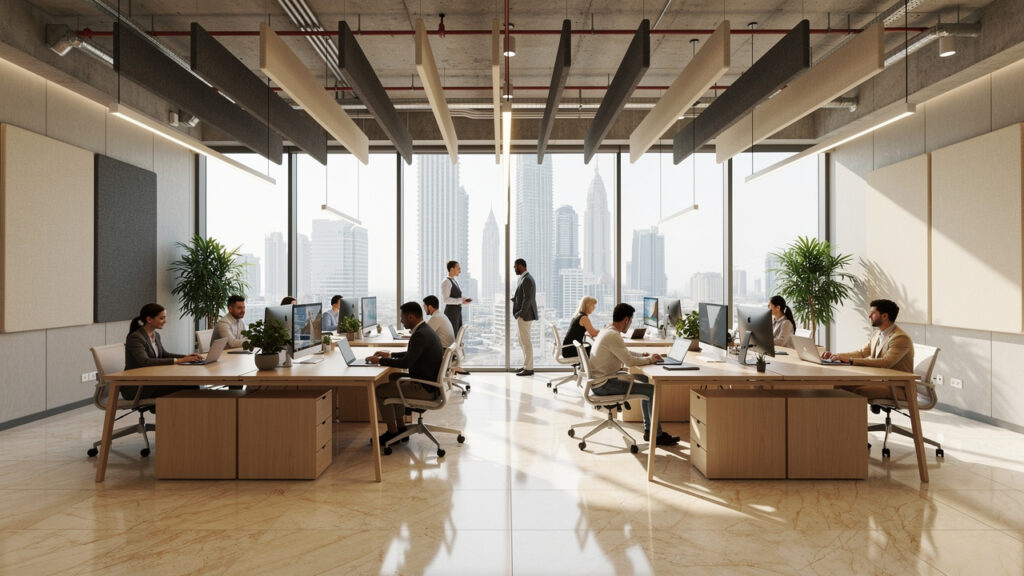
Many GCC offices without acoustic panels sound more like airports than workplaces. Hard concrete, glass, and stone bounce every phone call and keyboard click around the room, leaving staff drained by mid-day.
In open-plan layouts, one loud conversation can travel across entire departments. Private HR meetings or strategy calls feel awkward because anyone nearby hears every word, so people either talk less, hide in corridors, or wear headphones all day.
Wall and ceiling panels that absorb sound cut this echo, control noise, and improve speech clarity. When key surfaces are treated, offices across Dubai, Abu Dhabi, Doha, and the wider GCC can reach comfortable acoustic levels that support focus, privacy, and clear communication.
This guide explains why office acoustics matter so much in the Gulf, how panels affect productivity, which products work best in each space, and how DE Sound helps designers and contractors source reliable materials for GCC fit-outs.
Key Takeaways
Before diving into details, here are the main points project teams should keep in mind. Use this list as a quick checklist during design and coordination.
The main acoustic issue in GCC offices comes from hard concrete, glass, and stone finishes that reflect sound. In many towers along Sheikh Zayed Road or in Riyadh business districts, that reflection creates long echo and noisy rooms where a short chat can disturb people across the floor.
Open-plan layouts in Dubai, Abu Dhabi, Doha, and Manama amplify noise from phone calls, printers, and casual conversations. Research from Leesman shows noise control is one of the lowest-rated parts of office life worldwide, so every untreated open-plan floor loses valuable concentration time.
Three main acoustic panel families cover most commercial needs: PET fiber panels, wood acoustic panels, and stretch fabric systems. Ceiling baffles and acoustic clouds then help control high, reflective ceilings common across Gulf towers.
DE Sound eases supply headaches for Gulf projects with factory-direct pricing, fast GCC-wide delivery, and free technical advice. Designers, fit-out contractors, and facility managers can handle large rollouts with consistent quality and clear fire and acoustic test reports.
What Makes GCC Offices Acoustically Challenging?
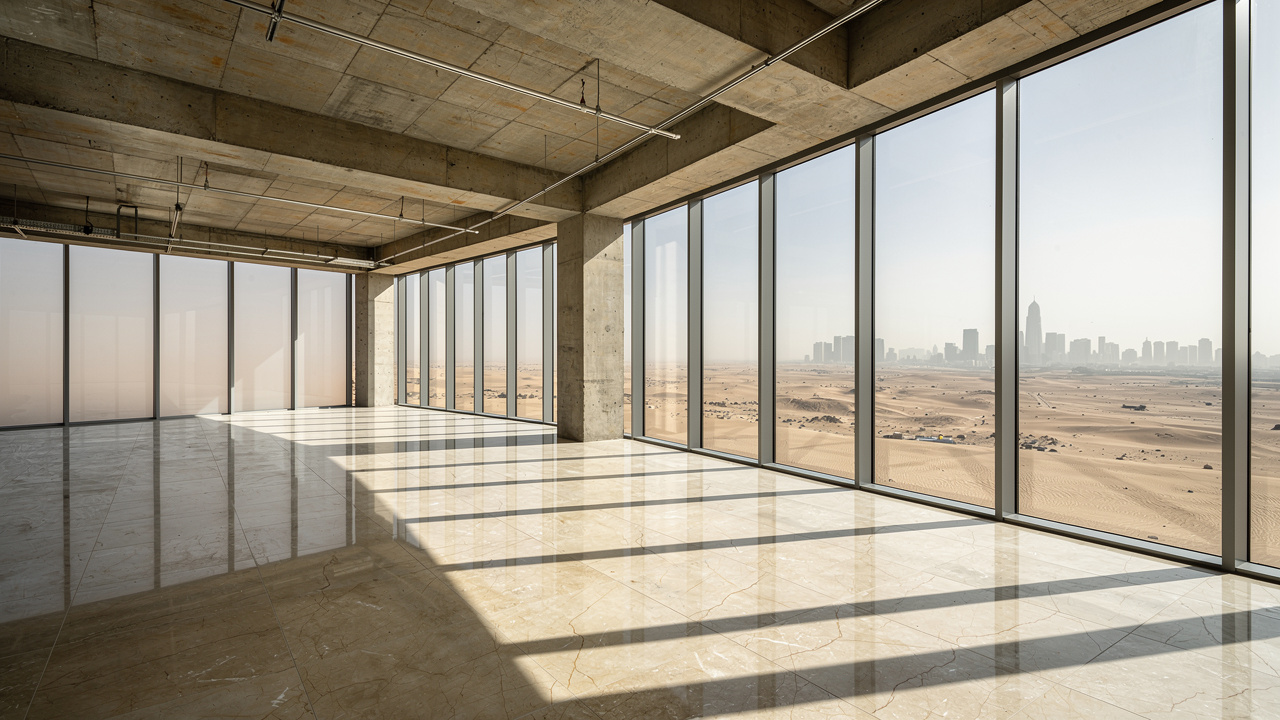
GCC offices are challenging acoustically because they mix hard reflective materials with open layouts and high ceilings. Without treatment, this combination leads to long reverberation times, overlapping conversations, and weak speech privacy.
Across the UAE, Saudi Arabia, Qatar, Bahrain, Kuwait, and Oman, most office towers use concrete slabs, glass curtain walls, and polished stone floors. These surfaces reflect sound instead of absorbing it, so every voice bounces multiple times before fading, creating a constant background roar as the space fills up.
Open-plan concepts in areas such as DIFC, Dubai Internet City, and King Abdullah Financial District remove many internal walls. That improves visibility between teams but also creates direct sound paths from one group to another. Oxford Economics reports that knowledge workers lose around 86 minutes of productive time per day to noise and interruptions, with open offices being a major cause.
High ceilings, exposed services, and large glass meeting rooms introduce even more reflection points. Without acoustic panels, reverberation time often sits well above the 0.4–0.6 second range recommended for offices in standards referenced by the WELL Building Standard, which makes speech blur together and forces people to strain to understand colleagues or clients.
Noise is more than a nuisance; it affects health. The World Health Organization links long-term noise exposure to higher stress, sleep problems, and increased cardiovascular risk. For GCC employers competing for talent, acoustic comfort has become part of a healthy, attractive workplace.
Several factors combine to make the issue especially strong in the Gulf:
Construction norms favor hard, glossy finishes that look premium but act like mirrors for sound. A single marble lobby or glass corridor can send footsteps and voices back and forth many times; when that lobby opens straight onto work areas, the noise spreads even further.
Densely occupied floors with shared desks, phone booths, and collaboration hubs add many small sound sources—hybrid meetings on Microsoft Teams or Zoom, client calls, and conversations in several languages. Without acoustic treatment, the sound level rises until people start raising their voices just to be heard.
Mechanical systems such as HVAC units, fan coils, and server rooms add a constant low-level hum. On their own they may seem acceptable, but combined with open-plan chatter and reflective finishes they push the overall noise floor to tiring levels.
How Do Acoustic Panels Improve Office Productivity And Comfort?
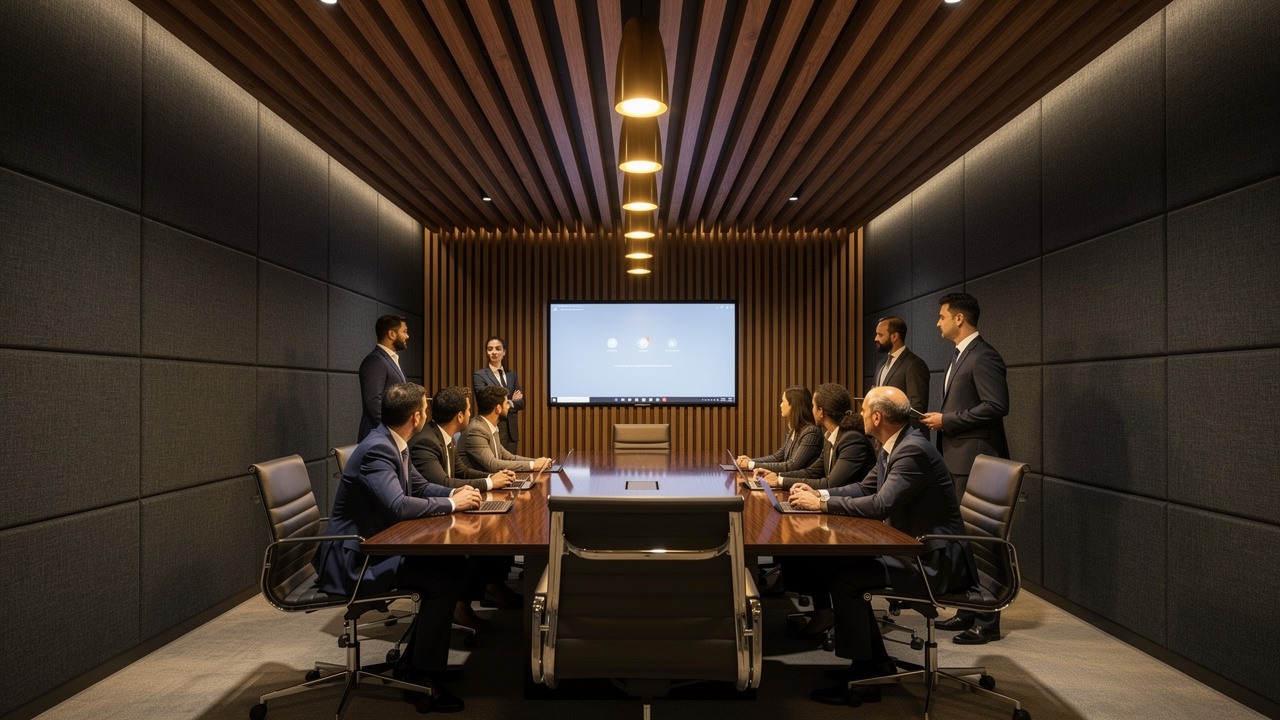
Office acoustic panels improve productivity and comfort by absorbing sound energy before it bounces around the room. By cutting reflections from walls and ceilings, they reduce reverberation time (RT60) to office-friendly levels, which makes speech clearer and background noise less distracting.
When sound hits a panel made from PET fiber, mineral wool, or similar porous materials, tiny air gaps convert part of that energy into heat. The performance of a panel is measured by its Noise Reduction Coefficient (NRC): an NRC of 0.80 means the material absorbs 80% of the sound that reaches it. High-quality office panels from suppliers such as DE Sound typically achieve NRC values between 0.80 and 1.00 under ASTM C423 test conditions.
Better acoustics are closely tied to business results. Oxford Economics notes that noise and distractions are major causes of lost productivity in knowledge work, while studies reviewed by Nielsen Norman Group show that people in noisy spaces make more errors and feel more fatigued at the end of the day.
“Noise is the most common complaint in modern offices, yet it is still treated as an afterthought in many projects.” — Julian Treasure, sound consultant and author
“Good workplace acoustics help knowledge workers think clearly, communicate easily, and avoid fatigue across a full day.” — Dr Nigel Oseland, workplace psychologist at Workplace Unlimited
Here is how acoustic panels improve everyday office life:
In open-plan areas, wall panels and ceiling rafts absorb the first reflections from speech and office equipment. This lowers the overall noise level so people no longer need to raise their voices, supporting deeper focus for tasks such as coding, analysis, and report writing.
In meeting rooms and boardrooms, treated walls and ceilings improve speech clarity for everyone at the table and on video calls. Microphones on Microsoft Teams, Zoom, or Webex pick up less echo and background noise, so clients abroad hear a clearer signal—even when several languages are spoken.
Around reception desks, lift lobbies, and coffee points, localized treatment keeps those lively zones from spilling noise into nearby workstations. Staff can hold quick chats or stand-up huddles without disturbing colleagues, and visitors experience a calmer first impression of the brand.
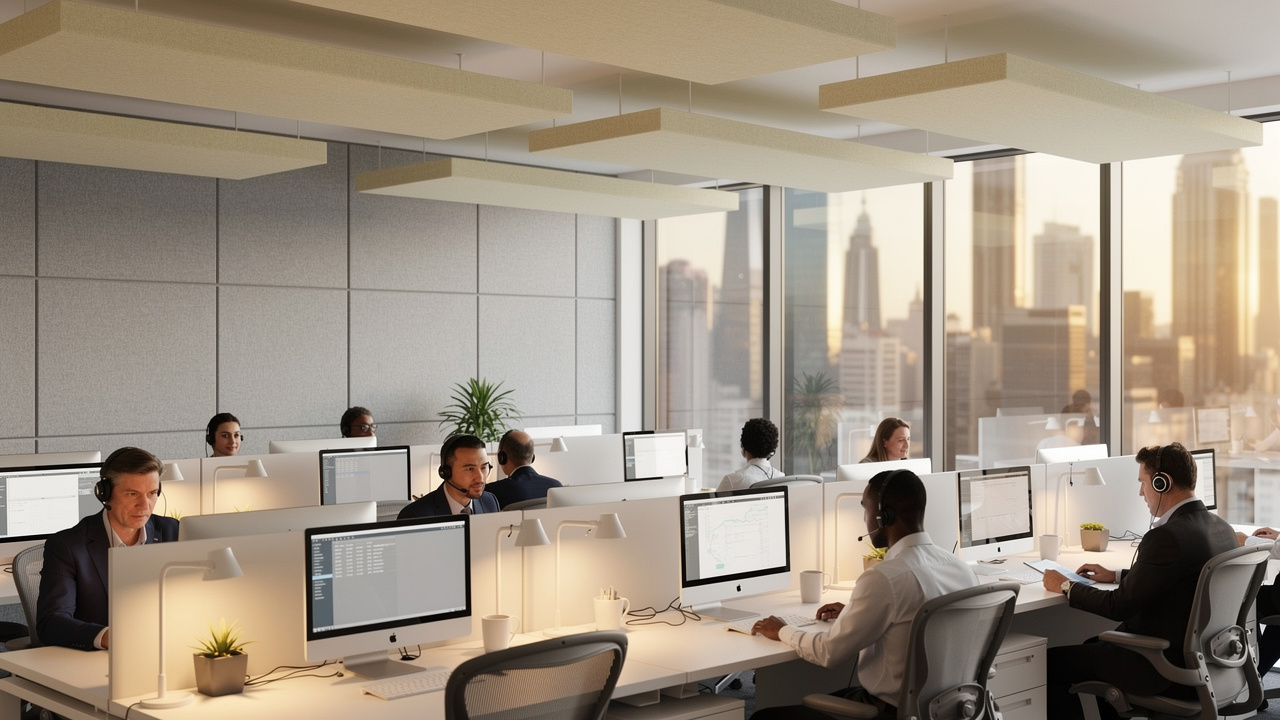
In call centers and customer support hubs, better acoustics reduce listening fatigue during long shifts, as studies on perception and comprehension of environmental sounds confirm how noise degradation affects auditory processing under demanding conditions. Agents hear callers more clearly and spend less effort guessing words through noise, which supports both service quality and staff retention.
Which Types Of Acoustic Panels Work Best In Commercial Office Spaces?
The most effective acoustic panels for commercial offices in the GCC are PET fiber panels, wood acoustic panels, and stretch fabric systems, supported by ceiling baffles and acoustic clouds. Each type suits different zones and design goals, from open-plan floors to executive suites.
PET fiber panels use compressed polyester—often made from recycled plastic bottles—to create light, easy-to-cut absorbers. They are widely used as decorative wall panels, desk screens, and ceiling rafts, and many PET products supplied by DE Sound support green building targets such as LEED and Estidama, which are common in UAE and Saudi projects.
Wood acoustic panels combine a natural timber finish with hidden absorption. Perforated or slotted MDF or plywood fronts sit in front of an acoustic backing so sound passes through small gaps and is absorbed behind, making these systems ideal for boardrooms, reception areas, and client-facing meeting suites.
Stretch fabric systems use a concealed frame, acoustic infill such as mineral wool, and a stretched fabric surface. The fabric can be plain, textured, or printed with graphics, giving designers wide visual freedom and allowing whole walls to perform as high-NRC absorbers in conference rooms, training spaces, and corporate auditoriums.
Many GCC offices also struggle with sound reflecting off high concrete slabs. Suspended ceiling baffles and acoustic clouds address this by hanging from the soffit and exposing both sides of the panel to sound. Guidance referenced by the WELL Building Standard suggests treating around 25–35% of combined wall and ceiling area in open offices, and hanging systems help reach that coverage without using too much wall space.
In practice, commercial projects across the Gulf often mix several products. A floor in Dubai Media City, for example, might use PET desk screens between workstations, wood slat panels in client areas, and stretch fabric walls in videoconference rooms. DE Sound works with designers and fit-out teams to balance performance, fire rating, and aesthetics across these different zones.
PET Panels, Wood Panels, Or Stretch Fabric: Which Should You Specify?
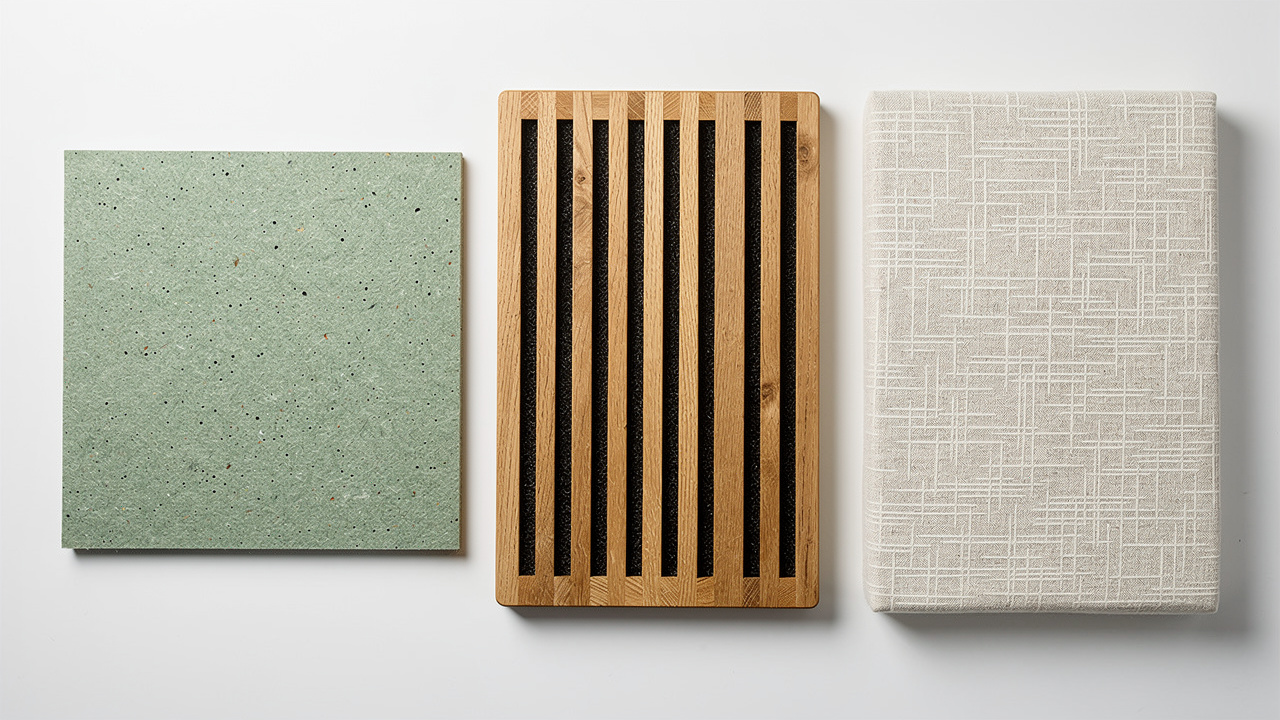
Choosing between PET, wood, and stretch fabric panels depends on the room type, desired look, and sustainability goals. Because DE Sound supplies all three families, project teams can select the best option for each room without juggling multiple vendors.
| Panel Type | Best Office Application | NRC Range | Sustainability Notes |
|---|---|---|---|
| PET fiber panels | Open-plan workstations, focus rooms, acoustic screens, ceiling rafts | Around 0.70 to 1.00 | Often made from high recycled PET content, can support LEED and Estidama points |
| Wood acoustic panels | Boardrooms, reception areas, executive suites, client lounges | Around 0.60 to 0.90 with acoustic backing | Wood veneer with acoustic core, can be specified with FSC timber and low VOC finishes |
| Stretch fabric systems | Conference rooms, training spaces, large meeting rooms, lobbies | Around 0.80 to 1.00 | Uses durable fabric and mineral wool, can integrate low VOC fabrics and recyclable cores |
Panel thickness also matters. For most GCC offices focused on speech, 25–50 millimetre panels on walls and ceilings work well; thicker panels or dedicated bass traps are mainly needed for recording studios, podcast rooms, or high-end media spaces that demand more low-frequency control.
Why GCC Fit-Out Contractors Choose DE Sound For Bulk Acoustic Panel Supply
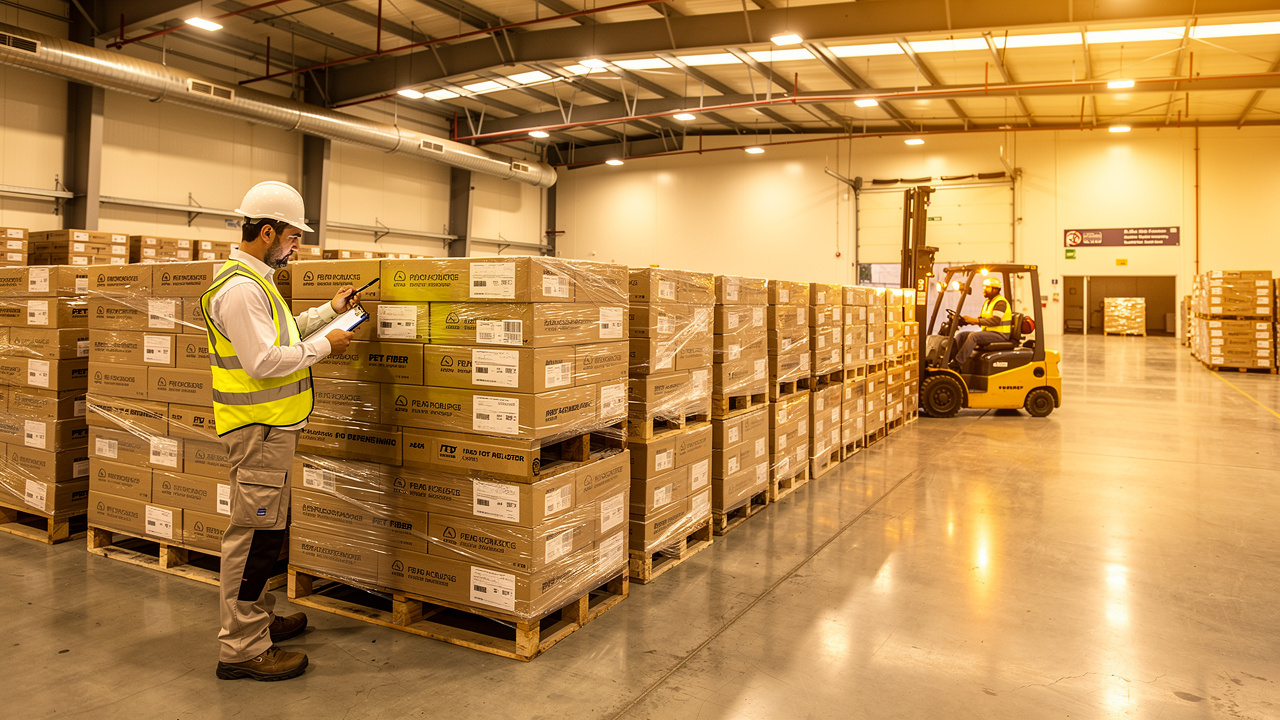
GCC fit-out contractors often choose DE Sound for acoustic panels because the company combines factory-direct pricing, regional stock, and hands-on technical support. Facility managers and procurement teams also value having one partner working consistently across the six GCC countries.
For commercial projects in Dubai, Abu Dhabi, Riyadh, Jeddah, Doha, and Muscat, budgets are tight and timelines are compressed. Buying materials through several small agents can create price gaps, color mismatches, and delivery delays. DE Sound addresses this by supplying PET panels, wood acoustic panels, stretch fabric systems, and ceiling baffles at wholesale rates straight from partner factories.
Certified performance is just as important as price. Office-grade panels from DE Sound are supported by fire and acoustic test reports in line with standards such as BS 476, ASTM E84, and EN 13501, helping consultants and authorities—including Dubai Civil Defence and Abu Dhabi Municipality—approve submittals more quickly.
Design and layout support simplifies life for teams that are not acoustic specialists. DE Sound offers free consultations to help choose panel types, thicknesses, and coverage for each room, including basic RT60 estimates, layout sketches, and advice on suitable fixing methods for concrete walls, gypsum partitions, or exposed soffits.
Key benefits that keep GCC contractors returning to DE Sound include:
Factory-direct pricing that helps commercial and government clients stretch fit-out budgets while still using tested acoustic panels, so teams do not need to cut back on treatment at the last minute.
Fast GCC-wide delivery from regional warehouses, with shipments planned around project milestones so panels arrive when walls and ceilings are ready—reducing site storage pressure and avoiding last-minute air freight.
A broad product range from one supplier, keeping specifications consistent across large portfolios. For example, a bank with multiple branches across the GCC can use the same PET and wood systems everywhere, simplifying maintenance and future upgrades.
“DE Sound understands the acoustic challenges of GCC offices—from hard concrete and glass construction to open-plan layouts and high ambient noise—and provides products and guidance developed specifically for the region.”
Key Points To Remember
These points sum up what GCC project teams should remember when planning office acoustics.
Hard finishes and open-plan layouts make Gulf offices far noisier than many clients expect; retrofitting acoustic panels is usually the quickest way to fix echo and privacy issues.
Covering about 25–35% of wall and ceiling surfaces with quality acoustic materials can significantly reduce noise and, as Leesman notes, boost employee satisfaction scores.
Choosing between PET, wood, and stretch fabric panels lets designers match performance with brand style, while DE Sound provides samples, mock-ups, and technical data across six GCC countries.
The Bottom Line
GCC offices face strong acoustic challenges from glass curtain walls, concrete cores, marble floors, and dense open-plan layouts. Without well-placed acoustic panels, these spaces quickly feel noisy, tiring, and unproductive for the people who use them every day.
By absorbing reflections and bringing reverberation times into office-friendly ranges, acoustic panels improve speech clarity, privacy, and overall comfort. PET fiber panels, wood acoustic panels, stretch fabric systems, and ceiling baffles give designers flexible tools to treat almost any room type, while DE Sound adds value through factory-direct pricing, certified products, and free advice delivered across six Gulf countries.
For interior designers, contractors, and facility managers planning a new office or refurbishment in the UAE or wider GCC, it pays to involve acoustic planning early, decide where panels will deliver the greatest benefit, and speak with the DE Sound team about bulk supply and layout guidance for your specific project.
Frequently Asked Questions
Question 1: What Is The Difference Between Soundproofing And Acoustic Panels?
Soundproofing focuses on blocking sound from passing between rooms using heavy walls, sealed doors, and special glazing. Acoustic panels do not stop sound leaving or entering a room; instead they absorb reflections inside the space. Most GCC offices mainly need acoustic treatment with panels rather than full structural soundproofing.
Question 2: How Many Acoustic Panels Does An Open-Plan Office Need?
Many open-plan offices work well when 25–35% of the combined wall and ceiling area is covered with absorptive material. Larger or taller spaces may also need ceiling baffles in addition to wall panels. DE Sound offers free consultations to help calculate sensible coverage for each floor plate and layout.
Question 3: Are Acoustic Panels Compliant With UAE And GCC Building Codes?
Office-grade acoustic panels in the UAE and wider GCC must carry valid fire test reports, such as BS 476, ASTM E84, or EN 13501. DE Sound supplies certified, fire-rated panels with full documentation ready for consultant and authority approval, and many PET products can also support LEED and Estidama targets.
Question 4: Can Acoustic Panels Be Customized To Match Office Interior Designs?
Yes. Acoustic panels can be produced in custom sizes, colors, and finishes to suit specific concepts. Options include PET panels in many shades, wood veneers that match joinery, and stretch fabrics printed with brand graphics. DE Sound provides samples and custom fabrication for custom office fit-outs across the GCC.
Question 5: How Quickly Can Acoustic Panels Be Delivered Across The GCC?
Lead time depends on panel type and level of customization, but DE Sound holds stock and manages regular shipments across six GCC countries. For standard panels, deliveries can often align with typical fit-out timelines, while for large or custom orders the team plans production and logistics around the project schedule.