

Noise from traffic, neighbors, and busy lobbies now spills into many UAE homes, apartments, and offices.
Conversations leak through walls, and sleep or daytime focus often suffers.
The best sound insulation systems for residential and commercial buildings stop noise moving between rooms and floors. They add mass, decouple structures, and seal gaps so walls, ceilings, floors, windows, and doors work as one quiet shell. This guide explains sound insulation versus sound absorption, shows which assemblies suit each surface, and highlights how DE Sound supports UAE and wider Gulf projects.
Start with the core acoustic concepts, then move room by room through the building.
Key Takeaways
Before getting into materials, here are the main points this article covers.
Sound insulation blocks noise that moves between spaces. Sound absorption calms reflections inside a room. When you know which problem you face, every material choice becomes easier.
Effective acoustic control touches five surfaces in every UAE project. Walls, ceilings, floors, windows, and doors all play a part. Ignoring even one surface leaves clear paths for noise to travel.
Performance ratings help compare products without guesswork. STC, IIC, NRC, and CAC numbers show how much sound a system blocks or absorbs. These ratings sit at the center of smart procurement decisions.
DE Sound supplies tested acoustic materials at wholesale pricing across the UAE and GCC. The team adds free technical advice so assemblies work as designed, not just on paper. That mix of stock, pricing, and support saves time for designers and contractors.
Early acoustic planning during design and tender stages keeps costs lower than trying to fix noise complaints after handover.
Sound Insulation Vs. Sound Absorption: Why the Distinction Matters for Your Project
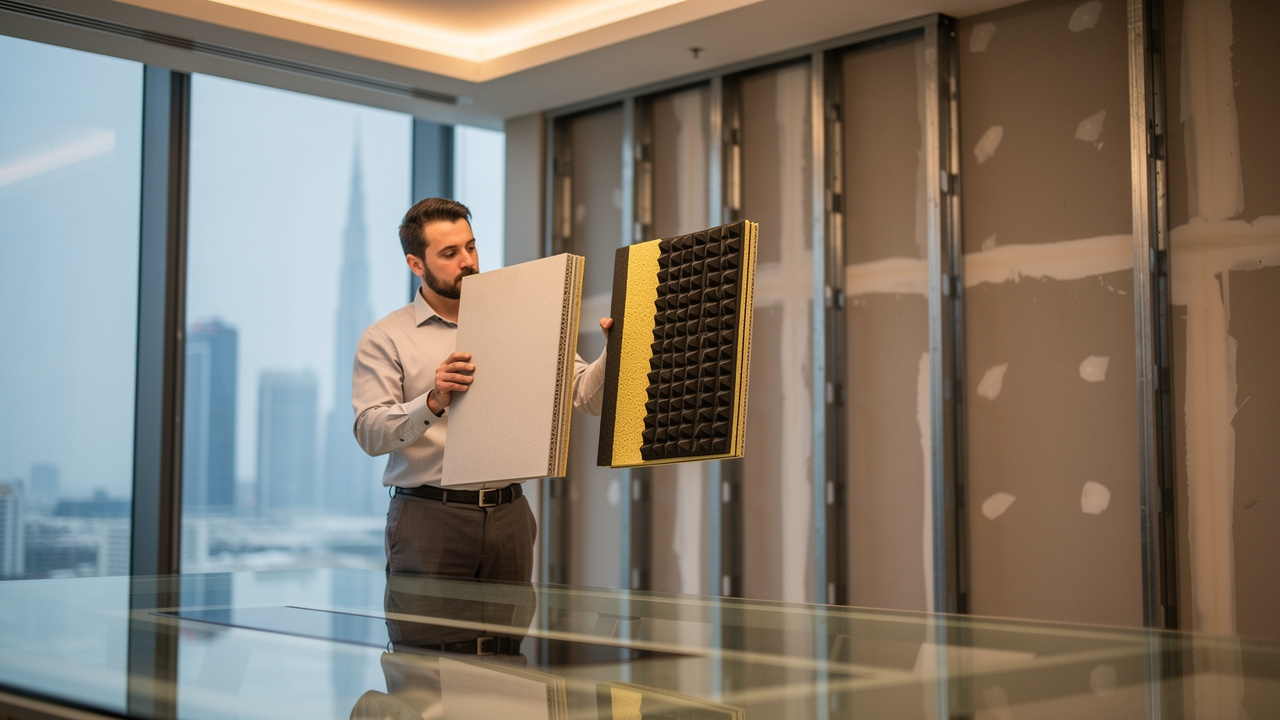
Sound insulation and sound absorption handle different acoustic tasks in UAE projects, even though people often treat them as one. Sound insulation blocks noise moving between rooms, apartments, or floors in places like Dubai Marina or Abu Dhabi Corniche towers.
Sound absorption deals with echo and reverberation inside a room, such as a restaurant in Downtown Dubai or a podcast studio in Dubai Studio City. Absorptive panels and ceilings help voices sound clear, but they do little to stop noise leaving the space. According to Nielsen Norman Group, more than half of employees in open-plan offices report noise as a frequent distraction, which shows why both control types matter.
A boardroom in a Sheikh Zayed Road hotel needs insulation in its walls and doors so conversations stay private. The same room also needs absorptive finishes on walls and ceilings so remote calls stay intelligible. A villa home theater in Sharjah follows the same pattern: first stop sound leaking to bedrooms, then calm reflections inside the cinema itself.
To decide which acoustic measure you need, ask three quick questions:
Is the complaint about hearing neighbors or traffic from another space? → Focus on insulation.
Is the complaint about echo, boom, or muffled speech inside the same room? → Focus on absorption.
Do people complain about both? → You will likely need a mix of systems.
When teams confuse these concepts, problems escalate. They may line a noisy partition with soft acoustic foam, then discover neighbors still hear every word because mass and decoupling never entered the design. DE Sound often joins projects at this point to redesign assemblies, so learning the distinction early protects both budgets and client trust.
“Start by asking where the noise comes from, how it travels, and where it bothers people the most. Clear answers here make every later decision easier.”
– Common guideline in architectural acoustics
Best Sound Insulation Systems by Surface: Walls, Ceilings, and Floors
The best sound insulation methods for UAE buildings change slightly from surface to surface. Walls, ceilings, and floors each carry sound in different ways, so each one needs a targeted assembly. Getting these three right usually solves most complaints before people move into a tower or hotel. According to J.D. Power, noise ranks among the top issues in guest satisfaction surveys for hotels, which shows how important these surfaces are.
Wall Systems: Layered Assemblies That Actually Work
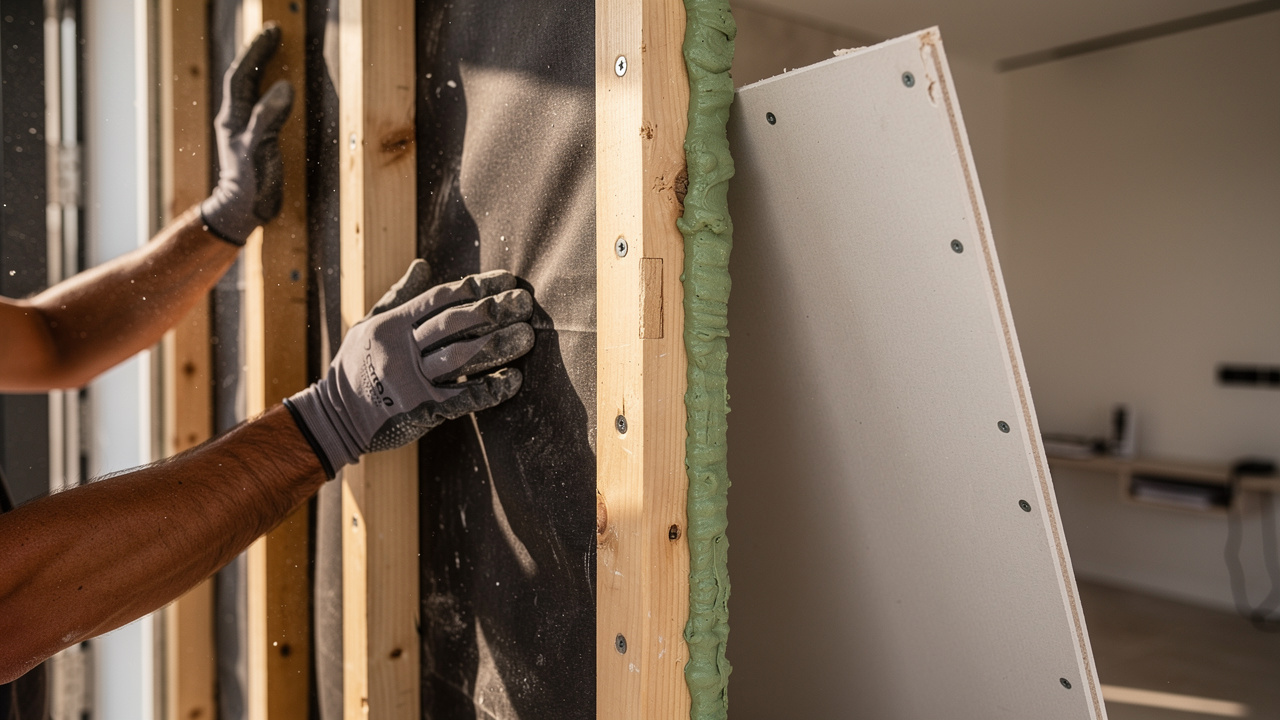
Wall systems carry most airborne noise between rooms, so layered wall assemblies sit at the heart of serious sound control. In many Dubai and Abu Dhabi hotels, a basic drywall partition receives extra mass, damping, and decoupling to reach the required STC rating. No single product handles that job on its own. Testing summarized by ASTM International shows typical single-stud drywall walls near STC 33, while advanced layered systems can reach STC values above 55.
Key components for high-performing wall systems include:
Mass Loaded Vinyl (MLV) adds dense, flexible weight to a stud wall without big structural changes. Installed between drywall layers or over existing plaster, it raises the wall’s resistance to voices, television noise, and light music. Installers in Sharjah and Ras Al Khaimah often choose heavier grades for low-frequency control near clubs or mechanical rooms.
Resilient sound isolation clips mount drywall on small rubber-lined hangers instead of directly on studs. This break in the rigid path slows vibration passing through concrete or steel frames, which cuts low-frequency transfer between hotel rooms. When clips hold furring channels that support two layers of board, STC values can rise far above a single-stud wall.
Green Glue noiseproofing compound, acoustical caulk, and putty pads finish the system. The compound sits between boards and turns vibration into tiny amounts of heat, while caulk and putty seal every gap around outlets and pipes. Without these sealants, even a strong wall can lose several STC points through small flanking paths.
Assembly order matters. If Mass Loaded Vinyl sits on both sides of a cavity with air gaps in between, the so-called triple leaf effect can appear and reduce low-frequency performance below about 500 hertz. DE Sound‘s technical team helps design wall build-ups that hit targets without this hidden problem, reviewing drawings and suggesting practical changes before materials reach site.
Ceiling and Floor Systems for Multi-Story Buildings
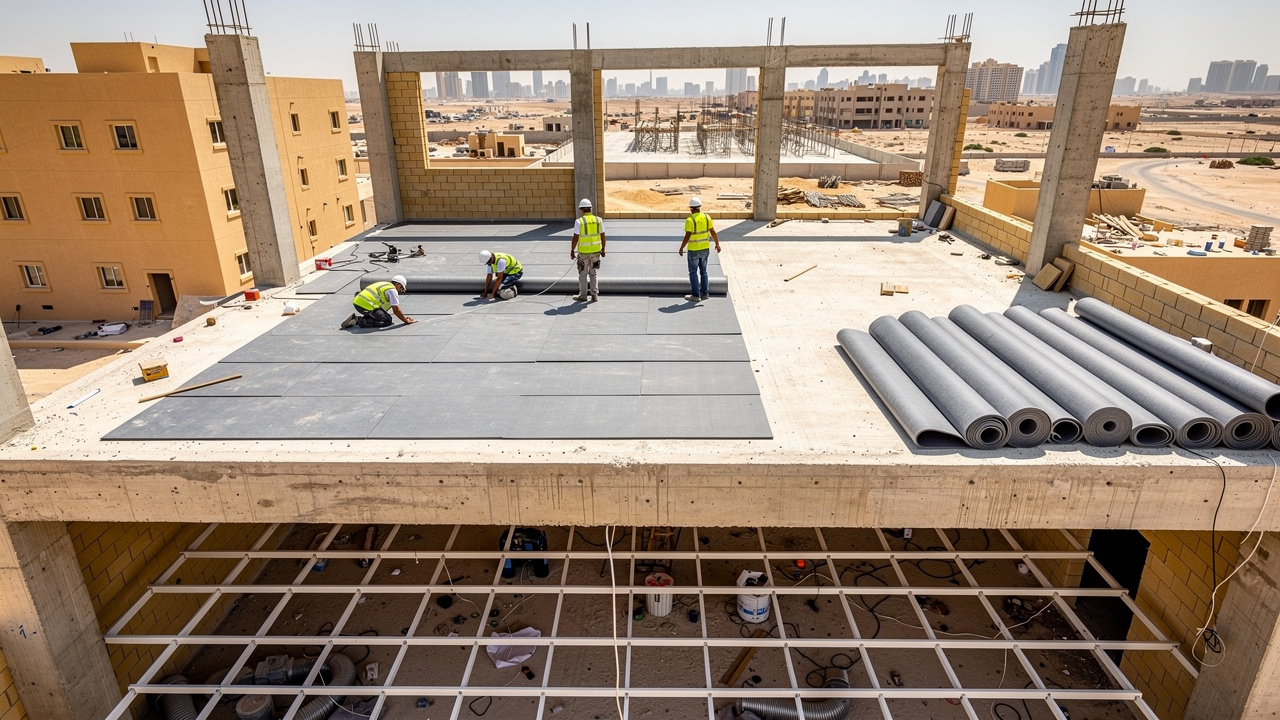
Ceilings and floors carry both airborne noise and impact noise between apartments and office levels. In the concrete towers common across Dubai, Abu Dhabi, and Doha, footfall on one level often becomes a complaint on the floor below. Treating these surfaces together works better than trying to fix noise from only above or only below.
For suspended grid ceilings in corporate offices or schools, acoustic barrier tiles and overlay pads help block sound in the plenum. Retrofit projects in Dubai Internet City often use overlay pads sitting above existing tiles, which avoids structural work and keeps tenants operating. Full fit-outs and hotel corridors usually specify dedicated barrier ceiling tiles that offer higher STC and CAC ratings. Light hood covers above recessed fixtures close a major leak point while still allowing safe heat dissipation.
Floors need acoustic underlayment placed over the structural slab and under tile, wood, or vinyl finishes. Quality underlay reduces impact noise, measured by IIC, and cuts airborne transmission through the slab. Developers in Jumeirah Village and Lusail now add underlay as a standard layer to reduce post-handover complaints. According to guidance from The National Research Council of Canada, floor assemblies with well-chosen underlayment can improve IIC ratings by more than ten points compared with bare concrete.
Scheduling is just as important as product choice:
Include underlayment and ceiling treatments in early specifications.
Confirm thickness, density, and fire performance before tenders go out.
Coordinate deliveries so material is on site before ceiling grids close or floor finishes start.
DE Sound helps project teams lock in these details and delivery windows so acoustic layers do not become last-minute compromises.
Do Windows and Doors Need Sound Insulation Too?
Windows and doors nearly always form the weakest parts of an acoustic envelope in UAE buildings. Treating only walls, ceilings, and floors while leaving light glazing and hollow doors unchanged leads to fast disappointment.
In high-rise districts near Dubai International Airport or busy sections of Sheikh Zayed Road, standard single glazing cannot cope with traffic noise. Acoustic window seal kits add a second layer of glass or clear panel inside the frame and close small air gaps, which can improve perceived loudness by several decibels. According to the World Health Organization, long-term exposure to environmental noise above roughly 55 decibels increases risks of sleep disturbance and heart disease, so every decibel counts.
For new construction in Abu Dhabi or Riyadh, many consultants now specify laminated glass with acoustic interlayers or full acoustic double glazing. Wider air gaps and thicker glass help block low-frequency traffic and aircraft noise more effectively than standard double panes. DE Sound supplies window-side barrier products and sealants that match these higher-performing frames.
Doors deserve equal attention. Hollow core doors often sit near STC 20, which hardly blocks normal speech, while a solid core leaf with good seals can move into the low 30s or higher. That difference shapes how private a clinic room, legal office, or hotel suite feels. Data compiled by Riverbank Acoustical Laboratories shows many tested acoustic doors reaching STC values above 45 when paired with proper frames and seals.
“A soundproofed room is only as effective as its weakest acoustic link, and that link is usually a door or window.”
– Common saying among acoustical consultants
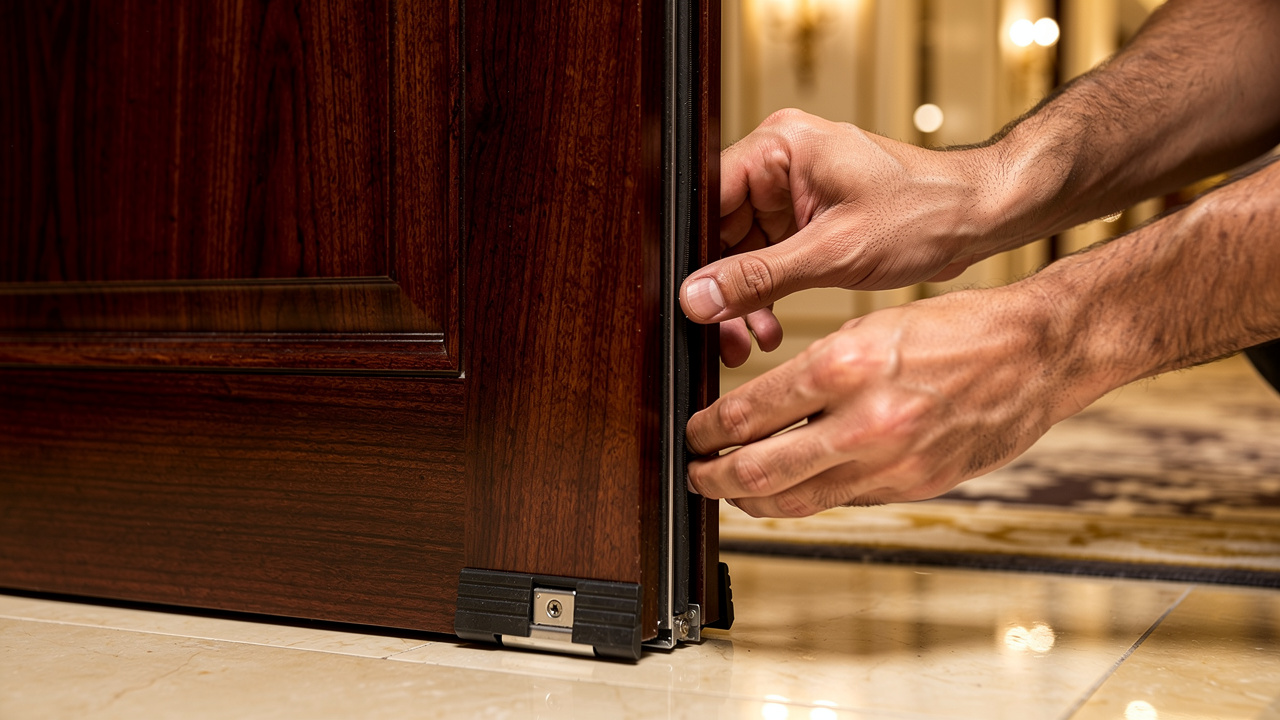
Where full door replacement is not possible, acoustic door seal kits upgrade existing solid core doors with minimal disruption. A complete kit usually includes an automatic door bottom that drops to close the floor gap, compressible jamb seals around the frame, and a low metal threshold. Many facility managers across Dubai, Muscat, and Manama now standardize these kits for corridor doors.
| Door Type | Approximate STC Range* | Typical UAE Uses | Recommended Upgrade Approach |
|---|---|---|---|
| Hollow core interior door | STC 20-25 | Budget apartments, basic offices | Replace with solid core leaf plus full seal kit |
| Solid core door | STC 30-35 | Standard offices, hotel guest rooms | Add perimeter seals and automatic drop seal at bottom |
| Purpose built acoustic door set | STC 40-55 | Studios, high end boardrooms, medical rooms | Install factory door, frame, and seals as a tested package |
*Ranges based on data from Woodwork Institute and published door manufacturer test results.
Why Gulf Region Projects Trust DE Sound for Acoustic Materials

DE Sound serves as a wholesale acoustic partner for designers, contractors, and facility managers who need reliable materials across the GCC. The company combines factory-direct pricing, tested products, and regional stock to keep residential and commercial acoustic work on schedule.
From a procurement view, buying MLV, acoustic ceiling tiles, underlayment, and door seal kits from one source cuts paperwork and freight surprises. DE Sound supports projects in Dubai, Abu Dhabi, Riyadh, Doha, Kuwait City, and Manama with warehouses and logistics designed for repeat orders. According to the U.S. Green Building Council, certified green buildings often show lower operating costs and higher occupancy, so DE Sound also maintains eco-focused acoustic options that support LEED or Estidama targets.
Here is how that service model plays out on real projects:
Factory-direct, transparent pricing helps contractors protect margins on large hospitality and education tenders. Estimators can see clear line items for MLV, panels, and sealants, rather than hidden markups. That clarity makes it easier to compare acoustic specifications during value engineering without dropping below performance targets.
Tested and certified materials give architects and facility managers confidence during approvals with UAE Civil Defence and local authorities. DE Sound provides acoustic test reports, fire certificates, and material data sheets alongside quotes. That documentation shortens review loops and reduces late stage design changes.
Free consultation from DE Sound’s technical team bridges the gap between product catalogues and real site conditions. Specialists review drawings, suggest wall or floor build-ups, and flag risky details such as back-to-back outlets or unsealed penetrations. Installers then receive clear guidance on spacing, fixing patterns, and sealant points so acoustic performance survives the construction rush.
Fast delivery across six GCC countries means stock reaches sites before ceiling grids close or floor finishes start. For multi-site clients such as hotel groups or school operators, DE Sound can repeat the same acoustic package in several cities with consistent pricing and documentation.
The Bottom Line
Effective sound control in UAE buildings treats the whole acoustic envelope, not just a single noisy wall. Walls, ceilings, floors, windows, and doors must all work together to keep traffic, neighbors, and busy lobbies from disturbing sleep or concentration. Three ideas keep projects on track: choose materials with appropriate STC, IIC, and NRC ratings, assemble them in the right order, and seal every flanking path. When those pieces link up, even dense urban locations can feel calm and private.
DE Sound supports that process with tested materials, wholesale pricing, and hands-on technical advice across the GCC. Whether the job is a single podcast studio or an entire hotel chain, the team can suggest assemblies and ship the matching products. For a free consultation and quote, contact DE Sound before your next fit-out reaches the finishing stage.
Frequently Asked Questions
These quick answers cover the questions DE Sound hears most often from UAE and GCC project teams. Each one stands alone so you can share it with clients or colleagues.
What Is the Difference Between STC and IIC Ratings?
STC measures how well a wall, floor, or ceiling blocks airborne sound, while IIC measures resistance to impact noise through a floor. In a Dubai or Abu Dhabi tower, you might need high STC walls between apartments and high IIC floor assemblies to control footsteps from above.
What Is the Best Sound Insulation Material for Apartment Walls in the UAE?
There is no single magic material, but a system built from several layers usually works best. Mass Loaded Vinyl combined with resilient clips and Green Glue normally delivers better results than any single material. In a UAE apartment, a typical upgrade uses clips on studs, two drywall layers with Green Glue between, and one MLV layer. DE Sound can match this concept to your exact wall build-up.
Can Sound Insulation Be Added to an Existing Building Without Major Renovation?
Yes, many acoustic upgrades suit occupied buildings. Ceiling tile overlays, acoustic window seal kits, door seal kits, and surface-mounted MLV on key walls all install with limited disruption. Facility managers in hotels, schools, and offices often phase this work by zone to keep operations running.
How Do I Know Which Acoustic Products Comply With UAE Building Standards?
Ask suppliers for independent lab reports following ASTM or ISO tests, plus fire and safety certificates. DE Sound includes this documentation with quotes so architects and facility managers can confirm compliance with UAE Civil Defence and green frameworks such as LEED or Estidama before approving a specification.
Does DE Sound Supply Acoustic Materials Across the Entire GCC?
Yes, DE Sound ships wholesale acoustic materials across the UAE, Saudi Arabia, Qatar, Kuwait, Bahrain, and Oman. Single-site and multi-site clients receive the same tested product ranges, consistent pricing, and coordinated delivery windows across the region.