
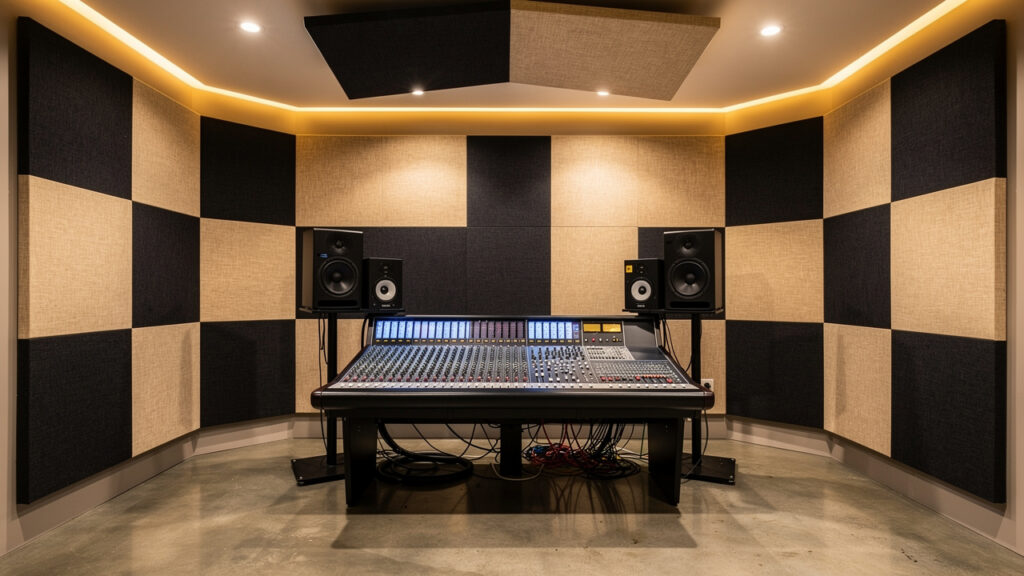
Many new studios across Dubai and Abu Dhabi sound harsh and echoey, even when the gear list looks impressive. Without fiberglass panels, recordings often feel amateur, no matter how expensive the microphones or audio interface might be.
Cheap foam stuck onto bare gypsum, glass, or concrete rarely fixes the issue and can even draw attention to existing room flaws.
Fiberglass panels are rigid glass‑fiber boards that absorb sound inside the studio instead of letting it bounce around the room. They give cleaner vocals, tighter mixes, and more accurate monitoring, which is why they are the standard in professional recording spaces across the UAE and GCC. This article explains what fiberglass panels do, why they beat foam, where to place them, and how DE Sound supplies them for studio projects.
Keep reading to see how the right acoustic treatment can turn a noisy box into a controlled recording room.
Key Takeaways
Fiberglass panels absorb sound energy inside a recording studio so echoes and flutter do not reach the microphones.
Panel thickness and Noise Reduction Coefficient (NRC) values shape how much each panel cuts reverberation at different frequencies.
Fiberglass beats foam in absorption, lifespan, fire safety, and visual finish for serious studio work.
DE Sound supplies tested fiberglass panels at wholesale scale for studio builders across the UAE and wider Gulf region.
How Do Fiberglass Panels Work in a Recording Studio?
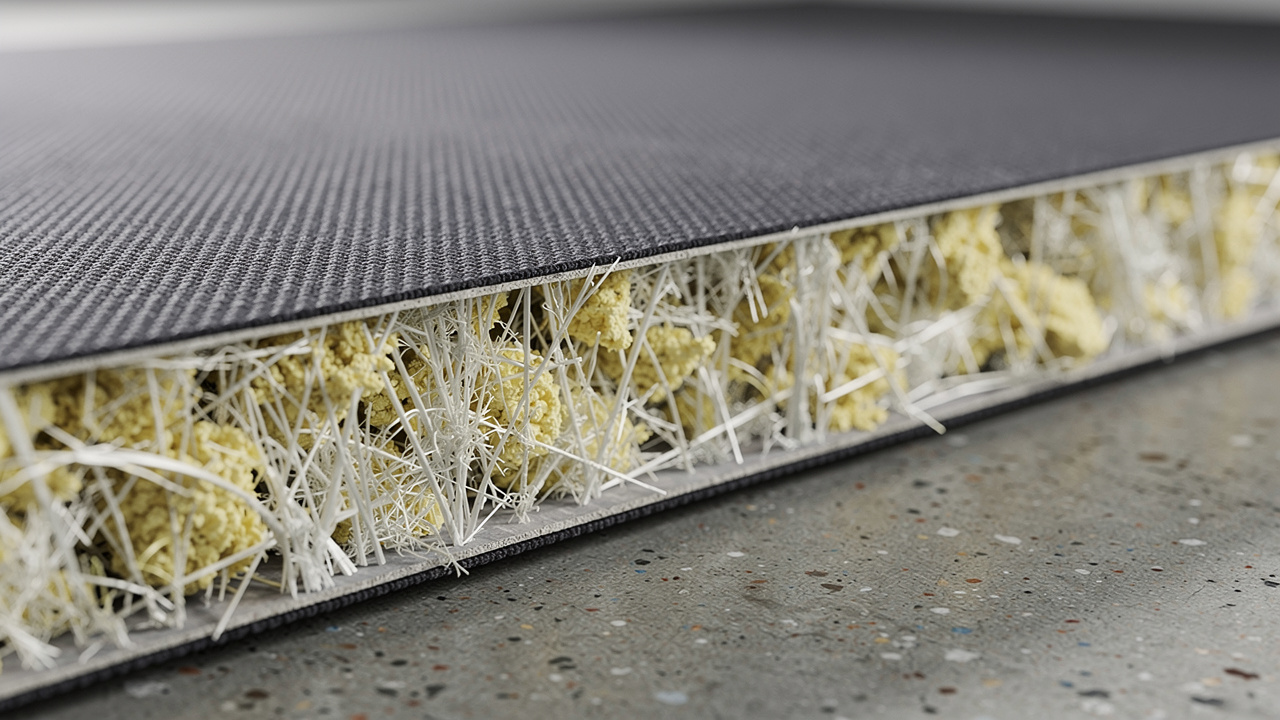
Fiberglass panels work in a recording studio by absorbing sound inside a dense glass‑fiber core. This porous structure turns moving air into tiny amounts of heat, which removes echo and flutter from the room.
Each panel uses tightly packed glass fibers formed into a rigid or semi‑rigid board. When sound waves hit the panel, they pass through the fabric face and push air between the fibers. Friction inside that maze slows the air and converts the wave energy into a trace of heat the room never hears again.
The main way to rate this effect is the Noise Reduction Coefficient (NRC). An NRC of 0.90 means the panel absorbs about 90 percent of incident sound in the tested bands. Lab data from Owens Corning shows that a 50 millimeter rigid fiberglass board can reach NRC values close to 1.0, which is why engineers rely on this type of material for control rooms and vocal booths.
In a studio, this absorption cuts the reverberation time, often called RT60, which is the time a sound takes to decay by 60 decibels. RT60 is the core metric in ISO 3382 from ISO, used worldwide to describe room decay. Shorter RT60 in the mid and high bands means:
clearer vocals and spoken word
better stereo imaging
fewer phase problems at the mix position
“You cannot fix a bad room with EQ alone.” — Common advice among mix engineers
Fiberglass panels also cover the frequency range that matters most in recording. Standard 50 millimeter panels handle roughly 500 to 4000 hertz very well, which lines up with speech and many instruments. Thicker boards or corner bass traps in the 75 to 100 millimeter range improve control in the low end, where room modes can ruin kick drums and bass guitars in studios from Dubai Marina apartments to Abu Dhabi warehouses, as demonstrated in a Numerical And Experimental Study of acoustic performance in ventilated noise barrier applications using phononic crystal structures.
Why Fiberglass Panels Outperform Foam and Other Acoustic Materials in Studios
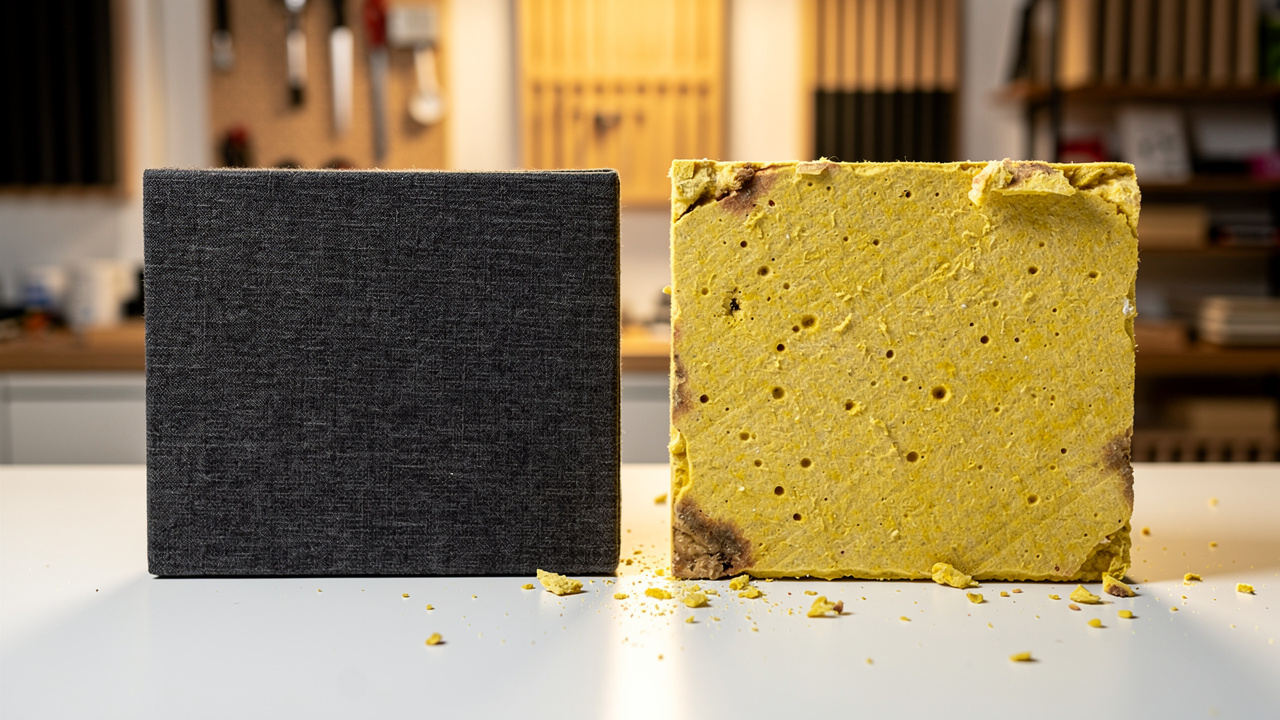
Fiberglass panels outperform foam in studios because they absorb more sound, last longer, and meet strict fire codes. They also give a cleaner, more professional finish than most budget materials.
Testing from GIK Acoustics shows that quality fiberglass panels can deliver NRC values 15 to 30 percent higher than similar‑thickness foam tiles. That means fewer panels are needed to reach a target RT60, which matters when every square meter of wall in a Dubai production suite or podcast booth carries a cost. Foam also loses performance as it ages and breaks down, while rigid fiberglass keeps its structure year after year, a durability advantage supported by Research on Thermal Performance of fiber-reinforced concrete wall panels, which demonstrates how fiber-based construction materials maintain stable performance characteristics under demanding environmental conditions.
Here is a simple comparison that many studio designers in the UAE use when selecting wall treatments:
| Material | Typical NRC At 50 mm | Durability In UAE Climate | Fire Rating | Best Studio Use |
|---|---|---|---|---|
| Fiberglass panel | About 0.95 to 1.00 | Stable for decades, resists heat and humidity | Class A, non‑combustible | Main wall and ceiling absorption, bass traps in corners |
| Acoustic foam tile | About 0.60 to 0.80 | Can yellow, crumble, and sag over time | Often needs extra treatment | Temporary or budget rooms away from public access |
| PET polyester panel | About 0.70 to 0.90 | Good strength, some risk of UV fading | Often Class B or similar | Offices, classrooms, less demanding listening environments |
| Mineral wool panel | About 0.90 to 1.00 | Good stability, may need extra protection | Often Class A or similar | Behind fabric or wood slats, additional bass trapping |
Class A in ASTM E84, referenced by ASTM International and NFPA, is the highest common surface flame rating for interior finishes. Fiberglass panels reach this class without extra chemicals, which helps projects pass UAE Civil Defense reviews for commercial buildings, hotels, and education spaces. Many foam and some PET products cannot reach the same grade without special treatments.
Mineral wool and wood slat panels also appear in high‑end studios from Al Quoz to Riyadh, and research into Polymers and their Use in ecological construction materials highlights how material selection affects both acoustic and sustainability outcomes. Mineral wool absorbs well but often needs framing and coverings that slow installation. Perforated or slatted wood adds style and some diffusion, yet usually still pairs with fiberglass behind it to reach the same broadband control. In many control rooms, rigid fiberglass boards such as the well‑known 703 and 705 style products still form the backbone of the acoustic package, with other materials used only for tuning and appearance — a finding consistent with Structural feasibility of glass fiber reinforced panel systems reviewed for load-bearing and durability performance. Regional suppliers such as DE Sound provide fiberglass boards with similar performance figures, ready for use in Gulf studio projects.
Where Are Fiberglass Panels Placed Inside a Recording Studio?
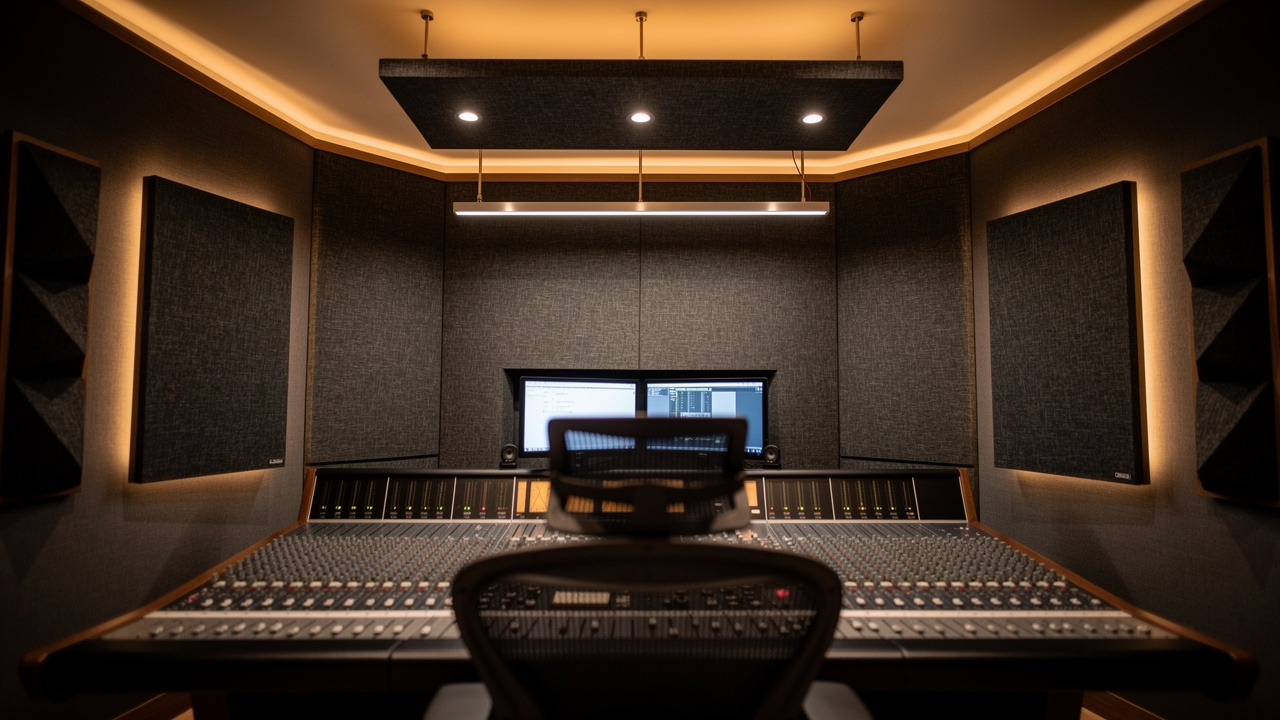
Inside a recording studio, fiberglass panels sit on the main reflection points, ceiling, corners, and other hard boundaries. The goal is to control the first sound bounces that reach the microphones and listener.
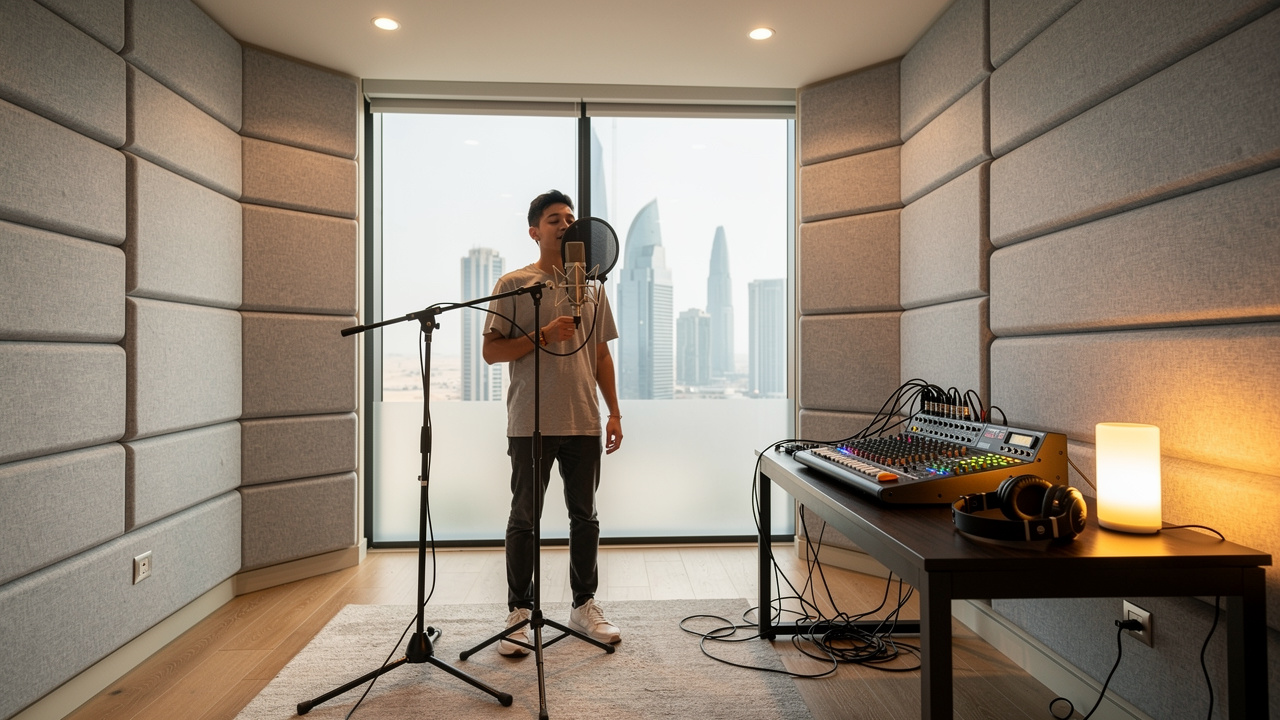
A well‑treated room in Dubai Media City looks very different from a room with random foam squares. Panel layout follows clear acoustic logic that any studio owner or fit‑out contractor can understand. Once the key areas are covered, extra panels add refinement rather than basic control.
“Treat the first reflections, not just the empty wall space.” — Common guideline among studio designers
Primary reflection points on side walls and rear wall usually take the first priority. These are the spots where sound from the speakers hits the wall once, then reaches the mix position a split second later. Covering these areas with 50 millimeter fiberglass panels tightens stereo imaging and reduces comb filtering that blurs high frequencies. Engineers often find these points by using a mirror while someone sits in the listening spot:
Sit in the mix position.
Have a friend slide a mirror along the side wall.
Mark every place where you can see a loudspeaker in the mirror and place panels there.
Ceiling cloud panels above the mix position control vertical reflections. In many UAE offices converted into studios, concrete or gypsum ceilings sit close to the listener, which can cause a hard “ping” on claps and snare hits. Hanging fiberglass clouds a short distance below the slab softens these reflections while still allowing air and services above. This is common in studios across Dubai Internet City and Downtown.
Corner bass traps handle the low‑frequency build‑up that gathers where walls meet. Thick fiberglass triangles or stacked 75 to 100 millimeter boards in the front and rear corners reduce boomy notes and ringing tails in the 80 to 200 hertz range. According to guidance from Acoustical Surfaces, corner trapping is one of the most effective ways to smooth bass response in small rooms.
Door and window surrounds often receive narrow fiberglass strips. These treat small but strong reflections that bounce off glass or hollow cores into sensitive microphones. In control rooms looking into live rooms, this keeps the view window while still keeping vocal takes clean and controlled.
Most professional studios aim to treat about 35 to 50 percent of the combined wall and ceiling area with absorption, a range echoed in many design notes from GIK Acoustics. Live rooms might sit near the lower end, while vocal booths and mix rooms lean higher. Software such as EASE and Odeon helps consultants in the UAE model these layouts before installation, but small project studios often follow the same basic pattern with tape measures and a clear plan.
Mounting panels with a 25 to 50 millimeter air gap between the fiberglass and the wall boosts low‑mid absorption without thicker material, a principle explored in Research on Flexural Performance of fiber-reinforced composite wall panels, which shows how panel construction and mounting configurations affect overall acoustic and structural behaviour. This works well in compact home studios across Jumeirah and Sharjah, where every centimeter of floor area matters. Many DE Sound clients use simple spacers or Z clips to create that gap while keeping lines straight and finish quality high.
How DE Sound Supplies Fiberglass Panels for Studio Builds Across the UAE and GCC
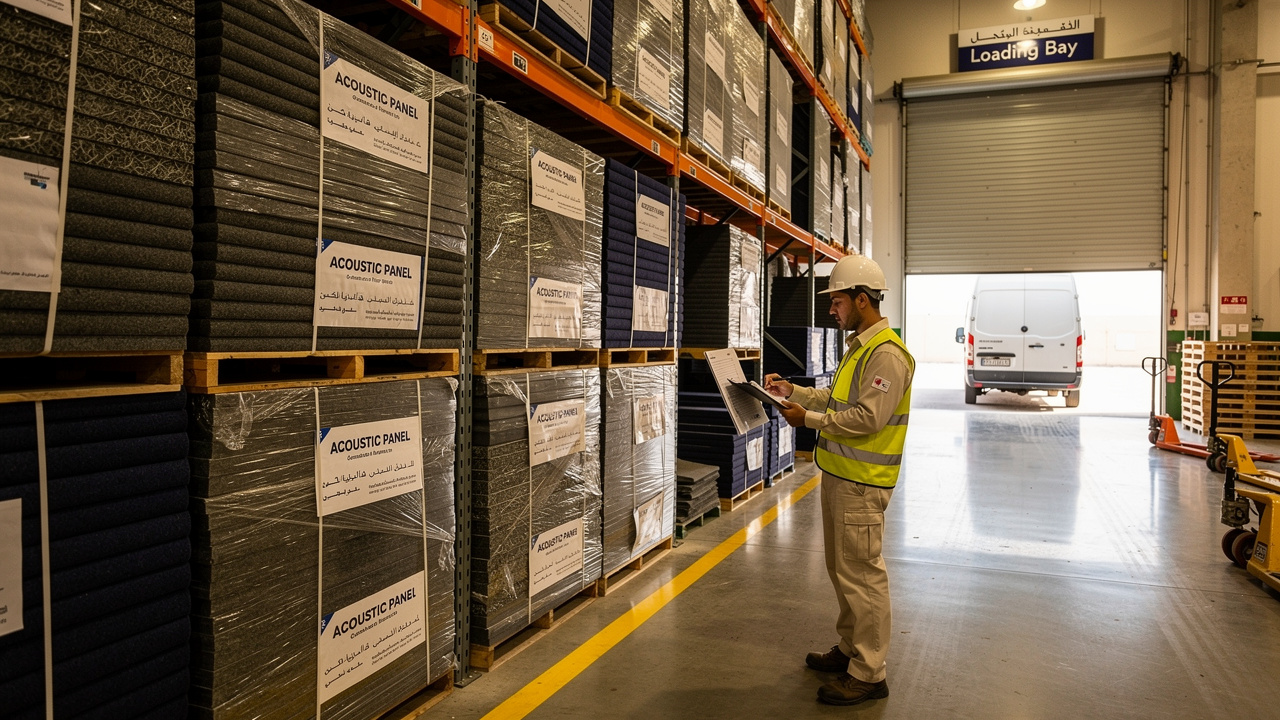
DE Sound supplies fiberglass panels for studio builds across the UAE and GCC with wholesale pricing and fast regional delivery. The company pairs high‑performance acoustic stock with local technical support so projects stay on budget and on schedule.
Recording and content spaces now appear in office towers, villas, and warehouses from Dubai to Doha, and Optimization Processes of Constructions research highlights how greening and material efficiency strategies are shaping fit-out decisions in modern commercial and mixed-use buildings across the region. Each project needs dozens or even hundreds of panels, and buying them at retail prices quickly becomes painful. DE Sound reduces that cost pressure by working on a factory‑direct basis, passing wholesale rates to interior designers, fit‑out contractors, and independent studio owners.
Because the product range focuses on tested acoustic materials, specifiers get real data instead of guesses. Panels come with NRC curves, density information, and fire certificates that match standards such as ASTM E84 and ISO 354, which many consultants and municipal reviewers in the Gulf region request, consistent with findings on Effect of Resin Content on material properties that inform building product certification requirements. According to UNESCO and ANSI, controlled reverberation times are important for learning spaces, and the same logic applies when DE Sound helps plan studios inside schools or universities.
The support does not stop at selling boxes. DE Sound’s team helps clients decide:
where 25 millimeter panels are enough
where 50 millimeter boards work better
where 75 or 100 millimeter bass traps are needed
That guidance is especially helpful for first‑time studio owners who might otherwise copy online layouts made for very different room sizes. Facility managers in Dubai, Abu Dhabi, Riyadh, and Muscat also rely on this advice when they add podcast booths or video studios inside larger corporate offices.
Logistics matter just as much as design. DE Sound holds regional stock and ships quickly across all six Gulf Cooperation Council states, listed by the GCC as the UAE, Saudi Arabia, Kuwait, Qatar, Bahrain, and Oman. This shortens build schedules compared with importing panels on a per‑project basis from Europe or the United States. For contractors juggling several fit‑outs at once, that reliability can decide whether a recording room opens on time.
The Bottom Line
Conclusion
Overall, fiberglass panels remain the first choice for recording studios because they combine high absorption, long service life, fire safety, and clean aesthetics in one product. Properly placed panels control reflections, tame reverberation, and make mixing decisions translate from Dubai studios to headphones and car systems worldwide. Foam and many budget options struggle to match that balance of performance and safety.
For studio owners, interior designers, and contractors across the UAE and GCC, partnering with DE Sound turns that theory into working rooms. The company supplies certified fiberglass panels at wholesale prices, helps plan thickness and placement, and moves stock quickly to any Gulf city. A short call or email to DE Sound can be the first step toward recordings that finally sound the way they should.
Frequently Asked Questions
Question: What Thickness Of Fiberglass Panel Is Best For A Recording Studio?
The best starting thickness for most studio walls is 50 millimeters, which covers mid and high frequencies very well. Corners usually need 75 to 100 millimeter panels or purpose‑made bass traps to control low‑frequency modes. DE Sound can review room sizes and recommend a mix of thicknesses for each project, for example:
50 millimeter panels on main reflection points
75 to 100 millimeter panels or dedicated traps in corners
50 millimeter ceiling clouds above the listening position
Question: Are Fiberglass Panels Safe To Install In An Enclosed Studio Space?
Yes, quality fiberglass panels are safe inside enclosed studios when correctly finished. Class A fire ratings under ASTM E84 mean the boards are non‑combustible and low smoke. Fabric‑wrapped faces stop loose fibers, and DE Sound supplies documentation so consultants and inspectors can verify the material performance.
Question: How Many Fiberglass Panels Does A Recording Studio Need?
Most professional rooms use enough fiberglass panels to cover about 35 to 50 percent of the wall and ceiling area. The exact count depends on room volume, ceiling height, and target reverberation time. DE Sound offers free acoustic guidance so studio owners can size panel orders before construction or renovation.
Question: Can Fiberglass Panels Be Used In A Home Studio Or Podcast Booth In The UAE?
Fiberglass panels work very well in home studios and podcast booths, even in small apartments and villas. Fabric‑wrapped panels give broadcast‑grade sound while still looking neat in living spaces or mixed‑use rooms. Many DE Sound clients in Dubai and Abu Dhabi use slim panels to treat spare bedrooms as recording zones.
Question: What Is The Difference Between Fiberglass Panels And Soundproofing?
Fiberglass panels handle sound absorption inside the room, which reduces echo, flutter, and overall reverberation. Soundproofing focuses on blocking sound transfer between rooms using mass, seals, and decoupled structures. A complete studio often combines both methods, and DE Sound can advise on how panels fit into the wider acoustic plan.