
Introduction
Acoustic pod rooms are modular, enclosed booths that sit inside noisy open offices and create quiet, private work zones. In UAE workplaces they solve the constant noise and privacy gaps that come with large, shared floors.
Open layouts across Dubai, Abu Dhabi, and Sharjah often bring ringing phones, video calls, and side conversations into a single sound cloud. That hurts focus, client confidentiality, and even staff wellbeing over time. Many companies spend heavily on fit-outs yet still hear complaints about noise from finance teams, call centres, and creative staff.
Acoustic pod rooms give office owners a quick way to add quiet meeting rooms, call booths, and studio spaces without heavy construction or permits. They also help tenants use expensive floor area more efficiently by turning underused corners into productive, bookable rooms. This article explains what pods are, how their acoustic design works, which pod types fit different sectors, and why material quality matters most in Gulf conditions. You also see how DE Sound supports bulk projects with certified acoustic materials across the GCC.
Ready to plan quieter offices that still feel flexible and modern? Keep reading for a clear, practical guide you can share with clients, colleagues, and contractors.
Key Takeaways
This summary section highlights the main ideas you can keep in mind while you read. It touches on how acoustic pod rooms work, where they fit, and which choices matter most. You can return here while you compare suppliers or prepare a project brief for your client or internal team.
Acoustic pod rooms are self-contained, modular booths that sit inside existing offices and studios. They give quiet space for calls, focus work, and media work without permanent walls. UAE tenants appreciate that pods can move when the layout or lease changes. That flexibility protects investment across multiple fit-outs.
Effective pods rely on two acoustic ideas that work together in one shell. Sound isolation blocks noise transfer through heavy walls, proper seals, and separated structures. Sound absorption inside the pod calms echoes so speech sounds clear and recordings stay clean. Missing either part leads to disappointing performance.
Adoption in the Gulf already spans corporate offices, co-working hubs, hotels, schools, and media zones such as Dubai Media City and twofour54 in Abu Dhabi. Financial and legal firms use pods for confidential calls, while content creators use them for podcast and video production. The same basic system serves many sectors when specified correctly.
Material quality controls whether a pod delivers the promised STC, NRC, and fire ratings over many years. Dense soundproof layers, tested acoustic panels, and climate-ready finishes stand up to Gulf heat and humidity. Cheap substitutes can sag, warp, or lose performance, which wastes both money and floor space.
DE Sound supports designers, contractors, and facility managers with wholesale acoustic materials suited to pods across the GCC. The range covers PET panels, wood wool panels, stretch fabric systems, and soundproof layers for walls, floors, and ceilings. Free technical advice and fast regional delivery help multi-pod projects stay on budget and on schedule.
What Are Acoustic Pod Rooms and Why Do UAE Offices Need Them?

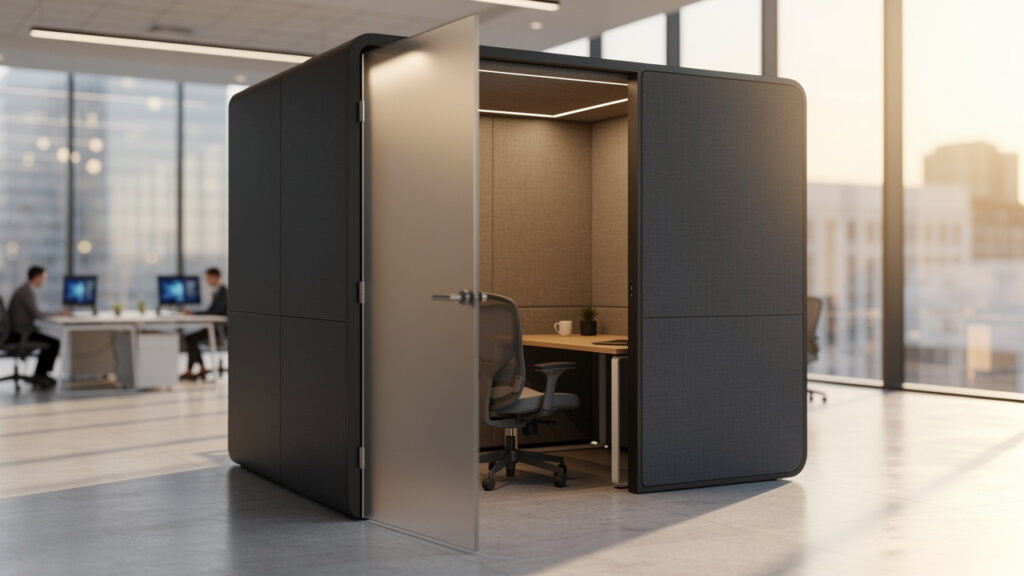
Acoustic pod rooms are self-contained, modular enclosures that create controlled, quiet spaces inside larger floors. In UAE offices they help owners and tenants cut noise, protect privacy, and add flexible work zones without changing base building structure.
Each pod arrives as a kit of panels, frames, doors, and integrated services that installers assemble on site. The unit then stands as a freestanding room within a room. Because it bolts together, the same pod can move to another floor, a new office, or a different country when leases change, which suits Gulf tenants with regional footprints and shifting headcounts.
Noisy space is not just an annoyance. Research from the World Health Organization links long exposure to high indoor noise levels above roughly 55 decibels with stress and reduced task performance. Open offices in busy districts such as DIFC or Business Bay often sit near or above that range during peak hours. That means staff try to write reports, review contracts, or join video calls in an environment that keeps their brain in constant alert mode.
Independent workplace surveys from firms like Gensler and Leesman repeatedly show that noise and lack of privacy rank among the top complaints in open offices. In Dubai and Abu Dhabi this pressure grows as hybrid work pushes companies to bring staff together more often for collaboration, which raises background noise even further.
For many UAE organisations, pods solve several daily problems at once:
Confidentiality: protecting client, patient, and HR conversations from being overheard.
Focus: giving staff a calm zone for deep work away from ringing phones.
Video calls: providing stable acoustics and a neutral background for online meetings.
Space planning: adding meeting capacity without chasing approvals for hard walls.
Pods do this by adding small, targeted bubbles of quiet inside the busy floor. A single acoustic pod room can host confidential HR meetings, client calls, or focus work in the morning, then act as a podcast space in the afternoon. Facility managers see them as modular tools they can redeploy as teams grow, shrink, or shift between departments.
How Do Acoustic Pod Rooms Actually Work?

Acoustic pod rooms work through two linked ideas that every designer and contractor should understand. First, they limit how much sound passes between the inside and outside. Second, they control how sound behaves inside the pod so speech and audio stay clear and comfortable.
At a high level you can think of the design in three parts:
Sound Isolation (Stopping Noise Getting In Or Out)
Sound isolation starts with mass. Heavy, multi layer wall panels with dense cores resist vibration better than light partitions. Many pod shells add materials such as mass loaded vinyl or composite mineral boards to push wall performance into the STC 45 to 55 range. By comparison, a standard gypsum partition in an office often sits closer to STC 35 to 40, according to guidance from the National Research Council Canada.The structure then reduces vibration paths. Decoupled frames, resilient mounts, and isolated ceilings keep structure borne sound from jumping straight through solid parts. Careful air sealing around doors, glass joints, cable cutouts, and floor tracks closes gaps that would otherwise leak sound. One poorly sealed service hole can drop isolation by more than 10 decibels in some bands, a point reinforced by a comprehensive assessment of room acoustics evaluating retrofitting strategies for speech intelligibility.
Sound Absorption (Controlling Echo Inside The Pod)
Inside the pod, acoustic treatment handles reflections. High NRC panels, often between 0.8 and 1.0, line key surfaces so sound energy converts to tiny amounts of heat instead of bouncing. That shortens reverberation time, or RT60, so voices sound natural rather than boxy. For speech pods, designers often aim for RT60 around 0.3 to 0.4 seconds, while music or mix rooms may need slightly different targets, as outlined in acoustic calculations and workflow methodologies for acoustically distinguishable spaces.
“Environmental noise is an increasing public health problem.”
— World Health Organization, Environmental Noise Guidelines
Ventilation And Background Noise
In the UAE one more factor carries special weight. Pods must connect to strong air conditioning while keeping that airflow quiet. Thoughtful layouts add lined ducts, acoustic attenuators, and low noise fans, an approach supported by the design and application of portable acoustic systems in controlled environments. The goal is to keep background noise inside the pod near NC 25 to NC 30 so speech stays clear, a range commonly recommended in guidance from groups like ASHRAE. Without this step, the pod itself becomes a new noise source.
Tip: Ask pod manufacturers and contractors for third-party acoustic test reports that show both STC and NRC values. This gives a more honest picture than marketing numbers alone.
— DE Sound technical team
Which Types of Acoustic Pod Rooms Are Right for Your Project?

Acoustic pod rooms cover a wide family of sizes and performance levels, so matching the right type to each use case makes a big difference. For UAE projects this choice often depends on headcount, noise level around the pod, and the privacy level the client expects.
Single person phone pods and focus booths suit staff who need a quiet corner in open offices. They offer just enough space for a chair, a small work surface, and a screen for video calls. Multi person meeting pods create huddle rooms without touching base building walls, which helps in co working spaces across Dubai and Sharjah.
Studio and broadcast pods lift isolation and internal treatment further so recordings stay clean, even in towers with heavy mechanical noise, with how did the addition of soundproof pods influence employees’ experience showing measurable improvements in occupant satisfaction. Educational and hospitality pods stand somewhere between, with specs tuned for tutoring rooms, music practice, hotel work lounges, or lobby call booths in cities such as Abu Dhabi and Ras Al Khaimah.
Here is a simple comparison you can keep nearby while you plan.
| Pod Type | Typical Users | Main Acoustic Goal | Common UAE Locations |
|---|---|---|---|
| Single person focus pod | Individual staff, freelancers | Speech privacy and low background noise | Corporate floors, co working hubs |
| Meeting and collaboration pod | Small teams, client groups | Confidential conversation without sound bleed | Corporate campuses, serviced offices |
| Studio or broadcast pod | Podcasters, content creators, musicians | High isolation and controlled RT60 | Dubai Media City, twofour54, home studios |
| Education or hospitality pod | Students, tutors, hotel guests | Quiet study or work in busy settings | Schools, universities, hotel lobbies |
To choose between these options, start with a short checklist:
How many people need to use the pod at once?
What are they doing inside: quick calls, workshops, recording, or long work sessions?
How loud is the surrounding area, and at what times of day?
Does the client need high speech privacy, or simply lower distraction?
Are there local constraints such as ceiling height, fire routes, and power or data access?
Selecting against the wrong target leads to problems. A light office pod in a tower beside a chiller plant may struggle with low frequency rumble. A very dry studio pod used as a client lounge can feel acoustically dead and uncomfortable for casual chats. DE Sound often helps clients review floor plans, ambient noise levels, and intended activities so each pod type lines up with real needs and budgets.
Why Material Quality Determines the Success of Every Acoustic Pod Installation
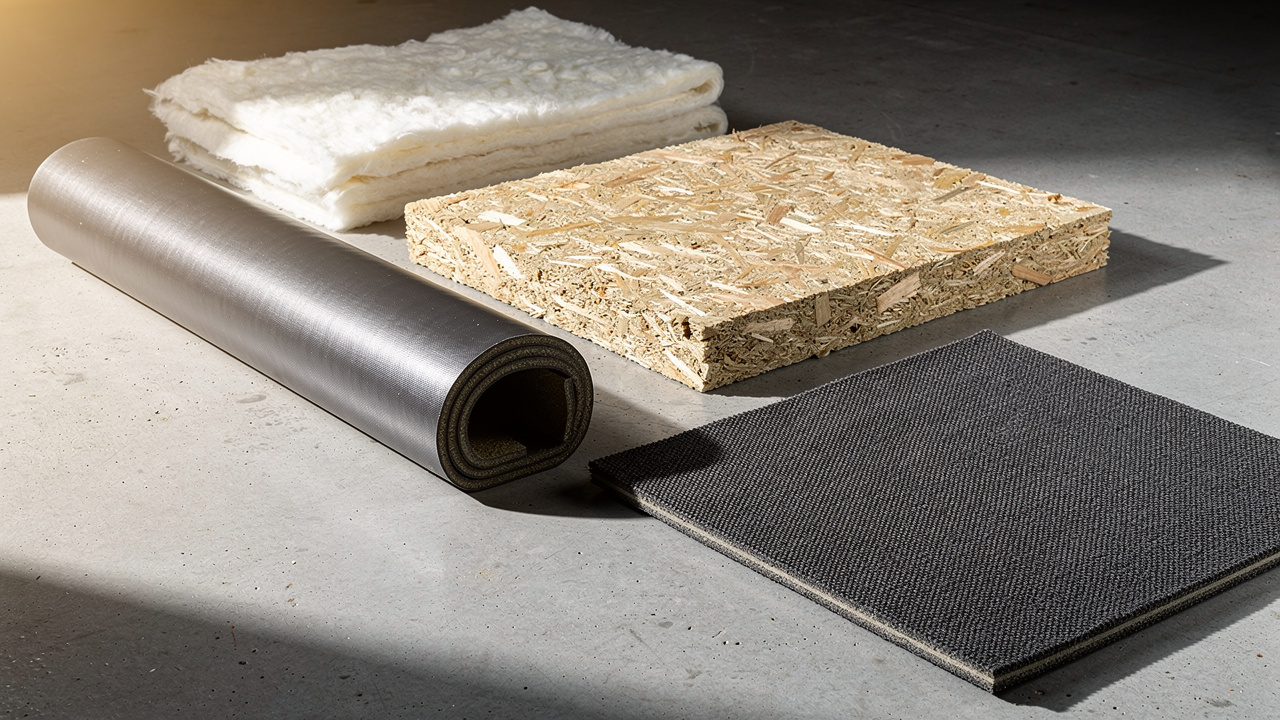
Material choice decides whether acoustic pod rooms keep performing year after year in Gulf conditions. On drawings many pods look similar, yet the internal layers, adhesives, and finishes can differ a lot. That difference shows up in STC numbers, fire ratings, smell, and even how panels age under heat and humidity.
The UAE climate creates harsh tests for cheap materials:
Site temperatures can rise above 40 degrees Celsius before full HVAC runs.
Coastal humidity in Dubai or Sharjah often crosses 80 percent for long periods.
Low grade foams can off gas, warp, or lose thickness under those stresses, undermining the optimized acoustics for meeting pods that proper material selection is designed to achieve.
Some fabric finishes trap moisture and support mold, which then harms both health and acoustic performance.
Fire safety adds another filter. The UAE Fire and Life Safety Code expects interior finishes in commercial buildings to meet specific classes such as Class A or Class B surfaces. According to guidance from UAE Civil Defence, designers must keep clear documentation that panels, insulation, and adhesives meet the right fire class. Acoustic pod rooms that use uncertified layers risk delays in approvals or forced replacement later.
“Unnecessary noise is the most cruel absence of care that can be inflicted on either the sick or the well.”
— Florence Nightingale, nurse and social reformer
Tip: Always ask suppliers for fire test reports and VOC certificates for acoustic panels, foams, and adhesives. This protects project approvals and the wellbeing of people using the pods every day.
— DE Sound project support team
DE Sound addresses these points by stocking tested acoustic materials suited to Gulf projects. PET panels offer stable absorption with low VOC emissions. Wood wool boards blend impact resistance with high NRC values and a natural visual texture that many designers favor in meeting pods. Stretch fabric systems give a clean, seamless finish while holding dense mineral wool safely behind the surface.
For the soundproof shell, DE Sound supplies mass loaded vinyl, high density boards, and acoustic sealants that help pods hit their STC targets in real sites, not just in lab tests. Wholesale, factory direct pricing keeps multi pod orders viable even when specs call for higher grade materials. Fast delivery across the GCC means contractors in Dubai, Abu Dhabi, Doha, or Riyadh can keep tight fit out schedules without acoustic products turning into the bottleneck.
The Bottom Line
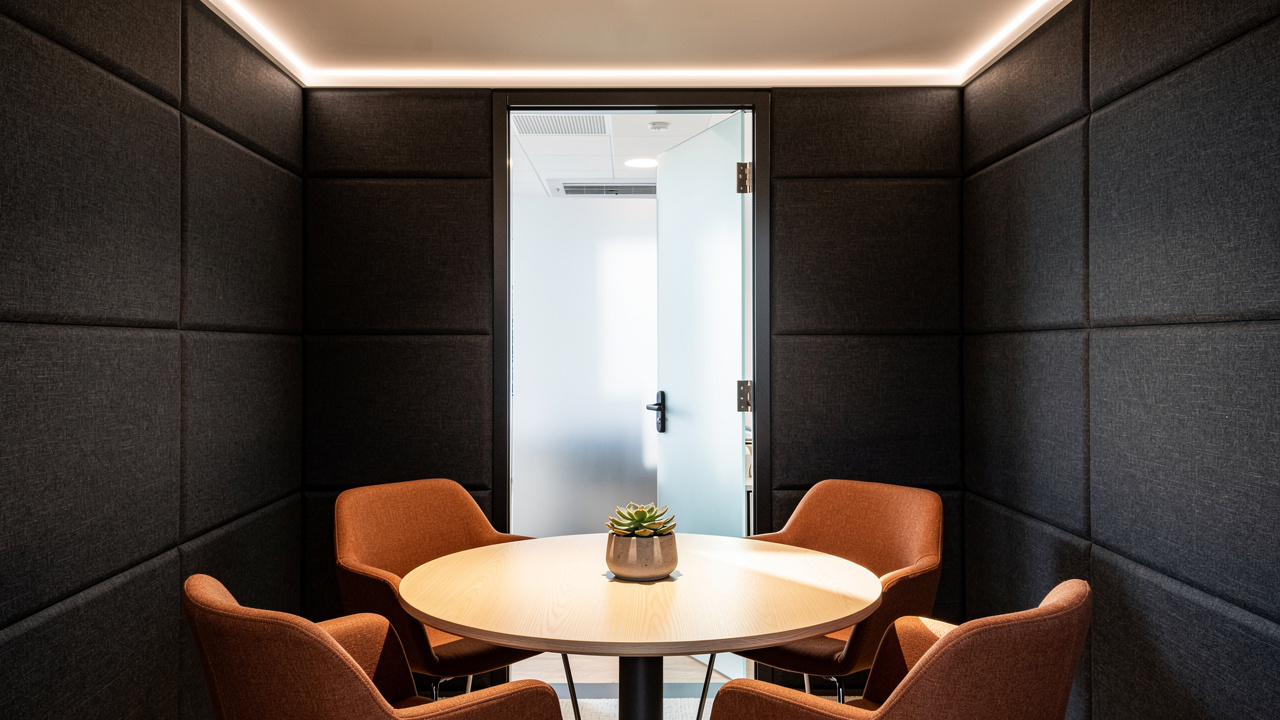
Acoustic pod rooms now sit at the center of quiet workspace design across UAE offices rather than on the fringe. They give landlords, tenants, and designers a movable way to add privacy, focus, and studio quality audio inside open floors that used to feel noisy and exposed.
Success depends on three linked choices:
Define the right pod type for each use. Decide whether you need a phone pod, focus booth, meeting pod, or studio based on headcount, tasks, and available space.
Match acoustic performance to the setting. Look closely at STC, NRC, and RT60 so the pod suits the surrounding noise and the activities planned inside.
Select materials that work in Gulf conditions. Choose products that handle high temperature and humidity, meet fire rules, and keep their performance for many years.
Once these points are clear, it becomes much easier to brief architects, pod manufacturers, and contractors so everyone works toward the same acoustic target.
DE Sound supports that process with wholesale acoustic materials, regional logistics, and free technical advice that shortens the learning curve for busy teams. With the right partners, quiet, flexible workspaces fit naturally into the next wave of UAE office design.
Frequently Asked Questions
Question: What is the typical STC rating I should target for an office acoustic pod room in the UAE?
The best starting point for most office acoustic pod rooms is STC 45 to 55. This range provides good speech privacy for meetings and calls in typical open plan noise. Noisy areas near mechanical rooms or busy corridors may need ratings above 55, which DE Sound can help you specify.
Question: Can acoustic pod rooms be relocated when an office moves or redesigns its layout?
Yes, modular acoustic pod rooms are designed for disassembly and reassembly with limited material loss. Panels, frames, and doors normally move to a new layout or site with only small replacement parts. This flexibility makes pods popular for UAE tenants who change floors or buildings during lease cycles.
Question: Do acoustic pod materials need to meet UAE fire safety regulations?
Yes, all acoustic materials in commercial pods must comply with the UAE Fire and Life Safety Code of Practice. Walls, ceilings, and finishes need documented fire classes such as Class A or Class B to pass Civil Defence review. DE Sound supplies acoustic panels and soundproof layers with the right test reports ready.
Question: How does the UAE’s climate affect acoustic pod material selection?
High temperatures, strong solar gain, and coastal humidity mean materials must stay stable above 40 degrees Celsius and resist moisture. Thermal movement, delamination, and mold risk all rise in Gulf conditions. DE Sound recommends climate ready panels, adhesives, and sealants plus quiet, well designed ventilation that suits the local HVAC style.
Question: What is the minimum order size for bulk acoustic materials from DE Sound?
Minimum order levels vary by product group and by country within the GCC. The most direct step is to contact DE Sound with your pod count, target specs, and delivery city. The team then shares factory direct pricing, any volume breaks, and clear guidance for both small pilot pods and large corporate rollouts.