
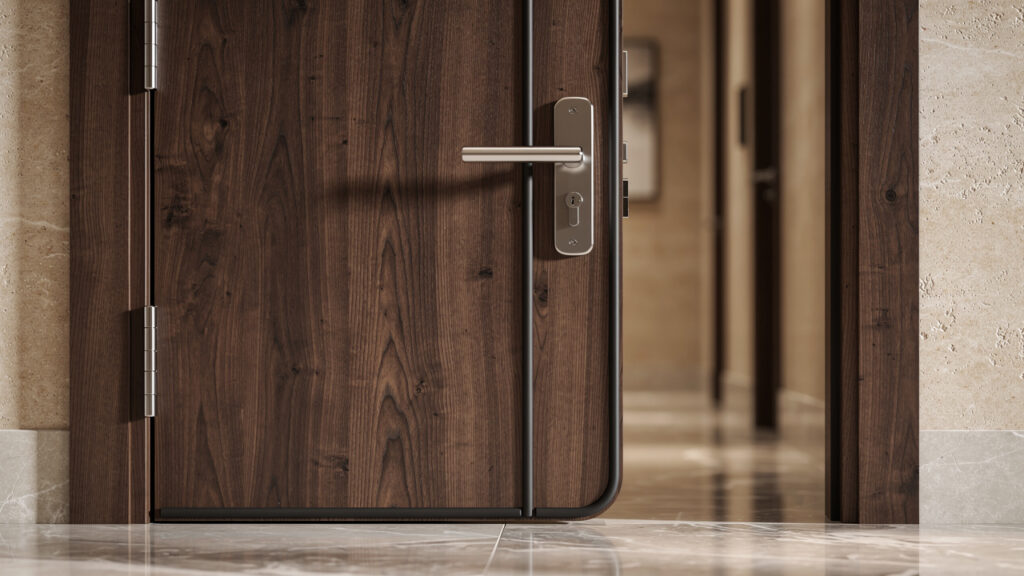
Noise slipping through lightweight doors ruins privacy in meeting rooms, guest rooms, and studios across the UAE. Conversations, corridor sounds, and street noise travel far too easily.
Wooden Acoustic Doors use dense cores and tight seals to block far more sound than standard hollow-core doors. They help keep conversations private, reduce corridor noise, and create calmer rooms for work, sleep, and recording.
This guide explains how these doors work, how to read STC ratings, where they matter most, and how DE Sound supports projects across the Gulf. With that knowledge, you can match each space to the right acoustic door from the start.
Key Takeaways
Here are the main points you will take from this article:
Wooden Acoustic Doors are solid door systems, not light hollow ones. They use dense cores and tight seals, cutting sound transfer between rooms far more than a standard interior door.
STC ratings show how much sound a door blocks. You will see which rating bands fit hotels, offices, schools, studios, and homes. That helps you choose performance without guessing or wasting budget.
The guide explains where acoustic doors make the biggest impact, with clear examples across hospitality, corporate offices, education, studios, and high-end residential projects in Dubai, Abu Dhabi, and the wider GCC.
You will also see how DE Sound supports design and fit-out teams with wholesale pricing, certified materials, free consultation, and fast delivery across six Gulf countries.
What Are Wooden Acoustic Doors And How Do They Work?
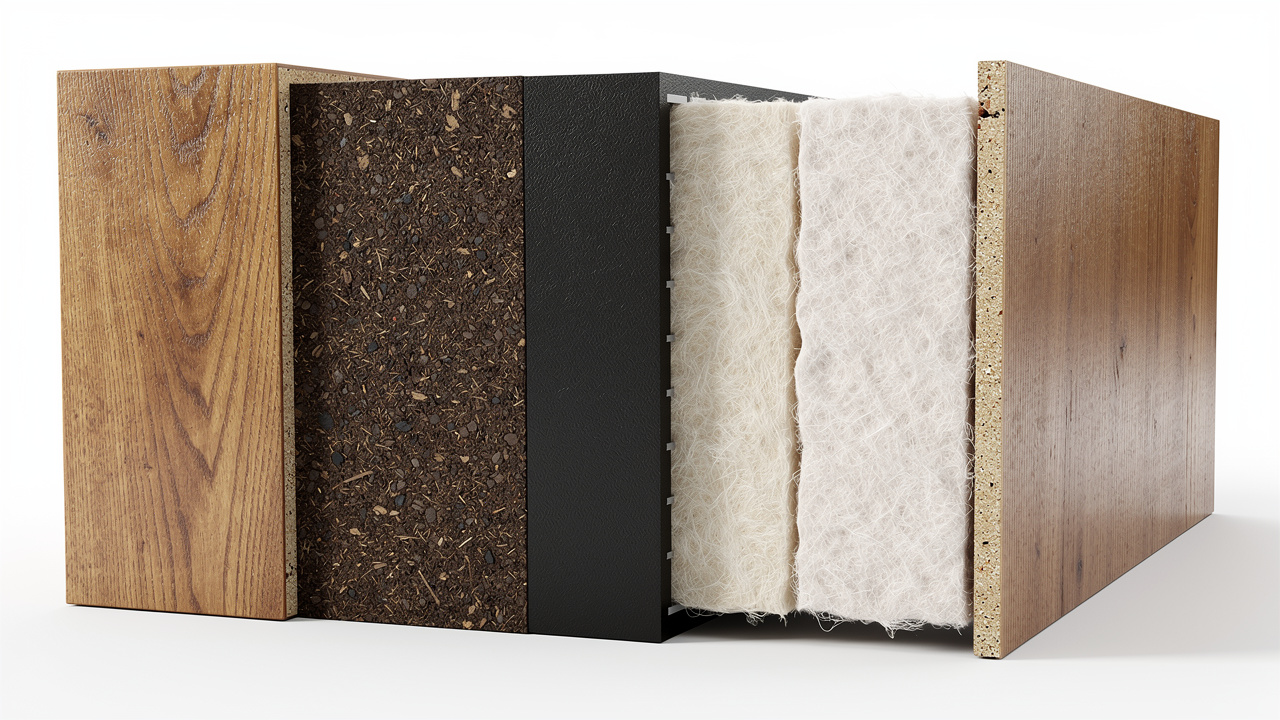
Wooden Acoustic Doors are complete door systems designed to reduce sound transmission while keeping the warmth of timber finishes. Instead of a thin hollow leaf, they use heavy, layered construction to resist vibration and protect privacy.
Inside the door leaf, manufacturers build up several layers of material. Typical cores for acoustic wooden doors include high-density particleboard or MDF, mass-loaded vinyl, and mineral wool or acoustic foam, an approach supported by research into Application of Hybrid Absorptive–Diffusive panels that shows how layered wooden constructions shape sound behavior. Each layer slows and absorbs sound waves before they reach the other side.
The performance of a sound-rated door is built on three main principles:
Mass
According to building acoustics studies by the National Research Council Canada, heavier partitions block more airborne noise because sound has to move more material. A solid acoustic door can weigh two to three times more than a standard interior door of the same size.Decoupling
Some Wooden Acoustic Doors include inner skins that are partially separated from the outer faces, so vibration has to cross a mechanical break. That small gap or flexible layer makes it harder for sound energy to pass from one side to the other.Sealing
Even a carefully built door leaf loses effectiveness if air can leak around the edges. That is why serious acoustic doors are supplied as full systems with matched frames and seals, not as loose leaves only.
Acoustic Sealing: The Detail That Makes Or Breaks Performance
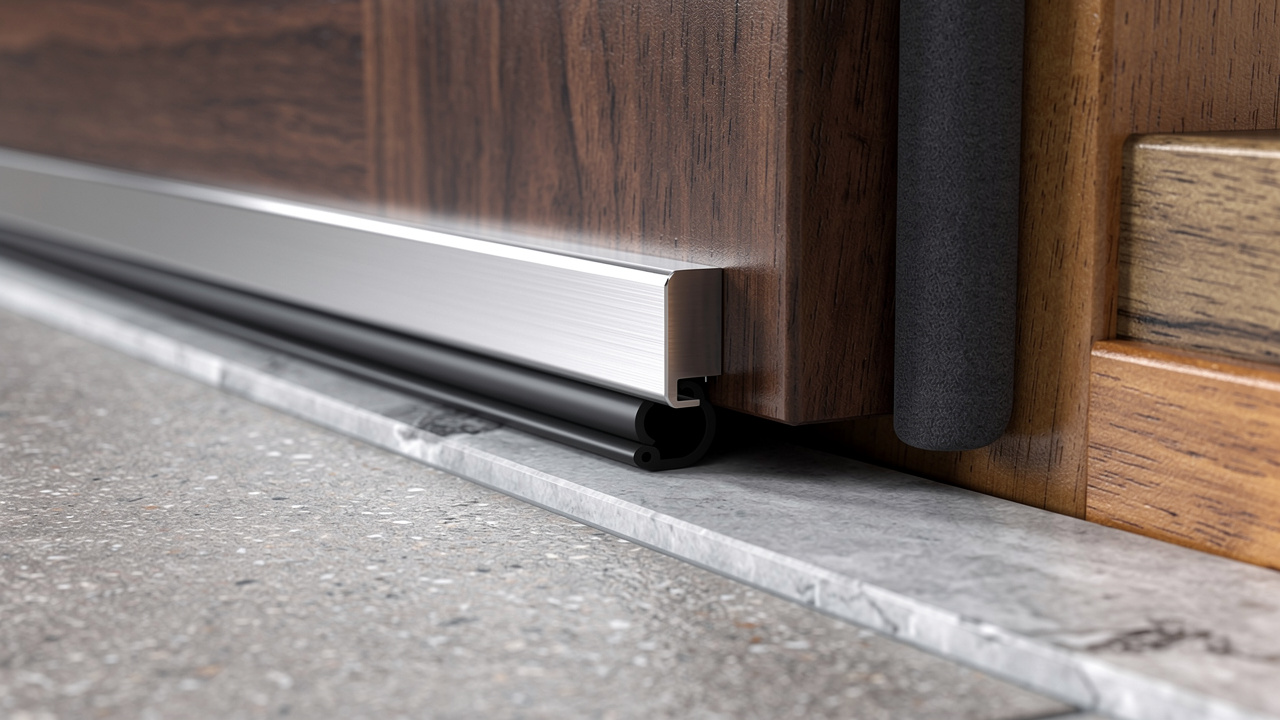
Acoustic sealing explains why two doors with similar cores can sound completely different on-site. Small gaps at the head, jambs, or threshold act like open windows for noise.
A complete acoustic door set uses compression gaskets along the sides and top of the frame. At the bottom, an automatic drop seal lowers when the door closes to meet the floor or a threshold plate. This creates a near-airtight barrier without making the door hard to open.
Research summarized by the National Research Council Canada shows that an opening equal to just one percent of a partition area can reduce its sound isolation by around 10 decibels. For that reason, Wooden Acoustic Doors must always be treated as a full system of leaf, frame, hardware, and seals, installed by someone who understands acoustic detailing.
Understanding STC Ratings: Choosing The Right Performance Level For Your Project
STC ratings give a single number for how well a door reduces airborne sound. For Wooden Acoustic Doors, this number is the fastest way to compare different models and match them to a project brief.
STC, or Sound Transmission Class, comes from laboratory tests where noise plays on one side of a partition and microphones measure how much passes through. The result is plotted across mid and high frequencies, then converted to a rounded value such as STC 40 or STC 50.
In practice, doors for UAE projects usually fall between STC 35 and STC 55. Lower ratings suit private offices or basic hotel corridors, while higher ratings belong in recording studios, cinemas, and medical suites that handle confidential speech.
| STC Rating | Performance Level | Recommended UAE Application |
|---|---|---|
| STC 30–35 | Basic, speech still audible | Private offices, hotel corridors |
| STC 40–45 | Good, loud speech faint | Classrooms, conference rooms, hotel guest rooms |
| STC 45–50 | High, speech inaudible | Boardrooms, music rooms, medical suites |
| STC 50–55+ | Professional isolation | Recording studios, broadcast facilities, cinemas |
Selecting the wrong rating often leads to complaints after handover. Under-specifying means staff or guests still hear conversations through the door, while over-specifying ties up budget where it is not needed. Many building codes based on the International Code Council target performance similar to STC 50 between dwellings, which gives a useful reference point for bedrooms and suites.
Designers also need to remember that laboratory STC is higher than what you receive on-site. Field tests, often called FSTC, typically measure three to five points lower because of flanking paths and minor installation tolerances. Guidance from the National Research Council Canada recommends treating the lab rating as a best-case value and allowing for this small drop when you plan performance.
Where Wooden Acoustic Doors Deliver The Greatest Impact Across UAE Projects
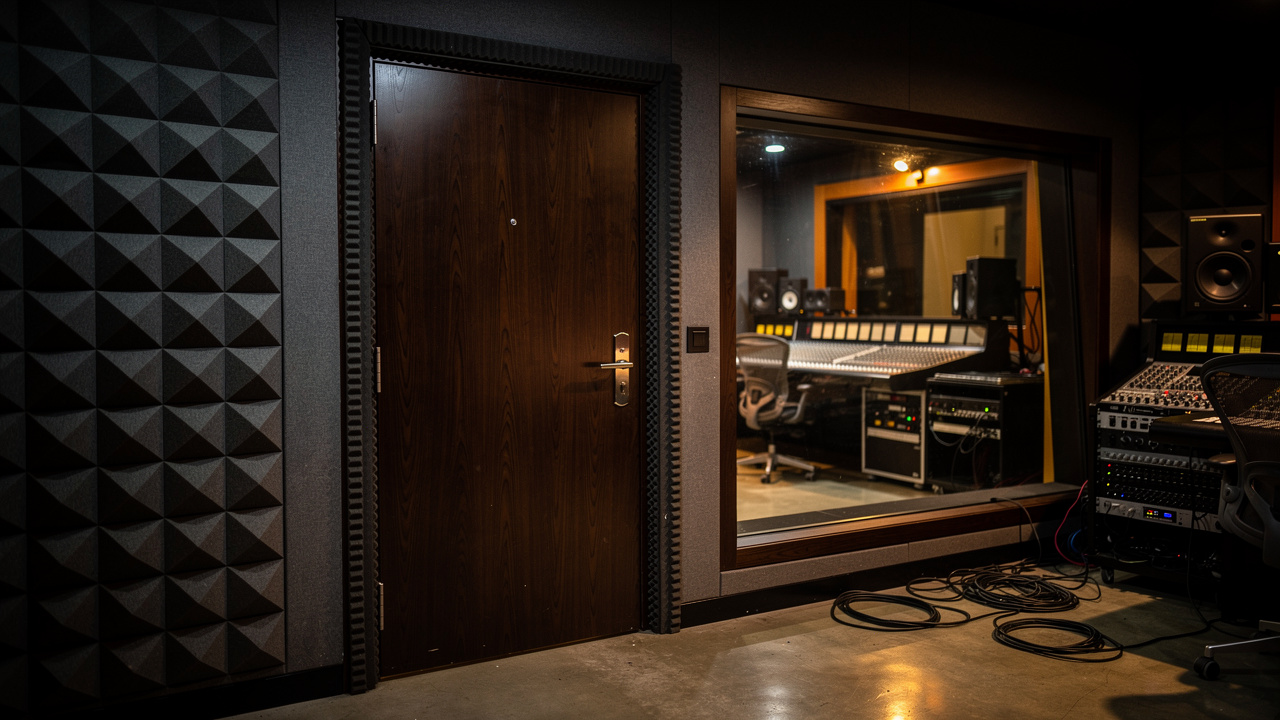
Wooden Acoustic Doors deliver the most value where privacy, comfort, and brand experience depend on low noise levels. Across the UAE and wider GCC, that includes hospitality, corporate, education, studios, and high-end residential projects.
Noise is more than an irritation. According to the World Health Organization, at least one million healthy life-years are lost each year in Western Europe because of traffic noise. Research from J.D. Power shows that unwanted sound is also one of the top reasons guests downgrade hotel reviews, which matters directly to operators in Dubai and Abu Dhabi.
Hotels And Hospitality
Hotels use Wooden Acoustic Doors at guestroom entries, connecting doors, and meeting spaces to protect sleep and quiet. STC 45 doors at standard rooms and STC 50 or higher at suites help cut corridor traffic, lift noise, and club music from nearby venues. Many luxury operators in Dubai Marina and Palm Jumeirah treat door acoustics as a core part of their guest experience.Corporate Offices And Boardrooms
Offices rely on acoustic doors for speech privacy during HR meetings, legal discussions, and executive briefings. Studies from the Center for the Built Environment show that speech privacy is a major source of dissatisfaction in open-plan offices. In areas like DIFC and Abu Dhabi Global Market, well-specified doors help protect confidential deals and reduce distraction from busy communal zones.Recording Studios And Content Creation Spaces
Studios and content rooms in Dubai Studio City or twofour54 Abu Dhabi usually target STC 50 to 55 doors at control rooms and live rooms. This level keeps traffic, neighbors, and HVAC noise out of sensitive microphones, while also preventing loud playback from disturbing adjacent tenants. For podcasters and streamers working from apartments, a studio-grade door can be the single biggest upgrade to recording quality.Educational Facilities
Schools and universities need calm classrooms so students hear teachers clearly. The American National Standards Institute sets strict limits on background noise levels in teaching spaces, and sound-rated doors support that target. In Abu Dhabi and Sharjah, acoustic doors between music rooms, auditoriums, and standard classrooms help stop lessons from clashing with each other.Residential Apartments And Villas
Premium communities such as Emirates Hills, Jumeirah Golf Estates, and Saadiyat Island often use Wooden Acoustic Doors at master suites, home offices, and cinemas. Residents gain better sleep, more private calls, and quieter movie nights, even when family members stay active elsewhere. For developers, this extra comfort becomes a clear selling point in high-end listings.
How DE Sound Supports Wooden Acoustic Door Projects Across The UAE And GCC
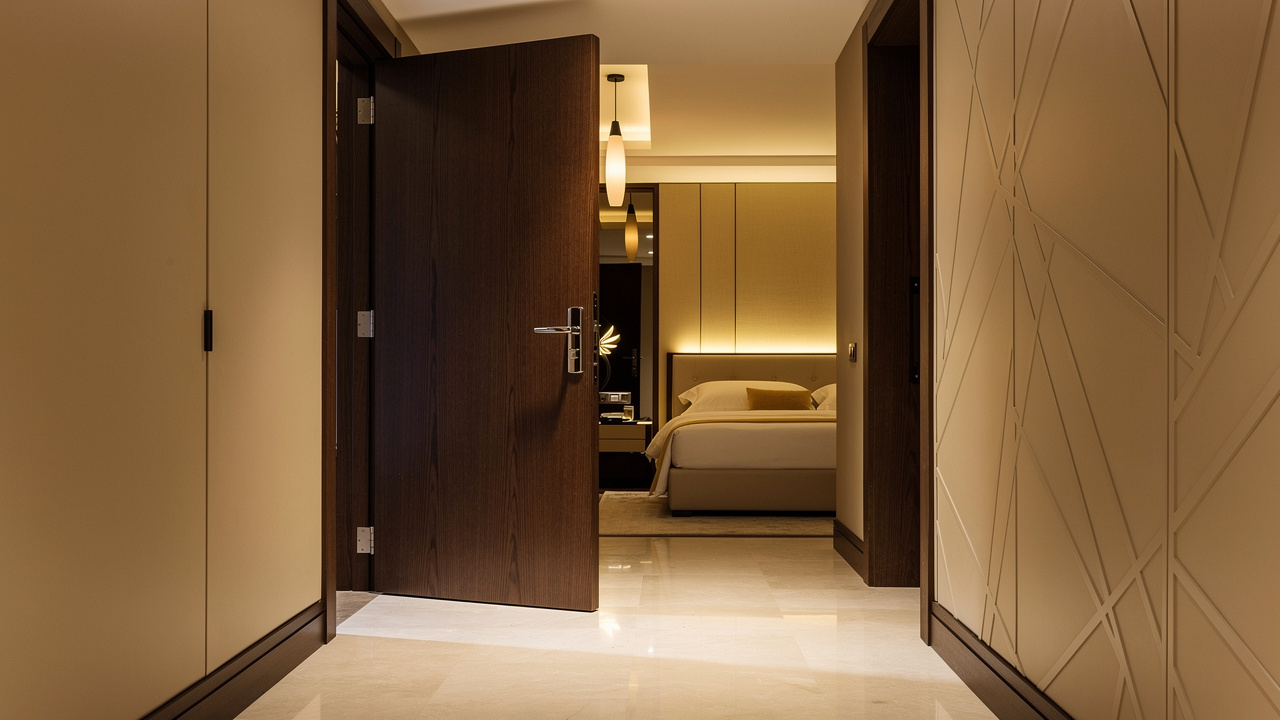
Choosing, buying, and installing Wooden Acoustic Doors at scale is easier when you work with a specialist acoustic supplier. DE Sound focuses on supporting designers, fit-out contractors, and facility managers across the GCC.
Because DE Sound operates on a factory-direct, wholesale model, project teams receive tested acoustic materials at attractive rates. That helps long hotel corridors, school blocks, or office floors stay within budget while still meeting acoustic targets agreed with consultants.
Doors alone rarely solve every noise problem. DE Sound also supplies PET panels, slatted wood panels, and stretch fabric systems so walls and ceilings around the doorway match the door’s performance. This layered approach reduces flanking paths that would otherwise bypass even a high-STC door leaf.
“Whether you are specifying Wooden Acoustic Doors for a single boardroom or a full hotel fit-out across multiple floors, DE Sound provides the technical expertise, certified product range, and regional supply capability to deliver.”
— DE Sound technical team
Free consultation from DE Sound acoustic specialists helps you pick the right STC rating and door construction for each room type. The team reviews drawings, highlights weak points such as adjacent mechanical rooms, and recommends matching wall and ceiling treatments so the whole partition performs as planned.
“The door is usually the weakest part of a sound-rated wall, so we pay close attention to frames, seals, and hardware on every project.”
— Senior acoustic specialist at DE Sound
Logistics also matter on Gulf projects that run to tight timelines. DE Sound coordinates fast deliveries across the UAE, Saudi Arabia, Qatar, Kuwait, Bahrain, and Oman, and keeps selected door configurations and acoustic materials available on short lead times. That support helps contractors avoid schedule delays while maintaining the acoustic quality promised to clients.
The Bottom Line
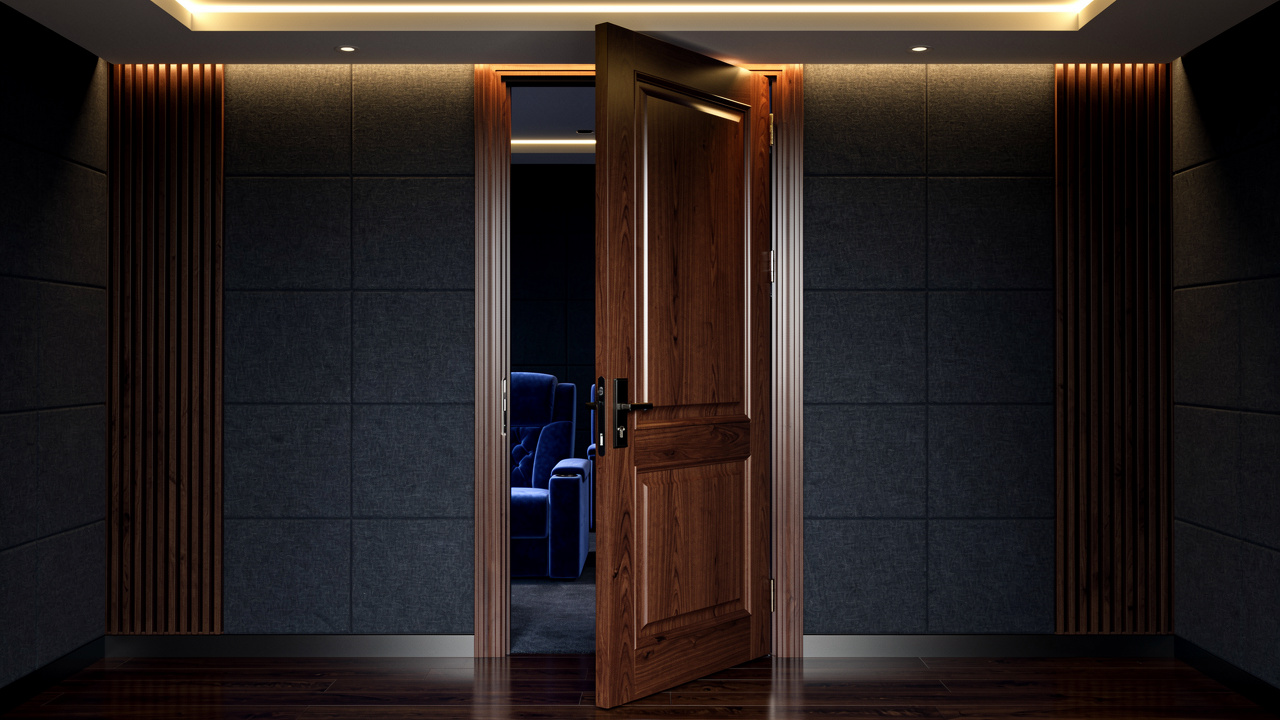
Wooden Acoustic Doors are one of the most effective upgrades for privacy and noise control in modern buildings. When you select the right STC rating and pay attention to seals and installation, they turn busy corridors and shared walls into much quieter boundaries.
From hotels on Sheikh Zayed Road to recording studios in Dubai Media City and villas on Saadiyat Island, the same principles apply. Heavy, well-sealed doors plus matching wall and ceiling treatments give guests, staff, students, and residents calmer, more private rooms.
If you need bulk acoustic doors or support picking ratings for a new project, DE Sound offers wholesale pricing, certified materials, and practical design help across the GCC. Reach out for a free consultation and bring reliable acoustic performance into your next fit-out.
Frequently Asked Questions
Question: What is a good STC rating for a wooden acoustic door in a hotel guestroom?
An STC rating around 45 is a strong target for most hotel guestroom doors in the UAE. Suites beside nightclubs, rooftops, or busy streets often benefit from STC 50 or higher. Field performance usually measures a few points lower than the laboratory rating, so allow for that gap.
Question: Can wooden acoustic doors also meet fire-rating requirements in UAE buildings?
Yes, many Wooden Acoustic Doors also meet required fire ratings in UAE projects. These models combine acoustic perimeter seals with intumescent strips that expand in heat to block smoke and flames. Always ask for test reports that show both fire and acoustic performance for Civil Defence approval.
Question: What causes a wooden acoustic door to underperform its rated STC on-site?
Most performance loss comes from installation issues, not the door leaf itself. Common problems include poorly adjusted drop seals, out-of-square frames that leave gaps, weak fixings, and sound flanking through lightweight walls or ceilings. Treat the door, frame, and surrounding construction as one acoustic system.
Question: Do wooden acoustic doors require special hardware or hinges?
Yes, acoustic doors are heavier and need strong hardware designed for the load. A typical leaf uses three or more heavy-duty hinges, a closer sized for the door weight, and latches that compress the seals without dragging. The right hardware prevents sagging and protects acoustic performance over time.
Question: How far in advance should wooden acoustic doors be ordered for UAE fit-out projects?
Custom acoustic doors normally need several weeks from approval to delivery, so early ordering is wise. Many manufacturers quote six to twelve weeks for made-to-order doors. DE Sound supports project schedules with regional stock on selected items and fast deliveries across six GCC countries.