
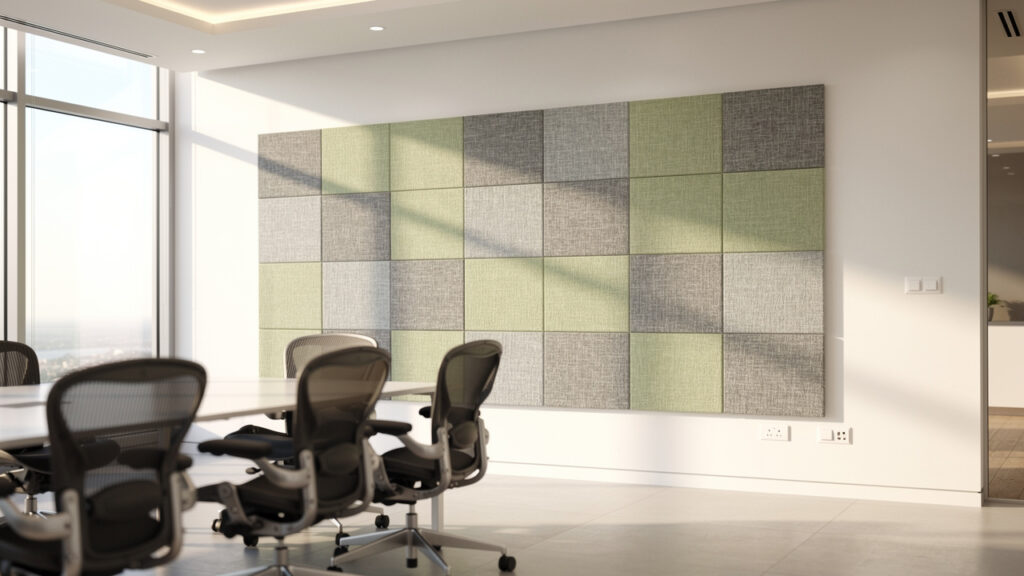
Eco-friendly acoustic materials and systems help control noise without harming the environment, especially in fast-growing UAE projects. In simple terms, eco-friendly acoustic products are sound-absorbing and sound-blocking materials made from recycled or natural content that lower environmental impact while still meeting acoustic targets. In this article, PET acoustic panels sit at the center because they are one of the most practical ways to reach both goals at once in offices, schools, hotels, and studios across the Gulf.
This guide explains what eco-friendly acoustic options mean in the UAE, why PET panels are growing so fast, where they fit best, which certifications to check, and how DE Sound helps teams source tested panels at wholesale scale.
Ready to see how PET panels can simplify your next spec and still hit sustainability targets?
Key Takeaways
Key takeaways help frame how PET panels fit into modern acoustic design in the Gulf.
Eco-friendly acoustic systems use recycled or renewable materials to manage noise while lowering environmental impact. They are tested with the same metrics as conventional products, so teams still get clear NRC, STC, and IIC data. That balance makes them a natural fit for green building projects.
PET acoustic panels have become the leading eco-friendly acoustic material in many UAE interiors. They come from recycled plastic bottles, reach high sound absorption values, and stay stable in humid, air-conditioned spaces. Their color range and shapes also suit branded commercial and hospitality projects.
Adoption of PET panels is rising in offices, schools, hotels, and media spaces across the GCC. Designers and procurement teams look for verified performance data, green certifications, and regional stock. DE Sound brings these elements together for bulk supply with technical support.
What Are Eco-Friendly Acoustic Options and Why Do They Matter in the UAE?
Eco-friendly acoustic options are noise control materials that combine sound performance with lower environmental impact, as demonstrated in research on the Multifunctional performance assessment of waste-based bioplastic wall panels for acoustic, thermal, and structural efficiency. They rely on recycled, renewable, or bio-based inputs instead of traditional fiberglass and foam. In the UAE, these materials let project teams hit acoustic targets while supporting sustainability promises and regulations.
In practice, eco-friendly acoustic products include recycled polyester PET panels, natural wool, cork, and other bio-based boards or batts. They are designed to absorb sound inside rooms or block sound between spaces, and they are measured with standard acoustic metrics:
Noise Reduction Coefficient (NRC): How much sound a surface absorbs.
Sound Transmission Class (STC): How well a wall or partition blocks airborne sound.
Impact Insulation Class (IIC): How well a floor system reduces impact noise such as footsteps.
According to the Acoustical Society of America, high quality acoustic panels often reach NRC values of 0.80 or higher, which is suitable for open offices, classrooms, and studios. Many recycled PET products already sit in this range, so choosing sustainable materials does not mean accepting weaker performance.
Why PET Panels Have Become the Go-To Eco-Friendly Acoustic Material
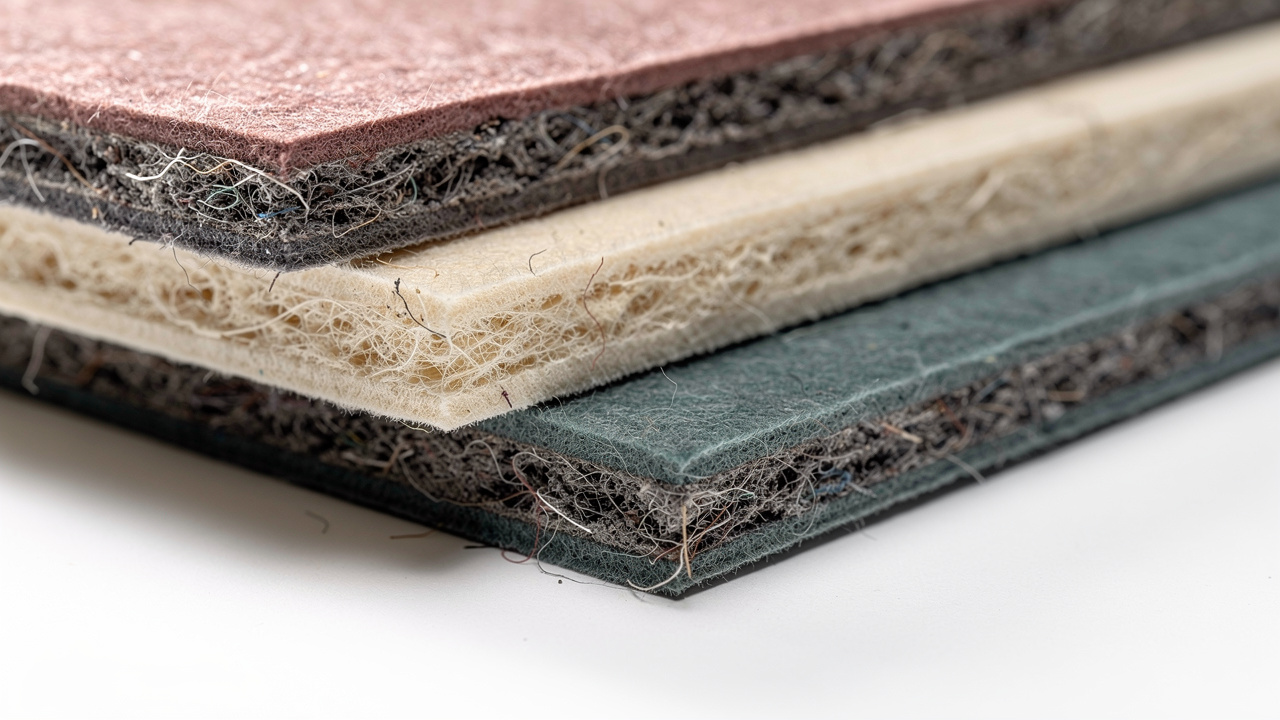
PET acoustic panels are boards made from recycled polyethylene terephthalate, the same plastic used in drink bottles. Manufacturers turn post-consumer bottles into fibers, then press those fibers into dense sheets. That gives PET panels the acoustic behavior designers need and keeps plastic waste out of landfills and oceans, which directly supports eco-focused acoustic design.
Designers often compare PET panels with other eco-focused materials. The table below highlights common differences.
| Material | Typical NRC Range | Durability In Humid GCC | Aesthetic Options | Cost And Availability |
|---|---|---|---|---|
| PET panels | 0.75 to 1.0 | Very stable and inert | Wide colors, shapes, prints | Strong regional stock, low waste |
| Natural wool | 0.70 to 0.95 | Needs careful detailing | Usually fabric-wrapped finishes | Higher unit cost, longer lead times |
| Cork | 0.40 to 0.70 | Good but can stain | Warm, natural textures | Limited colors, moderate stock |
| Bamboo panels | 0.30 to 0.60 | Stable when sealed | Striking linear and slat looks | Often imported per project |
Because PET panels combine high NRC values, easy handling, and broad color choice, they often win during value engineering. They deliver the acoustic performance a consultant expects while staying flexible for interior branding and wayfinding.
For DE Sound clients, PET also aligns with green building targets at a price level that works for bulk orders, which explains why it has become the default eco-focused acoustic material in many Gulf fit-outs.
Where Are PET Acoustic Panels Being Used Across the Gulf Region?
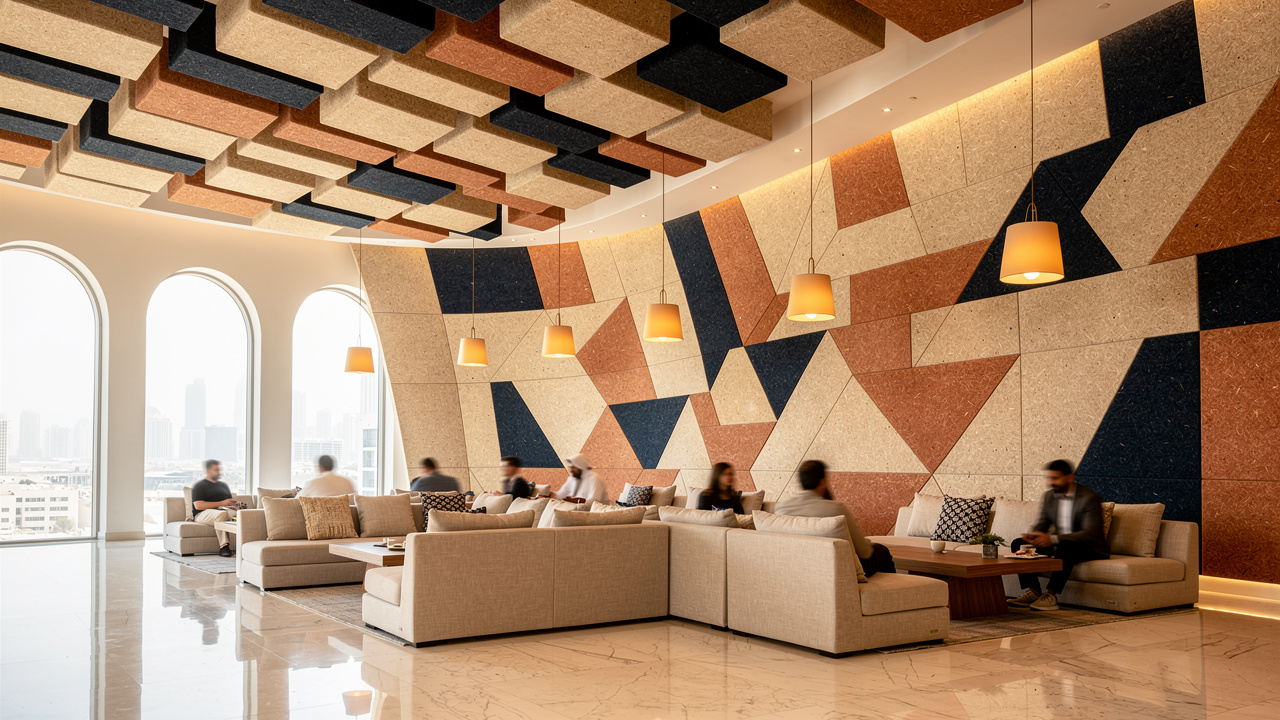
PET acoustic panels now appear across corporate, hospitality, education, and media projects in the UAE and wider GCC. Each sector uses them to solve a clear noise problem and to support environmental and brand goals at the same time. This makes PET a practical backbone for eco-friendly acoustic strategies across many building types.
Corporate offices and co-working spaces use PET panels to control reverberation in open plans and meeting rooms. Panels on walls and ceilings help reach target reverberation times between 0.4 and 0.6 seconds, which is widely recommended for speech clarity in offices. Research referenced by the Acoustical Society of America links shorter reverberation with better speech understanding and fewer distractions. PET panels also help teams earn LEED acoustic performance credits without heavy constructions.
Hotels, restaurants, and event venues need quiet guest rooms and pleasant public spaces. PET panels line headboard walls, corridors, lobby ceilings, and conference rooms so that voices remain clear but not harsh. According to the World Green Building Council, better acoustic comfort supports user wellbeing and overall satisfaction. Many hotel brands operating in Dubai and Abu Dhabi now prefer eco-friendly acoustic materials that also support their published sustainability reports.
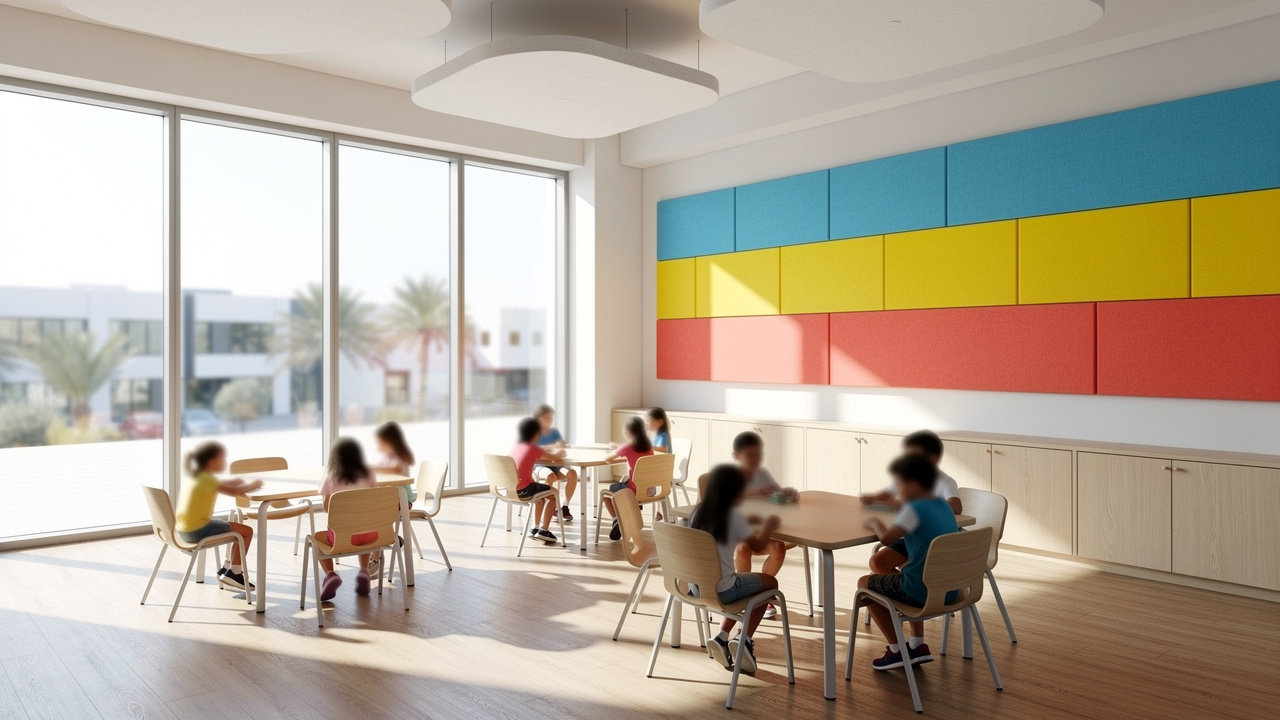
Schools and universities apply PET panels in classrooms, music rooms, and lecture halls where speech intelligibility is a priority. Standards such as ANSI S12.60, discussed by the U.S. Access Board, call for classroom reverberation times of around 0.6 seconds or less. PET panels in bright colors help reach this target while adding visual interest and keeping VOC emissions low when GREENGUARD Gold certified options are used.
Recording studios and content spaces, including podcast rooms and streaming booths, need controlled mid and high frequency absorption without relying only on foam. PET panels, used as broadband absorbers and cloud elements, provide consistent response and a clean visual look for on-camera spaces. Studio owners across Dubai Media City and other hubs can pair PET with bass traps or diffusers to achieve broadcast-ready sound while still aligning with eco-focused brand values.
DE Sound supports these sectors by holding PET stock suited to each use case, from simple office baffles to studio-grade panels, so designers can specify one core material across multi-use portfolios.
What Certifications and Performance Standards Should You Verify Before Specifying PET Panels?
To specify PET acoustic panels with confidence, project teams in the UAE need clear acoustic data and trusted environmental certifications. Verified reports protect safety, comfort, and green building submissions for eco-friendly acoustic systems. Without them, even a good-looking panel can cause trouble at sign-off.
On the acoustic side, start with Noise Reduction Coefficient. For most commercial interiors, consultants often look for panel NRC values of at least 0.80. According to guidance shared by the Institute of Noise Control Engineering, higher NRC values support clear speech and shorter reverberation in open offices and teaching spaces. For partitions, check whether the panel sits inside a system that has a tested Sound Transmission Class rating that meets your privacy targets.
Impact Insulation Class is more relevant for floor systems, but some PET products appear as underlays or as part of raised floor builds. In high-rise towers and hotels, target IIC values around 50 or above, in line with many international building codes. Fire performance is non-negotiable for the Gulf region, so always ask for EN 13501-1 or ASTM E84 reports that show Class A or Class B ratings, depending on the project requirement; technical resources such as PULPBAFFLE: A biodegradable acoustic solution using additive manufacturing illustrate how next-generation sustainable acoustic products are being engineered with safety and compliance built in from the start.
“Green buildings can reduce or remove negative impacts and can create positive impacts for our climate and natural environment.”
— World Green Building Council, Global Industry Network
Environmental credentials confirm that PET panels really support eco claims:
Global Recycled Standard (GRS): Shows that the stated recycled content is correct.
GREENGUARD Gold: Confirms low VOC emissions, which is vital for schools, healthcare, and residential projects according to the U.S. Green Building Council.
Environmental Product Declarations (EPDs): Provide lifecycle data that help with LEED v4 and Estidama submissions.
Cradle to Cradle certification: Indicates deeper work on material health and circularity.
Procurement teams should always request full technical data sheets and third-party laboratory reports, not only marketing brochures. DE Sound supplies PET panels with complete acoustic and environmental documentation, which simplifies coordination with acoustic consultants, sustainability teams, and local authorities.
How DE Sound Supplies PET Acoustic Panels to UAE and GCC Projects
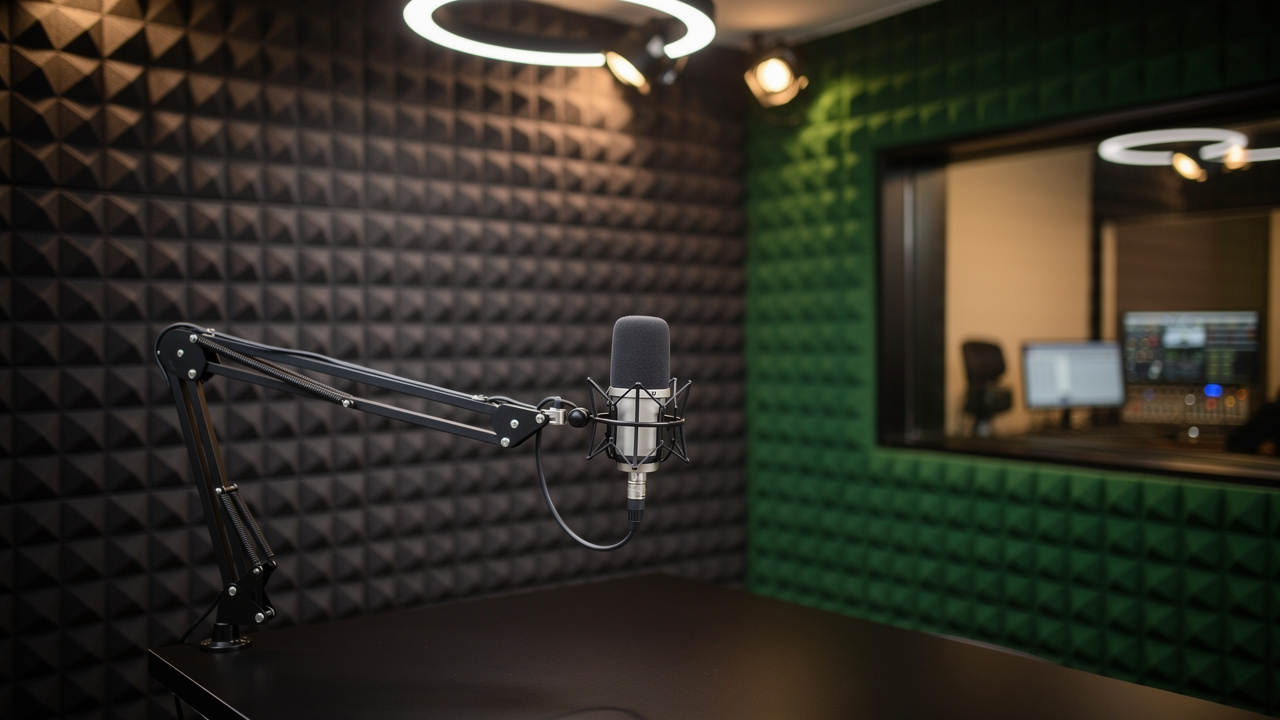
DE Sound supplies PET acoustic panels across the UAE and wider GCC with a focus on tested performance and sustainability. The company helps interior designers, fit-out contractors, facility managers, and studio owners turn eco-friendly acoustic concepts into real, buildable packages that arrive on time and within budget.
DE Sound works on a wholesale, factory-direct pricing model. That structure removes extra layers in the supply chain and keeps PET panels cost-competitive with conventional materials. For large office, hospitality, or education projects, this makes it realistic to choose high recycled content products without breaking tight budgets. Many leading PET manufacturers offer commercial warranties between 10 and 15 years, as shown in data from suppliers such as Autex Acoustics, and DE Sound passes those assurances on to its clients.
Regional stock and faster delivery: DE Sound maintains regional stock of popular PET panel sizes, densities, and colors in UAE warehouses. This shortens lead times for Dubai and Abu Dhabi projects and supports deliveries across Saudi Arabia, Qatar, Oman, Bahrain, and Kuwait. Fit-out teams working on compressed programs benefit from predictable delivery instead of waiting for small international shipments.
A complete acoustic range: The company offers a broad acoustic range that includes PET panels, wood panels, and stretch systems for ceilings and walls, reflecting an industry-wide move toward sustainable solutions documented in studies on Improving Building Acoustics with coir fiber composites, which confirm that natural and recycled materials can serve as the foundation of complete acoustic systems across diverse building types. This mix helps designers compare looks, budgets, and performance for each space. DE Sound’s technical team can review reflected ceiling plans and wall elevations, then suggest combinations that reach target NRC or RT60 values with efficient material use.
Free expert consultation: Free expert consultation is a core part of DE Sound’s service. Acoustic specialists discuss project goals, drawing packages, and green building requirements with clients before orders are placed. They help interpret acoustic reports, check that selected PET panels carry the needed certificates, and advise installers on fixing methods so that tested performance is achieved onsite.
For procurement officers and facility managers handling multi-site portfolios, DE Sound can also structure bulk agreements across several projects. That approach keeps specifications consistent, avoids color or batch variations, and supports long-term maintenance planning for PET-based acoustic schemes.
The Bottom Line
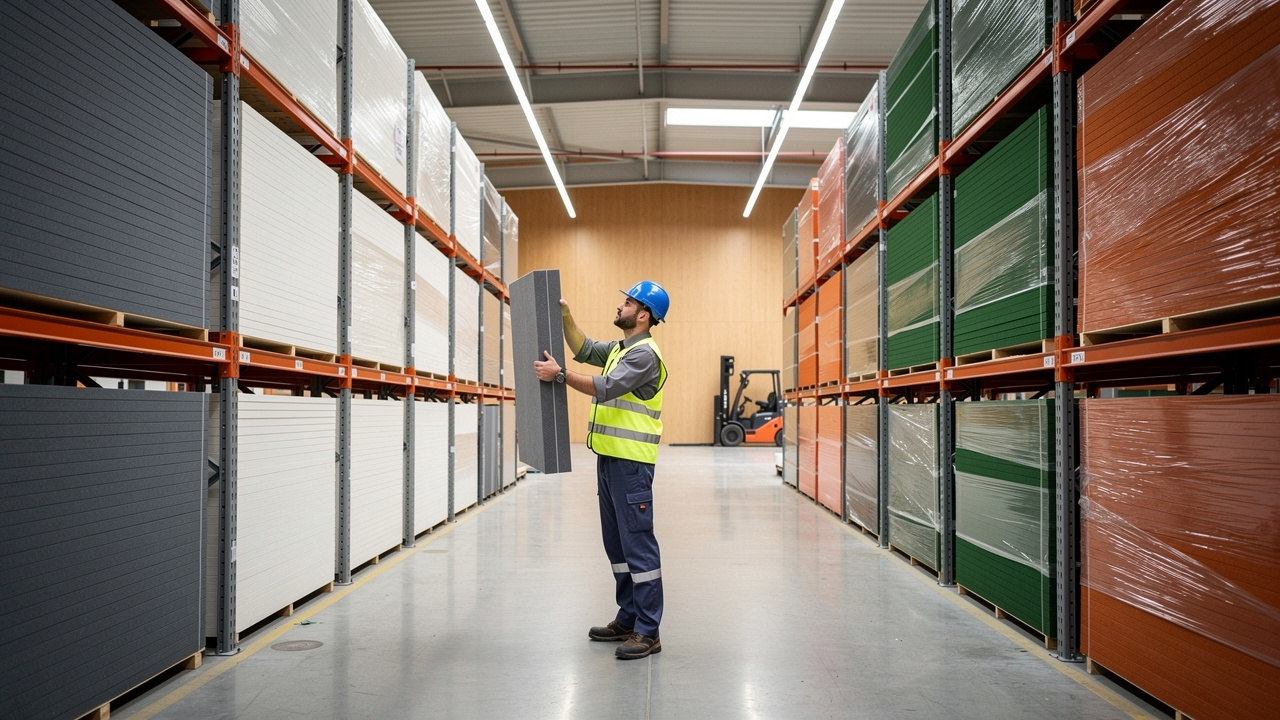
PET acoustic panels have earned their place as the leading eco-friendly acoustic choice for many Gulf projects. They blend strong sound absorption, real recycled content, stable performance in humid climates, and flexible design options in one material that scales well for bulk orders.
When paired with the right certifications, PET panels help projects in Dubai, Abu Dhabi, and across the GCC meet LEED, Estidama, or internal ESG targets while still delivering comfortable, quiet rooms. DE Sound adds regional strength through factory-direct pricing, stocked product ranges, and practical technical support.
If you are planning a new office, school, hotel, or studio, PET panels from DE Sound offer a clear path to reliable acoustics and sustainability on the same specification line. A brief consultation can align acoustic goals, budgets, and delivery timing before your next fit-out phase begins.
Frequently Asked Questions
Question 1: Are PET Acoustic Panels Safe For Use In Schools And Healthcare Environments?
Yes, quality PET acoustic panels made from recycled fibers are considered safe for sensitive spaces. Panels that carry GREENGUARD Gold certification meet strict limits for VOC emissions, which supports healthy indoor air. When combined with proper fire ratings, this makes them suitable for UAE schools, clinics, and hospitals.
Question 2: How Do PET Panels Contribute To LEED Or Estidama Green Building Certification In UAE Projects?
PET panels support several credit paths in LEED and Estidama. Recycled content with Global Recycled Standard documentation aids Materials and Resources credits, while GREENGUARD Gold helps Indoor Environmental Quality credits for low-emitting materials. Environmental Product Declarations can also contribute points and simplify Pearl Rating submissions in Abu Dhabi.
Question 3: How Long Do PET Acoustic Panels Last In Commercial Applications?
Well-manufactured PET acoustic panels often last for a decade or more in normal commercial use. They resist moisture, fading, and minor impact better than many fabric-covered boards, which suits the UAE’s air-conditioned interiors. Actual service life and warranty length depend on the brand and installation details.
Question 4: Can PET Acoustic Panels Be Customized For Specific Interior Design Requirements?
Yes, PET panels are highly adaptable for design-driven projects. They come in many colors, thicknesses, and shapes, and they can be cut into patterns or three-dimensional forms. DE Sound also supports custom sizing and layout advice, which helps large hospitality and corporate interiors coordinate acoustic treatment with visual concepts.
Question 5: What Is The Minimum Order Quantity For PET Panels When Sourcing In Bulk In The UAE?
Minimum order quantities vary by thickness, finish, and manufacturer, especially for special colors. It is best to speak with a supplier early in design so quantities match factory packing and transport efficiency. DE Sound operates on a wholesale, factory-direct model and can advise on project-specific minimums and pricing breaks.